Florian Jeberger – författare
627 kr
Läs direkt efter köp
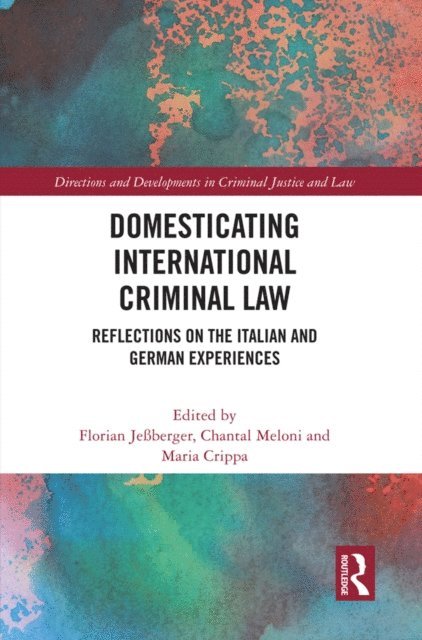
This book provides an essential and critical overview of the most significant issues concerning the domestication of international criminal law, in particular with regard to the implementation of the ICC Statute. It discusses the most recent proposals for reform of the German Code of Crimes under International Law, the "Völkerstrafgesetzbuch", 20 years after its entering into force and introduces the project for an Italian code of international crimes drafted by the Committee of experts established in 2022 by the Ministry of Justice.
Following the adoption of the ICC Statute, many States, including Germany with the "Völkerstrafgesetzbuch", introduced specific legislation to incorporate international criminal law into their domestic legal systems and a considerable number of them have been investigating and prosecuting war crimes, crimes against humanity, genocide, and even aggression ever since. Twenty-five years later, however, the process is not completed as other countries, like Italy, are still working on adopting provisions on international crimes. This book opens with a broad overview of the different approaches of the domestication of international criminal law, with a specific focus on the German and the Italian systems. After an assessment of the prerequisites for the domestic implementation of international criminal law, also from a constitutional law perspective, each chapter offers an in-depth analysis of a specific issue, such as: the definition of international crimes (genocide and crimes against humanity, war crimes and aggression); the applicability of and exceptions to the general principles of domestic criminal law; the regulation of individual criminal responsibility; sanctions and sentencing; as well as procedural aspects related to immunities, jurisdiction and prosecutorial discretion. The strong academic perspective of many authors is complemented by an equally strong practitioner perspective of the others, provided by legal scholars in the highest positions in international and national judicial institutions, resulting in a well-informed and critical appraisal of the most recent developments overall in the international criminal justice system.
Domesticating International Criminal Law will be of great interest to legal scholars and students, as well as practitioners with an interest in comparative and international law, international criminal law and international relations.
627 kr
Läs direkt efter köp
This book provides an essential and critical overview of the most significant issues concerning the domestication of international criminal law, in particular with regard to the implementation of the ICC Statute. It discusses the most recent proposals for reform of the German Code of Crimes under International Law, the "Völkerstrafgesetzbuch", 20 years after its entering into force and introduces the project for an Italian code of international crimes drafted by the Committee of experts established in 2022 by the Ministry of Justice.
Following the adoption of the ICC Statute, many States, including Germany with the "Völkerstrafgesetzbuch", introduced specific legislation to incorporate international criminal law into their domestic legal systems and a considerable number of them have been investigating and prosecuting war crimes, crimes against humanity, genocide, and even aggression ever since. Twenty-five years later, however, the process is not completed as other countries, like Italy, are still working on adopting provisions on international crimes. This book opens with a broad overview of the different approaches of the domestication of international criminal law, with a specific focus on the German and the Italian systems. After an assessment of the prerequisites for the domestic implementation of international criminal law, also from a constitutional law perspective, each chapter offers an in-depth analysis of a specific issue, such as: the definition of international crimes (genocide and crimes against humanity, war crimes and aggression); the applicability of and exceptions to the general principles of domestic criminal law; the regulation of individual criminal responsibility; sanctions and sentencing; as well as procedural aspects related to immunities, jurisdiction and prosecutorial discretion. The strong academic perspective of many authors is complemented by an equally strong practitioner perspective of the others, provided by legal scholars in the highest positions in international and national judicial institutions, resulting in a well-informed and critical appraisal of the most recent developments overall in the international criminal justice system.
Domesticating International Criminal Law will be of great interest to legal scholars and students, as well as practitioners with an interest in comparative and international law, international criminal law and international relations.
687 kr
Läs direkt efter köp
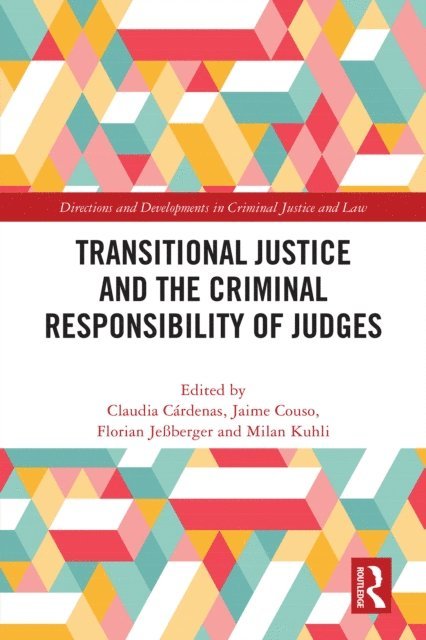
This collective volume delves into the criminal responsibility of judges under authoritarian regimes, with case studies from Germany, Argentina, and Chile, examining their involvement in criminal human rights abuses and failures to protect victims from such crimes.
Through comparative analysis, this volume offers insights into the legal and doctrinal challenges of prosecuting judicial involvement in crimes such as murder (‘judicial murder’), kidnapping, unlawful detention, and torture. Bridging a gap in transitional justice and international criminal law literature, it focuses on the rarely explored criminal responsibility of judges beyond judicial misconduct. In doing so, it provides readers with a deeper understanding of judicial roles in authoritarian regimes and the complex legal standards involved in prosecuting such cases. It also informs the ongoing discourse on judicial accountability and the potential legal implications for judges in contemporary contexts.
Transitional Justice and the Criminal Responsibility of Judges is ideal for students, scholars, and civil servants or practitioners working in the domestic or the international criminal justice system.
687 kr
Läs direkt efter köp
This collective volume delves into the criminal responsibility of judges under authoritarian regimes, with case studies from Germany, Argentina, and Chile, examining their involvement in criminal human rights abuses and failures to protect victims from such crimes.
Through comparative analysis, this volume offers insights into the legal and doctrinal challenges of prosecuting judicial involvement in crimes such as murder (‘judicial murder’), kidnapping, unlawful detention, and torture. Bridging a gap in transitional justice and international criminal law literature, it focuses on the rarely explored criminal responsibility of judges beyond judicial misconduct. In doing so, it provides readers with a deeper understanding of judicial roles in authoritarian regimes and the complex legal standards involved in prosecuting such cases. It also informs the ongoing discourse on judicial accountability and the potential legal implications for judges in contemporary contexts.
Transitional Justice and the Criminal Responsibility of Judges is ideal for students, scholars, and civil servants or practitioners working in the domestic or the international criminal justice system.
562 kr
Läs direkt efter köp
562 kr
Läs direkt efter köp
1 920 kr
Läs direkt efter köp
1 960 kr
Läs direkt efter köp
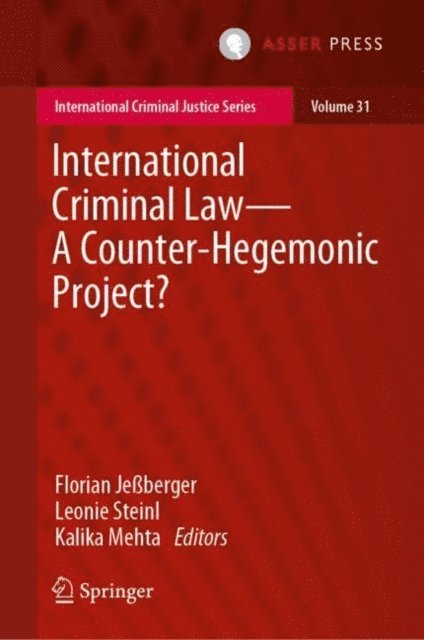
This book enquires into the counter-hegemonic capacity of international criminal justice. It highlights perspectives and themes that have thus far often been neglected in the scholarship on (critical approaches to) international criminal justice.
Can international criminal justice be viewed as a ‘counter-hegemonic’ project? And if so, under what conditions? In response to these questions, scholars and practitioners from the Global South and North reflect inter alia on the engagement with international criminal justice in the context of Ukraine, Palestine, and minorities in South-Asia while also highlighting the hegemonic tendencies built into the institutional structure of the International Criminal Court on the axes of gender and language.
Florian Jeßberger is Professor of Criminal Law and Director of the Franz von Liszt Institute for International Criminal Justice, Humboldt-Universität zu Berlin, Germany.
Leonie Steinl is a Senior Lecturer in Criminal Law at Humboldt-Universität zu Berlin, Germany.
Kalika Mehta is an Associate Researcher at the Franz von Liszt Institute for International Criminal Justice, Humboldt-Universität zu Berlin, Germany.