Forum on Microbial Threats – författare
618 kr
Läs direkt efter köp
A planning committee convened by the Forum on Microbial Threats of the National Academies of Sciences, Engineering, and Medicine held a virtual workshop on February 23-25, 2021, titled Systematizing the One Health Approach in Preparedness and Response Efforts for Infectious Disease Outbreaks. The workshop gave particular consideration to research opportunities, multisectoral collaboration mechanisms, community-engagement strategies, educational opportunities, and policies that speakers have found effective in implementing the core capacities and interventions of One Health principles to strengthen national health systems and enhance global health security. This Proceedings of a Workshop summarizes the presentations and discussions of the workshop.
Accelerating the Use of Pathogen Genomics and Metagenomics in Public Health
Proceedings of a Workshop
386 kr
Skickas inom 3-6 vardagar
Accelerating the Use of Pathogen Genomics and Metagenomics in Public Health
Proceedings of a Workshop
318 kr
Läs direkt efter köp
685 kr
Läs direkt efter köp
In recent public workshops and working group meetings, the Forum on Microbial Threats of the Institute of Medicine (IOM) has examined a variety of infectious disease outbreaks with pandemic potential, including those caused by influenza (IOM, 2005) and severe acute respiratory syndrome (SARS) (IOM, 2004). Particular attention has been paid to the potential pandemic threat posed by the H5N1 strain of avian influenza, which is now endemic in many Southeast Asian bird populations. Since 2003, the H5N1 subtype of avian influenza has caused 185 confirmed human deaths in 11 countries, including some cases of viral transmission from human to human (WHO, 2007). But as worrisome as these developments are, at least they are caused by known pathogens. The next pandemic could well be caused by the emergence of a microbe that is still unknown, much as happened in the 1980s with the emergence of the human immunodeficiency virus (HIV) and in 2003 with the appearance of the SARS coronavirus.
Previous Forum meetings on pandemic disease have discussed the scientific and logistical challenges associated with pandemic disease recognition, identification, and response. Participants in these earlier meetings also recognized the difficulty of implementing disease control strategies effectively. Ethical and Legal Considerations in Mitigating Pandemic Disease: Workshop Summary as a factual summary of what occurred at the workshop.902 kr
Läs direkt efter köp
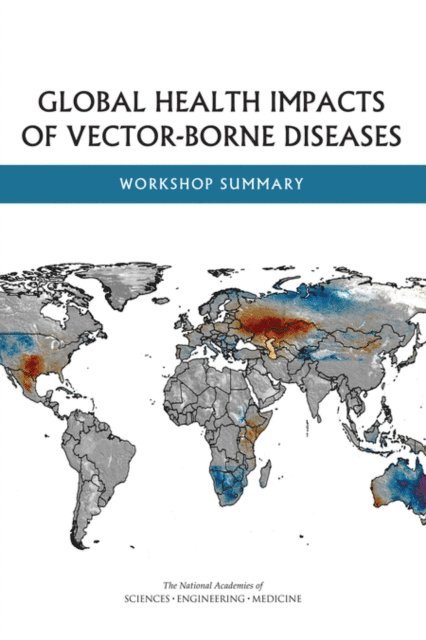
Vector-borne infectious diseases, such as malaria, dengue fever, yellow fever, and plague, cause a significant fraction of the global infectious disease burden; indeed, nearly half of the world''s population is infected with at least one type of vector-borne pathogen (CIESIN, 2007; WHO, 2004a). Vector-borne plant and animal diseases, including several newly recognized pathogens, reduce agricultural productivity and disrupt ecosystems throughout the world. These diseases profoundly restrict socioeconomic status and development in countries with the highest rates of infection, many of which are located in the tropics and subtropics.
Although this workshop summary provides an account of the individual presentations, it also reflects an important aspect of the Forum philosophy. The workshop functions as a dialogue among representatives from different sectors and allows them to present their beliefs about which areas may merit further attention. These proceedings summarize only the statements of participants in the workshop and are not intended to be an exhaustive exploration of the subject matter or a representation of consensus evaluation. Vector-Borne Diseases : Understanding the Environmental, Human Health, and Ecological Connections, Workshop Summary (Forum on Microbial Threats) summarizes this workshop.710 kr
Läs direkt efter köp
Early detection is essential to the control of emerging, reemerging, and novel infectious diseases, whether naturally occurring or intentionally introduced. Containing the spread of such diseases in a profoundly interconnected world requires active vigilance for signs of an outbreak, rapid recognition of its presence, and diagnosis of its microbial cause, in addition to strategies and resources for an appropriate and efficient response. Although these actions are often viewed in terms of human public health, they also challenge the plant and animal health communities.
Surveillance, defined as "the continual scrutiny of all aspects of occurrence and spread of a disease that are pertinent to effective control", involves the "systematic collection, analysis, interpretation, and dissemination of health data." Disease detection and diagnosis is the act of discovering a novel, emerging, or reemerging disease or disease event and identifying its cause. Diagnosis is "the cornerstone of effective disease control and prevention efforts, including surveillance."
Disease surveillance and detection relies heavily on the astute individual: the clinician, veterinarian, plant pathologist, farmer, livestock manager, or agricultural extension agent who notices something unusual, atypical, or suspicious and brings this discovery in a timely way to the attention of an appropriate representative of human public health, veterinary medicine, or agriculture. Most developed countries have the ability to detect and diagnose human, animal, and plant diseases.
Global Infectious Disease Surveillance and Detection: Assessing the Challenges—Finding Solutions, Workshop Summary is part of a 10 book series and summarizes the recommendations and presentations of the workshop.
802 kr
Läs direkt efter köp
Long before the "germ theory" of disease was described, late in the nineteenth century, humans knew that climatic conditions influence the appearance and spread of epidemic diseases. Ancient notions about the effects of weather and climate on disease remain embedded in our collective consciousness-through expressions such as "cold" for rhinovirus infections; "malaria," derived from the Latin for "bad air;" and the common complaint of feeling "under the weather." Today, evidence is mounting that earth''s climate is changing at a faster rate than previously appreciated, leading researchers to view the longstanding relationships between climate and disease with new urgency and from a global perspective. On December 4 and 5, 2007, the Forum on Microbial Threats hosted a public workshop in Washington, DC to consider the possible infectious disease impacts of global climate change and extreme weather events on human, animal, and plant health, as well as their expected implications for global and national security.
877 kr
Läs direkt efter köp
Dr. Joshua Lederberg - scientist, Nobel laureate, visionary thinker, and friend of the Forum on Microbial Threats - died on February 2, 2008. It was in his honor that the Institute of Medicine''s Forum on Microbial Threats convened a public workshop on May 20-21, 2008, to examine Dr. Lederberg''s scientific and policy contributions to the marketplace of ideas in the life sciences, medicine, and public policy. The resulting workshop summary, Microbial Evolution and Co-Adaptation, demonstrates the extent to which conceptual and technological developments have, within a few short years, advanced our collective understanding of the microbiome, microbial genetics, microbial communities, and microbe-host-environment interactions.
828 kr
Läs direkt efter köp
As the human population grows—tripling in the past century while, simultaneously, quadrupling its demand for water—Earth''s finite freshwater supplies are increasingly strained, and also increasingly contaminated by domestic, agricultural, and industrial wastes. Today, approximately one-third of the world''s population lives in areas with scarce water resources. Nearly one billion people currently lack access to an adequate water supply, and more than twice as many lack access to basic sanitation services. It is projected that by 2025 water scarcity will affect nearly two-thirds of all people on the planet. Recognizing that water availability, water quality, and sanitation are fundamental issues underlying infectious disease emergence and spread, the Institute of Medicine held a two-day public workshop, summarized in this volume. Through invited presentations and discussions, participants explored global and local connections between water, sanitation, and health; the spectrum of water-related disease transmission processes as they inform intervention design; lessons learned from water-related disease outbreaks; vulnerabilities in water and sanitation infrastructure in both industrialized and developing countries; and opportunities to improve water and sanitation infrastructure so as to reduce the risk of water-related infectious disease.
844 kr
Läs direkt efter köp
Modern transportation allows people, animals, and plants—and the pathogens they carry—to travel more easily than ever before. The ease and speed of travel, tourism, and international trade connect once-remote areas with one another, eliminating many of the geographic and cultural barriers that once limited the spread of disease. Because of our global interconnectedness through transportation, tourism and trade, infectious diseases emerge more frequently; spread greater distances; pass more easily between humans and animals; and evolve into new and more virulent strains.
The IOM''s Forum on Microbial Threats hosted the workshop "Globalization, Movement of Pathogens (and Their Hosts) and the Revised International Health Regulations" December 16-17, 2008 in order to explore issues related to infectious disease spread in a "borderless" world. Participants discussed the global emergence, establishment, and surveillance of infectious diseases; the complex relationship between travel, trade, tourism, and the spread of infectious diseases; national and international policies for mitigating disease movement locally and globally; and obstacles and opportunities for detecting and containing these potentially wide-reaching and devastating diseases. This document summarizes the workshop.
892 kr
Läs direkt efter köp
As the human population grows—tripling in the past century while, simultaneously, quadrupling its demand for water—Earth''s finite freshwater supplies are increasingly strained, and also increasingly contaminated by domestic, agricultural, and industrial wastes. Today, approximately one-third of the world''s population lives in areas with scarce water resources. Nearly one billion people currently lack access to an adequate water supply, and more than twice as many lack access to basic sanitation services. It is projected that by 2025 water scarcity will affect nearly two-thirds of all people on the planet. Recognizing that water availability, water quality, and sanitation are fundamental issues underlying infectious disease emergence and spread, the Institute of Medicine held a two-day public workshop, summarized in this volume. Through invited presentations and discussions, participants explored global and local connections between water, sanitation, and health; the spectrum of water-related disease transmission processes as they inform intervention design; lessons learned from water-related disease outbreaks; vulnerabilities in water and sanitation infrastructure in both industrialized and developing countries; and opportunities to improve water and sanitation infrastructure so as to reduce the risk of water-related infectious disease.
1 095 kr
Läs direkt efter köp
In March and early April 2009, a new, swine-origin 2009-H1N1 influenza A virus emerged in Mexico and the United States. During the first few weeks of surveillance, the virus spread by human-to-human transmission worldwide to over 30 countries. On June 11, 2009, the World Health Organization (WHO) raised the worldwide pandemic alert level to Phase 6 in response to the ongoing global spread of the novel influenza A (H1N1) virus. By October 30, 2009, the H1N1 influenza A had spread to 191 countries and resulted in 5,700 fatalities. A national emergency was declared in the United States and the swine flu joined SARS and the avian flu as pandemics of the 21st century. Vaccination is currently available, but in limited supply, and with a 60 percent effectiveness rate against the virus. The story of how this new influenza virus spread out of Mexico to other parts of North America and then on to Europe, the Far East, and now Australia and the Pacific Rim countries has its origins in the global interconnectedness of travel, trade, and tourism. Given the rapid spread of the virus, the international scientific, public health, security, and policy communities had to mobilize quickly to characterize this unique virus and address its potential effects. The World Health Organization and Centers for Disease Control have played critical roles in the surveillance, detection and responses to the H1N1 virus. The Domestic and International Impacts of the 2009-H1N1 Influenza A Pandemic: Global Challenges, Global Solutions aimed to examine the evolutionary origins of the H1N1 virus and evaluate its potential public health and socioeconomic consequences, while monitoring and mitigating the impact of a fast-moving pandemic. The rapporteurs for this workshop reported on the need for increased and geographically robust global influenza vaccine production capacities; enhanced and sustained interpandemic demand for seasonal influenza vaccines; clear "triggers" for pandemic alert levels; and accelerated research collaboration on new vaccine manufacturing techniques. This book will be an essential guide for healthcare professionals, policymakers, drug manufacturers and investigators.
919 kr
Läs direkt efter köp
Modern transportation allows people, animals, and plants—and the pathogens they carry—to travel more easily than ever before. The ease and speed of travel, tourism, and international trade connect once-remote areas with one another, eliminating many of the geographic and cultural barriers that once limited the spread of disease. Because of our global interconnectedness through transportation, tourism and trade, infectious diseases emerge more frequently; spread greater distances; pass more easily between humans and animals; and evolve into new and more virulent strains.
The IOM''s Forum on Microbial Threats hosted the workshop "Globalization, Movement of Pathogens (and Their Hosts) and the Revised International Health Regulations" December 16-17, 2008 in order to explore issues related to infectious disease spread in a "borderless" world. Participants discussed the global emergence, establishment, and surveillance of infectious diseases; the complex relationship between travel, trade, tourism, and the spread of infectious diseases; national and international policies for mitigating disease movement locally and globally; and obstacles and opportunities for detecting and containing these potentially wide-reaching and devastating diseases. This document summarizes the workshop.
1 128 kr
Skickas
1 220 kr
Läs direkt efter köp
Years of using, misusing, and overusing antibiotics and other antimicrobial drugs has led to the emergence of multidrug-resistant ''superbugs.'' The IOM''s Forum on Microbial Threats held a public workshop April 6-7 to discuss the nature and sources of drug-resistant pathogens, the implications for global health, and the strategies to lessen the current and future impact of these superbugs.
1 170 kr
Läs direkt efter köp
In March and early April 2009, a new, swine-origin 2009-H1N1 influenza A virus emerged in Mexico and the United States. During the first few weeks of surveillance, the virus spread by human-to-human transmission worldwide to over 30 countries. On June 11, 2009, the World Health Organization (WHO) raised the worldwide pandemic alert level to Phase 6 in response to the ongoing global spread of the novel influenza A (H1N1) virus. By October 30, 2009, the H1N1 influenza A had spread to 191 countries and resulted in 5,700 fatalities. A national emergency was declared in the United States and the swine flu joined SARS and the avian flu as pandemics of the 21st century. Vaccination is currently available, but in limited supply, and with a 60 percent effectiveness rate against the virus. The story of how this new influenza virus spread out of Mexico to other parts of North America and then on to Europe, the Far East, and now Australia and the Pacific Rim countries has its origins in the global interconnectedness of travel, trade, and tourism. Given the rapid spread of the virus, the international scientific, public health, security, and policy communities had to mobilize quickly to characterize this unique virus and address its potential effects. The World Health Organization and Centers for Disease Control have played critical roles in the surveillance, detection and responses to the H1N1 virus. The Domestic and International Impacts of the 2009-H1N1 Influenza A Pandemic: Global Challenges, Global Solutions aimed to examine the evolutionary origins of the H1N1 virus and evaluate its potential public health and socioeconomic consequences, while monitoring and mitigating the impact of a fast-moving pandemic. The rapporteurs for this workshop reported on the need for increased and geographically robust global influenza vaccine production capacities; enhanced and sustained interpandemic demand for seasonal influenza vaccines; clear "triggers" for pandemic alert levels; and accelerated research collaboration on new vaccine manufacturing techniques. This book will be an essential guide for healthcare professionals, policymakers, drug manufacturers and investigators.
668 kr
Läs direkt efter köp
Globalization is by no means a new phenomenon; transcontinental trade and the movement of people date back at least 2,000 years, to the era of the ancient Silk Road trade route. The global spread of infectious disease has followed a parallel course. Indeed, the emergence and spread of infectious disease are, in a sense, the epitome of globalization. Although some experts mark the fall of the Berlin Wall as the beginning of this new era of globalization, others argue that it is not so new. The future of globalization is still in the making. Despite the successful attempts of the developed world during the course of the last century to control many infectious diseases and even to eradicate some deadly afflictions, 13 million people worldwide still die from such diseases every year.On April 16 and 17, 2002, the Forum on Emerging Infections held a working group discussion on the influence of globalization on the emergence and control of infectious diseases. The contents of the unattributed sections are based on the presentations and discussions that took place during the workshop. The Impact of Globalization on Infectious Disease Emergence and Control report summarizes the presentations and discussions related to the increasing cross-border and cross-continental movements of people and how this could exacerbate the emergence and global spread of infectious diseases. This report also summarizes the means by which sovereign states and nations must adopt a global public health mind-set and develop a new organizational framework to maximize the opportunities and overcome the challenges created by globalization and build the necessary capacity to respond effectively to emerging infectious disease threats.
836 kr
Läs direkt efter köp
The Forum on Microbial Threats (previously named the Forum on Emerging Infections) was created in 1996 in response to a request from the Centers for Disease Control and Prevention (CDC) and the National Institutes of Health (NIH). The goal of the Forum is to provide structured opportunities for representatives from academia, industry, professional and interest groups, and government to examine and discuss scientific and policy issues that are of shared interest and that are specifically related to research and prevention, detection, and management of emerging infectious diseases. In accomplishing this task, the Forum provides the opportunity to foster the exchange of information and ideas, identify areas in need of greater attention, clarify policy issues by enhancing knowledge and identifying points of agreement, and inform decision makers about science and policy issues. The Forum seeks to illuminate issues rather than resolve them directly; hence, it does not provide advice or recommendations on any specific policy initiative pending before any agency or organization. Its strengths are the diversity of its membership and the contributions of individual members expressed throughout the activities of the Forum.Recent increased attention to both United States and international public health systems as well as the medical research and treatment infrastructure has revealed significant deficiencies in their capacity to respond to infectious diseases. Medical and public health professionals may be poorly equipped to detect, diagnose, and treat common infectious diseases as well as those diseases that pose an unexpected threat. The need for the development of domestic and international training programs in the expanding field of emerging and reemerging infectious diseases is well recognized. Well-trained infectious disease professionals form the basis of a strong national healthcare system.The Forum on Emerging Infections (now renamed the Forum on Microbial Threats) convened a 2-day workshop discussion—the subject of this summary—to examine the education and training needs to ensure an adequate infectious diseases workforce. The workshop reviewed trends in research training programs and discussed the requirements for establishing successful educational initiatives and training programs to ensure a competent and prepared workforce for current and future challenges in infectious diseases. Some key disciplines explored as case-study examinations included infectious disease epidemiology, vaccinology, vector biology, and public health laboratorians.
919 kr
Läs direkt efter köp
The report describes what steps the United States and other countries have taken thus far to prepare for the next outbreak of "killer flu." It also looks at gaps in readiness, including hospitals'' inability to absorb a surge of patients and many nations'' incapacity to monitor and detect flu outbreaks. The report points to the need for international agreements to share flu vaccine and antiviral stockpiles to ensure that the 88 percent of nations that cannot manufacture or stockpile these products have access to them. It chronicles the toll of the H5N1 strain of avian flu currently circulating among poultry in many parts of Asia, which now accounts for the culling of millions of birds and the death of at least 50 persons. And it compares the costs of preparations with the costs of illness and death that could arise during an outbreak.
618 kr
Läs direkt efter köp
The Infectious Etiology of Chronic Diseases: Defining the Relationship, Enhancing theResearch, and Mitigating the Effects, summarizes a two-day workshop held by theInstitute of Medicine''s Forum on Microbial Threats to address this rapidly evolvingfield. Participants explored factors driving infectious etiologies of chronic diseases ofprominence, identified difficulties in linking infectious agents with chronic outcomes,and discussed broad-based strategies and research programs to advance the field.
1 253 kr
Läs direkt efter köp
Dr. Joshua Lederberg - scientist, Nobel laureate, visionary thinker, and friend of the Forum on Microbial Threats - died on February 2, 2008. It was in his honor that the Institute of Medicine''s Forum on Microbial Threats convened a public workshop on May 20-21, 2008, to examine Dr. Lederberg''s scientific and policy contributions to the marketplace of ideas in the life sciences, medicine, and public policy. The resulting workshop summary, Microbial Evolution and Co-Adaptation, demonstrates the extent to which conceptual and technological developments have, within a few short years, advanced our collective understanding of the microbiome, microbial genetics, microbial communities, and microbe-host-environment interactions.
919 kr
Läs direkt efter köp
Vector-borne infectious diseases, such as malaria, dengue fever, yellow fever, and plague, cause a significant fraction of the global infectious disease burden; indeed, nearly half of the world''s population is infected with at least one type of vector-borne pathogen (CIESIN, 2007; WHO, 2004a). Vector-borne plant and animal diseases, including several newly recognized pathogens, reduce agricultural productivity and disrupt ecosystems throughout the world. These diseases profoundly restrict socioeconomic status and development in countries with the highest rates of infection, many of which are located in the tropics and subtropics.
Although this workshop summary provides an account of the individual presentations, it also reflects an important aspect of the Forum philosophy. The workshop functions as a dialogue among representatives from different sectors and allows them to present their beliefs about which areas may merit further attention. These proceedings summarize only the statements of participants in the workshop and are not intended to be an exhaustive exploration of the subject matter or a representation of consensus evaluation. Vector-Borne Diseases : Understanding the Environmental, Human Health, and Ecological Connections, Workshop Summary (Forum on Microbial Threats) summarizes this workshop.1 003 kr
Läs direkt efter köp
Long before the "germ theory" of disease was described, late in the nineteenth century, humans knew that climatic conditions influence the appearance and spread of epidemic diseases. Ancient notions about the effects of weather and climate on disease remain embedded in our collective consciousness-through expressions such as "cold" for rhinovirus infections; "malaria," derived from the Latin for "bad air;" and the common complaint of feeling "under the weather." Today, evidence is mounting that earth''s climate is changing at a faster rate than previously appreciated, leading researchers to view the longstanding relationships between climate and disease with new urgency and from a global perspective. On December 4 and 5, 2007, the Forum on Microbial Threats hosted a public workshop in Washington, DC to consider the possible infectious disease impacts of global climate change and extreme weather events on human, animal, and plant health, as well as their expected implications for global and national security.
1 003 kr
Läs direkt efter köp
Early detection is essential to the control of emerging, reemerging, and novel infectious diseases, whether naturally occurring or intentionally introduced. Containing the spread of such diseases in a profoundly interconnected world requires active vigilance for signs of an outbreak, rapid recognition of its presence, and diagnosis of its microbial cause, in addition to strategies and resources for an appropriate and efficient response. Although these actions are often viewed in terms of human public health, they also challenge the plant and animal health communities.
Surveillance, defined as "the continual scrutiny of all aspects of occurrence and spread of a disease that are pertinent to effective control", involves the "systematic collection, analysis, interpretation, and dissemination of health data." Disease detection and diagnosis is the act of discovering a novel, emerging, or reemerging disease or disease event and identifying its cause. Diagnosis is "the cornerstone of effective disease control and prevention efforts, including surveillance."
Disease surveillance and detection relies heavily on the astute individual: the clinician, veterinarian, plant pathologist, farmer, livestock manager, or agricultural extension agent who notices something unusual, atypical, or suspicious and brings this discovery in a timely way to the attention of an appropriate representative of human public health, veterinary medicine, or agriculture. Most developed countries have the ability to detect and diagnose human, animal, and plant diseases.
Global Infectious Disease Surveillance and Detection: Assessing the Challenges—Finding Solutions, Workshop Summary is part of a 10 book series and summarizes the recommendations and presentations of the workshop.
1 003 kr
Läs direkt efter köp
In recent public workshops and working group meetings, the Forum on Microbial Threats of the Institute of Medicine (IOM) has examined a variety of infectious disease outbreaks with pandemic potential, including those caused by influenza (IOM, 2005) and severe acute respiratory syndrome (SARS) (IOM, 2004). Particular attention has been paid to the potential pandemic threat posed by the H5N1 strain of avian influenza, which is now endemic in many Southeast Asian bird populations. Since 2003, the H5N1 subtype of avian influenza has caused 185 confirmed human deaths in 11 countries, including some cases of viral transmission from human to human (WHO, 2007). But as worrisome as these developments are, at least they are caused by known pathogens. The next pandemic could well be caused by the emergence of a microbe that is still unknown, much as happened in the 1980s with the emergence of the human immunodeficiency virus (HIV) and in 2003 with the appearance of the SARS coronavirus.
Previous Forum meetings on pandemic disease have discussed the scientific and logistical challenges associated with pandemic disease recognition, identification, and response. Participants in these earlier meetings also recognized the difficulty of implementing disease control strategies effectively. Ethical and Legal Considerations in Mitigating Pandemic Disease: Workshop Summary as a factual summary of what occurred at the workshop.1 003 kr
Läs direkt efter köp
Infectious diseases have existed longer than us, as long as us, or are relatively newer than us. It may be the case that a disease has existed for many, many years but has only recently begun affecting humans. At the turn of the century the number of deaths caused by infections in the United States had been falling steadily but since the ''80s has seen an increase. In the past 30 years alone 37 new pathogens have been identified as human disease threats and 12% of known human pathogens have been classified as either emerging or remerging. Whatever the story, there is currently a "war" on infectious diseases. This war is simply the systematic search for the microbial "cause" of each disease, followed by the development of antimicrobial therapies.
The "war" on infectious diseases, however, must be revisited in order to develop a more realistic and detailed picture of the dynamic interactions among and between host organisms and their diverse populations of microbes. Only a fraction of these microbes are pathogens. Thus, in order to explore the crafting of a new metaphor for host-microbe relationships, and to consider how such a new perspective might inform and prioritize biomedical research, the Forum on Microbial Threats of the Institute of Medicine (IOM) convened the workshop, Ending the War Metaphor: The Changing Agenda for Unraveling the Host-Microbe Relationship on March 16-17, 2005.
Workshop participants examined knowledge and approaches to learning about the bacterial inhabitants of the human gut, the best known host-microbe system, as well as findings from studies of microbial communities associated with other mammals, fish, plants, soil, and insects. The perspective adopted by this workshop is one that recognizes the breadth and diversity of host-microbe relationships beyond those relative few that result in overt disease. Included in this summary are the reports and papers of individuals participating in the Forum as well as the views of the editors.
Addressing Foodborne Threats to Health
Policies, Practices, and Global Coordination: Workshop Summary
1 170 kr
Läs direkt efter köp
In December 2004, at a press conference called to announce his departure as Secretary of the Department of Health and Human Services (HHS), Tommy Thompson raised both concern and controversy when he remarked that he could not understand why the terrorists had not yet attacked our food supply "because it is so easy to do." Although to date the United States has been spared such a disaster, the many documented examples of unintentional outbreaks of foodborne disease—some of which have sickened hundreds of thousands of people, and killed hundreds—provide a grim basis for estimating the impact of deliberate food adulteration. Due to the wide variety of potential chemical and biological agents that could be introduced at many vulnerable points along the food supply continuum, contaminating food is considered an especially simple, yet effective, means to threaten large populations.To explore the nature and extent of such threats, possibilities for reducing their impact, and obstacles to this goal, the Forum on Microbial Threats of the Institute of Medicine (IOM) convened the workshop Foodborne Threats to Health: The Policies and Practice of Surveillance, Prevention, Outbreak Investigations, and International Coordination on October 25 and 26, 2005. Workshop participants discussed the threat spectrum and burden of disease associated with foodborne illness and the role that increasing globalization of food production and distribution plays in the transmission of foodborne disease. Participants also reviewed existing research, policies, and practices concerning foodborne threats in order to identify unmet needs, challenges, and opportunities for improving food safety systems, surveillance, and emergency response.Although this workshop summary provides an account of the individual presentations, it also reflects an important aspect of the Forum philosophy. The workshop functions as a dialogue among representatives from different sectors and presents their beliefs on which areas may merit further attention. However, the reader should be aware that the material presented here expresses the views and opinions of the individuals participating in the workshop and not the deliberations of a formally constituted IOM study committee. These proceedings summarize only what participants stated in the workshop and are not intended to be an exhaustive exploration of the subject matter or a representation of consensus evaluation.
769 kr
Läs direkt efter köp
The emergence of severe acute respiratory syndrome (SARS) in late 2002 and 2003challenged the global public health community to confront a novel epidemic thatspread rapidly from its origins in southern China until it had reached more than 25other countries within a matter of months. In addition to the number of patientsinfected with the SARS virus, the disease had profound economic and political repercussionsin many of the affected regions. Recent reports of isolated new SARS casesand a fear that the disease could reemerge and spread have put public health officialson high alert for any indications of possible new outbreaks. This report examinesthe response to SARS by public health systems in individual countries, the biologyof the SARS coronavirus and related coronaviruses in animals, the economic andpolitical fallout of the SARS epidemic, quarantine law and other public health measuresthat apply to combating infectious diseases, and the role of international organizationsand scientific cooperation in halting the spread of SARS. The report providesan illuminating survey of findings from the epidemic, along with an assessment ofwhat might be needed in order to contain any future outbreaks of SARS or otheremerging infections.
1 337 kr
Läs direkt efter köp
Years of using, misusing, and overusing antibiotics and other antimicrobial drugs has led to the emergence of multidrug-resistant ''superbugs.'' The IOM''s Forum on Microbial Threats held a public workshop April 6-7 to discuss the nature and sources of drug-resistant pathogens, the implications for global health, and the strategies to lessen the current and future impact of these superbugs.
1 454 kr
Läs direkt efter köp
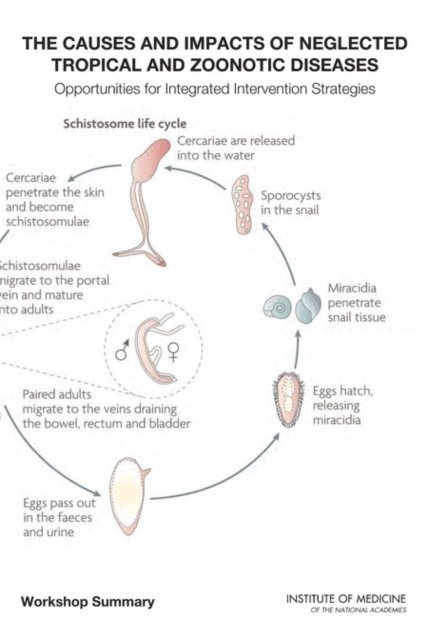
Neglected tropical diseases (NTDs) afflict more than 1.4 billion people, many of whom live on less than $1.25 a day. While there are effective ways to manage NTDs, policy-makers and funders have only recently begun to recognize the economic and public health importance of controlling NTDs. The IOM''s Forum on Microbial Threats held a workshop September 21-22, 2010, to discuss the science of and policy surrounding NTDs.