Board on Global Health – författare
904 kr
Skickas
703 kr
Skickas
685 kr
Läs direkt efter köp
The global response to COVID-19 has demonstrated the importance of vigilance and preparedness for infectious diseases, particularly influenza. There is a need for more effective influenza vaccines and modern manufacturing technologies that are adaptable and scalable to meet demand during a pandemic. The rapid development of COVID-19 vaccines has demonstrated what is possible with extensive data sharing, researchers who have the necessary resources and novel technologies to conduct and apply their research, rolling review by regulators, and public-private partnerships. As demonstrated throughout the response to COVID-19, the process of research and development of novel vaccines can be significantly optimized when stakeholders are provided with the resources and technologies needed to support their response.
Vaccine Research and Development to Advance Pandemic and Seasonal Influenza Preparedness and Response focuses on how to leverage the knowledge gained from the COVID-19 pandemic to optimize vaccine research and development (R&D) to support the prevention and control of seasonal and pandemic influenza. The committee''s findings address four dimensions of vaccine R&D: (1) basic and translational science, (2) clinical science, (3) manufacturing science, and (4) regulatory science.
752 kr
Läs direkt efter köp
The COVID-19 pandemic has challenged the world''s preparedness for a respiratory virus event. While the world has been combating COVID-19, seasonal and pandemic influenza remain imminent global health threats. Non-vaccine public health control measures can combat emerging and ongoing influenza outbreaks by mitigating viral spread.
Public Health Lessons for Non-Vaccine Influenza Interventions examines provides conclusions and recommendations from an expert committee on how to leverage the knowledge gained from the COVID-19 pandemic to optimize the use of public health interventions other than vaccines to decrease the toll of future seasonal and potentially pandemic influenza. It considers the effectiveness of public health efforts such as use of masks and indoor spacing, use of treatments such as monoclonal antibodies, and public health communication campaigns.
904 kr
Skickas
802 kr
Läs direkt efter köp
The COVID-19 pandemic has laid bare the fragility of the global system of preparedness and response to pandemics and the fragmentation of our research and development ecosystem. The pandemic has provided a disruptive moment to advance new norms and frameworks for influenza. It also has demonstrated how innovative global public-private partnerships and coordination mechanisms can lead to rapid successes in viral vaccine research, manufacturing, and risk pooling.
Countering the Pandemic Threat Through Global Coordination on Vaccines identifies ways to strengthen pandemic and seasonal influenza global coordination, partnerships, and financing. This report presents seven overarching recommendations for how the urgent influenza threat should be conceptualized and prioritized within the global pandemic preparedness and response agenda in the future.
836 kr
Läs direkt efter köp
Influenza viruses, both seasonal and pandemic, have the potential to disrupt the health and well-being of populations around the world. The global response to the COVID-19 pandemic and prior public health emergencies of international concern illustrate the importance of global preparedness and coordination among governments, academia, scientists, policy makers, nongovernmental organizations, the private sector, and the public to address the threat of pandemic influenza. These health emergencies have revealed opportunities to enhance global vaccine infrastructure, manufacturing, distribution, and administration.
Globally Resilient Supply Chains for Seasonal and Pandemic Influenza Vaccines outlines key findings and recommendations to bolster vaccine distribution, manufacturing, and supply chains for future seasonal and pandemic influenza events. This report addresses the challenges of manufacturing and distributing vaccines for both seasonal and pandemic influenza, highlighting the critical components of vaccine manufacturing and distribution and offering recommendations that would address gaps in the current global vaccine infrastructure.
618 kr
Läs direkt efter köp
A planning committee convened by the Forum on Microbial Threats of the National Academies of Sciences, Engineering, and Medicine held a virtual workshop on February 23-25, 2021, titled Systematizing the One Health Approach in Preparedness and Response Efforts for Infectious Disease Outbreaks. The workshop gave particular consideration to research opportunities, multisectoral collaboration mechanisms, community-engagement strategies, educational opportunities, and policies that speakers have found effective in implementing the core capacities and interventions of One Health principles to strengthen national health systems and enhance global health security. This Proceedings of a Workshop summarizes the presentations and discussions of the workshop.
656 kr
Skickas
300 kr
Läs direkt efter köp
Accelerating the Use of Pathogen Genomics and Metagenomics in Public Health
Proceedings of a Workshop
386 kr
Skickas inom 3-6 vardagar
Accelerating the Use of Pathogen Genomics and Metagenomics in Public Health
Proceedings of a Workshop
318 kr
Läs direkt efter köp
685 kr
Läs direkt efter köp
In recent public workshops and working group meetings, the Forum on Microbial Threats of the Institute of Medicine (IOM) has examined a variety of infectious disease outbreaks with pandemic potential, including those caused by influenza (IOM, 2005) and severe acute respiratory syndrome (SARS) (IOM, 2004). Particular attention has been paid to the potential pandemic threat posed by the H5N1 strain of avian influenza, which is now endemic in many Southeast Asian bird populations. Since 2003, the H5N1 subtype of avian influenza has caused 185 confirmed human deaths in 11 countries, including some cases of viral transmission from human to human (WHO, 2007). But as worrisome as these developments are, at least they are caused by known pathogens. The next pandemic could well be caused by the emergence of a microbe that is still unknown, much as happened in the 1980s with the emergence of the human immunodeficiency virus (HIV) and in 2003 with the appearance of the SARS coronavirus.
Previous Forum meetings on pandemic disease have discussed the scientific and logistical challenges associated with pandemic disease recognition, identification, and response. Participants in these earlier meetings also recognized the difficulty of implementing disease control strategies effectively. Ethical and Legal Considerations in Mitigating Pandemic Disease: Workshop Summary as a factual summary of what occurred at the workshop.902 kr
Läs direkt efter köp
Vector-borne infectious diseases, such as malaria, dengue fever, yellow fever, and plague, cause a significant fraction of the global infectious disease burden; indeed, nearly half of the world''s population is infected with at least one type of vector-borne pathogen (CIESIN, 2007; WHO, 2004a). Vector-borne plant and animal diseases, including several newly recognized pathogens, reduce agricultural productivity and disrupt ecosystems throughout the world. These diseases profoundly restrict socioeconomic status and development in countries with the highest rates of infection, many of which are located in the tropics and subtropics.
Although this workshop summary provides an account of the individual presentations, it also reflects an important aspect of the Forum philosophy. The workshop functions as a dialogue among representatives from different sectors and allows them to present their beliefs about which areas may merit further attention. These proceedings summarize only the statements of participants in the workshop and are not intended to be an exhaustive exploration of the subject matter or a representation of consensus evaluation. Vector-Borne Diseases : Understanding the Environmental, Human Health, and Ecological Connections, Workshop Summary (Forum on Microbial Threats) summarizes this workshop.652 kr
Läs direkt efter köp
The influenza pandemics of 1918, 1957, and 1968 offer a warning to the world about the potential dangers of the influenza virus. In 2006, after a series of cases and clusters of the highly pathogenic H5N1 avian virus made clear the threat of a possible pandemic, the U.S. Congress allocated $39 million to the Department of Defense Global Emerging Infections Surveillance and Response System (DoD-GEIS) to increase and improve its worldwide influenza surveillance network through upgrades to its domestic and overseas laboratories'' capabilities.
An Institute of Medicine (IOM) committee was subsequently formed to evaluate the effectiveness of these laboratory-based programs in relation to the supplemental funding, and the report that follows details the committee''s findings. The committee that prepared this report, the Committee for the Assessment of DoD-GEIS Influenza Surveillance and Response Programs, was convened at the request of DoD-GEIS management to evaluate the execution of the fiscal year 2006 supplemental funding for avian influenza/ pandemic influenza (AI/PI) surveillance and response. The committee was tasked with evaluating the DoD-GEIS AI/PI surveillance program for the worth of each funded project''s contribution to a comprehensive AI/PI surveillance program; the adequacy of the program in view of the evolving epidemiologic factors; responsiveness to the intent of Congress as expressed in Sec. 748, H.R.1815, Pandemic Avian Flu Preparedness; consistency with the DoD and national plans; and coordination of efforts with CDC, WHO, and local governments. Review of the DoD-GEIS Influenza Programs: Strengthening Global Surveillance and Response reviews the development of conclusions and recommendations with long-term, program-level relevance as well as conclusions and recommendations regarding the improvement of specific DoD-GEIS projects.710 kr
Läs direkt efter köp
Early detection is essential to the control of emerging, reemerging, and novel infectious diseases, whether naturally occurring or intentionally introduced. Containing the spread of such diseases in a profoundly interconnected world requires active vigilance for signs of an outbreak, rapid recognition of its presence, and diagnosis of its microbial cause, in addition to strategies and resources for an appropriate and efficient response. Although these actions are often viewed in terms of human public health, they also challenge the plant and animal health communities.
Surveillance, defined as "the continual scrutiny of all aspects of occurrence and spread of a disease that are pertinent to effective control", involves the "systematic collection, analysis, interpretation, and dissemination of health data." Disease detection and diagnosis is the act of discovering a novel, emerging, or reemerging disease or disease event and identifying its cause. Diagnosis is "the cornerstone of effective disease control and prevention efforts, including surveillance."
Disease surveillance and detection relies heavily on the astute individual: the clinician, veterinarian, plant pathologist, farmer, livestock manager, or agricultural extension agent who notices something unusual, atypical, or suspicious and brings this discovery in a timely way to the attention of an appropriate representative of human public health, veterinary medicine, or agriculture. Most developed countries have the ability to detect and diagnose human, animal, and plant diseases.
Global Infectious Disease Surveillance and Detection: Assessing the Challenges—Finding Solutions, Workshop Summary is part of a 10 book series and summarizes the recommendations and presentations of the workshop.
752 kr
Läs direkt efter köp
The current state of science in violence prevention reveals progress, promise, and a number of remaining challenges. In order to fully examine the issue of global violence prevention, the Institute of Medicine in collaboration with Global Violence Prevention Advocacy, convened a workshop and released the workshop summary entitled, Violence Prevention in Low-and Middle-Income Countries.
The workshop brought together participants with a wide array of expertise in fields related to health, criminal justice, public policy, and economic development, to study and articulate specific opportunities for the U.S. government and other leaders with resources to more effectively support programming for prevention of the many types of violence. Participants highlighted the need for the timely development of an integrated, science-based approach and agenda to support research, clinical practice, program development, policy analysis, and advocacy for violence prevention.
727 kr
Läs direkt efter köp
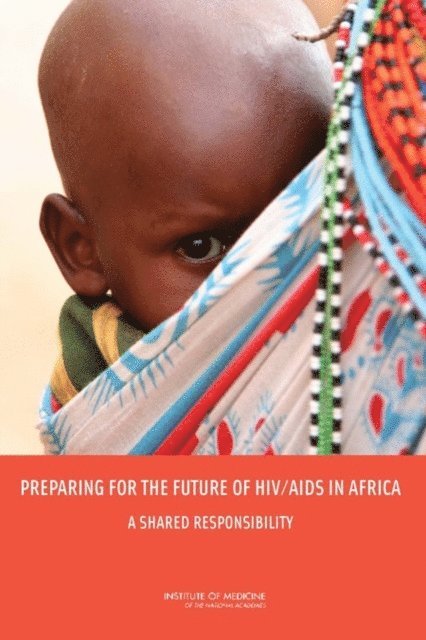
The number of people infected with HIV or living with AIDS is increasing at unprecedented rates as various scientists, organizations, and institutions search for innovative solutions to combating and preventing the disease. At the request of the Bill & Melinda Gates Foundation, Methodological Challenges in Biomedical HIV Prevention Trials addresses methodological challenges in late-stage nonvaccine biomedical HIV prevention trials with a specific focus on microbicide and pre-exposure prophylaxis trials. This book recommends a number of ways to improve the design, monitoring, and analysis of late-stage clinical trials that evaluate nonvaccine biomedical interventions. The objectives include identifying a beneficial method of intervention, enhancing quantification of the impact, properly assessing the effects of using such an intervention, and reducing biases that can lead to false positive trial results.According to Methodological Challenges in Biomedical HIV Prevention Trials, the need to identify a range of effective, practical, and affordable preventive strategies is critical. Although a large number of promising new HIV prevention strategies and products are currently being tested in late-stage clinical trials, these trials face a myriad of methodological challenges that slow the pace of research and limit the ability to identify and fully evaluate effective biomedical interventions.
477 kr
Läs direkt efter köp
802 kr
Läs direkt efter köp
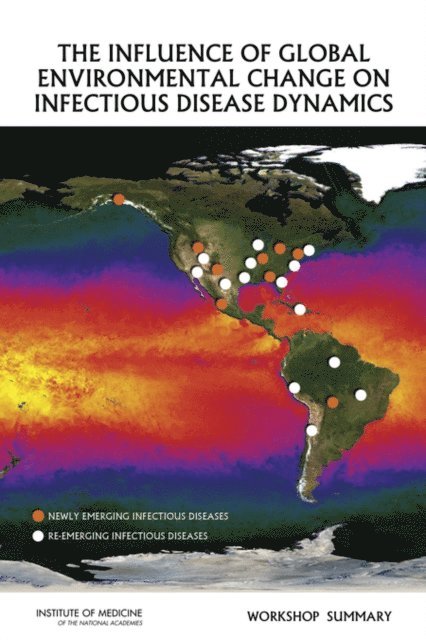
Long before the "germ theory" of disease was described, late in the nineteenth century, humans knew that climatic conditions influence the appearance and spread of epidemic diseases. Ancient notions about the effects of weather and climate on disease remain embedded in our collective consciousness-through expressions such as "cold" for rhinovirus infections; "malaria," derived from the Latin for "bad air;" and the common complaint of feeling "under the weather." Today, evidence is mounting that earth''s climate is changing at a faster rate than previously appreciated, leading researchers to view the longstanding relationships between climate and disease with new urgency and from a global perspective. On December 4 and 5, 2007, the Forum on Microbial Threats hosted a public workshop in Washington, DC to consider the possible infectious disease impacts of global climate change and extreme weather events on human, animal, and plant health, as well as their expected implications for global and national security.
468 kr
Läs direkt efter köp
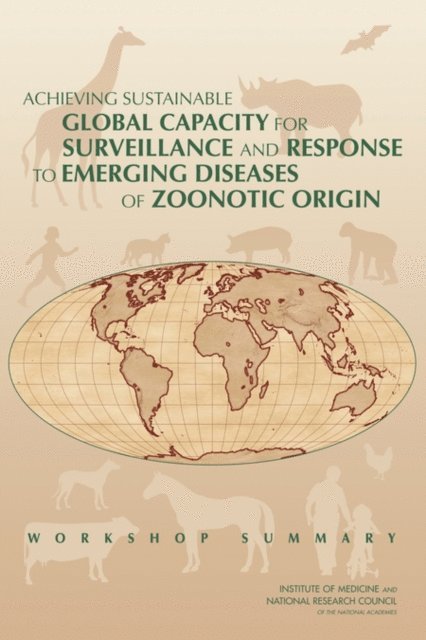
One of the biggest threats today is the uncertainty surrounding the emergence of a novel pathogen or the re-emergence of a known infectious disease that might result in disease outbreaks with great losses of human life and immense global economic consequences. Over the past six decades, most of the emerging infectious disease events in humans have been caused by zoonotic pathogens—those infectious agents that are transmitted from animals to humans.
In June 2008, the Institute of Medicine''s and National Research Council''s Committee on Achieving Sustainable Global Capacity for Surveillance and Response to Emerging Diseases of Zoonotic Origin convened a workshop. This workshop addressed the reasons for the transmission of zoonotic disease and explored the current global capacity for zoonotic disease surveillance.
877 kr
Läs direkt efter köp
Dr. Joshua Lederberg - scientist, Nobel laureate, visionary thinker, and friend of the Forum on Microbial Threats - died on February 2, 2008. It was in his honor that the Institute of Medicine''s Forum on Microbial Threats convened a public workshop on May 20-21, 2008, to examine Dr. Lederberg''s scientific and policy contributions to the marketplace of ideas in the life sciences, medicine, and public policy. The resulting workshop summary, Microbial Evolution and Co-Adaptation, demonstrates the extent to which conceptual and technological developments have, within a few short years, advanced our collective understanding of the microbiome, microbial genetics, microbial communities, and microbe-host-environment interactions.

919 kr
Läs direkt efter köp
This book identifies feasible, affordable steps for LMCs and their international partners to begin to reduce the cancer burden for current and future generations. Stemming the growth of cigarette smoking tops the list to prevent cancer and all the other major chronic diseases. Other priorities include infant vaccination against the hepatitis B virus to prevent liver cancers and vaccination to prevent cervical cancer. Developing and increasing capacity for cancer screening and treatment of highly curable cancers (including most childhood malignancies) can be accomplished using "resource-level appropriateness" as a guide. And there are ways to make inexpensive oral morphine available to ease the pain of the many who will still die from cancer.
769 kr
Läs direkt efter köp
In 2003, Congress passed the United States Leadership Against HIV/AIDS, Tuberculosis, and Malaria Act, which established a 5-year, $15 billion initiative to help countries around the world respond to their AIDS epidemics. The initiative is generally referred to by the title of the 5-year strategy required by the act—PEPFAR, or the President''s Emergency Plan for AIDS Relief.
PEPFAR Implementation evaluates this initiative''s progress and concludes that although PEPFAR has made a promising start, U.S. leadership is still needed in the effort to respond to the HIV/AIDS pandemic. The book recommends that the program transition from its focus on emergency relief to an emphasis on the long-term strategic planning and capacity building necessary for a sustainable response. PEPFAR Implementation will be of interest to policy makers, health care professionals, special interest groups, and others interested in global AIDS relief.
495 kr
Läs direkt efter köp
Smallpox was a devastating disease that decimated human populations for centuries, and its eradication in 1980 was a monumental achievement for the global health community. Since then the remaining known strains of its causative agent, variola virus, have been contained in two World Health Organization (WHO)-approved repositories.In 1999, the World Health Assembly (WHA) debated the issue of destroying these remaining strains. Arguments were presented on the need to retain the live virus for use in additional important research, and the decision to destroy the virus was deferred until this research could be completed. In that same year, the Institute of Medicine (IOM) convened a consensus committee to explore scientific needs for the live virus. In the ten years since the first IOM report, the scientific, political, and regulatory environments have changed. In this new climate, the IOM was once again tasked to consider scientific needs for live variola virus. The committee evaluated the scientific need for live variola virus in four areas: development of therapeutics, development of vaccines, genomic analysis, and discovery research.
602 kr
Läs direkt efter köp
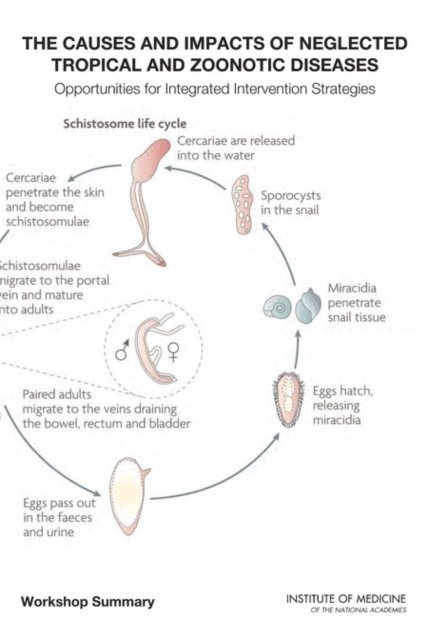
H1N1 ("swine flu"), SARS, mad cow disease, and HIV/AIDS are a few examples of zoonotic diseases-diseases transmitted between humans and animals. Zoonotic diseases are a growing concern given multiple factors: their often novel and unpredictable nature, their ability to emerge anywhere and spread rapidly around the globe, and their major economic toll on several disparate industries.Infectious disease surveillance systems are used to detect this threat to human and animal health. By systematically collecting data on the occurrence of infectious diseases in humans and animals, investigators can track the spread of disease and provide an early warning to human and animal health officials, nationally and internationally, for follow-up and response. Unfortunately, and for many reasons, current disease surveillance has been ineffective or untimely in alerting officials to emerging zoonotic diseases.Sustaining Global Surveillance and Response to Emerging Zoonotic Diseases assesses some of the disease surveillance systems around the world, and recommends ways to improve early detection and response. The book presents solutions for improved coordination between human and animal health sectors, and among governments and international organizations.Parties seeking to improve the detection and response to zoonotic diseases—including U.S. government and international health policy makers, researchers, epidemiologists, human health clinicians, and veterinarians—can use this book to help curtail the threat zoonotic diseases pose to economies, societies, and health.
656 kr
Skickas
493 kr
Läs direkt efter köp
Health is a highly valued, visible, and concrete investment that has the power to both save lives and enhance the credibility of the United States in the eyes of the world. While the United States has made a major commitment to global health, there remains a wide gap between existing knowledge and tools that could improve health if applied universally, and the utilization of these known tools across the globe.
The U.S. Commitment to Global Health concludes that the U.S. government and U.S.-based foundations, universities, nongovernmental organizations, and commercial entities have an opportunity to improve global health. The book includes recommendations that these U.S. institutions:
increase the utilization of existing interventions to achieve significant health gains; generate and share knowledge to address prevalent health problems in disadvantaged countries; invest in people, institutions, and capacity building with global partners; increase the quantity and quality of U.S. financial commitments to global health; and engage in respectful partnerships to improve global health.In doing so, the U.S. can play a major role in saving lives and improving the quality of life for millions around the world.
828 kr
Läs direkt efter köp
As the human population grows—tripling in the past century while, simultaneously, quadrupling its demand for water—Earth''s finite freshwater supplies are increasingly strained, and also increasingly contaminated by domestic, agricultural, and industrial wastes. Today, approximately one-third of the world''s population lives in areas with scarce water resources. Nearly one billion people currently lack access to an adequate water supply, and more than twice as many lack access to basic sanitation services. It is projected that by 2025 water scarcity will affect nearly two-thirds of all people on the planet. Recognizing that water availability, water quality, and sanitation are fundamental issues underlying infectious disease emergence and spread, the Institute of Medicine held a two-day public workshop, summarized in this volume. Through invited presentations and discussions, participants explored global and local connections between water, sanitation, and health; the spectrum of water-related disease transmission processes as they inform intervention design; lessons learned from water-related disease outbreaks; vulnerabilities in water and sanitation infrastructure in both industrialized and developing countries; and opportunities to improve water and sanitation infrastructure so as to reduce the risk of water-related infectious disease.
560 kr
Läs direkt efter köp
In 2007 and 2008, the world witnessed a dramatic increase in food prices. The global financial crisis that began in 2008 compounded the burden of high food prices, exacerbating the problems of hunger and malnutrition in developing countries. The tandem food price and economic crises struck amidst the massive, chronic problem of hunger and undernutrition in developing countries. National governments and international actors have taken a variety of steps to mitigate the negative effects of increased food prices on particular groups. The recent abrupt increase in food prices, in tandem with the current global economic crisis, threatens progress already made in these areas, and could inhibit future efforts. The Institute of Medicine held a workshop, summarized in this volume, to describe the dynamic technological, agricultural, and economic issues contributing to the food price increases of 2007 and 2008 and their impacts on health and nutrition in resource-poor regions. The compounding effects of the current global economic downturn on nutrition motivated additional discussions on these dual crises, their impacts on the nutritional status of vulnerable populations, and opportunities to mitigate their negative nutritional effects.