Fran O' Rourke - Böcker
Visar alla böcker från författaren Fran O' Rourke. Handla med fri frakt och snabb leverans.
2 produkter
2 produkter
801 kr
Kommande
Aquinas and the Platonist Tradition studies a variety of central topics to illustrate the pervasive influence of Platonism and Neoplatonism in the philosophy of St Thomas. The overall thesis is that Aquinas combined the transcendent impulse of Platonism with the natural sensibility of Aristotle; his deepest metaphysical intuitions are unmistakably Platonist. While Aquinas followed Aristotle in epistemology, his deeper insights were more in tune with Plato. Adopting Aristotle’s method, he provided a more secure foundation for positions that was more characteristic of Plato. Fran O'Rourke notes the fundamental unity of Plato and Aristotle fashioned by Aquinas at a deeper level.The opening chapter deals in broad strokes with themes common to Plato and St Thomas. Direct influence is not always evident (Aquinas had limited knowledge of Plato’s writings), rather a shared interest in profound philosophical questions, approached separately on converging paths. Subsequent chapters deal in detail with particular questions, relying frequently on indirect Neoplatonic sources and interpretations, in particular St Augustine, Pseudo-Dionysius, and the author of the Liber de Causis. Central topics include the immortality of the soul, the nature of beauty, the status of evil, the names of God, Aquinas’ debt to Pseudo-Dionysius in the understanding of being/existence ( esse) as intensive power ( virtus essendi), the knowledge of transcendent reality, and the nature and ontological status of angels.O'Rourke's method is to begin each topic with a close reading of relevant texts from the entire corpus thomisticum. There followed a comparison and contrast with earlier authors and references to later influences. Each essay concludes with an evaluation, frequently criticizing the arguments involved. The studies are not merely historical, but aim to show the abiding philosophical relevance of the Platonist and Thomistic thought.There is a dearth of extended studies of the Platonist/Neoplatonist heritage of Aquinas. Many books refer in a general way to these influences, but none in an extended or systematic manner. While this book is a collection of diverse essays, it has nevertheless a comprehensive unity. It presents many new insights regarding the fundamental significance of Platonist/Neoplatonist aspects of Aquinas’ thought.
787 kr
Tillfälligt slut
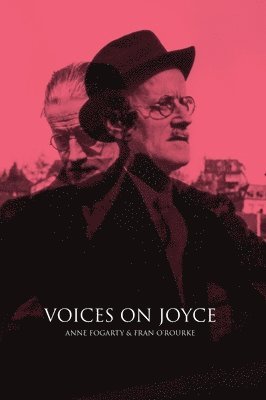
Voices on Joyce gathers together interpretations of Joyce's work by scholars in a wide span of disciplines: music, history, literature, philosophy, sport, geography, modern languages, economics, theatre studies and law. The depth and range of James Joyce's relationship with key historical, intellectual and cultural issues in the early twentieth century are explored, including: the growth of Dublin as a city, the advance of Irish separatist nationalism, criminal trials in late nineteenth-century Ireland, the influence of Classical authors such as Aristotle and Ovid, the Irish Literary Revival, the value of operatic music, notions of the aesthetic and of a democratic readership, and the history and social import of Jewish communities and traditions. The twenty essays in this collection draw out the openness and pluralism of Joyce's writing and underscore the need for readings of his work from a large variety of diverging perspectives. The wide ranging voices in this collection are composed by present and former UCD academics, and constitute a unique reckoning with the legacy of Joyce by members of his alma mater.A portrait of Joyce emerges as a writer deeply embedded in Irish intellectual discourses and as a figure of vital on-going importance in the social and cultural debates of twenty-first century Ireland.Photos interleaving the essays by the modernist and photojournalist, Lee Miller, taken in Dublin in 1946, provide vivid images of Joycean locations and of their artistic reimagining.