Francesco Casetti – författare
Visar alla böcker från författaren Francesco Casetti. Handla med fri frakt och snabb leverans.
8 produkter
8 produkter
1 183 kr
Skickas inom 7-10 vardagar
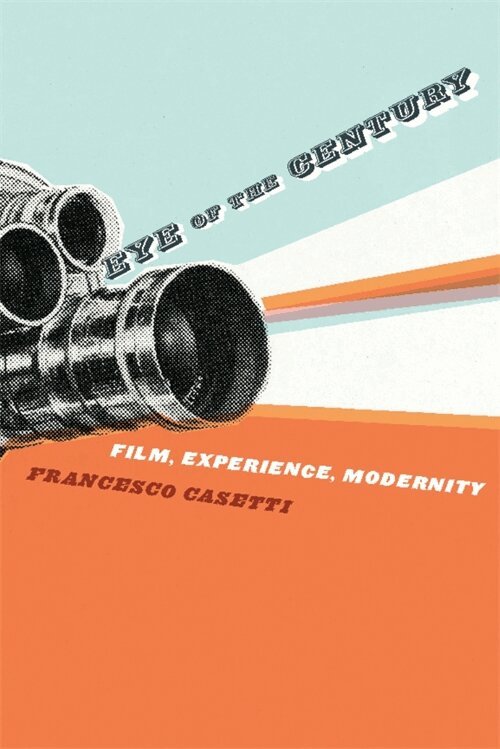
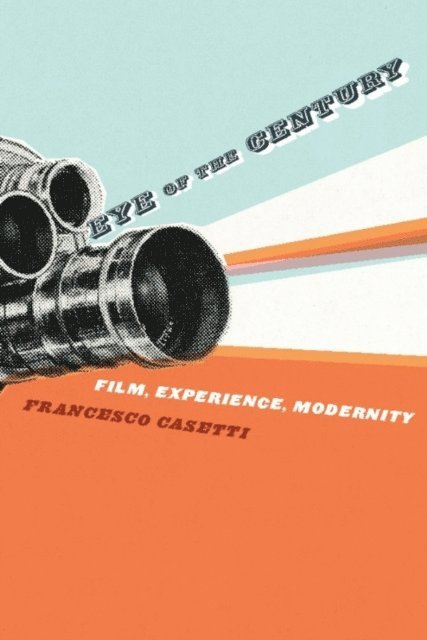
Is it true that film in the twentieth century experimented with vision more than any other art form? And what visions did it privilege? In this brilliant book, acclaimed film scholar Francesco Casetti situates the cinematic experience within discourses of twentieth-century modernity. He suggests that film defined a unique gaze, not only because it recorded many of the century's most important events, but also because it determined the manner in which they were received. Casetti begins by examining film's nature as a medium in an age obsessed with immediacy, nearness, and accessibility. He considers the myths and rituals cinema constructed on the screen and in the theater and how they provided new images and behaviors that responded to emerging concerns, ideas, and social orders. Film also succeeded in negotiating the different needs of modernity, comparing and uniting conflicting stimuli, providing answers in a world torn apart by conflict, and satisfying a desire for everydayness, as well as lightness, in people's lives.The ability to communicate, the power to inform, and the capacity to negotiate-these are the three factors that defined film's function and outlook and made the medium a relevant and vital art form of its time. So what kind of gaze did film create? Film cultivated a personal gaze, intimately tied to the emergence of point of view, but also able to restore the immediacy of the real; a complex gaze, in which reality and imagination were combined; a piercing gaze, achieved by machine, and yet deeply anthropomorphic; an excited gaze, rich in perceptive stimuli, but also attentive to the spectator's orientation; and an immersive gaze, which gave the impression of being inside the seen world while also maintaining a sense of distance. Each of these gazes combined two different qualities and balanced them. The result was an ever inventive synthesis that strived to bring about true compromises without ever sacrificing the complexity of contradiction. As Casetti demonstrates, film proposed a vision that, in making opposites permeable, modeled itself on an oxymoronic principle. In this sense, film is the key to reading and understanding the modern experience.
301 kr
Skickas inom 7-10 vardagar
Is it true that film in the twentieth century experimented with vision more than any other art form? And what visions did it privilege? In this brilliant book, acclaimed film scholar Francesco Casetti situates the cinematic experience within discourses of twentieth-century modernity. He suggests that film defined a unique gaze, not only because it recorded many of the century's most important events, but also because it determined the manner in which they were received. Casetti begins by examining film's nature as a medium in an age obsessed with immediacy, nearness, and accessibility. He considers the myths and rituals cinema constructed on the screen and in the theater and how they provided new images and behaviors that responded to emerging concerns, ideas, and social orders. Film also succeeded in negotiating the different needs of modernity, comparing and uniting conflicting stimuli, providing answers in a world torn apart by conflict, and satisfying a desire for everydayness, as well as lightness, in people's lives.The ability to communicate, the power to inform, and the capacity to negotiate-these are the three factors that defined film's function and outlook and made the medium a relevant and vital art form of its time. So what kind of gaze did film create? Film cultivated a personal gaze, intimately tied to the emergence of point of view, but also able to restore the immediacy of the real; a complex gaze, in which reality and imagination were combined; a piercing gaze, achieved by machine, and yet deeply anthropomorphic; an excited gaze, rich in perceptive stimuli, but also attentive to the spectator's orientation; and an immersive gaze, which gave the impression of being inside the seen world while also maintaining a sense of distance. Each of these gazes combined two different qualities and balanced them. The result was an ever inventive synthesis that strived to bring about true compromises without ever sacrificing the complexity of contradiction. As Casetti demonstrates, film proposed a vision that, in making opposites permeable, modeled itself on an oxymoronic principle. In this sense, film is the key to reading and understanding the modern experience.
2 258 kr
Skickas inom 3-6 vardagar
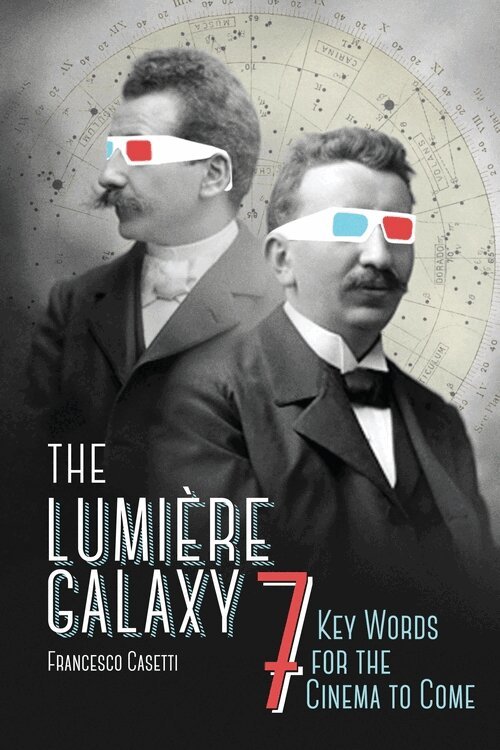
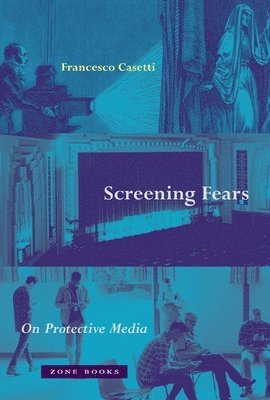
Francesco Casetti believes new media technologies are producing an exciting new era in cinema aesthetics. Whether we experience film in the theater, on our hand-held devices, in galleries and museums, onboard and in flight, or up in the clouds in the bits we download, cinema continues to alter our habits and excite our imaginations. Casetti travels from the remote corners of film history and theory to the most surprising sites on the internet and in our cities to prove the ongoing relevance of cinema. He does away with traditional notions of canon, repetition, apparatus, and spectatorship in favor of new keywords, including expansion, relocation, assemblage, and performance. The result is an innovative understanding of cinema's place in our lives and culture, along with a critical sea-change in the study of the art. The more the nature of cinema transforms, the more it discovers its own identity, and Casetti helps readers realize the galaxy of possibilities embedded in the medium.
301 kr
Skickas inom 7-10 vardagar
Francesco Casetti believes new media technologies are producing an exciting new era in cinema aesthetics. Whether we experience film in the theater, on our hand-held devices, in galleries and museums, onboard and in flight, or up in the clouds in the bits we download, cinema continues to alter our habits and excite our imaginations. Casetti travels from the remote corners of film history and theory to the most surprising sites on the internet and in our cities to prove the ongoing relevance of cinema. He does away with traditional notions of canon, repetition, apparatus, and spectatorship in favor of new keywords, including expansion, relocation, assemblage, and performance. The result is an innovative understanding of cinema's place in our lives and culture, along with a critical sea-change in the study of the art. The more the nature of cinema transforms, the more it discovers its own identity, and Casetti helps readers realize the galaxy of possibilities embedded in the medium.
244 kr
Skickas inom 7-10 vardagar
426 kr
Kommande
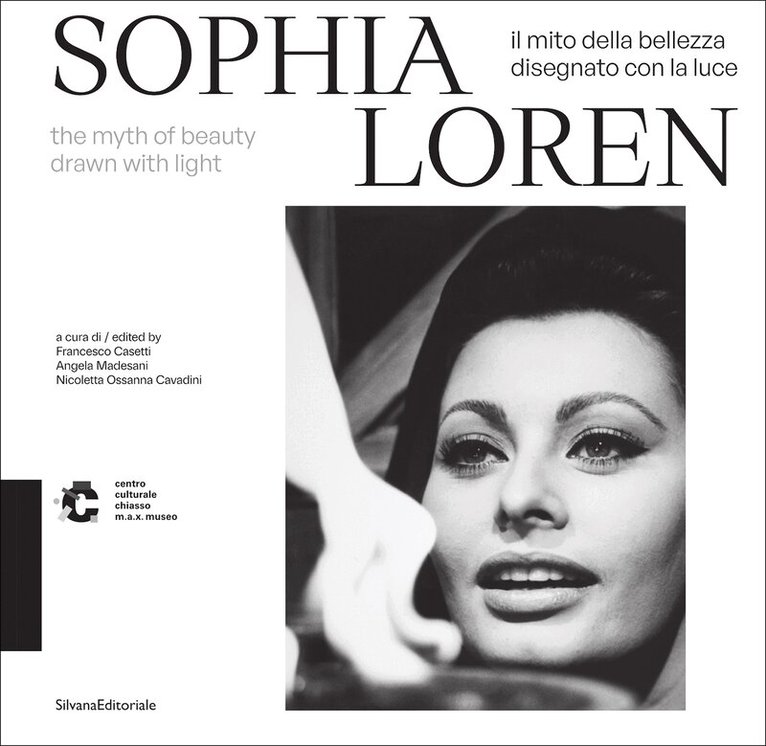
The book, like the related exhibition, is part of the strand of events that the m.a.x. museo cyclically devotes to photography. It presents a broad range of iconic images of Sophia Loren, which portray her at special moments in her life, during the filming of her famous movies or on more personal occasions, portrayed by some of the twentieth century’s greatest photographers. Organised on thematic-chronological principles, the illustrations present a total of almost 200 photographs, mostly vintage, embracing the full span of Sophia Loren’s life and conveying the profound feelings that the diva aroused in both her films (over a hundred) and her life.The book is divided into seven sections: starting from the Naples of the Origins, the city where Sofia Lazzaro Scicolone, as she was known, lived with her mother and experienced the first difficulties of life, moving on to cinema with photographs of Screenplays, then to elegance and its particular relationship with art. This is followed by the parts of the exhibition devoted to public encounters and important awards received, and then those that capture her in more intimate moments with her family. The exhibition closes with a series of images expressing the identification of Loren with an Icon of Beauty. There is also an in-depth study of the relationship between Sophia Loren and Salvatore Ferragamo, and later Giorgio Armani, documented through photographs and designer objects such as the refined shoes from the Ferragamo Museum in Florence.The exhibition interprets the guiding theme of Centro Culturale Chiasso for 2025-2026, namely pulchritudo, understood as both external and internal beauty, through a series of shots that, following the etymology of the word “photography” or “drawing with light”, depict a global icon of beauty in the broadest sense, as a symbol of charisma as well as harmony of features. Born in Rome and raised in Pozzuoli (Naples), Sophia Loren has chosen to live in Geneva, Switzerland. This exhibition and its catalogue are intended to enhance this twofold connection, building a cultural bridge between Switzerland and Italy and revealing the diva as a paradigm of a beauty acknowledged worldwide.Providing a critical interpretation of the works presented in the catalogue are essays by Angela Madesani, Francesco Casetti, Nicoletta Ossanna Cavadini, Giovanna Bertelli and Maria Canella, together with a rich bio-bibliographical apparatus.Text in English and Italian.
1 345 kr
Skickas inom 3-6 vardagar
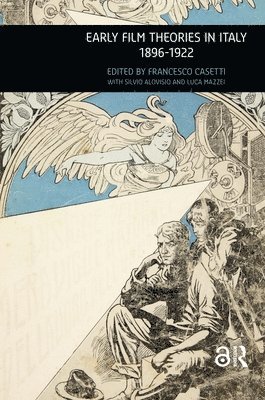
An exploration of Italian culture in transition during the advent of cinema, as this 'scandalous' new technology appeared poised to thoroughly change everyday life.
917 kr
Skickas inom 10-15 vardagar
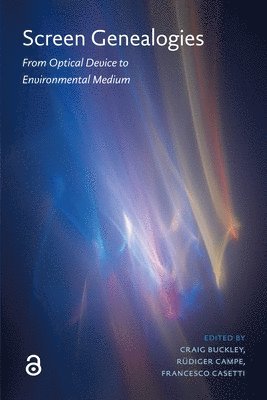
Against the grain of the growing literature on screens, Screen Genealogies argues that the present excess of screens cannot be understood as an expansion and multiplication of the movie screen, nor of the video display.