• Fri frakt över 249 kr
  • •
  • Snabba leveranser
  • •
  • Billiga böcker
Kundservice

Du är på sajten för privatpersoner.

Företag, bibliotek eller offentlig verksamhet?

Du handlar på classic.bokus.com, där alla dina funktioner finns intakta.
Till classic.bokus.com
Bokus logotyp. Gå till startsidan.
  • Erbjudanden
  • Nyheter
  • Student
  • Topplistor
  • Barn & ungdom
  • Bokus Play
  • E-böcker
  • Pocketböcker
  • Spel & pussel

10% rabatt på allt med kod: NYSTART10 →

Sidfot

Mina sidor

    Hjälp

    • Kundservice
    • Vanliga frågor och svar
    • Frakt och leverans
    • Retur vid ångerrätt
    • Reklamera vara
    • Betalning
    • Köpvillkor
    • Allmänna villkor
    • Information om webbplatsens tillgänglighet

    Om Bokus

    • Om oss
    • Pressrum
    • För studenter
    • För företag
    • För bibliotek och offentlig verksamhet
    • För leverantörer
    • Hållbarhet

    Populärt

    • Aktuella erbjudanden
    • Presentkort
    • Studentlitteratur
    • Nya böcker
    • Topplistor
    • Signerade böcker
    • Engelska böcker

    Inspiration

    • Boktips
    • BookTok
    • Populära bokserier
    • Barnbokskaraktärer
    • Populära författare
    Logotyp för Bokus
    Följ oss på Facebook (extern länk)Följ oss på Instagram (extern länk)Följ oss på YouTube (extern länk)Följ oss på TikTok (extern länk)
    bokus @ CookiesAnpassa cookiesIntegritetspolicyKöpvillkor
    Till Citymail hemsida (extern länk)Till Budbee hemsida (extern länk)Till Postnord hemsida (extern länk)Till Schenker hemsida (extern länk)Till Early Bird hemsida (extern länk)Till Walleys hemsida (extern länk)
    1. Kultur
    2. Scenkonst och film
    3. Film

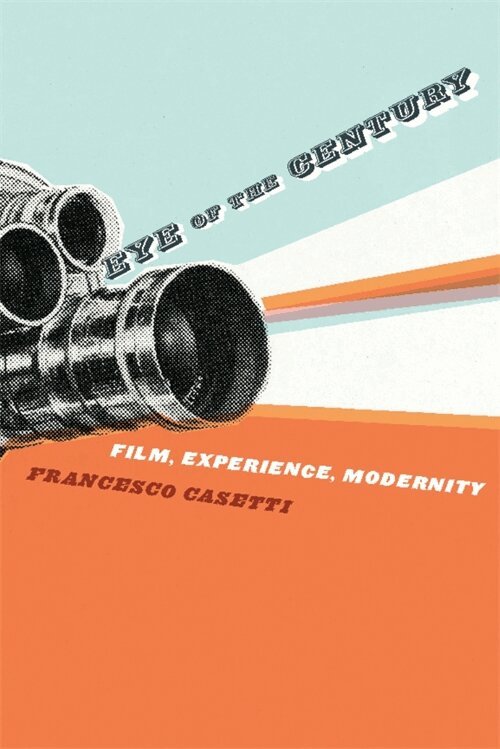
    Eye of the Century

    Film, Experience, Modernity

    AvFrancesco Casetti

    Inbunden, Engelska, 2008

    Del i serien Film and Culture Series

    1 220 kr

    Beställningsvara. Skickas inom 5-8 vardagar. Fri frakt över 249 kr.

    Fler format och utgåvor

    Häftad

    311 kr

    E-bok

    477 kr

    Beskrivning

    Is it true that film in the twentieth century experimented with vision more than any other art form? And what visions did it privilege? In this brilliant book, acclaimed film scholar Francesco Casetti situates the cinematic experience within discourses of twentieth-century modernity. He suggests that film defined a unique gaze, not only because it recorded many of the century's most important events, but also because it determined the manner in which they were received. Casetti begins by examining film's nature as a medium in an age obsessed with immediacy, nearness, and accessibility. He considers the myths and rituals cinema constructed on the screen and in the theater and how they provided new images and behaviors that responded to emerging concerns, ideas, and social orders. Film also succeeded in negotiating the different needs of modernity, comparing and uniting conflicting stimuli, providing answers in a world torn apart by conflict, and satisfying a desire for everydayness, as well as lightness, in people's lives.The ability to communicate, the power to inform, and the capacity to negotiate-these are the three factors that defined film's function and outlook and made the medium a relevant and vital art form of its time. So what kind of gaze did film create? Film cultivated a personal gaze, intimately tied to the emergence of point of view, but also able to restore the immediacy of the real; a complex gaze, in which reality and imagination were combined; a piercing gaze, achieved by machine, and yet deeply anthropomorphic; an excited gaze, rich in perceptive stimuli, but also attentive to the spectator's orientation; and an immersive gaze, which gave the impression of being inside the seen world while also maintaining a sense of distance. Each of these gazes combined two different qualities and balanced them. The result was an ever inventive synthesis that strived to bring about true compromises without ever sacrificing the complexity of contradiction. As Casetti demonstrates, film proposed a vision that, in making opposites permeable, modeled itself on an oxymoronic principle. In this sense, film is the key to reading and understanding the modern experience.

    Produktinformation

    • Utgivningsdatum:2008-05-14
    • Mått:152 x 229 x undefined mm
    • Format:Inbunden
    • Språk:Engelska
    • Serie:Film and Culture Series
    • Antal sidor:288
    • Förlag:Columbia University Press
    • ISBN:9780231139946

    Utforska kategorier

    • Film inom Kultur

    Mer om författaren

    Francesco Casetti is full professor at the Universita Cattolica in Milan where he teaches the study of cinematography and is the chair of the Department of Media and Performing Arts. He has also taught at Yale, the University of California at Berkeley, and the Sorbonne. He is the author of Inside the Gaze: The Fiction Film and Its Spectator and Theories of Cinema, 1945-1995.

    Recensioner i media

    "Casetti's writing is erudite, elegant, insightful, and with its repeated direct address to the reader, seductively dialogic and alluringly didactic." -- Sabine Hake, H-German

    Innehållsförteckning

    • Acknowledgments A Hundred Years, A Century 1. The Gaze of Its Age 2. Framing The World 3. Double Vision 4. The Glass Eye 5. Strong Sensations 6. Glosses, Exymorons, And Discipline Remains of the Day Notes Bibliography