Francesco Forte - Böcker
Visar alla böcker från författaren Francesco Forte. Handla med fri frakt och snabb leverans.
4 produkter
4 produkter
809 kr
Skickas inom 7-10 vardagar
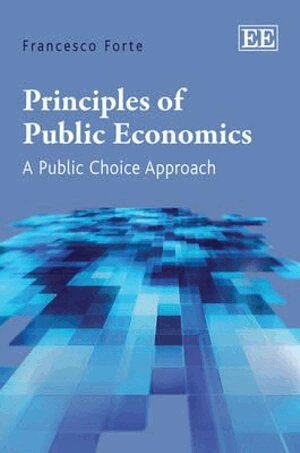
In response to the idea that alternative theories, ideologies and institutions of public economics are unsatisfactory, this important and path-breaking book deals with the principles of economics using a more realistic 'tempered public choice approach'. Opening with an introduction on the development of the economic theory of public finance, Francesco Forte develops a discourse based on a theoretical framework of welfare economics. Here, the assumption of 'homo oeconomicus' is replaced by that of an average man with imperfect rationality and imperfect ethical constraints, and social welfare functions are replaced by equilibrium solutions in 'games' played by contracting parties at constitutional and post-constitutional stages. The positive and normative theory of public goods becomes much more complex, and merit wants are evaluated from an individualistic perspective. Theories of public expenditure, public revenues and the interrelation between various levels of government are also analysed. The public choice approach combined with theoretical welfare economics and institutions will prove a stimulating and engaging read for those with a special interest in public sector economics, public choice and Austrian economics.
3 555 kr
Skickas inom 7-10 vardagar
This comprehensive and thought-provoking Handbook reviews public sector economics from pluralist perspectives that either complement or reach beyond mainstream views.The book takes a comprehensive interdisciplinary approach, drawing on economic elements in the fields of philosophy, sociology, psychology, history and law. The expert contributors present new methodological approaches across these disciplines in five distinct sections:'Revisiting the Theoretical Foundations' compares and contrasts Austrians, Marxists, public choice theorists and Keynesians'Revisiting the Values' is concerned with justice, welfare, religions and civil rights'Beyond Rationalistic Rational Choice' includes chapters devoted to memory, information and group motivationThe final sections on 'Optimal Government and Government Failure' and 'Public Economics of Public Bads' deal with competition among governments, their suboptimal size, regulation, corruption, the informal economy, cognitive dissonance, rent seeking, the UN and criminal cycles.Academics, researchers and students with an interest in economics - particularly public sector economics and Austrian economics - and public policy will find this Handbook to be an invaluable reference tool.Contributors: F. Acacia, J. Alm, G. Brady, G. Brosio, M. Caputo, M. Casson, G. Coco, M. Cubel Sanchez, S. Fedeli, M. Florio, F. Forte, N. Goldschmit, A. Habisch, M. Holler, J. Huerta de Soto, J.P. Jimenez, A. Koziashvili, M.A. Leroch, C. Magazzino, M. Mantovani, D. Montolio, R. Mudami, D.C. Mueller, S. Nitzan, D.M.A. Patti, P. Salin, P. Salmon, F. Sobbrio, V. Tanzi, Y. Tobol, B.A. Wickström, R. Zanola
779 kr
Skickas inom 7-10 vardagar
This comprehensive and thought-provoking Handbook reviews public sector economics from pluralist perspectives that either complement or reach beyond mainstream views.The book takes a comprehensive interdisciplinary approach, drawing on economic elements in the fields of philosophy, sociology, psychology, history and law. The expert contributors present new methodological approaches across these disciplines in five distinct sections:'Revisiting the Theoretical Foundations' compares and contrasts Austrians, Marxists, public choice theorists and Keynesians'Revisiting the Values' is concerned with justice, welfare, religions and civil rights'Beyond Rationalistic Rational Choice' includes chapters devoted to memory, information and group motivationThe final sections on 'Optimal Government and Government Failure' and 'Public Economics of Public Bads' deal with competition among governments, their suboptimal size, regulation, corruption, the informal economy, cognitive dissonance, rent seeking, the UN and criminal cycles.Academics, researchers and students with an interest in economics - particularly public sector economics and Austrian economics - and public policy will find this Handbook to be an invaluable reference tool.Contributors: F. Acacia, J. Alm, G. Brady, G. Brosio, M. Caputo, M. Casson, G. Coco, M. Cubel Sanchez, S. Fedeli, M. Florio, F. Forte, N. Goldschmit, A. Habisch, M. Holler, J. Huerta de Soto, J.P. Jimenez, A. Koziashvili, M.A. Leroch, C. Magazzino, M. Mantovani, D. Montolio, R. Mudami, D.C. Mueller, S. Nitzan, D.M.A. Patti, P. Salin, P. Salmon, F. Sobbrio, V. Tanzi, Y. Tobol, B.A. Wickström, R. Zanola
2 929 kr
Skickas inom 7-10 vardagar
In response to the idea that alternative theories, ideologies and institutions of public economics are unsatisfactory, this important and path-breaking book deals with the principles of economics using a more realistic 'tempered public choice approach'. Opening with an introduction on the development of the economic theory of public finance, Francesco Forte develops a discourse based on a theoretical framework of welfare economics. Here, the assumption of 'homo oeconomicus' is replaced by that of an average man with imperfect rationality and imperfect ethical constraints, and social welfare functions are replaced by equilibrium solutions in 'games' played by contracting parties at constitutional and post-constitutional stages. The positive and normative theory of public goods becomes much more complex, and merit wants are evaluated from an individualistic perspective. Theories of public expenditure, public revenues and the interrelation between various levels of government are also analysed. The public choice approach combined with theoretical welfare economics and institutions will prove a stimulating and engaging read for those with a special interest in public sector economics, public choice and Austrian economics.