Francisco Aboitiz – författare
Visar alla böcker från författaren Francisco Aboitiz. Handla med fri frakt och snabb leverans.
8 produkter
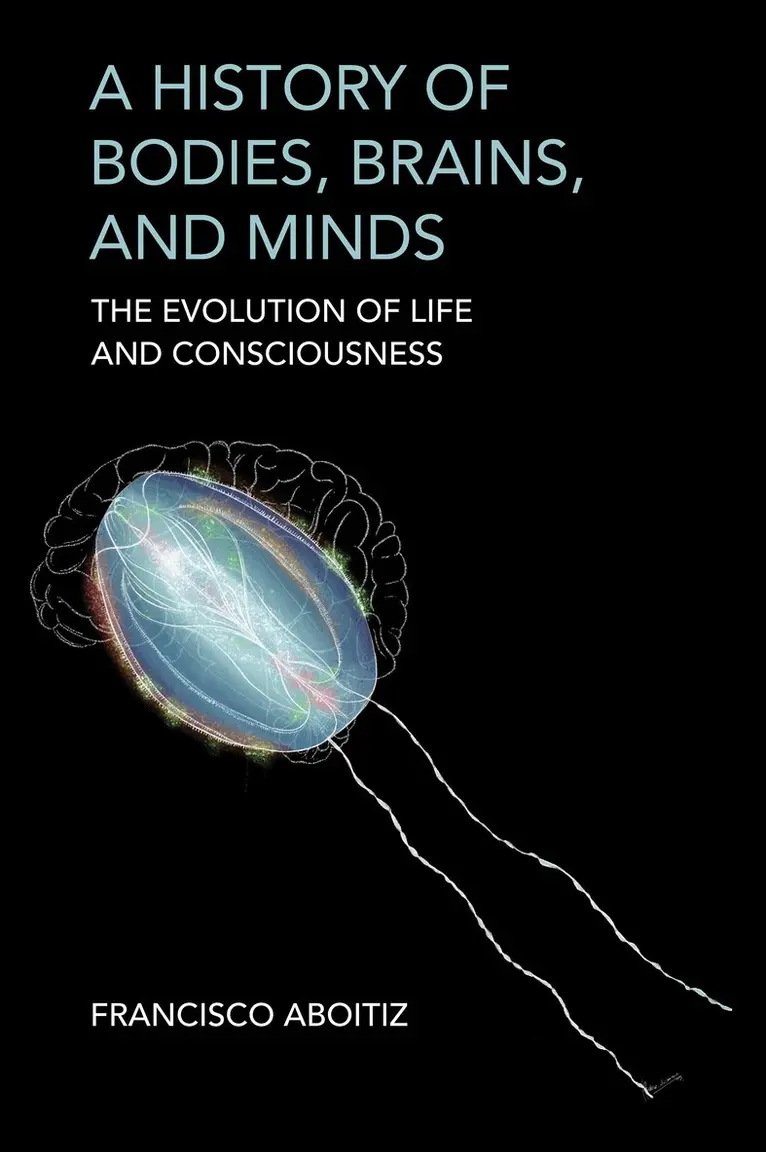
History of Bodies, Brains, and Minds
The Evolution of Life and Consciousness
Häftad, 2024
803 kr
Lägg i varukorg
A panoramic view of the evolution of life on our planet, from its origins to humanity’s future. In A History of Bodies, Brains, and Minds , Francisco Aboitiz provides a brief history of life, the brain, and cognition, from the earliest living beings to our own species. The author proceeds from the …
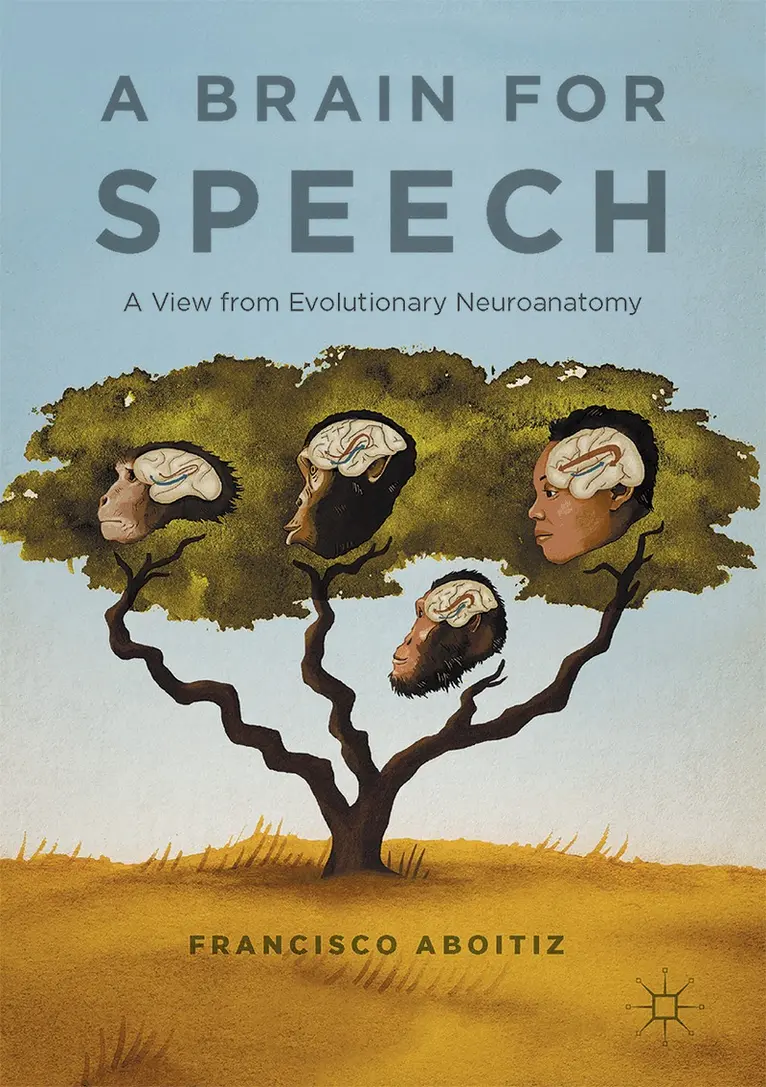
Brain for Speech
A View from Evolutionary Neuroanatomy
Inbunden, 2017
1594 kr
Lägg i varukorg
This book discusses evolution of the human brain, the origin of speech and language. It covers past and present perspectives on the contentious issue of the acquisition of the language capacity. Divided into two parts, this insightful work covers several characteristics of the human brain including …
Brain for Speech
A View from Evolutionary Neuroanatomy
E-bok, 2017
2110 kr
Lägg i varukorg
This book discusses evolution of the human brain, the origin of speech and language. It covers past and present perspectives on the contentious issue of the acquisition of the language capacity. Divided into two parts, this insightful work covers several characteristics of the human brain including …
Origin and Evolution of the Vertebrate Telencephalon, with Special Reference to the Mammalian Neocortex
Av Francisco Aboitiz, J. Montiel
Häftad, 2007
1094 kr
Lägg i varukorg
1 Introduction There is little doubt that the vertebrate brain is the most complex structure we know. As with any complex structure, there is the immediate question about its origins. Howcouldsuchacomplexdesigndevelopfromthesimplestmulticellular animals? This problem has pervaded the study of …
Origin and Evolution of the Vertebrate Telencephalon, with Special Reference to the Mammalian Neocortex
Av J. Montiel, Francisco Aboitiz
E-bok, 2007
1459 kr
Lägg i varukorg
1 Introduction There is little doubt that the vertebrate brain is the most complex structure we know. As with any complex structure, there is the immediate question about its origins. Howcouldsuchacomplexdesigndevelopfromthesimplestmulticellular animals? This problem has pervaded the study of …
From Attention to Goal-Directed Behavior
Neurodynamical, Methodological and Clinical Trends
Av Francisco Aboitiz, Diego Cosmelli
Inbunden, 2008
2245 kr
Lägg i varukorg
Attention is a key psychological construct in the understanding of human cognition, and the target of enormous efforts to elucidate its physiological mechanisms, as the wealth of literature—both primary and secondary—attests (for recent compilations see Itti, Rees, & Tsotsos, 2005; Paletta & Rome, …
From Attention to Goal-Directed Behavior
Neurodynamical, Methodological and Clinical Trends
Av Diego Cosmelli, Francisco Aboitiz
E-bok, 2008
2925 kr
Lägg i varukorg
Attention is a key psychological construct in the understanding of human cognition, and the target of enormous efforts to elucidate its physiological mechanisms, as the wealth of literature—both primary and secondary—attests (for recent compilations see Itti, Rees, & Tsotsos, 2005; Paletta & Rome, …
From Attention to Goal-Directed Behavior
Neurodynamical, Methodological and Clinical Trends
Av Francisco Aboitiz, Diego Cosmelli
Häftad, 2010
2180 kr
Lägg i varukorg
Attention is a key psychological construct in the understanding of human cognition, and the target of enormous efforts to elucidate its physiological mechanisms, as the wealth of literature—both primary and secondary—attests (for recent compilations see Itti, Rees, & Tsotsos, 2005; Paletta & Rome, …