Francisco Ruiz – författare
Visar alla böcker från författaren Francisco Ruiz. Handla med fri frakt och snabb leverans.
5 produkter
Ontologies for Software Engineering and Software Technology
Av Coral Calero, Francisco Ruiz m. fl.
Inbunden, 2006
1800 kr
Lägg i varukorg
Communication is one of the main activities in software projects, many such projects fail or encounter serious problems because the stakeholders involved have different understandings of the problem domain and/or they use different terminologies. Ontologies can help to mitigate these communication …
Ontologies for Software Engineering and Software Technology
Av Mario Piattini, Francisco Ruiz m. fl.
E-bok, 2006
2358 kr
Lägg i varukorg
Communication is one of the main activities in software projects, many such projects fail or encounter serious problems because the stakeholders involved have different understandings of the problem domain and/or they use different terminologies. Ontologies can help to mitigate these communication …
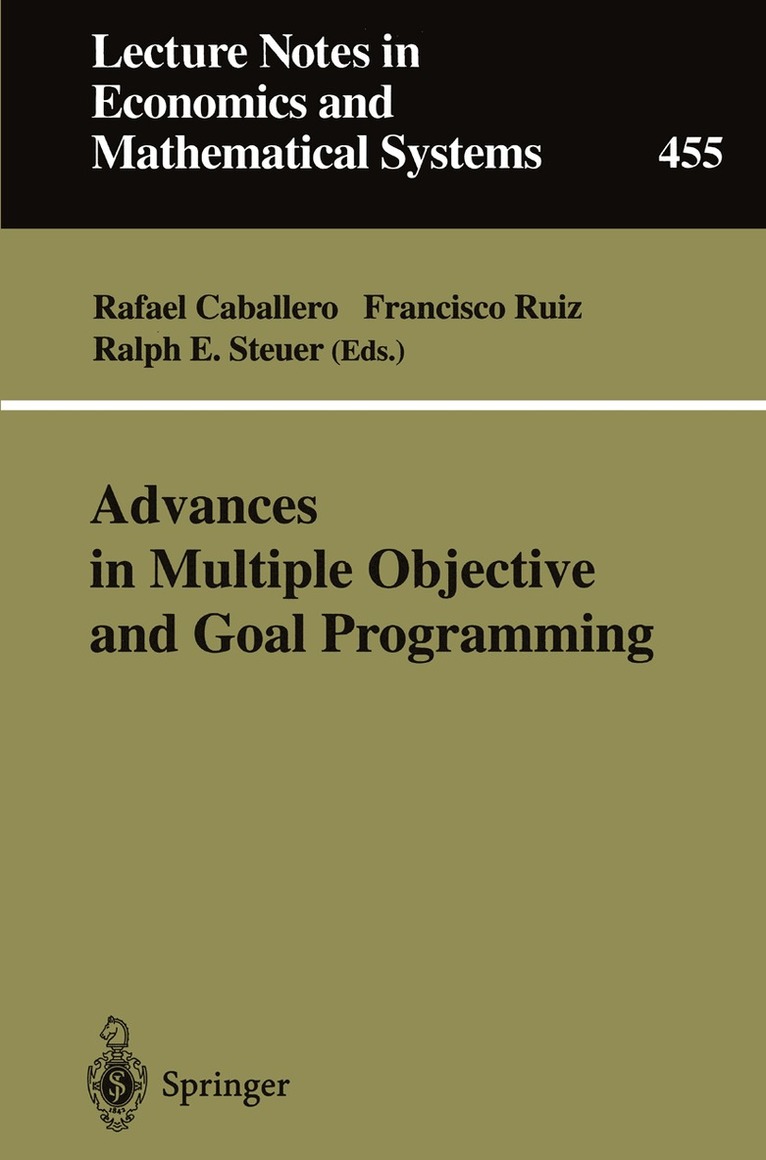
Advances in Multiple Objective and Goal Programming
Proceedings of the Second International Conference on Multi-Objective Programming and Goal Programming, Torremolinos, Spain, May 16–18, 1996
Av Rafael Caballero, Francisco Ruiz m. fl.
Häftad, 1997
1128 kr
Lägg i varukorg
This Volume contains 41 papers and comprises the refereed proceedings of the 2nd International Conference on Multi-Objective Programming and Goal Programming (MOPGP'96) that was held at the Hotel Melia Costa del Sol, Torremolinos (15 km from Malaga), Spain, May 16-18, 1996. The Conference was …
Ontologies for Software Engineering and Software Technology
Av Coral Calero, Francisco Ruiz m. fl.
Häftad, 2010
1635 kr
Lägg i varukorg
Communication is one of the main activities in software projects, many such projects fail or encounter serious problems because the stakeholders involved have different understandings of the problem domain and/or they use different terminologies. Ontologies can help to mitigate these communication …
Advances in Multiple Objective and Goal Programming
Proceedings of the Second International Conference on Multi-Objective Programming and Goal Programming, Torremolinos, Spain, May 16–18, 1996
Av Ralph E. Steuer, Francisco Ruiz m. fl.
E-bok, 2012
1502 kr
Lägg i varukorg