Francoise Audouze - Böcker
Visar alla böcker från författaren Francoise Audouze. Handla med fri frakt och snabb leverans.
3 produkter
3 produkter
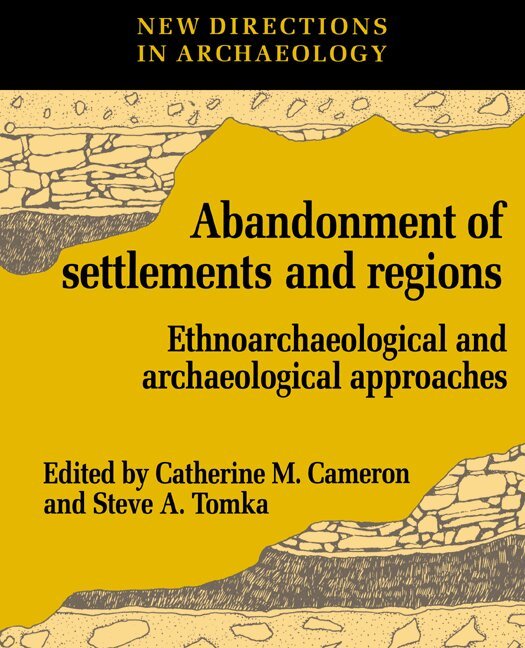
The Abandonment of Settlements and Regions
Ethnoarchaeological and Archaeological Approaches
Häftad, Engelska, 1996
563 kr
Skickas inom 7-10 vardagar
All archaeological sites have been abandoned, but people abandoned sites in many different ways, and for different reasons. What they did when leaving a settlement, structure, or activity area had a direct effect on the kind and quality of the cultural remains entering the archaeological record - for example, whether tools were removed, destroyed, or buried in the ground, and building structures dismantled or left standing. This book examines abandonment as a stage in the formation of an archaeological site, and relies on ethnoarchaelogical and archaeological data from many areas of the world - North and South America, Europe, Africa, and the Near East. It documents the many complex factors surrounding abandonment both across entire regions and within settlement areas, and makes an important theoretical and methodological contribution to this area of archaeological investigation.
515 kr
Tillfälligt slut
A comprehensive investigation of household life during the Upper Paleolithic era.What was home and family like in Paleolithic Europe? How did mobile hunter-gatherer families live, work, and play together in the fourteenth millennium BP? What were the functional and spatial constraints and markers of their domesticity-the processes that create and sustain a household?Despite the long recognized absence of comprehensive archaeological data on such ancient homes and hearths, the archaeologists in this volume begin unraveling the domesticity of the Upper Paleolithic by drawing on both an immense trove of new material evidence and comparative site data, and a range of incisive and illuminating ethnographic analogies, theoretical models, and simulations. Five Late Magdalenian sites from the Paris Basin and one later Azilian site provide striking evidence of well preserved camps of short duration, situated on valley bottoms and buried by gentle floods. Of particular interest and value is the site of Verberie, rich in lithic tools, faunal remains, hearts, and other indicators of spatial organization, which has been excavated continuously for twenty-six years by the same director and provides an unparalleled source of information on Paleolithic domesticity. The first group of essays and reports look at the technology and demographic evidences of domesticity; the second set seeks clues to the spatial patterning of Paleolithic households; while the final essays draw on ethnographic analogies to reconstruct and interpret gendered divisions of labor, perishable technologies, and other activities not directly recognizable from archaeological remains.
1 057 kr
Tillfälligt slut
A comprehensive investigation of household life during the Upper Paleolithic era.What was home and family like in Paleolithic Europe? How did mobile hunter-gatherer families live, work, and play together in the fourteenth millennium BP? What were the functional and spatial constraints and markers of their domesticity-the processes that create and sustain a household?Despite the long recognized absence of comprehensive archaeological data on such ancient homes and hearths, the archaeologists in this volume begin unraveling the domesticity of the Upper Paleolithic by drawing on both an immense trove of new material evidence and comparative site data, and a range of incisive and illuminating ethnographic analogies, theoretical models, and simulations. Five Late Magdalenian sites from the Paris Basin and one later Azilian site provide striking evidence of well preserved camps of short duration, situated on valley bottoms and buried by gentle floods. Of particular interest and value is the site of Verberie, rich in lithic tools, faunal remains, hearts, and other indicators of spatial organization, which has been excavated continuously for twenty-six years by the same director and provides an unparalleled source of information on Paleolithic domesticity. The first group of essays and reports look at the technology and demographic evidences of domesticity; the second set seeks clues to the spatial patterning of Paleolithic households; while the final essays draw on ethnographic analogies to reconstruct and interpret gendered divisions of labor, perishable technologies, and other activities not directly recognizable from archaeological remains.