Frank Hendrickx – författare
1 113 kr
Skickas inom 10-15 vardagar
1 113 kr
Skickas inom 10-15 vardagar
1 459 kr
Läs direkt efter köp
1 892 kr
Läs direkt efter köp
1 906 kr
Läs direkt efter köp
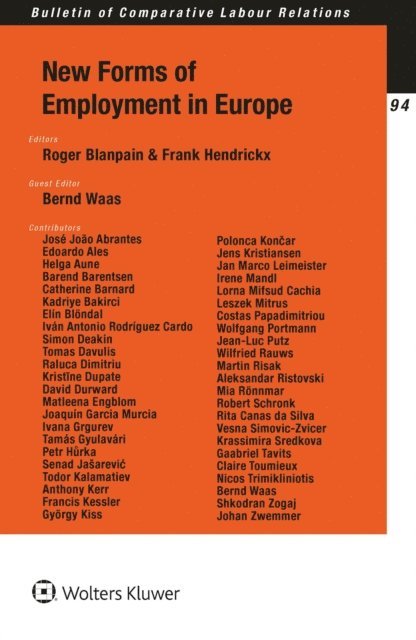
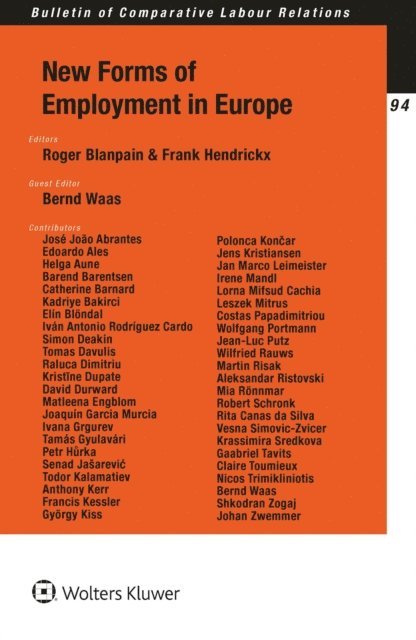
The ''full-time job'' is no longer an option for many people seeking employment. It has been replaced by an ever-expanding plethora of ''atypical'' employment relationships designed by employers to streamline their operations and/or take advantage of information communications technology. Numerous labour law issues arise, demanding urgent attention. How should law and policy best address these challenges? This incomparable and timely book explores this contentious topic in depth, presenting ten penetrating essays on aspects of the topic by leading European authorities followed by reports on new forms of employment in thirty-five European countries
Full-scale analysis of new forms of employment, their characteristics, and their effects on working conditions and the labour market includes such issues as the following:
- employment relationships with more than one employer;- discontinuous and/or intermittent work;- work based on networking arrangements;- labour pooling;- crowdworking and crowsourcing;- lack of worker representation;- rights for vulnerable migrant workers;- removal of wage and hours threshold;- false self-employment;- non-payment of ''small'' amounts (e.g., holiday pay);- portage salarial;- voucher-based work;- ICT-based mobile work;- organizations offering specific administrative services;- need for safety nets for workers; and- existing and potential monitoring and control mechanisms.
Relevant EU Directives and national legal frameworks regarding new forms of employment are fully discussed, with an emphasis on recent trends and proposed solutions.
This volume raises awareness of the problems generated by new emerging forms of employment and provides some answers and insights, including lessons to be learned from current developments. In particular, the authors'' bringing to light of issues that have not been sufficiently addressed so far under European law will be welcomed by labour law practitioners, company legal counsel, human resources professionals, and academics in the field.
2 138 kr
Skickas inom 3-6 vardagar
1 822 kr
Läs direkt efter köp
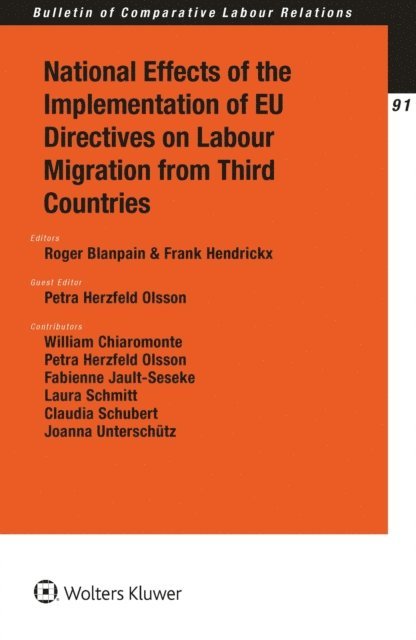
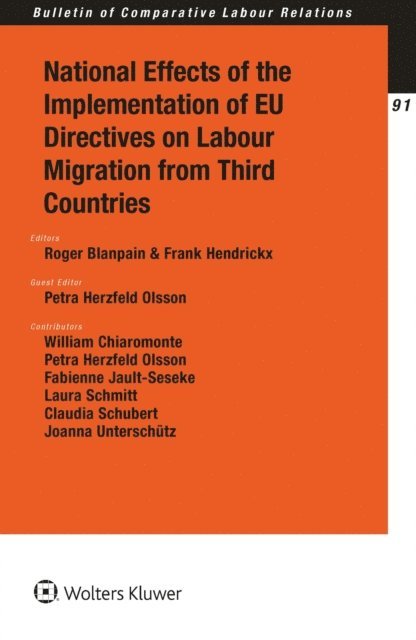
Guaranteeing third country national workers robust equal treatment with regard to working conditions and pay is a crucial condition for avoiding social dumping, exploitation, and other reasons for regime shopping within the EU. However, Member States are still reluctant to compromise control of their borders and their labour markets. The EU legislation adopted is, as a result, fragmented and full of solutions that give Member States an extensive margin of room for manoeuvre. In this book six distinguished European labour law academics discuss how three EU directives on labour migration – the Single Permit Directive, the Blue Card Directive, and the Directive on Seasonal Employment – interact with the labour migration systems of France, Germany, Italy, Poland, and Sweden – five countries with very different characteristics and approaches to implementation.
Concrete issues dealt with in each country include the following:
– conditions for granting work permits;- reasons for withdrawing a work permit;- how long a migrant worker can stay;- whether a migrant worker can bring his or her family;- employment and labour rights of migrant workers;- migrant workers'' access to social rights;- how a migrant worker may enforce rights;- sanctions for violations of applicable provisions; and- potential for permanent status for a migrant worker.For each of these issues the authors analyse to what extent national legislators have been ready to adapt their national systems in order to fulfill the aims of the EU directives. They also identify unintended, or at least not explicit, effects of the implementation process.
The authors clearly reveal whether the ambitions of the EU when initiating this process can be detected in the implementation process, and how implementation of the three directives have changed and could change national law on these issues. As the first in-depth analysis of how the intersection of migration and labour law and their impact on labour and employment relations play out in the EU context this book brings important insights to the growing literature in this field. The analysis will be of particular interest to national legislators, but is also sure to be warmly welcomed by academics and practitioners in fields related to labour and employment and migration.
1 892 kr
Läs direkt efter köp
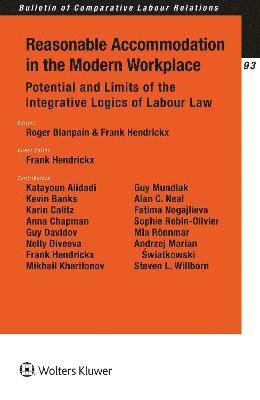
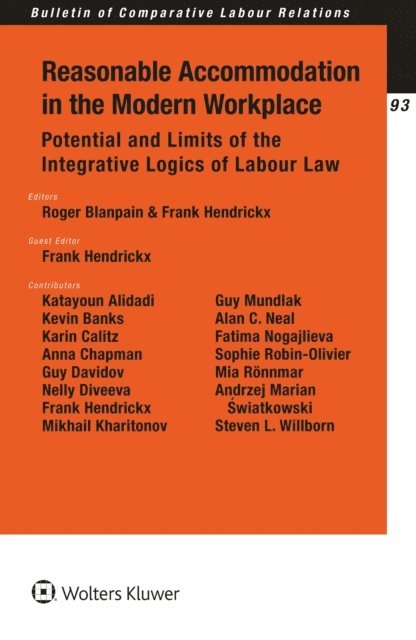
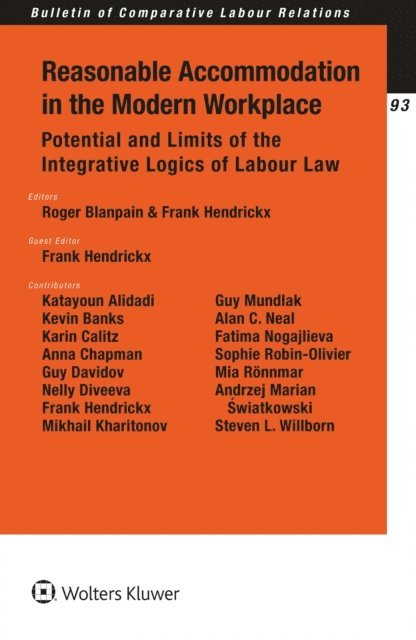
More and more the modern workplace faces challenges of diversity and employability. There is an increasingly insistent need to match workforce diversity, or workers'' own characteristics and choices, with employers'' organizational and business requirements. In this context, the notion of reasonable accommodation inevitably arises. Concepts such as ''adaptability'' and ''employability'' not only require workers to adapt to new labour market circumstances but are also directed towards employers'' duties to accommodate work and the workplace to the worker''s situation. This book is the first study to analyse, at a global scale, how employment discrimination law gives shape to an accommodated workplace in three main areas of interest: age, disability, and religion/belief.
Sixteen prominent labour and employment law scholars offer in-depth perspectives from Belgium, the Netherlands, France, Sweden, Russia, Israel, Canada, the United States, South Africa, and Australia. Each report fully integrates relevant legislation, case law, and legal doctrine and follows the same structure to allow easy comparisons across jurisdictions. Attention is also given to the roles of European Union law and the UN Convention on the Rights of Persons with Disabilities. Issues and topics covered include the following:
- the scope of ''accommodation'';- ''reasonable'' defined;- recognized business requirements that may override the duty to accommodate;- when employers'' neutrality policies to avoid accusations of discrimination may constitute indirect discrimination;- use of integration or re-integration strategies to accommodate disabled/incapable workers;- use of ''exit gateways'' that enable employers to avoid liability in cases of disability discrimination;- when employers must take into account workers'' family lives; and- when an obligation to reclassify a worker exists.These articles were originally presented as papers at the 2015 meeting of the International Association of Labour Law Journals hosted by the Institute for Labour Law of the University of Leuven.
Ultimately the book makes clear that reasonable accommodation cannot be narrowed down to a formal anti-discrimination perspective but requires an integrative logic that can grow in a broader labour law context. As a compelling analysis of whether the idea of reasonable accommodation is winning ground in labour law in today''s world, this book will prove of immeasurable value to labour and employment lawyers and judges, as well as to corporate counsel and academics in the field.
2 256 kr
Läs direkt efter köp
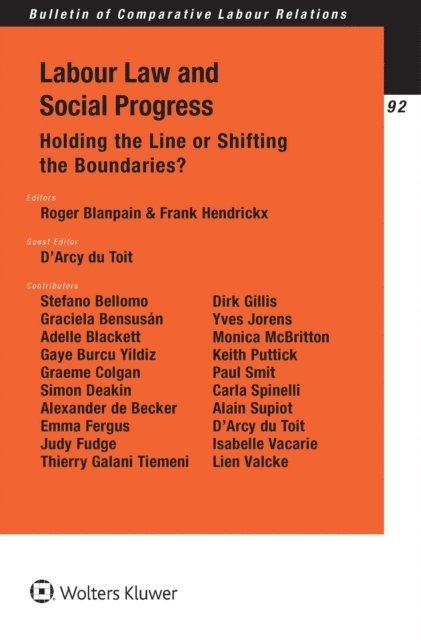
For forty years the international watchword has been deregulation of labour law and of social security. Now, however, the rise in unemployment and lack of employment security, the dizzying inequality gulf, and the environmental disasters and mass migrations caused by this deregulation are generating an impetus that defines social justice no longer merely in terms of the equitable distribution of resources, but also – and often primarily – in terms of the just recognition of persons. This collection of incisive essays recognizes that the growing interdependence of all of the people of the earth demands that labour rights are understood as an aspect of human rights, and thus envisaged at the international level.
Contributions by twenty outstanding labour law scholars from a range of countries worldwide provide in-depth analysis of such aspects of the debate as the following:
– collective action in the interests of market effectiveness as well as fair outcomes for workers;- right to strike;- resilience of trade unions and collective bargaining as mechanisms of labour market regulation;- importance of national policy, despite the influence of global market forces, in shaping national outcomes;- work as the locus of the relationship between humans and nature;- search for a legal foundation for corporate social responsibility;- litigation as an alternative to collective bargaining;- the role of collective labour relations for immigrants and disabled people;- lessons that developed countries could learn from mechanisms pioneered in developing countries in coping with conditions of austerity; and- the trap of soft law and of declarations of intent that weigh lightly in the face of the power of the interests at play in international trade.The essays take stock of the dimensions of the current situation and also explore paths leading to a better achievement of social justice in labour law.
These essays recognize that economic development and the pursuit of social justice are interwoven in a quest for social progress that includes mechanisms designed to eliminate unjustifiable inequality. For lawyers and other parties committed to the emerging political will to not only respect fundamental rights, but more broadly improve labour and environmental protection, this book opens abundant avenues that can be pursued in practice and in policy.
The volume is based on a selection of papers presented at the 21st World Congress of the International Society for Labour and Social Security Law in Cape Town in 2015.
1 822 kr
Läs direkt efter köp
Guaranteeing third country national workers robust equal treatment with regard to working conditions and pay is a crucial condition for avoiding social dumping, exploitation, and other reasons for regime shopping within the EU. However, Member States are still reluctant to compromise control of their borders and their labour markets. The EU legislation adopted is, as a result, fragmented and full of solutions that give Member States an extensive margin of room for manoeuvre. In this book six distinguished European labour law academics discuss how three EU directives on labour migration – the Single Permit Directive, the Blue Card Directive, and the Directive on Seasonal Employment – interact with the labour migration systems of France, Germany, Italy, Poland, and Sweden – five countries with very different characteristics and approaches to implementation.
Concrete issues dealt with in each country include the following:
– conditions for granting work permits;- reasons for withdrawing a work permit;- how long a migrant worker can stay;- whether a migrant worker can bring his or her family;- employment and labour rights of migrant workers;- migrant workers'' access to social rights;- how a migrant worker may enforce rights;- sanctions for violations of applicable provisions; and- potential for permanent status for a migrant worker.For each of these issues the authors analyse to what extent national legislators have been ready to adapt their national systems in order to fulfill the aims of the EU directives. They also identify unintended, or at least not explicit, effects of the implementation process.
The authors clearly reveal whether the ambitions of the EU when initiating this process can be detected in the implementation process, and how implementation of the three directives have changed and could change national law on these issues. As the first in-depth analysis of how the intersection of migration and labour law and their impact on labour and employment relations play out in the EU context this book brings important insights to the growing literature in this field. The analysis will be of particular interest to national legislators, but is also sure to be warmly welcomed by academics and practitioners in fields related to labour and employment and migration.
2 256 kr
Läs direkt efter köp
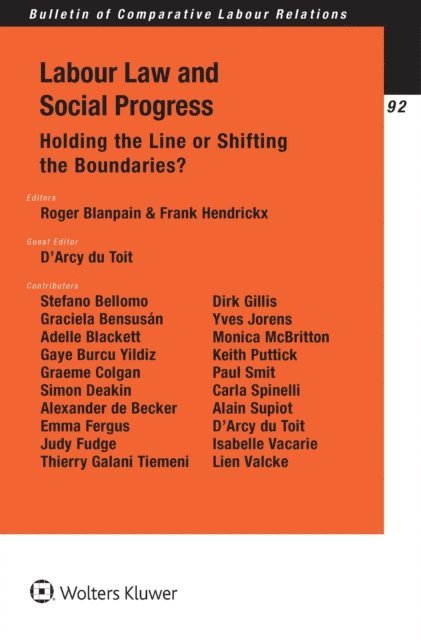
For forty years the international watchword has been deregulation of labour law and of social security. Now, however, the rise in unemployment and lack of employment security, the dizzying inequality gulf, and the environmental disasters and mass migrations caused by this deregulation are generating an impetus that defines social justice no longer merely in terms of the equitable distribution of resources, but also – and often primarily – in terms of the just recognition of persons. This collection of incisive essays recognizes that the growing interdependence of all of the people of the earth demands that labour rights are understood as an aspect of human rights, and thus envisaged at the international level.
Contributions by twenty outstanding labour law scholars from a range of countries worldwide provide in-depth analysis of such aspects of the debate as the following:
– collective action in the interests of market effectiveness as well as fair outcomes for workers;- right to strike;- resilience of trade unions and collective bargaining as mechanisms of labour market regulation;- importance of national policy, despite the influence of global market forces, in shaping national outcomes;- work as the locus of the relationship between humans and nature;- search for a legal foundation for corporate social responsibility;- litigation as an alternative to collective bargaining;- the role of collective labour relations for immigrants and disabled people;- lessons that developed countries could learn from mechanisms pioneered in developing countries in coping with conditions of austerity; and- the trap of soft law and of declarations of intent that weigh lightly in the face of the power of the interests at play in international trade.The essays take stock of the dimensions of the current situation and also explore paths leading to a better achievement of social justice in labour law.
These essays recognize that economic development and the pursuit of social justice are interwoven in a quest for social progress that includes mechanisms designed to eliminate unjustifiable inequality. For lawyers and other parties committed to the emerging political will to not only respect fundamental rights, but more broadly improve labour and environmental protection, this book opens abundant avenues that can be pursued in practice and in policy.
The volume is based on a selection of papers presented at the 21st World Congress of the International Society for Labour and Social Security Law in Cape Town in 2015.
2 634 kr
Läs direkt efter köp
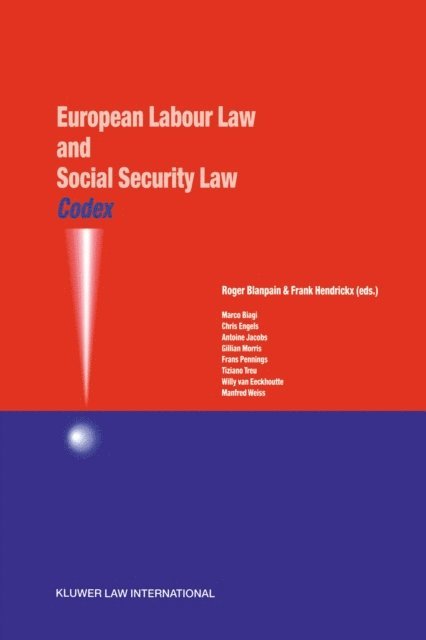
Because labour and social security issues have arisen in many disparate ways since the inception of the European Communities, there is an increasing need for a consistent classification of European law in this area. This groundbreaking book at last rectifies that situation, presenting as complete and up-to-date a codification as possible of this body of law, with texts of the most important documents and direct reference to print and online sources of all relevant conventions, regulations, directives, decisions, recommendations, and agreements. The codification encompasses all European Union texts on labour and social security, as well as all pertinent Council of Europe documents.
Among the texts reprinted in full are the following:
• all relevant portions of the Treaty on European Union, the Treaty Establishing the European Community, the Treaty of Nice, the Charter of Fundamental Rights of the European Union, and the European Convention on Human Rights;• the Community Charter of the Fundamental Rights of Workers;• all Council directives on equal treatment;• all directives on European Works Councils; and• the European Social Charter.The expert codification is the work of ten notable contributors: Marco Biagi, Roger Blanpain, Chris Engels, Frank Hendrickx, Antoine T.J.M. Jacobs, Gillian Morris, Frans Pennings, Tiziano Treu, Willy van Eeckhoutte, and Manfred Weiss.
Codex European Labour Law and Social Security Law assembles this scattered collection of texts into an easily-accessible corpus for the first time. It will be of immense value as a source of first instance for practitioners, researchers, and students alike.
1 825 kr
Läs direkt efter köp
More and more the modern workplace faces challenges of diversity and employability. There is an increasingly insistent need to match workforce diversity, or workers'' own characteristics and choices, with employers'' organizational and business requirements. In this context, the notion of reasonable accommodation inevitably arises. Concepts such as ''adaptability'' and ''employability'' not only require workers to adapt to new labour market circumstances but are also directed towards employers'' duties to accommodate work and the workplace to the worker''s situation. This book is the first study to analyse, at a global scale, how employment discrimination law gives shape to an accommodated workplace in three main areas of interest: age, disability, and religion/belief.
Sixteen prominent labour and employment law scholars offer in-depth perspectives from Belgium, the Netherlands, France, Sweden, Russia, Israel, Canada, the United States, South Africa, and Australia. Each report fully integrates relevant legislation, case law, and legal doctrine and follows the same structure to allow easy comparisons across jurisdictions. Attention is also given to the roles of European Union law and the UN Convention on the Rights of Persons with Disabilities. Issues and topics covered include the following:
- the scope of ''accommodation'';- ''reasonable'' defined;- recognized business requirements that may override the duty to accommodate;- when employers'' neutrality policies to avoid accusations of discrimination may constitute indirect discrimination;- use of integration or re-integration strategies to accommodate disabled/incapable workers;- use of ''exit gateways'' that enable employers to avoid liability in cases of disability discrimination;- when employers must take into account workers'' family lives; and- when an obligation to reclassify a worker exists.These articles were originally presented as papers at the 2015 meeting of the International Association of Labour Law Journals hosted by the Institute for Labour Law of the University of Leuven.
Ultimately the book makes clear that reasonable accommodation cannot be narrowed down to a formal anti-discrimination perspective but requires an integrative logic that can grow in a broader labour law context. As a compelling analysis of whether the idea of reasonable accommodation is winning ground in labour law in today''s world, this book will prove of immeasurable value to labour and employment lawyers and judges, as well as to corporate counsel and academics in the field.
1 822 kr
Läs direkt efter köp
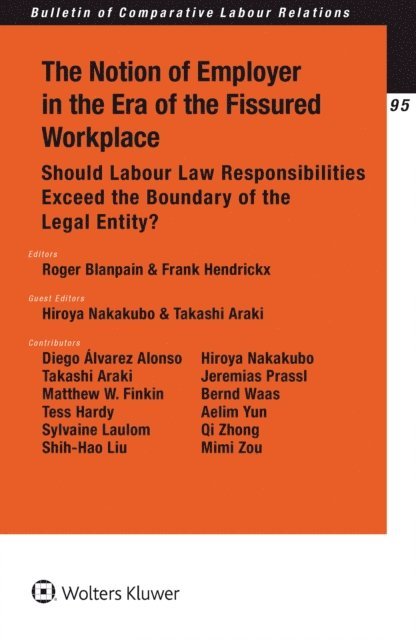
The word ''fissured'' aptly describes the effect on the workplace of the enormous retreat from direct employment on the part of large enterprises that began several decades ago and shows no sign of slowing down. Market-leading companies, even though they continue to wield considerable influence on the fate of actual workers, may thus be relieved of legal responsibility as employers. How extensive is this phenomenon? Do recourses exist in labour law? What ongoing trends can be discerned? This groundbreaking book tackles these questions and more, with thoroughly researched reports from ten of the world''s leading market-driven economies - Australia, China, France, Germany, Japan, the Republic of Korea, Spain, Taiwan, the United Kingdom, and the United States.
Recognizing that law should squarely grasp and tackle this new reality, the authors consider such questions as the following:
- How far can current labour law go in determining the responsibility of persons who have no direct contractual relationship with the workers?- Do other measures such as soft law or reputation mechanisms in the market deal with the undesirable consequences of the fissurization more properly?- What managerial motives and socioeconomic backgrounds give rise to such fissurization?- What distinct phenomena compose fissuring?- Are measures available to protect workers that go beyond the boundary of the legal entity (e.g., initiatives toward piercing the corporate veil)?Each contributor describes, for his or her country, how far the fragmentation and externalization of employment has gone, current legislation protecting workers in a multilayered contractual relationship or indirect employment relationship (e.g., on health and safety, wages, bargaining, dismissal), and emerging developments and trends.
This book ably responds to the question posed by a recent study: Why has work became so bad for so many and what can be done to improve it? Although concerned scholars worldwide will rally to the call, the reports in this volume will also be of great practical value to business persons and labour and employment lawyers everywhere.
1 822 kr
Läs direkt efter köp
The word ''fissured'' aptly describes the effect on the workplace of the enormous retreat from direct employment on the part of large enterprises that began several decades ago and shows no sign of slowing down. Market-leading companies, even though they continue to wield considerable influence on the fate of actual workers, may thus be relieved of legal responsibility as employers. How extensive is this phenomenon? Do recourses exist in labour law? What ongoing trends can be discerned? This groundbreaking book tackles these questions and more, with thoroughly researched reports from ten of the world’s leading market-driven economies – Australia, China, France, Germany, Japan, the Republic of Korea, Spain, Taiwan, the United Kingdom, and the United States.
Recognizing that law should squarely grasp and tackle this new reality, the authors consider such questions as the following:
– How far can current labour law go in determining the responsibility of persons who have no direct contractual relationship with the workers?– Do other measures such as soft law or reputation mechanisms in the market deal with the undesirable consequences of the ¬fissurization more properly?– What managerial motives and socioeconomic backgrounds give rise to such ¬fissurization?– What distinct phenomena compose ¬fissuring?– Are measures available to protect workers that go beyond the boundary of the legal entity (e.g., initiatives toward piercing the corporate veil)?Each contributor describes, for his or her country, how far the fragmentation and externalization of employment has gone, current legislation protecting workers in a multilayered contractual relationship or indirect employment relationship (e.g., on health and safety, wages, bargaining, dismissal), and emerging developments and trends.
This book ably responds to the question posed by a recent study: Why has work became so bad for so many and what can be done to improve it? Although concerned scholars worldwide will rally to the call, the reports in this volume will also be of great practical value to business persons and labour and employment lawyers everywhere.
1 906 kr
Läs direkt efter köp
The ''full-time job'' is no longer an option for many people seeking employment. It has been replaced by an ever-expanding plethora of ‘atypical’ employment relationships designed by employers to streamline their operations and/or take advantage of information communications technology. Numerous labour law issues arise, demanding urgent attention. How should law and policy best address these challenges? This incomparable and timely book explores this contentious topic in depth, presenting ten penetrating essays on aspects of the topic by leading European authorities followed by reports on new forms of employment in thirty-five European countries.
Full-scale analysis of new forms of employment, their characteristics, and their effects on working conditions and the labour market includes such issues as the following:
– employment relationships with more than one employer;– discontinuous and/or intermittent work;– work based on networking arrangements;– labour pooling;– crowdworking and crowsourcing;– lack of worker representation;– rights for vulnerable migrant workers;– removal of wage and hours threshold;– false self-employment;– non-payment of ''small'' amounts (e.g., holiday pay);– portage salarial;– voucher-based work;– ICT-based mobile work;– organizations offering specific administrative services;– need for safety nets for workers; and– existing and potential monitoring and control mechanisms.Relevant EU Directives and national legal frameworks regarding new forms of employment are fully discussed, with an emphasis on recent trends and proposed solutions.
This volume raises awareness of the problems generated by new emerging forms of employment and provides some answers and insights, including lessons to be learned from current developments. In particular, the authors’ bringing to light of issues that have not been sufficiently addressed so far under European law will be welcomed by labour law practitioners, company legal counsel, human resources professionals, and academics in the field.
1 317 kr
Läs direkt efter köp
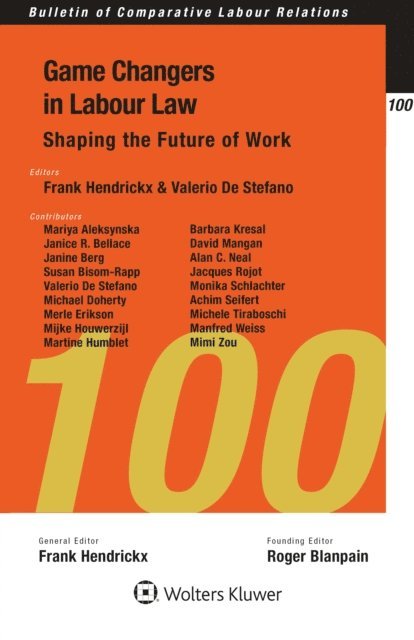
The renowned international labour law scholars contributing to this incomparable volume use the term ‘game changers’ to refer to evolutions, concepts, ideas and challenges that are having, or have had, major impacts on how we must understand and approach labour law in today’s global economy. The volume derives from an international conference organized by the Institute for Labour Law at the University of Leuven, Belgium in November 2017. This initiative is pursued in the spirit and with the methods of the late Emeritus Professor Roger Blanpain (1932–2016), a great reformer who continuously searched for key challenges in the world of work and looked as far as possible into the future, engaging in critical reflection and rethinking the design of labour law. While seeking to identify the main game changers, the authors explore new pathways and answers which may help to understand and shape the future of work.
This is the 100th of Kluwer’s Bulletin of Comparative Labour Relations, a series Professor Blanpain launched nearly fifty years ago. The contributors address, and reflect on, such vital issues and topics as the following:
– the ‘gig’ economy;– core labour law values;– freedom of association;– non-standard employment;– the rise of the service sector;– employment and self-employment;– the European Pillar of Social Rights;– app-based work;– algorithms as controls in the workplace;– collective bargaining rights and the right to strike;– the role of temporary employment agencies; and– termination of the employment relationship.There are also chapters devoted to specific issues in France, Italy, the United Kingdom, Estonia, China and the United States.
Roger Blanpain consistently reminded us that labour relations are power relations. Although this book shows that the power balance is tipped towards employers in today’s world, what is nevertheless very clear is that labour law can play a crucial role in re-enlivening equitable outcomes, fairness, decent work and social justice in our contemporary and future societies, and that academia can help to understand, guide and shape that future. For this reason, this book will be invaluable to professionals in labour relations, whether in the academic, policy or legal communities.
1 317 kr
Skickas
The renowned international labour law scholars contributing to this incomparable volume use the term ‘game changers’ to refer to evolutions, concepts, ideas and challenges that are having, or have had, major impacts on how we must understand and approach labour law in today’s global economy. The volume derives from an international conference organized by the Institute for Labour Law at the University of Leuven, Belgium in November 2017. This initiative is pursued in the spirit and with the methods of the late Emeritus Professor Roger Blanpain (1932–2016), a great reformer who continuously searched for key challenges in the world of work and looked as far as possible into the future, engaging in critical reflection and rethinking the design of labour law. While seeking to identify the main game changers, the authors explore new pathways and answers which may help to understand and shape the future of work.
This is the 100th of Kluwer’s Bulletin of Comparative Labour Relations, a series Professor Blanpain launched nearly fifty years ago. The contributors address, and reflect on, such vital issues and topics as the following:
– the ‘gig’ economy;– core labour law values;– freedom of association;– non-standard employment;– the rise of the service sector;– employment and self-employment;– the European Pillar of Social Rights;– app-based work;– algorithms as controls in the workplace;– collective bargaining rights and the right to strike;– the role of temporary employment agencies; and– termination of the employment relationship.There are also chapters devoted to specific issues in France, Italy, the United Kingdom, Estonia, China and the United States.
Roger Blanpain consistently reminded us that labour relations are power relations. Although this book shows that the power balance is tipped towards employers in today’s world, what is nevertheless very clear is that labour law can play a crucial role in re-enlivening equitable outcomes, fairness, decent work and social justice in our contemporary and future societies, and that academia can help to understand, guide and shape that future. For this reason, this book will be invaluable to professionals in labour relations, whether in the academic, policy or legal communities.
1 717 kr
Skickas inom 5-8 vardagar
1 457 kr
Läs direkt efter köp
Bulletin of Comparative Labour Relations
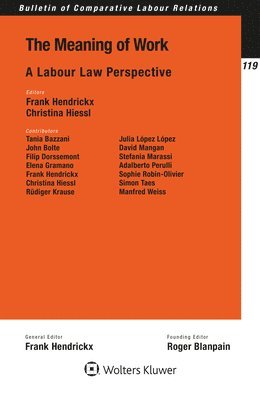
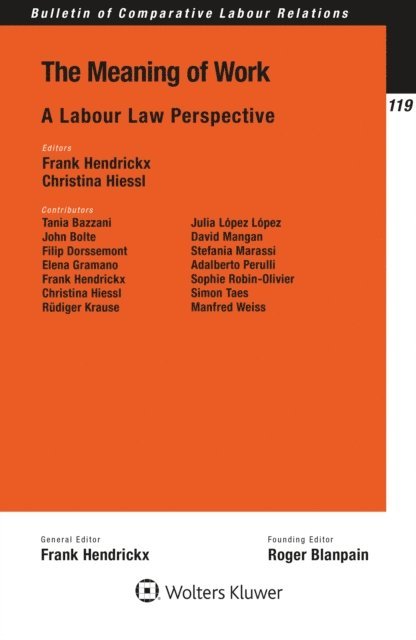
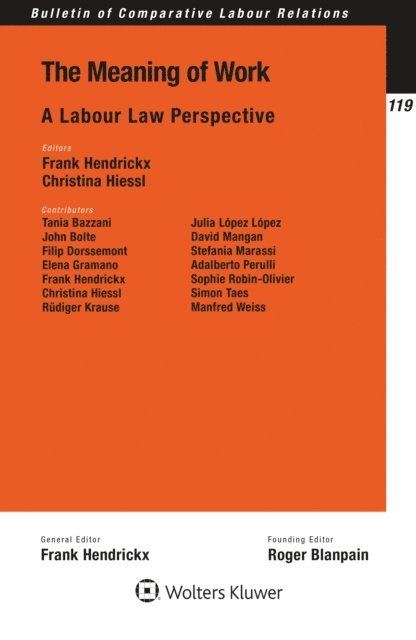
Now that the idea of the workplace and the traditional view of working time are undergoing major challenges, it is important to rethink the questions of what is work and what is the meaning of work. This book delves into the problems and issues raised by these questions today and explores new pathways and answers. Fourteen distinguished labour and employment law experts contribute insightful examinations of developments and trends in the world of work that have a penetrating impact on the ways in which we understand and approach labour law.
The book is the result of the Third Conference in Commemoration of Professor Roger Blanpain, organized by the Institute for Labour Law of KU Leuven in September 2023. In a collection of papers, the contributors explore such aspects of the rapidly changing work landscape as the following:
working with smart technology and artificial intelligence;
protection of the self-employed and teleworkers;
the erosion of boundaries between work and personal life;
the ‘right to disconnect’;
protection of worker privacy in an era of heightened surveillance;
reconciling the EU General Data Protection Regulation (GDPR) with labour law requirements;
labour law protections beyond the human worker to include the environment;
work in periods of crisis;
precarious work;
wearable technology in workplace monitoring; and
robots in the workplace.
With a core consideration of the relationship between labour law and the individual, the overall perspective proposes a transformative vision where labour law becomes the law of social freedom, intrinsically linked to personal development and social recognition.
The diverse contributions together provide a crucial foundation for reimagining labour law and advancing our understanding of the evolving meaning of work by highlighting the necessity for legal frameworks to respond to unprecedented global, technological, and social transformations. With its practical insights into contemporary workplace issues, critical analysis of work-life balance, and guidance on managing technological change, it will be welcomed by practitioners, academics, regulators, and social partners working in the fields of labour and employment law.
1 406 kr
Läs direkt efter köp
Bulletin of Comparative Labour Relations
Now that the idea of the workplace and the traditional view of working time are undergoing major challenges, it is important to rethink the questions of what is work and what is the meaning of work. This book delves into the problems and issues raised by these questions today and explores new pathways and answers. Fourteen distinguished labour and employment law experts contribute insightful examinations of developments and trends in the world of work that have a penetrating impact on the ways in which we understand and approach labour law.
The book is the result of the Third Conference in Commemoration of Professor Roger Blanpain, organized by the Institute for Labour Law of KU Leuven in September 2023. In a collection of papers, the contributors explore such aspects of the rapidly changing work landscape as the following:
working with smart technology and artificial intelligence;
protection of the self-employed and teleworkers;
the erosion of boundaries between work and personal life;
the ‘right to disconnect’;
protection of worker privacy in an era of heightened surveillance;
reconciling the EU General Data Protection Regulation (GDPR) with labour law requirements;
labour law protections beyond the human worker to include the environment;
work in periods of crisis;
precarious work;
wearable technology in workplace monitoring; and
robots in the workplace.
With a core consideration of the relationship between labour law and the individual, the overall perspective proposes a transformative vision where labour law becomes the law of social freedom, intrinsically linked to personal development and social recognition.
The diverse contributions together provide a crucial foundation for reimagining labour law and advancing our understanding of the evolving meaning of work by highlighting the necessity for legal frameworks to respond to unprecedented global, technological, and social transformations. With its practical insights into contemporary workplace issues, critical analysis of work-life balance, and guidance on managing technological change, it will be welcomed by practitioners, academics, regulators, and social partners working in the fields of labour and employment law.
1 317 kr
Läs direkt efter köp
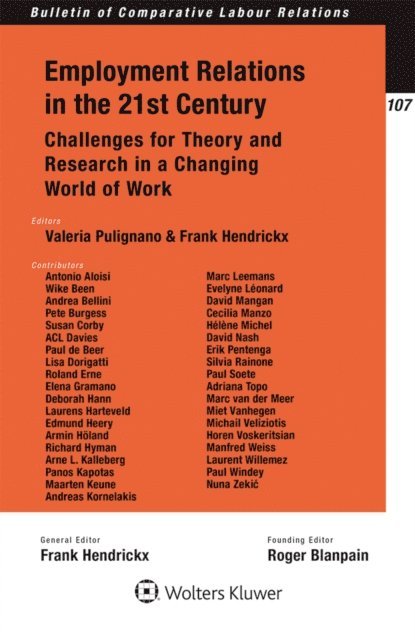
It cannot be denied that in recent decades, for many if not most people, work has become unstable and insecure, with serious risk and few benefits for workers. As this reality spills over into political and social life, it is crucial to interrogate the transformations affecting employment relations, shape research agendas, and influence the policies of national and international institutions. This single volume brings together thirty-nine scholars (both academics and experienced industrial relations actors) in the fields of employment relations and labour law in a forthright discussion of new approaches, theories, and methods aimed at ameliorating the world of work.
Focusing on why and how work is changing, how collective actors deal with it, and the future of work from different disciplinary angles and at an international level, the contributors describe and analyse such issues and topics as the following:
new forms of social protection and representation; differences in the power relations of workers and political dynamics; balancing protection of workers’ dignity and promotion of productivity; intersection of information technology and workplace regulation; how the gig economy undermines legal protections; role of professional and trade associations; workplace conflict management; lay judges in labour courts; undeclared work in the informal sector of the labour market; work incapacity and disability; (in)coherence of the work-related case law of the European Court of Justice; and business restructurings.Derived from a major conference held in Leuven in September 2018, the book offers an in-depth understanding of the changing world of work, its main transformations, and the challenges posed to classical employment relations theories and methods as well as to labour law.
With its wide range of insights, analysis, and reflection, this unique contribution to the study of industrial relations offers an authoritative reference guide to scholars, policymakers, trade unions and business associations, human resources professionals, and practitioners who need to deal with the future of work challenges.
1 317 kr
Läs direkt efter köp
It cannot be denied that in recent decades, for many if not most people, work has become unstable and insecure, with serious risk and few benefits for workers. As this reality spills over into political and social life, it is crucial to interrogate the transformations affecting employment relations, shape research agendas, and influence the policies of national and international institutions. This single volume brings together thirty-nine scholars (both academics and experienced industrial relations actors) in the fields of employment relations and labour law in a forthright discussion of new approaches, theories, and methods aimed at ameliorating the world of work.
Focusing on why and how work is changing, how collective actors deal with it, and the future of work from different disciplinary angles and at an international level, the contributors describe and analyse such issues and topics as the following:
new forms of social protection and representation; differences in the power relations of workers and political dynamics; balancing protection of workers’ dignity and promotion of productivity; intersection of information technology and workplace regulation; how the gig economy undermines legal protections; role of professional and trade associations; workplace conflict management; lay judges in labour courts; undeclared work in the informal sector of the labour market; work incapacity and disability; (in)coherence of the work-related case law of the European Court of Justice; and business restructurings.Derived from a major conference held in Leuven in September 2018, the book offers an in-depth understanding of the changing world of work, its main transformations, and the challenges posed to classical employment relations theories and methods as well as to labour law.
With its wide range of insights, analysis, and reflection, this unique contribution to the study of industrial relations offers an authoritative reference guide to scholars, policymakers, trade unions and business associations, human resources professionals, and practitioners who need to deal with the future of work challenges.
1 553 kr
Skickas inom 5-8 vardagar
1 271 kr
Läs direkt efter köp
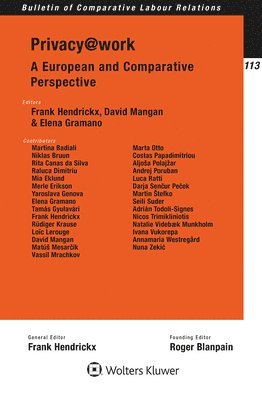
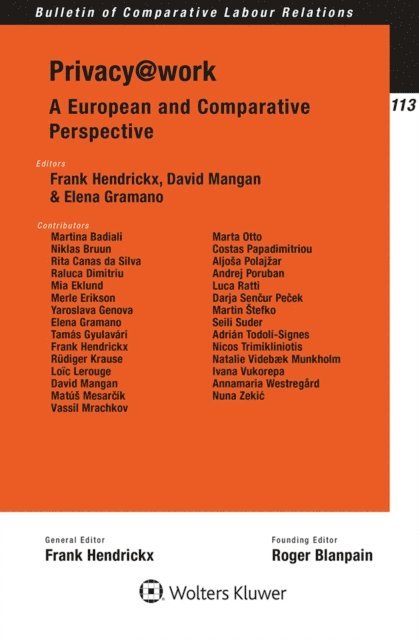
The right to privacy is a fundamental right. Along with the related right to personal data protection, it has come to take a central place in contemporary employment relations and shows significant relevance for the future of work. This thoroughly researched volume, which offers insightful essays by leading European academics and policymakers in labour and employment law, is the first to present a thoroughly up-to-date Europe-wide survey and analysis of the intensive and growing interaction of workplace relations systems with developments in privacy law.
With abundant reference to the EU’s General Data Protection Regulation, the case law of the European Court of Human Rights, and the work of the International Labour Organisation, the book proceeds as a series of country chapters, each by a recognised expert in a specific jurisdiction. Legal comparison is based on a questionnaire circulated to the contributors in advance. Each country chapter addresses the national legal weight of such issues and topics as the following:
interaction of privacy and data protection law;
legitimacy, purpose limitation, and data minimisation;
transparency;
role of consent;
artificial intelligence and automated decision-making;
health-related data, including biometrics and psychological testing;
monitoring and surveillance; and
use of social media.
A detailed introductory overview begins the volume.
The research for this book is based on a dynamic methodology, founded in scientific desk research and expert networking. Recognising that the need for further guidance for privacy at work has been demonstrated by various European and international bodies, this book delivers a signal contribution to the field for social partners, practitioners, policymakers, scholars, and all other stakeholders working at the crossroads of privacy, data protection, and labour law.
911 kr
Läs direkt efter köp
Derived from the renowned multi-volume International Encyclopaedia of Laws, this monograph on Belgium not only describes and analyses the legal aspects of labour relations, but also examines labour relations practices and developing trends. It provides a survey of the subject that is both usefully brief and sufficiently detailed to answer most questions likely to arise in any pertinent legal setting.
Both individual and collective labour relations are covered in ample detail, with attention to such underlying and pervasive factors as employment contracts, suspension of the contracts, dismissal laws and covenant of non-competition, as well as international private law. The author describes all important details of the law governing hours and wages, benefits, intellectual property implications, trade union activity, employers’ associations, workers’ participation, collective bargaining, industrial disputes, and much more.
Building on a clear overview of labour law and labour relations, the book offers practical guidance on which sound preliminary decisions may be based. It will find a ready readership among lawyers representing parties with interests in Belgium, and academics and researchers will appreciate its value in the study of comparative trends in laws affecting labour and labour relations.
911 kr
Läs direkt efter köp
Derived from the renowned multi-volume International Encyclopaedia of Laws, this monograph on Belgium not only describes and analyses the legal aspects of labour relations, but also examines labour relations practices and developing trends. It provides a survey of the subject that is both usefully brief and sufficiently detailed to answer most questions likely to arise in any pertinent legal setting.
Both individual and collective labour relations are covered in ample detail, with attention to such underlying and pervasive factors as employment contracts, suspension of the contracts, dismissal laws and covenant of non-competition, as well as international private law. The author describes all important details of the law governing hours and wages, benefits, intellectual property implications, trade union activity, employers’ associations, workers’ participation, collective bargaining, industrial disputes, and much more.
Building on a clear overview of labour law and labour relations, the book offers practical guidance on which sound preliminary decisions may be based. It will find a ready readership among lawyers representing parties with interests in Belgium, and academics and researchers will appreciate its value in the study of comparative trends in laws affecting labour and labour relations.
1 078 kr
Skickas inom 5-8 vardagar
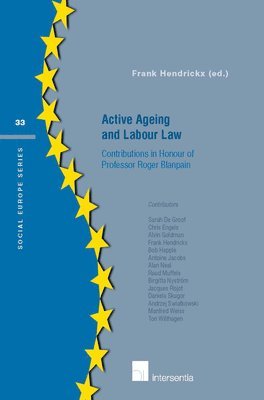
Active Ageing and Labour Law
Contributions in Honour of Professor Roger Blanpain
1 047 kr
Tillfälligt slut
2 950 kr
Tillfälligt slut