Frank Hunleth – författare
218 kr
Läs direkt efter köp
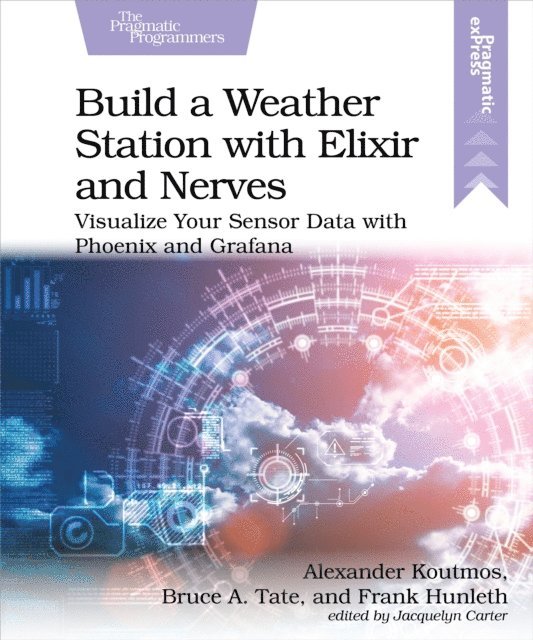
The Elixir programming language has become a go-to tool for creating reliable, fault-tolerant, and robust server-side applications. Thanks to Nerves, those same exact benefits can be realized in embedded applications. This book will teach you how to structure, build, and deploy production grade Nerves applications to network-enabled devices. The weather station sensor hub project that you will be embarking upon will show you how to create a full stack IoT solution in record time. You will build everything from the embedded Nerves device to the Phoenix backend and even the Grafana time-series data visualizations.
Elixir as a programming language has found its way into many different software domains, largely in part to the rock-solid foundation of the Erlang virtual machine. Thanks to the Nerves framework, Elixir has also found success in the world of embedded systems and IoT. Having access to all of the Elixir and OTP constructs such as concurrency, supervision, and immutability makes for a powerful IoT recipe. Find out how to create fault-tolerant, reliable, and robust embedded applications using the Nerves framework.
Build and deploy a production-grade weather station sensor hub using Elixir and Nerves, all while leveraging the best practices established by the Nerves community for structuring and organizing Nerves applications. Capture all of your weather station sensor data using Phoenix and Ecto in a lightweight server-side application. Efficiently store and retrieve the time-series weather data collected by your device using TimescaleDB (the Postgres extension for time-series data). Finally, complete the full stack IoT solution by using Grafana to visualize all of your time-series weather station data. Discover how to create software solutions where the underlying technologies and techniques are applicable to all layers of the project.
Take your project from idea to production ready in record time with Elixir and Nerves.
What You Need:
To complete the Nerves weather station project in this book, you will need the following:
A Linux, MacOS, or Windows computer to build and deploy Nerves firmware imagesA Raspberry Pi Zero W or any other Nerves supported target (https://hexdocs.pm/nerves/targets.html#supported-targets-and-systems)A VEML6030 light sensorAn BME680 environmental sensorAn SGP30 air quality sensorQwiic connect cables for weather sensors218 kr
Läs direkt efter köp
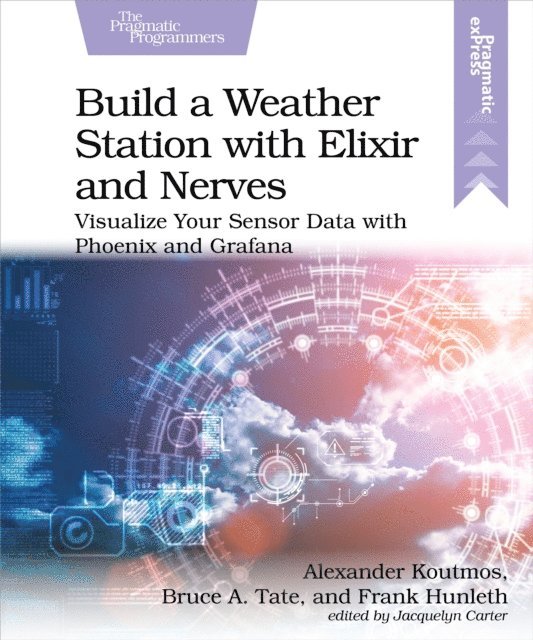
The Elixir programming language has become a go-to tool for creating reliable, fault-tolerant, and robust server-side applications. Thanks to Nerves, those same exact benefits can be realized in embedded applications. This book will teach you how to structure, build, and deploy production grade Nerves applications to network-enabled devices. The weather station sensor hub project that you will be embarking upon will show you how to create a full stack IoT solution in record time. You will build everything from the embedded Nerves device to the Phoenix backend and even the Grafana time-series data visualizations.
Elixir as a programming language has found its way into many different software domains, largely in part to the rock-solid foundation of the Erlang virtual machine. Thanks to the Nerves framework, Elixir has also found success in the world of embedded systems and IoT. Having access to all of the Elixir and OTP constructs such as concurrency, supervision, and immutability makes for a powerful IoT recipe. Find out how to create fault-tolerant, reliable, and robust embedded applications using the Nerves framework.
Build and deploy a production-grade weather station sensor hub using Elixir and Nerves, all while leveraging the best practices established by the Nerves community for structuring and organizing Nerves applications. Capture all of your weather station sensor data using Phoenix and Ecto in a lightweight server-side application. Efficiently store and retrieve the time-series weather data collected by your device using TimescaleDB (the Postgres extension for time-series data). Finally, complete the full stack IoT solution by using Grafana to visualize all of your time-series weather station data. Discover how to create software solutions where the underlying technologies and techniques are applicable to all layers of the project.
Take your project from idea to production ready in record time with Elixir and Nerves.
What You Need:
To complete the Nerves weather station project in this book, you will need the following:
A Linux, MacOS, or Windows computer to build and deploy Nerves firmware imagesA Raspberry Pi Zero W or any other Nerves supported target (https://hexdocs.pm/nerves/targets.html#supported-targets-and-systems)A VEML6030 light sensorAn BME680 environmental sensorAn SGP30 air quality sensorQwiic connect cables for weather sensors254 kr
Läs direkt efter köp
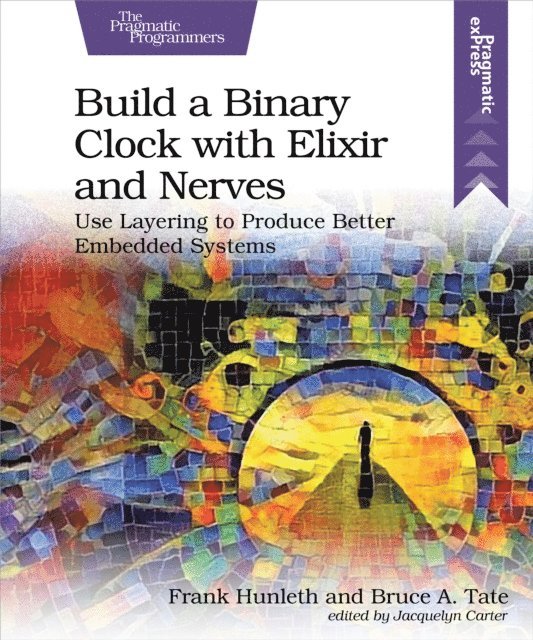
Want to get better at coding Elixir? Write a hardware project with Nerves. As you build this binary clock, you''ll build in resiliency using OTP, the same libraries powering many commercial phone switches. You''ll attack complexity the way the experts do, using a layered approach. You''ll sharpen your debugging skills by taking small, easily verified steps toward your goal. When you''re done, you''ll have a working binary clock and a good appreciation of the work that goes into a hardware system. You''ll also be able to apply that understanding to every new line of Elixir you write.
Combining software with hardware can be frustrating, but you can become proficient in no time by taking a simple, logical approach. Blinking a single LED is the traditional "hello-world" of embedded systems. Building your own binary clock is the logical next step. It blinks groupings of LEDs based on the system time. This guide walks you through a working project using the techniques used by experts who build software for hardware every day.
This common sense project moves forward in tiny, logical steps. As you progress, you can verify each step before moving on to the next. You don''t have to be a Nerves novice to benefit from this project. Become a better Elixir programmer as you build your own desktop showpiece. With a layered approach to software design, you''ll learn to control the complexity of your programs the way the experts do by focusing on one small slice of your system at a time.
When you''re done, you''ll have your own binary clock, and also more of the tools you need to design and build your own Nerves and Elixir projects. You''ll also be a better programmer with a deeper appreciation of layering techniques for controlling complexity.
What You Need:
This project is for Elixir developers who want to get started with Nerves, or improve their skills. The project is designed for Elixir 1.11 and Nerves 1.7, but later versions will probably work as well with slight modifications. The project uses a Raspberry Pi zero with a set of components. With slight modifications, you can make this book work with other components as well.
254 kr
Läs direkt efter köp
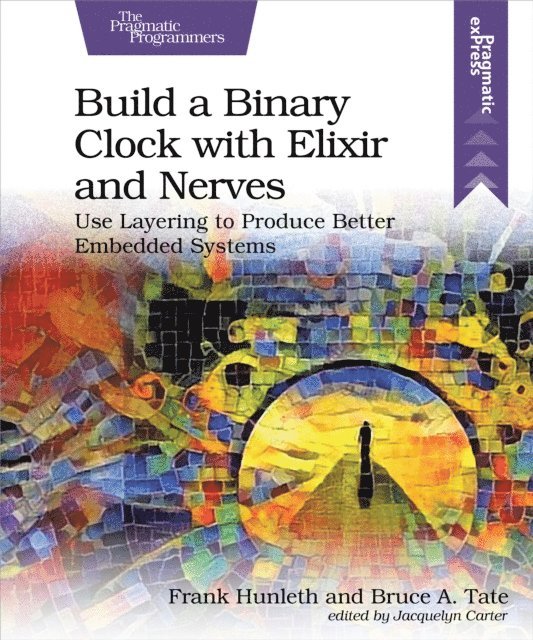
Want to get better at coding Elixir? Write a hardware project with Nerves. As you build this binary clock, you''ll build in resiliency using OTP, the same libraries powering many commercial phone switches. You''ll attack complexity the way the experts do, using a layered approach. You''ll sharpen your debugging skills by taking small, easily verified steps toward your goal. When you''re done, you''ll have a working binary clock and a good appreciation of the work that goes into a hardware system. You''ll also be able to apply that understanding to every new line of Elixir you write.
Combining software with hardware can be frustrating, but you can become proficient in no time by taking a simple, logical approach. Blinking a single LED is the traditional "hello-world" of embedded systems. Building your own binary clock is the logical next step. It blinks groupings of LEDs based on the system time. This guide walks you through a working project using the techniques used by experts who build software for hardware every day.
This common sense project moves forward in tiny, logical steps. As you progress, you can verify each step before moving on to the next. You don''t have to be a Nerves novice to benefit from this project. Become a better Elixir programmer as you build your own desktop showpiece. With a layered approach to software design, you''ll learn to control the complexity of your programs the way the experts do by focusing on one small slice of your system at a time.
When you''re done, you''ll have your own binary clock, and also more of the tools you need to design and build your own Nerves and Elixir projects. You''ll also be a better programmer with a deeper appreciation of layering techniques for controlling complexity.
What You Need:
This project is for Elixir developers who want to get started with Nerves, or improve their skills. The project is designed for Elixir 1.11 and Nerves 1.7, but later versions will probably work as well with slight modifications. The project uses a Raspberry Pi zero with a set of components. With slight modifications, you can make this book work with other components as well.