Bruce Tate – författare
214 kr
Läs direkt efter köp
Bruce Tate, author of the Jolt Award-winning Better, Faster, Lighter Java has an intriguing notion about the future of Java, and it''s causing some agitation among Java developers. Bruce believes Java is abandoning its base, and conditions are ripe for an alternative to emerge.
In Beyond Java, Bruce chronicles the rise of the most successful language of all time, and then lays out, in painstaking detail, the compromises the founders had to make to establish success. Then, he describes the characteristics of likely successors to Java. He builds to a rapid and heady climax, presenting alternative languages and frameworks with productivity and innovation unmatched in Java. He closes with an evaluation of the most popular and important programming languages, and their future role in a world beyond Java.
If you are agree with the book''s premise--that Java''s reign is coming to an end--then this book will help you start to build your skills accordingly. You can download some of the frameworks discussed and learn a few new languages. This book will teach you what a new language needs to succeed, so when things do change, you''ll be more prepared. And even if you think Java is here to stay, you can use the best techniques from frameworks introduced in this book to improve what you''re doing in Java today.
251 kr
Läs direkt efter köp
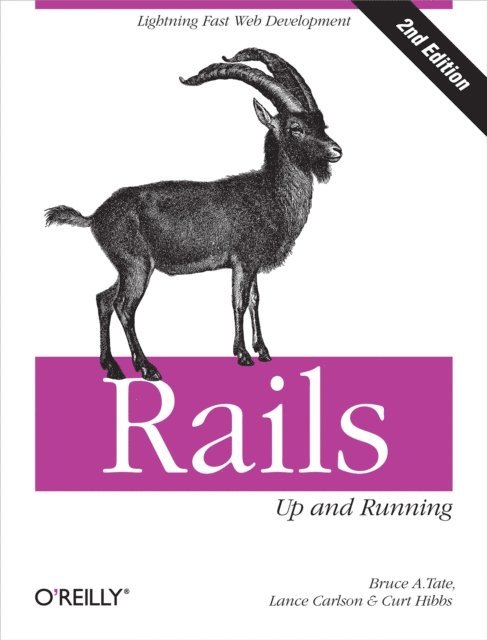
In just a matter of days, you can develop powerful web applications with Rails that once took weeks or months to produce with other web frameworks. If that sounds too good to be true, it isn''t. Find out for yourself with Rails: Up and Running, the concise and popular book that not only explains how Rails works, but guides you through a complete test drive.Perfect for beginning web developers, this thoroughly revised edition teaches you the basics of installing and using Rails 2.1 and the Ruby scripting language. While Rails is praised for its simplicity, there are still a few tricky steps to master along the way. Rails: Up and Running offers lots of examples and covers just about everything you need to build functional Rails applications right away. Learn how to:
Create simple database-backed applications, and build dynamic user-centric web pages using Ajax and RESTExploit the Rails service frameworks to send emails and implement web servicesMap data to an imperfect table, traverse complex relationships, and build custom findersUse techniques to solve common database performance problemsSee how fast you can go on Rails, and how reliable it''s become with the stability and power of version 2.1. With Rails: Up and Running, you''ll discover why Rails is a remarkable new way to build database-driven web applications.295 kr
Läs direkt efter köp
Sometimes the simplest answer is the best. Many Enterprise Java developers, accustomed to dealing with Java''s spiraling complexity, have fallen into the habit of choosing overly complicated solutions to problems when simpler options are available. Building server applications with "heavyweight" Java-based architectures, such as WebLogic, JBoss, and WebSphere, can be costly and cumbersome. When you''ve reached the point where you spend more time writing code to support your chosen framework than to solve your actual problems, it''s time to think in terms of simplicity.In Better, Faster, Lighter Java, authors Bruce Tate and Justin Gehtland argue that the old heavyweight architectures are unwieldy, complicated, and contribute to slow and buggy application code. As an alternative means for building better applications, the authors present two "lightweight" open source architectures: Hibernate--a persistence framework that does its job with a minimal API and gets out of the way, and Spring--a container that''s not invasive, heavy or complicated.Hibernate and Spring are designed to be fairly simple to learn and use, and place reasonable demands on system resources. Better, Faster, Lighter Java shows you how they can help you create enterprise applications that are easier to maintain, write, and debug, and are ultimately much faster.Written for intermediate to advanced Java developers, Better, Faster, Lighter Java, offers fresh ideas--often unorthodox--to help you rethink the way you work, and techniques and principles you''ll use to build simpler applications. You''ll learn to spend more time on what''s important. When you''re finished with this book, you''ll find that your Java is better, faster, and lighter than ever before.
251 kr
Läs direkt efter köp
Since development first began on Spring in 2003, there''s been a constant buzz about it in Java development publications and corporate IT departments. The reason is clear: Spring is a lightweight Java framework in a world of complex heavyweight architectures that take forever to implement. Spring is like a breath of fresh air to overworked developers.In Spring, you can make an object secure, remote, or transactional, with a couple of lines of configuration instead of embedded code. The resulting application is simple and clean. In Spring, you can work less and go home early, because you can strip away a whole lot of the redundant code that you tend to see in most J2EE applications. You won''t be nearly as burdened with meaningless detail. In Spring, you can change your mind without the consequences bleeding through your entire application. You''ll adapt much more quickly than you ever could before.Spring: A Developer''s Notebook offers a quick dive into the new Spring framework, designed to let you get hands-on as quickly as you like. If you don''t want to bother with a lot of theory, this book is definitely for you. You''ll work through one example after another. Along the way, you''ll discover the energy and promise of the Spring framework.This practical guide features ten code-intensive labs that''ll rapidly get you up to speed. You''ll learn how to do the following, and more:
install the Spring Frameworkset up the development environmentuse Spring with other open source Java tools such as Tomcat, Struts, and Hibernatemaster AOP and transactionsutilize ORM solutionsAs with all titles in the Developer''s Notebook series, this no-nonsense book skips all the boring prose and cuts right to the chase. It''s an approach that forces you to get your hands dirty by working through one instructional example after another-examples that speak to you instead of at you.273 kr
Läs direkt efter köp
Sometimes the simplest answer is the best. Many Enterprise Java developers, accustomed to dealing with Java''s spiraling complexity, have fallen into the habit of choosing overly complicated solutions to problems when simpler options are available. Building server applications with "heavyweight" Java-based architectures, such as WebLogic, JBoss, and WebSphere, can be costly and cumbersome. When you''ve reached the point where you spend more time writing code to support your chosen framework than to solve your actual problems, it''s time to think in terms of simplicity.In Better, Faster, Lighter Java, authors Bruce Tate and Justin Gehtland argue that the old heavyweight architectures are unwieldy, complicated, and contribute to slow and buggy application code. As an alternative means for building better applications, the authors present two "lightweight" open source architectures: Hibernate--a persistence framework that does its job with a minimal API and gets out of the way, and Spring--a container that''s not invasive, heavy or complicated.Hibernate and Spring are designed to be fairly simple to learn and use, and place reasonable demands on system resources. Better, Faster, Lighter Java shows you how they can help you create enterprise applications that are easier to maintain, write, and debug, and are ultimately much faster.Written for intermediate to advanced Java developers, Better, Faster, Lighter Java, offers fresh ideas--often unorthodox--to help you rethink the way you work, and techniques and principles you''ll use to build simpler applications. You''ll learn to spend more time on what''s important. When you''re finished with this book, you''ll find that your Java is better, faster, and lighter than ever before.
236 kr
Läs direkt efter köp
Since development first began on Spring in 2003, there''s been a constant buzz about it in Java development publications and corporate IT departments. The reason is clear: Spring is a lightweight Java framework in a world of complex heavyweight architectures that take forever to implement. Spring is like a breath of fresh air to overworked developers.In Spring, you can make an object secure, remote, or transactional, with a couple of lines of configuration instead of embedded code. The resulting application is simple and clean. In Spring, you can work less and go home early, because you can strip away a whole lot of the redundant code that you tend to see in most J2EE applications. You won''t be nearly as burdened with meaningless detail. In Spring, you can change your mind without the consequences bleeding through your entire application. You''ll adapt much more quickly than you ever could before.Spring: A Developer''s Notebook offers a quick dive into the new Spring framework, designed to let you get hands-on as quickly as you like. If you don''t want to bother with a lot of theory, this book is definitely for you. You''ll work through one example after another. Along the way, you''ll discover the energy and promise of the Spring framework.This practical guide features ten code-intensive labs that''ll rapidly get you up to speed. You''ll learn how to do the following, and more:
install the Spring Frameworkset up the development environmentuse Spring with other open source Java tools such as Tomcat, Struts, and Hibernatemaster AOP and transactionsutilize ORM solutionsAs with all titles in the Developer''s Notebook series, this no-nonsense book skips all the boring prose and cuts right to the chase. It''s an approach that forces you to get your hands dirty by working through one instructional example after another-examples that speak to you instead of at you.199 kr
Läs direkt efter köp
Bruce Tate, author of the Jolt Award-winning Better, Faster, Lighter Java has an intriguing notion about the future of Java, and it''s causing some agitation among Java developers. Bruce believes Java is abandoning its base, and conditions are ripe for an alternative to emerge.
In Beyond Java, Bruce chronicles the rise of the most successful language of all time, and then lays out, in painstaking detail, the compromises the founders had to make to establish success. Then, he describes the characteristics of likely successors to Java. He builds to a rapid and heady climax, presenting alternative languages and frameworks with productivity and innovation unmatched in Java. He closes with an evaluation of the most popular and important programming languages, and their future role in a world beyond Java.
If you are agree with the book''s premise--that Java''s reign is coming to an end--then this book will help you start to build your skills accordingly. You can download some of the frameworks discussed and learn a few new languages. This book will teach you what a new language needs to succeed, so when things do change, you''ll be more prepared. And even if you think Java is here to stay, you can use the best techniques from frameworks introduced in this book to improve what you''re doing in Java today.
280 kr
Läs direkt efter köp
In just a matter of days, you can develop powerful web applications with Rails that once took weeks or months to produce with other web frameworks. If that sounds too good to be true, it isn''t. Find out for yourself with Rails: Up and Running, the concise and popular book that not only explains how Rails works, but guides you through a complete test drive.Perfect for beginning web developers, this thoroughly revised edition teaches you the basics of installing and using Rails 2.1 and the Ruby scripting language. While Rails is praised for its simplicity, there are still a few tricky steps to master along the way. Rails: Up and Running offers lots of examples and covers just about everything you need to build functional Rails applications right away. Learn how to:
Create simple database-backed applications, and build dynamic user-centric web pages using Ajax and RESTExploit the Rails service frameworks to send emails and implement web servicesMap data to an imperfect table, traverse complex relationships, and build custom findersUse techniques to solve common database performance problemsSee how fast you can go on Rails, and how reliable it''s become with the stability and power of version 2.1. With Rails: Up and Running, you''ll discover why Rails is a remarkable new way to build database-driven web applications.236 kr
Läs direkt efter köp
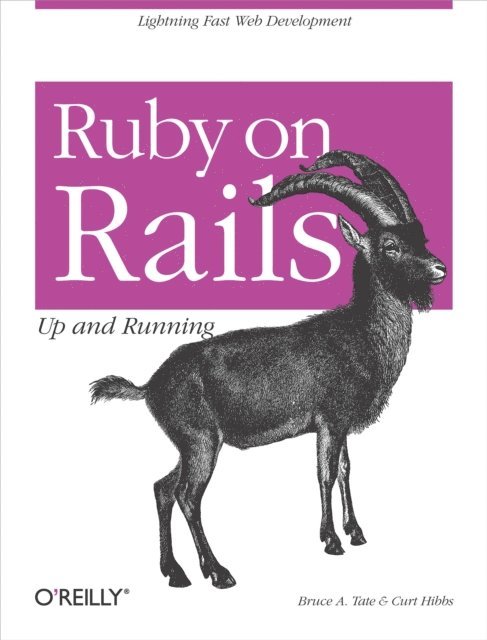
Ruby on Rails is the super-productive new way to develop full-featuredweb applications. With Ruby on Rails, powerful web applications thatonce took weeks or months to develop can now be produced in a matter ofdays. If it sounds too good to be true, it isn''t.
If you''re like a lot of web developers, you''ve probably consideredkicking the tires on Rails - the framework of choice for the newgeneration of Web 2.0 developers. Ruby on Rails: Up and Running takes you out for a test drive and shows you just how fastRuby on Rails can go.
This compact guide teaches you the basics of installing and using boththe Ruby scripting language and the Rails framework for the quickdevelopment of web applications. Ruby on Rails: Up andRunning covers just about everything youneed - from making a simple database-backed application toadding elaborate Ajaxian features and all the juicy bits in between.While Rails is praised for its simplicity and speed of development,there are still a few steps to master on the way. More advancedmaterial helps you map data to an imperfect table, traverse complexrelationships, and build custom finders. A section on working with Ajaxand REST shows you how to exploit the Rails service frameworks to sendemails, implement web services, and create dynamic user-centric webpages. The book also explains the essentials of logging to findperformance problems and delves into other performance-optimizingtechniques.
As new web development frameworks go, Ruby on Rails is the talk of thetown. And Ruby on Rails: Up and Running can makesure you''re in on the discussion.
430 kr
Skickas inom 5-8 vardagar
278 kr
Läs direkt efter köp
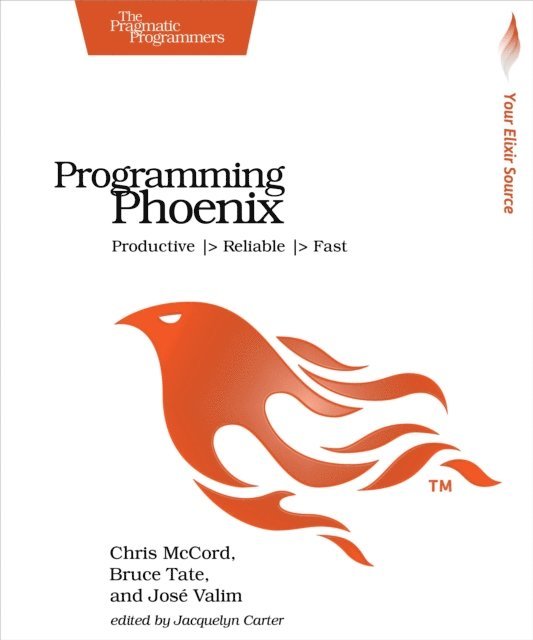
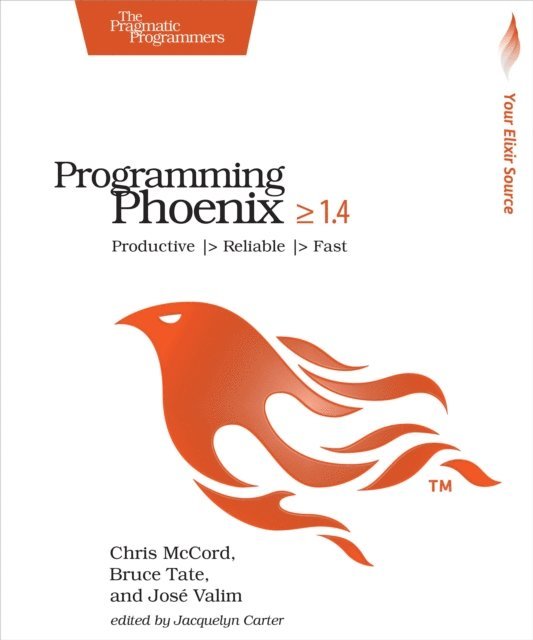
Don''t accept the compromise between fast and beautiful: you can have it all. Phoenix creator Chris McCord, Elixir creator Jose Valim, and award-winning author Bruce Tate walk you through building an application that''s fast and reliable. At every step, you''ll learn from the Phoenix creators not just what to do, but why. Packed with insider insights, this definitive guide will be your constant companion in your journey from Phoenix novice to expert, as you build the next generation of web applications.Phoenix is the long-awaited web framework based on Elixir, the highly concurrent language that combines a beautiful syntax with rich metaprogramming. The authors, who developed the earliest production Phoenix applications, will show you how to create code that''s easier to write, test, understand, and maintain. The best way to learn Phoenix is to code, and you''ll get to attack some interesting problems. Start working with controllers, views, and templates within the first few pages. Build an in-memory repository, and then back it with an Ecto database layer. Learn to use change sets and constraints that keep readers informed and your database integrity intact. Craft your own interactive application based on the channels API for the real-time, high-performance applications that this ecosystem made famous. Write your own authentication components called plugs, and even learn to use the OTP layer for monitored, reliable services. Organize your code with umbrella projects so you can keep your applications modular and easy to maintain.This is a book by developers and for developers, and we know how to help you ramp up quickly. Any book can tell you what to do. When you''ve finished this one, you''ll also know why to do it.What You Need:To work through this book, you will need a computer capable of running Erlang 17 or better, Elixir 1.1, or better, Phoenix 1.0 or better, and Ecto 1.0 or better. A rudimentary knowledge of Elixir is also highly recommended.
278 kr
Läs direkt efter köp
Don''t accept the compromise between fast and beautiful: you can have it all. Phoenix creator Chris McCord, Elixir creator Jose Valim, and award-winning author Bruce Tate walk you through building an application that''s fast and reliable. At every step, you''ll learn from the Phoenix creators not just what to do, but why. Packed with insider insights, this definitive guide will be your constant companion in your journey from Phoenix novice to expert, as you build the next generation of web applications.Phoenix is the long-awaited web framework based on Elixir, the highly concurrent language that combines a beautiful syntax with rich metaprogramming. The authors, who developed the earliest production Phoenix applications, will show you how to create code that''s easier to write, test, understand, and maintain. The best way to learn Phoenix is to code, and you''ll get to attack some interesting problems. Start working with controllers, views, and templates within the first few pages. Build an in-memory repository, and then back it with an Ecto database layer. Learn to use change sets and constraints that keep readers informed and your database integrity intact. Craft your own interactive application based on the channels API for the real-time, high-performance applications that this ecosystem made famous. Write your own authentication components called plugs, and even learn to use the OTP layer for monitored, reliable services. Organize your code with umbrella projects so you can keep your applications modular and easy to maintain.This is a book by developers and for developers, and we know how to help you ramp up quickly. Any book can tell you what to do. When you''ve finished this one, you''ll also know why to do it.What You Need:To work through this book, you will need a computer capable of running Erlang 17 or better, Elixir 1.1, or better, Phoenix 1.0 or better, and Ecto 1.0 or better. A rudimentary knowledge of Elixir is also highly recommended.
324 kr
Läs direkt efter köp
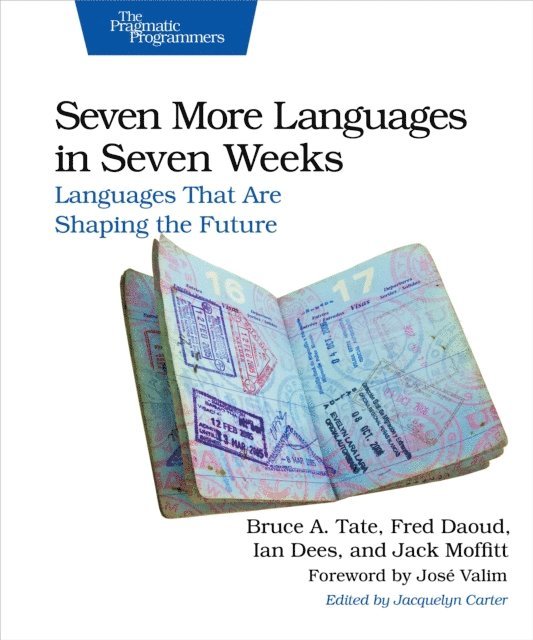
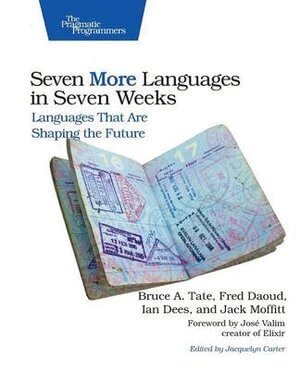
Great programmers aren''t born--they''re made. The industry is moving from object-oriented languages to functional languages, and you need to commit to radical improvement. New programming languages arm you with the tools and idioms you need to refine your craft. While other language primers take you through basic installation and "Hello, World," we aim higher. Each language in Seven More Languages in Seven Weeks will take you on a step-by-step journey through the most important paradigms of our time. You''ll learn seven exciting languages: Lua, Factor, Elixir, Elm, Julia, MiniKanren, and Idris.Learn from the award-winning programming series that inspired the Elixir language. Hear how other programmers across broadly different communities solve problems important enough to compel language development. Expand your perspective, and learn to solve multicore and distribution problems.In each language, you''ll solve a non-trivial problem, using the techniques that make that language special. Write a fully functional game in Elm, without a single callback, that compiles to JavaScript so you can deploy it in any browser. Write a logic program in Clojure using a programming model, MiniKanren, that is as powerful as Prolog but much better at interacting with the outside world. Build a distributed program in Elixir with Lisp-style macros, rich Ruby-like syntax, and the richness of the Erlang virtual machine. Build your own object layer in Lua, a statistical program in Julia, a proof in code with Idris, and a quiz game in Factor.When you''re done, you''ll have written programs in five different programming paradigms that were written on three different continents. You''ll have explored four languages on the leading edge, invented in the past five years, and three more radically different languages, each with something significant to teach you.
324 kr
Läs direkt efter köp
Great programmers aren''t born--they''re made. The industry is moving from object-oriented languages to functional languages, and you need to commit to radical improvement. New programming languages arm you with the tools and idioms you need to refine your craft. While other language primers take you through basic installation and "Hello, World," we aim higher. Each language in Seven More Languages in Seven Weeks will take you on a step-by-step journey through the most important paradigms of our time. You''ll learn seven exciting languages: Lua, Factor, Elixir, Elm, Julia, MiniKanren, and Idris.Learn from the award-winning programming series that inspired the Elixir language. Hear how other programmers across broadly different communities solve problems important enough to compel language development. Expand your perspective, and learn to solve multicore and distribution problems.In each language, you''ll solve a non-trivial problem, using the techniques that make that language special. Write a fully functional game in Elm, without a single callback, that compiles to JavaScript so you can deploy it in any browser. Write a logic program in Clojure using a programming model, MiniKanren, that is as powerful as Prolog but much better at interacting with the outside world. Build a distributed program in Elixir with Lisp-style macros, rich Ruby-like syntax, and the richness of the Erlang virtual machine. Build your own object layer in Lua, a statistical program in Julia, a proof in code with Idris, and a quiz game in Factor.When you''re done, you''ll have written programs in five different programming paradigms that were written on three different continents. You''ll have explored four languages on the leading edge, invented in the past five years, and three more radically different languages, each with something significant to teach you.
357 kr
Läs direkt efter köp
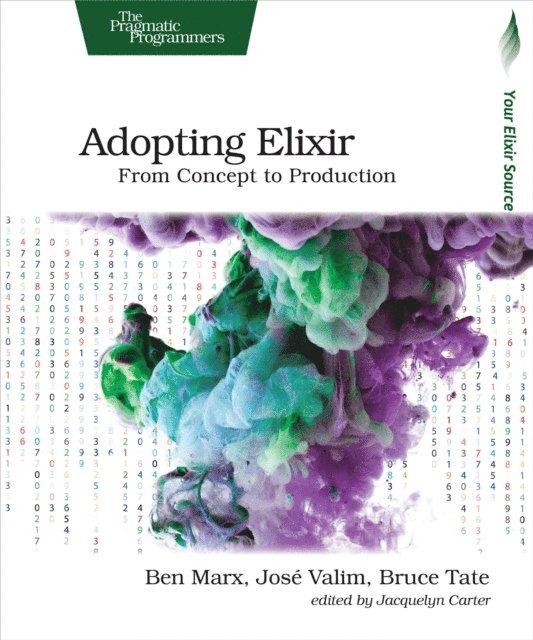
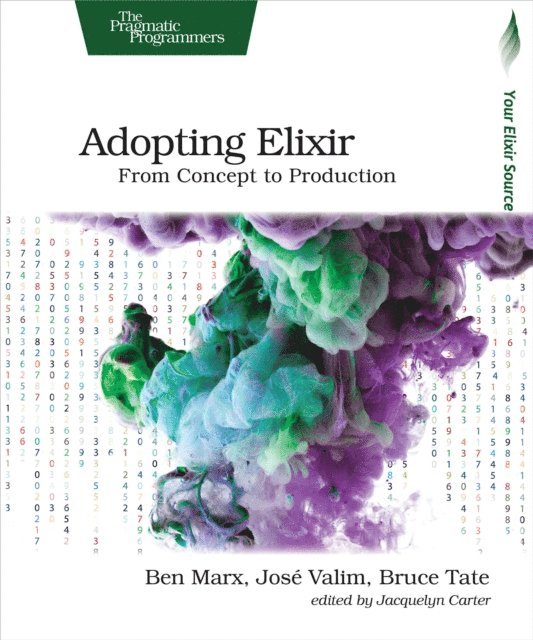
Adoption is more than programming. Elixir is an exciting new language, but to successfully get your application from start to finish, you''re going to need to know more than just the language. The case studies and strategies in this book will get you there. Learn the best practices for the whole life of your application, from design and team-building, to managing stakeholders, to deployment and monitoring. Go beyond the syntax and the tools to learn the techniques you need to develop your Elixir application from concept to production.
Learn real-life strategies from the people who built Elixir and use it successfully at scale. See how Ben Marx and Bleacher Report maintain one of the highest-traffic Elixir applications by selling the concept to management and delivering on that promise. Find out how Bruce Tate and icanmakeitbetter hire and train Elixir engineers, and the techniques they''ve employed to design and ensure code consistency since Elixir''s early days. Explore IPSer challenges in deploying and monitoring distributed applications with Elixir creator Jose Valim and Plataformatec.
Make a business case and build a team before you finish your first prototype. Once you''re in development, form strategies for organizing your code and learning the constraints of the runtime and ecosystem. Convince stakeholders, both business and technical, about the value they can expect. Prepare to make the critical early decisions that will shape your application for years to come. Manage your deployment with all of the knobs and gauges that good DevOps teams demand. Decide between the many options available for deployment, and how to best prepare yourself for the challenges of running a production application.
This book picks up where most Elixir books leave off. It won''t teach you to program Elixir, or any of its tools. Instead, it guides you through the broader landscape and shows you a holistic approach to adopting the language.
What You Need:
This book works with any version of Elixir.
357 kr
Läs direkt efter köp
Adoption is more than programming. Elixir is an exciting new language, but to successfully get your application from start to finish, you''re going to need to know more than just the language. The case studies and strategies in this book will get you there. Learn the best practices for the whole life of your application, from design and team-building, to managing stakeholders, to deployment and monitoring. Go beyond the syntax and the tools to learn the techniques you need to develop your Elixir application from concept to production.
Learn real-life strategies from the people who built Elixir and use it successfully at scale. See how Ben Marx and Bleacher Report maintain one of the highest-traffic Elixir applications by selling the concept to management and delivering on that promise. Find out how Bruce Tate and icanmakeitbetter hire and train Elixir engineers, and the techniques they''ve employed to design and ensure code consistency since Elixir''s early days. Explore IPSer challenges in deploying and monitoring distributed applications with Elixir creator Jose Valim and Plataformatec.
Make a business case and build a team before you finish your first prototype. Once you''re in development, form strategies for organizing your code and learning the constraints of the runtime and ecosystem. Convince stakeholders, both business and technical, about the value they can expect. Prepare to make the critical early decisions that will shape your application for years to come. Manage your deployment with all of the knobs and gauges that good DevOps teams demand. Decide between the many options available for deployment, and how to best prepare yourself for the challenges of running a production application.
This book picks up where most Elixir books leave off. It won''t teach you to program Elixir, or any of its tools. Instead, it guides you through the broader landscape and shows you a holistic approach to adopting the language.
What You Need:
This book works with any version of Elixir.
387 kr
Läs direkt efter köp
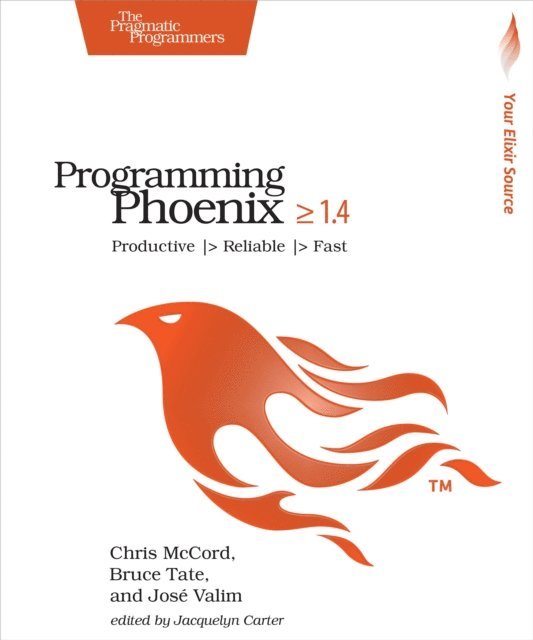
Don''t accept the compromise between fast and beautiful: you can have it all. Phoenix creator Chris McCord, Elixir creator Jose Valim, and award-winning author Bruce Tate walk you through building an application that''s fast and reliable. At every step, you''ll learn from the Phoenix creators not just what to do, but why. Packed with insider insights and completely updated for Phoenix 1.4, this definitive guide will be your constant companion in your journey from Phoenix novice to expert, as you build the next generation of web applications.
Phoenix is the long-awaited web framework based on Elixir, the highly concurrent language that combines a beautiful syntax with rich metaprogramming. The best way to learn Phoenix is to code, and you''ll get to attack some interesting problems. Start working with controllers, views, and templates within the first few pages. Build an in-memory context, and then back it with an Ecto database layer, complete with changesets and constraints that keep readers informed and your database integrity intact. Craft your own interactive application based on the channels API for the real-time applications that this ecosystem made famous. Write your own authentication plugs, and use the OTP layer for supervised services. Organize code with modular umbrella projects.
This edition is fully updated for Phoenix 1.4, with a new chapter on using Channel Presence to find out who''s connected, even on a distributed application. Use the new generators and the new ExUnit features to organize tests and make Ecto tests concurrent.
This is a book by developers and for developers, and we know how to help you ramp up quickly. Any book can tell you what to do. When you''ve finished this one, you''ll also know why to do it.
What You Need:To work through this book, you will need a computer capable of running Erlang 18 or higher, Elixir 1.5 or higher, and Phoenix 1.4 or higher. A rudimentary knowledge of Elixir is also highly recommended.
387 kr
Läs direkt efter köp
Don''t accept the compromise between fast and beautiful: you can have it all. Phoenix creator Chris McCord, Elixir creator Jose Valim, and award-winning author Bruce Tate walk you through building an application that''s fast and reliable. At every step, you''ll learn from the Phoenix creators not just what to do, but why. Packed with insider insights and completely updated for Phoenix 1.4, this definitive guide will be your constant companion in your journey from Phoenix novice to expert, as you build the next generation of web applications.
Phoenix is the long-awaited web framework based on Elixir, the highly concurrent language that combines a beautiful syntax with rich metaprogramming. The best way to learn Phoenix is to code, and you''ll get to attack some interesting problems. Start working with controllers, views, and templates within the first few pages. Build an in-memory context, and then back it with an Ecto database layer, complete with changesets and constraints that keep readers informed and your database integrity intact. Craft your own interactive application based on the channels API for the real-time applications that this ecosystem made famous. Write your own authentication plugs, and use the OTP layer for supervised services. Organize code with modular umbrella projects.
This edition is fully updated for Phoenix 1.4, with a new chapter on using Channel Presence to find out who''s connected, even on a distributed application. Use the new generators and the new ExUnit features to organize tests and make Ecto tests concurrent.
This is a book by developers and for developers, and we know how to help you ramp up quickly. Any book can tell you what to do. When you''ve finished this one, you''ll also know why to do it.
What You Need:To work through this book, you will need a computer capable of running Erlang 18 or higher, Elixir 1.5 or higher, and Phoenix 1.4 or higher. A rudimentary knowledge of Elixir is also highly recommended.
218 kr
Läs direkt efter köp
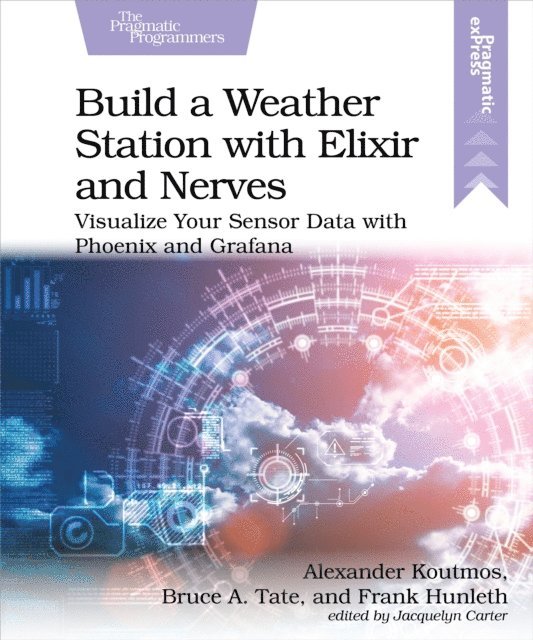
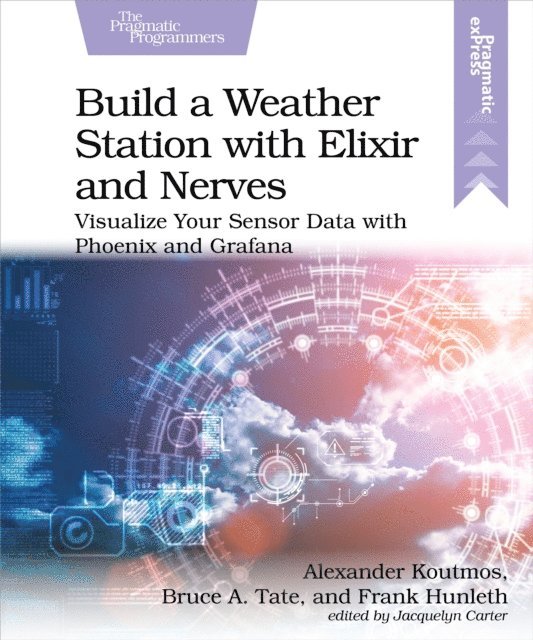
The Elixir programming language has become a go-to tool for creating reliable, fault-tolerant, and robust server-side applications. Thanks to Nerves, those same exact benefits can be realized in embedded applications. This book will teach you how to structure, build, and deploy production grade Nerves applications to network-enabled devices. The weather station sensor hub project that you will be embarking upon will show you how to create a full stack IoT solution in record time. You will build everything from the embedded Nerves device to the Phoenix backend and even the Grafana time-series data visualizations.
Elixir as a programming language has found its way into many different software domains, largely in part to the rock-solid foundation of the Erlang virtual machine. Thanks to the Nerves framework, Elixir has also found success in the world of embedded systems and IoT. Having access to all of the Elixir and OTP constructs such as concurrency, supervision, and immutability makes for a powerful IoT recipe. Find out how to create fault-tolerant, reliable, and robust embedded applications using the Nerves framework.
Build and deploy a production-grade weather station sensor hub using Elixir and Nerves, all while leveraging the best practices established by the Nerves community for structuring and organizing Nerves applications. Capture all of your weather station sensor data using Phoenix and Ecto in a lightweight server-side application. Efficiently store and retrieve the time-series weather data collected by your device using TimescaleDB (the Postgres extension for time-series data). Finally, complete the full stack IoT solution by using Grafana to visualize all of your time-series weather station data. Discover how to create software solutions where the underlying technologies and techniques are applicable to all layers of the project.
Take your project from idea to production ready in record time with Elixir and Nerves.
What You Need:
To complete the Nerves weather station project in this book, you will need the following:
A Linux, MacOS, or Windows computer to build and deploy Nerves firmware imagesA Raspberry Pi Zero W or any other Nerves supported target (https://hexdocs.pm/nerves/targets.html#supported-targets-and-systems)A VEML6030 light sensorAn BME680 environmental sensorAn SGP30 air quality sensorQwiic connect cables for weather sensors218 kr
Läs direkt efter köp
The Elixir programming language has become a go-to tool for creating reliable, fault-tolerant, and robust server-side applications. Thanks to Nerves, those same exact benefits can be realized in embedded applications. This book will teach you how to structure, build, and deploy production grade Nerves applications to network-enabled devices. The weather station sensor hub project that you will be embarking upon will show you how to create a full stack IoT solution in record time. You will build everything from the embedded Nerves device to the Phoenix backend and even the Grafana time-series data visualizations.
Elixir as a programming language has found its way into many different software domains, largely in part to the rock-solid foundation of the Erlang virtual machine. Thanks to the Nerves framework, Elixir has also found success in the world of embedded systems and IoT. Having access to all of the Elixir and OTP constructs such as concurrency, supervision, and immutability makes for a powerful IoT recipe. Find out how to create fault-tolerant, reliable, and robust embedded applications using the Nerves framework.
Build and deploy a production-grade weather station sensor hub using Elixir and Nerves, all while leveraging the best practices established by the Nerves community for structuring and organizing Nerves applications. Capture all of your weather station sensor data using Phoenix and Ecto in a lightweight server-side application. Efficiently store and retrieve the time-series weather data collected by your device using TimescaleDB (the Postgres extension for time-series data). Finally, complete the full stack IoT solution by using Grafana to visualize all of your time-series weather station data. Discover how to create software solutions where the underlying technologies and techniques are applicable to all layers of the project.
Take your project from idea to production ready in record time with Elixir and Nerves.
What You Need:
To complete the Nerves weather station project in this book, you will need the following:
A Linux, MacOS, or Windows computer to build and deploy Nerves firmware imagesA Raspberry Pi Zero W or any other Nerves supported target (https://hexdocs.pm/nerves/targets.html#supported-targets-and-systems)A VEML6030 light sensorAn BME680 environmental sensorAn SGP30 air quality sensorQwiic connect cables for weather sensors176 kr
Läs direkt efter köp
Elixir is a functional language that crosses many boundaries. With a syntax borrowing heavily from Ruby, a runtime that is on the Erlang BEAM, a macro system like that in Lisp, and a streaming library like you might find in Haskell, Elixir takes the best features from many environments. Elixir borrows from Erlang''s "Let It Crash" philosophy, and adds significant improvements with structs, first-class hygienic macros, and abstractions such as protocols. Many of these ideas were borrowed from other communities, and they make a big difference in language adoption. This book gives you a quick guided tour through the fascinating world of Elixir!
Explore Elixir with the author of Seven Languages in Seven Weeks. In this fast-paced book - first published with Groxio''s Programmer Passport - you''ll discover how Elixir''s fantastic documentation, clear error messages, and excellent tooling make it approachable and easy to work with. Learn about techniques other books skip, like writing your own Mix task, and discover several blind spots that beginning and intermediate Elixir developers encounter.
Effective Elixir depends on getting the most out of the most common datatypes - explore the most important ones before using them to write modules and different kinds of functions. Learn when to choose tuples, maps, or lists in your programs, and the most effective ways to access lists. Understand the differences between maps and keyword lists. Learn the primitives Elixir uses to start multiple processes and send messages between them. You''ll finish the book by dabbling with the advanced techniques of streams, sigils, and macros.
Find out what Groxio IPSers already know. The assistance of an experienced guide will help you learn Elixir more quickly than you could without one.
What You Need:
You''ll need Elixir version 1.12 or greater.
177 kr
Läs direkt efter köp
Elixir is a functional language that crosses many boundaries. With a syntax borrowing heavily from Ruby, a runtime that is on the Erlang BEAM, a macro system like that in Lisp, and a streaming library like you might find in Haskell, Elixir takes the best features from many environments. Elixir borrows from Erlang''s "Let It Crash" philosophy, and adds significant improvements with structs, first-class hygienic macros, and abstractions such as protocols. Many of these ideas were borrowed from other communities, and they make a big difference in language adoption. This book gives you a quick guided tour through the fascinating world of Elixir!
Explore Elixir with the author of Seven Languages in Seven Weeks. In this fast-paced book - first published with Groxio''s Programmer Passport - you''ll discover how Elixir''s fantastic documentation, clear error messages, and excellent tooling make it approachable and easy to work with. Learn about techniques other books skip, like writing your own Mix task, and discover several blind spots that beginning and intermediate Elixir developers encounter.
Effective Elixir depends on getting the most out of the most common datatypes - explore the most important ones before using them to write modules and different kinds of functions. Learn when to choose tuples, maps, or lists in your programs, and the most effective ways to access lists. Understand the differences between maps and keyword lists. Learn the primitives Elixir uses to start multiple processes and send messages between them. You''ll finish the book by dabbling with the advanced techniques of streams, sigils, and macros.
Find out what Groxio IPSers already know. The assistance of an experienced guide will help you learn Elixir more quickly than you could without one.
What You Need:
You''ll need Elixir version 1.12 or greater.
176 kr
Läs direkt efter köp
OTP is the heart of the rapidly growing Elixir, the functional language at the heart of Phoenix and LiveView. OTP enables exciting concurrent applications with among the best reliability properties in the world. With this book, you''ll learn to code systems that can detect failure and recover from it automatically using the same techniques behind the world''s telecommunication systems. By plugging into OTP, your own libraries will handle concurrent requests robustly, and seamlessly integrate with other supervised Elixir and Erlang applications. If you''re looking to take your next step as an Elixir developer, look no further than OTP.
OTP is a library for building fault tolerant systems with self-healing properties; its services power many of the world''s reliable telecom infrastructure. It also powers many of Elixir''s most powerful capabilities. In this fast-paced book - first published with Groxio''s Programmer Passport - you''ll learn about the most important abstractions that power OTP. This approachable guide will give you a high-level understanding before diving into individual details. This understanding will tell you how the core APIs work so you''ll know why Elixir programmers write code the way they do.
To start, this guide will walk you through building your own basic service that works in the same way as OTP''s foundational GenServer. This quick exercise will gently ease you into the way GenServers work. You''ll build your own GenServer, and then quickly move on to adding the supervision services to enable the reliability and self-healing properties that make Elixir famous. Once you''ve done so, you''ll add features like a dynamic supervisor, and use a process registry to make your program more flexible and dynamic.
What You Need:
You''ll need Elixir version 1.12 or greater.
Find out what Groxio IPSers already know. The assistance of an experienced guide will help you learn how to use OTP to build reliable, highly concurrent systems more quickly than you could without one.
176 kr
Läs direkt efter köp
OTP is the heart of the rapidly growing Elixir, the functional language at the heart of Phoenix and LiveView. OTP enables exciting concurrent applications with among the best reliability properties in the world. With this book, you''ll learn to code systems that can detect failure and recover from it automatically using the same techniques behind the world''s telecommunication systems. By plugging into OTP, your own libraries will handle concurrent requests robustly, and seamlessly integrate with other supervised Elixir and Erlang applications. If you''re looking to take your next step as an Elixir developer, look no further than OTP.
OTP is a library for building fault tolerant systems with self-healing properties; its services power many of the world''s reliable telecom infrastructure. It also powers many of Elixir''s most powerful capabilities. In this fast-paced book - first published with Groxio''s Programmer Passport - you''ll learn about the most important abstractions that power OTP. This approachable guide will give you a high-level understanding before diving into individual details. This understanding will tell you how the core APIs work so you''ll know why Elixir programmers write code the way they do.
To start, this guide will walk you through building your own basic service that works in the same way as OTP''s foundational GenServer. This quick exercise will gently ease you into the way GenServers work. You''ll build your own GenServer, and then quickly move on to adding the supervision services to enable the reliability and self-healing properties that make Elixir famous. Once you''ve done so, you''ll add features like a dynamic supervisor, and use a process registry to make your program more flexible and dynamic.
What You Need:
You''ll need Elixir version 1.12 or greater.
Find out what Groxio IPSers already know. The assistance of an experienced guide will help you learn how to use OTP to build reliable, highly concurrent systems more quickly than you could without one.
254 kr
Läs direkt efter köp
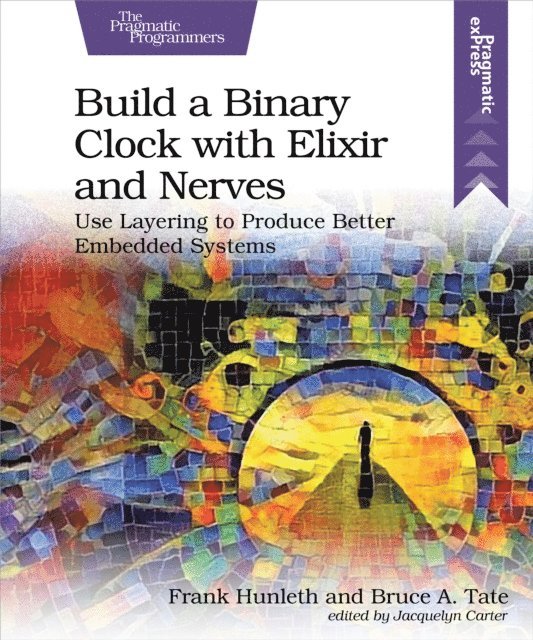
Want to get better at coding Elixir? Write a hardware project with Nerves. As you build this binary clock, you''ll build in resiliency using OTP, the same libraries powering many commercial phone switches. You''ll attack complexity the way the experts do, using a layered approach. You''ll sharpen your debugging skills by taking small, easily verified steps toward your goal. When you''re done, you''ll have a working binary clock and a good appreciation of the work that goes into a hardware system. You''ll also be able to apply that understanding to every new line of Elixir you write.
Combining software with hardware can be frustrating, but you can become proficient in no time by taking a simple, logical approach. Blinking a single LED is the traditional "hello-world" of embedded systems. Building your own binary clock is the logical next step. It blinks groupings of LEDs based on the system time. This guide walks you through a working project using the techniques used by experts who build software for hardware every day.
This common sense project moves forward in tiny, logical steps. As you progress, you can verify each step before moving on to the next. You don''t have to be a Nerves novice to benefit from this project. Become a better Elixir programmer as you build your own desktop showpiece. With a layered approach to software design, you''ll learn to control the complexity of your programs the way the experts do by focusing on one small slice of your system at a time.
When you''re done, you''ll have your own binary clock, and also more of the tools you need to design and build your own Nerves and Elixir projects. You''ll also be a better programmer with a deeper appreciation of layering techniques for controlling complexity.
What You Need:
This project is for Elixir developers who want to get started with Nerves, or improve their skills. The project is designed for Elixir 1.11 and Nerves 1.7, but later versions will probably work as well with slight modifications. The project uses a Raspberry Pi zero with a set of components. With slight modifications, you can make this book work with other components as well.
254 kr
Läs direkt efter köp
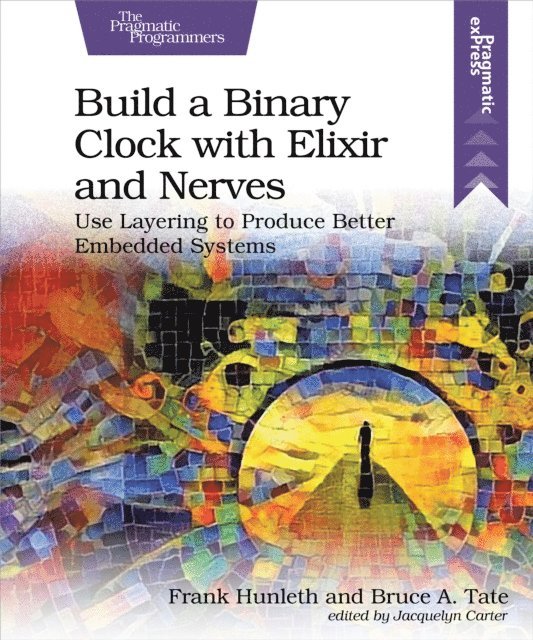
Want to get better at coding Elixir? Write a hardware project with Nerves. As you build this binary clock, you''ll build in resiliency using OTP, the same libraries powering many commercial phone switches. You''ll attack complexity the way the experts do, using a layered approach. You''ll sharpen your debugging skills by taking small, easily verified steps toward your goal. When you''re done, you''ll have a working binary clock and a good appreciation of the work that goes into a hardware system. You''ll also be able to apply that understanding to every new line of Elixir you write.
Combining software with hardware can be frustrating, but you can become proficient in no time by taking a simple, logical approach. Blinking a single LED is the traditional "hello-world" of embedded systems. Building your own binary clock is the logical next step. It blinks groupings of LEDs based on the system time. This guide walks you through a working project using the techniques used by experts who build software for hardware every day.
This common sense project moves forward in tiny, logical steps. As you progress, you can verify each step before moving on to the next. You don''t have to be a Nerves novice to benefit from this project. Become a better Elixir programmer as you build your own desktop showpiece. With a layered approach to software design, you''ll learn to control the complexity of your programs the way the experts do by focusing on one small slice of your system at a time.
When you''re done, you''ll have your own binary clock, and also more of the tools you need to design and build your own Nerves and Elixir projects. You''ll also be a better programmer with a deeper appreciation of layering techniques for controlling complexity.
What You Need:
This project is for Elixir developers who want to get started with Nerves, or improve their skills. The project is designed for Elixir 1.11 and Nerves 1.7, but later versions will probably work as well with slight modifications. The project uses a Raspberry Pi zero with a set of components. With slight modifications, you can make this book work with other components as well.
357 kr
Skickas inom 5-8 vardagar
297 kr
Skickas inom 5-8 vardagar
240 kr
Läs direkt efter köp
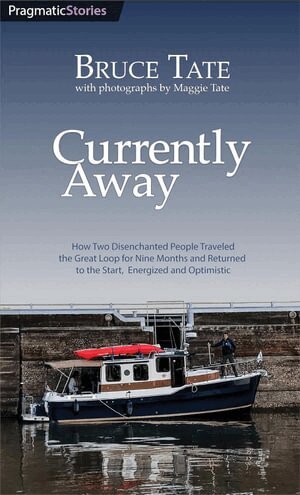
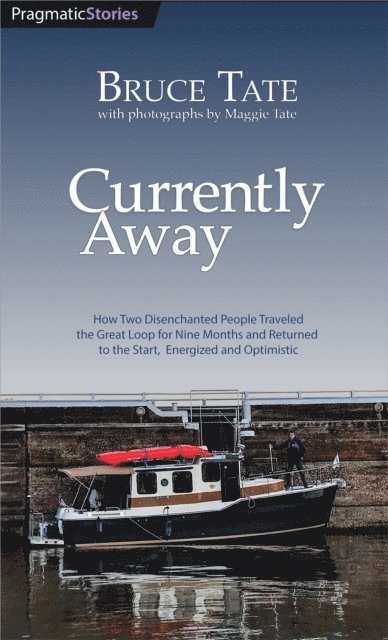
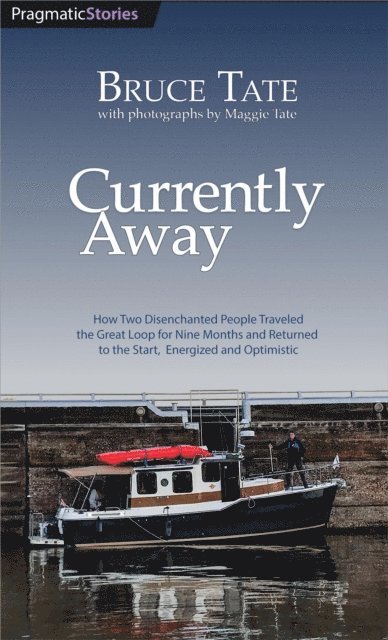
The walls were closing in on Bruce and Maggie Tate. Isolation forced on them by the pandemic, combined with America''s growing political factionalism, threatened their bonds with community and family. Something had to change. Maggie''s surprising answer: buy a boat, learn to pilot it, and embark on the Great Loop. For nine months Bruce and Maggie navigated rivers, coastal waters, lakes, locks, and loss. Against all odds, they conquered the Loop, and along the way found common cause across political divides with new friends while blowing the walls off their world.
Bruce and Maggie Tate were spiraling downward. Normally outgoing and cheerful, Maggie was broken down by pandemic isolation. Bruce, facing asthma, heart disease and Covid-related professional issues, was sure that the virus and his comorbidities would kill him. And the plant-based diet he had just started made him wish it would hurry up. Meanwhile, their country seemed to be crumbling into warring factions.
That was when Maggie made a life-changing decision. With no experience, knowing little about seafaring, inboard motors, or navigation, she and Bruce and the family dog decided to take on the Great Loop, a six-thousand-mile journey down inland rivers, around the Gulf and Atlantic coasts, and across the Great Lakes. They had to navigate canals and locks, were threatened by dangerous seas, and even had to deal with heartbreaking loss. But along the way, they made new lifelong friends and were forever changed.
When, in a time of great divisiveness, two broken people took on the challenge of their lives, against all odds they found common cause across political divides and made themselves whole again.
240 kr
Läs direkt efter köp
The walls were closing in on Bruce and Maggie Tate. Isolation forced on them by the pandemic, combined with America''s growing political factionalism, threatened their bonds with community and family. Something had to change. Maggie''s surprising answer: buy a boat, learn to pilot it, and embark on the Great Loop. For nine months Bruce and Maggie navigated rivers, coastal waters, lakes, locks, and loss. Against all odds, they conquered the Loop, and along the way found common cause across political divides with new friends while blowing the walls off their world.
Bruce and Maggie Tate were spiraling downward. Normally outgoing and cheerful, Maggie was broken down by pandemic isolation. Bruce, facing asthma, heart disease and Covid-related professional issues, was sure that the virus and his comorbidities would kill him. And the plant-based diet he had just started made him wish it would hurry up. Meanwhile, their country seemed to be crumbling into warring factions.
That was when Maggie made a life-changing decision. With no experience, knowing little about seafaring, inboard motors, or navigation, she and Bruce and the family dog decided to take on the Great Loop, a six-thousand-mile journey down inland rivers, around the Gulf and Atlantic coasts, and across the Great Lakes. They had to navigate canals and locks, were threatened by dangerous seas, and even had to deal with heartbreaking loss. But along the way, they made new lifelong friends and were forever changed.
When, in a time of great divisiveness, two broken people took on the challenge of their lives, against all odds they found common cause across political divides and made themselves whole again.