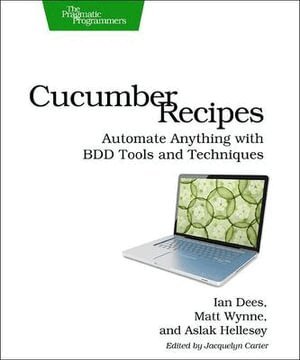
Ian Dees – författare
226 kr
Läs direkt efter köp
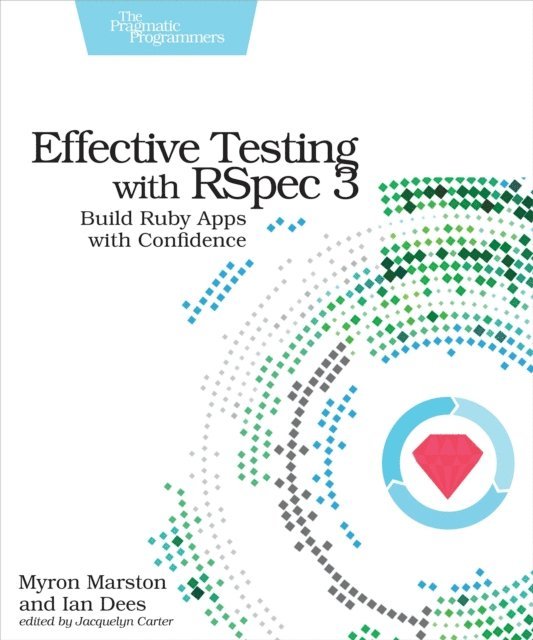
"Our tests are broken again!" "Why does the suite take so long to run?" "What value are we getting from these tests anyway?" Solve your testing problems by building and maintaining quality software with RSpec - the popular BDD-flavored Ruby testing framework. This definitive guide from RSpec''s lead developer shows you how to use RSpec to drive more maintainable designs, specify and document expected behavior, and prevent regressions during refactoring. Build a project using RSpec to design, describe, and test the behavior of your code. Whether you''re new to automated tests or have been using them for years, this book will help you write more effective tests.
RSpec has been downloaded more than 100 million times and has inspired countless test frameworks in other languages. Use this influential Ruby testing framework to iteratively develop a project with the confidence that comes from well-tested code. This book guides you through creating a Ruby project with RSpec, and explores the individual components in detail.
Start by learning the basics of installing and using RSpec. Then build a real-world JSON API, using RSpec throughout the process to drive a BDD-style outside-in workflow. Apply an effective test strategy to write fast, robust tests that support evolutionary design through refactoring. The rest of the book provides the definitive guide to RSpec''s components. Use rspec-core''s metadata to slice and dice your spec suite. Dig into rspec-expectations'' matchers: compose them in flexible ways, specify expected outcomes with precision, and diagnose problems quickly with the help of good failure messages. Write fast, isolated tests with rspec-mocks'' test doubles while pushing your code toward simpler interfaces.
The authors, with a combined 20 years of automated testing experience, share testing wisdom that will lead to a fun, productive testing experience.
What You Need:
To follow along with the book, you''ll need Ruby 2.2+. The book will guide you through installing RSpec 3 and setting up a new project to use it.
226 kr
Läs direkt efter köp
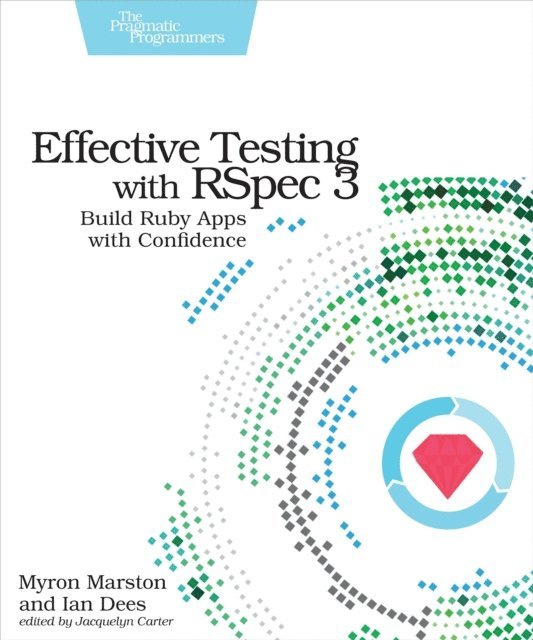
"Our tests are broken again!" "Why does the suite take so long to run?" "What value are we getting from these tests anyway?" Solve your testing problems by building and maintaining quality software with RSpec - the popular BDD-flavored Ruby testing framework. This definitive guide from RSpec''s lead developer shows you how to use RSpec to drive more maintainable designs, specify and document expected behavior, and prevent regressions during refactoring. Build a project using RSpec to design, describe, and test the behavior of your code. Whether you''re new to automated tests or have been using them for years, this book will help you write more effective tests.
RSpec has been downloaded more than 100 million times and has inspired countless test frameworks in other languages. Use this influential Ruby testing framework to iteratively develop a project with the confidence that comes from well-tested code. This book guides you through creating a Ruby project with RSpec, and explores the individual components in detail.
Start by learning the basics of installing and using RSpec. Then build a real-world JSON API, using RSpec throughout the process to drive a BDD-style outside-in workflow. Apply an effective test strategy to write fast, robust tests that support evolutionary design through refactoring. The rest of the book provides the definitive guide to RSpec''s components. Use rspec-core''s metadata to slice and dice your spec suite. Dig into rspec-expectations'' matchers: compose them in flexible ways, specify expected outcomes with precision, and diagnose problems quickly with the help of good failure messages. Write fast, isolated tests with rspec-mocks'' test doubles while pushing your code toward simpler interfaces.
The authors, with a combined 20 years of automated testing experience, share testing wisdom that will lead to a fun, productive testing experience.
What You Need:
To follow along with the book, you''ll need Ruby 2.2+. The book will guide you through installing RSpec 3 and setting up a new project to use it.
324 kr
Läs direkt efter köp
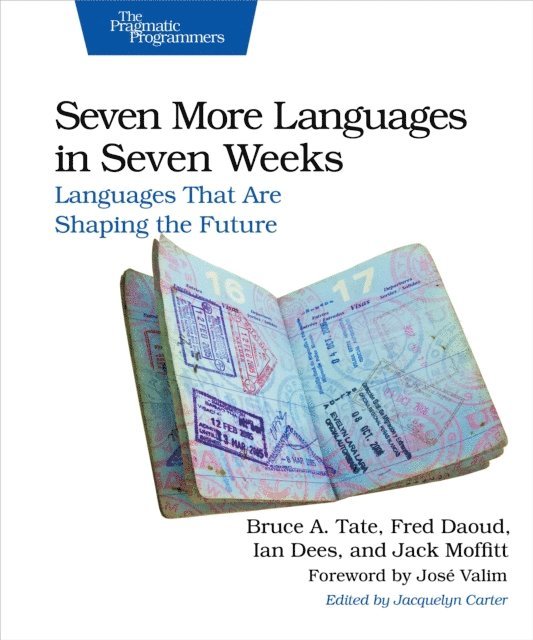
Great programmers aren''t born--they''re made. The industry is moving from object-oriented languages to functional languages, and you need to commit to radical improvement. New programming languages arm you with the tools and idioms you need to refine your craft. While other language primers take you through basic installation and "Hello, World," we aim higher. Each language in Seven More Languages in Seven Weeks will take you on a step-by-step journey through the most important paradigms of our time. You''ll learn seven exciting languages: Lua, Factor, Elixir, Elm, Julia, MiniKanren, and Idris.Learn from the award-winning programming series that inspired the Elixir language. Hear how other programmers across broadly different communities solve problems important enough to compel language development. Expand your perspective, and learn to solve multicore and distribution problems.In each language, you''ll solve a non-trivial problem, using the techniques that make that language special. Write a fully functional game in Elm, without a single callback, that compiles to JavaScript so you can deploy it in any browser. Write a logic program in Clojure using a programming model, MiniKanren, that is as powerful as Prolog but much better at interacting with the outside world. Build a distributed program in Elixir with Lisp-style macros, rich Ruby-like syntax, and the richness of the Erlang virtual machine. Build your own object layer in Lua, a statistical program in Julia, a proof in code with Idris, and a quiz game in Factor.When you''re done, you''ll have written programs in five different programming paradigms that were written on three different continents. You''ll have explored four languages on the leading edge, invented in the past five years, and three more radically different languages, each with something significant to teach you.
324 kr
Läs direkt efter köp
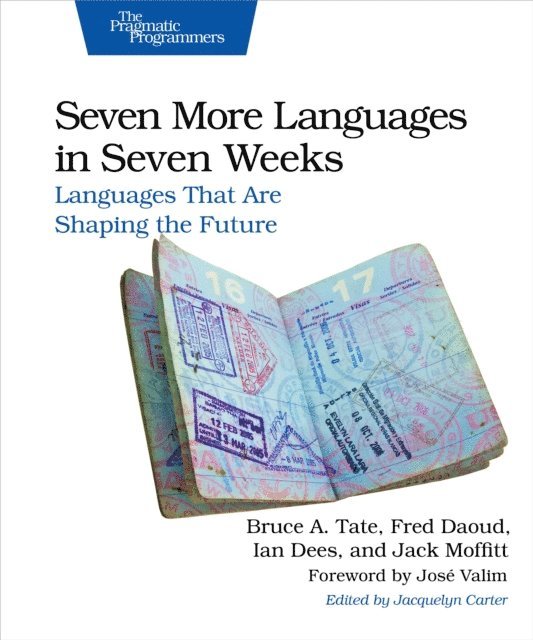
Great programmers aren''t born--they''re made. The industry is moving from object-oriented languages to functional languages, and you need to commit to radical improvement. New programming languages arm you with the tools and idioms you need to refine your craft. While other language primers take you through basic installation and "Hello, World," we aim higher. Each language in Seven More Languages in Seven Weeks will take you on a step-by-step journey through the most important paradigms of our time. You''ll learn seven exciting languages: Lua, Factor, Elixir, Elm, Julia, MiniKanren, and Idris.Learn from the award-winning programming series that inspired the Elixir language. Hear how other programmers across broadly different communities solve problems important enough to compel language development. Expand your perspective, and learn to solve multicore and distribution problems.In each language, you''ll solve a non-trivial problem, using the techniques that make that language special. Write a fully functional game in Elm, without a single callback, that compiles to JavaScript so you can deploy it in any browser. Write a logic program in Clojure using a programming model, MiniKanren, that is as powerful as Prolog but much better at interacting with the outside world. Build a distributed program in Elixir with Lisp-style macros, rich Ruby-like syntax, and the richness of the Erlang virtual machine. Build your own object layer in Lua, a statistical program in Julia, a proof in code with Idris, and a quiz game in Factor.When you''re done, you''ll have written programs in five different programming paradigms that were written on three different continents. You''ll have explored four languages on the leading edge, invented in the past five years, and three more radically different languages, each with something significant to teach you.
312 kr
Skickas inom 5-8 vardagar
357 kr
Skickas inom 5-8 vardagar