Frank L. Holt - Böcker
Visar alla böcker från författaren Frank L. Holt. Handla med fri frakt och snabb leverans.
10 produkter
10 produkter
278 kr
Skickas inom 5-8 vardagar
War, the most profitable economic activity in the ancient world, transferred wealth from the vanquished to the victor. Invasions, sieges, massacres, annexations, and mass deportations all redistributed property with dramatic consequences for kings and commoners alike. No conqueror ever captured more people or property in so short a lifetime than Alexander the Great in the late fourth century BC. For all its savagery, the creation of Alexander's empire has generally been hailed as a positive economic event for all concerned. Even those harshly critical of Alexander today tend to praise his plundering of Persia as a means of liberating the moribund resources of the East. To test this popular interpretation, The Treasures of Alexander the Great investigates the kinds and quantities of treasure seized by the Macedonian king, from gold and silver to land and slaves. It reveals what became of the king's wealth and what Alexander's redistribution of these vast resources can tell us about his much-disputed policies and personality. Though Alexander owed his vast fortune to war, battle also distracted him from competently managing his spoils and much was wasted, embezzled, deliberately destroyed, or idled unprofitably. The Treasures of Alexander the Great provides a long-overdue and accessible account of Alexander's wealth and its enormous impact on the ancient world.
445 kr
Skickas inom 5-8 vardagar
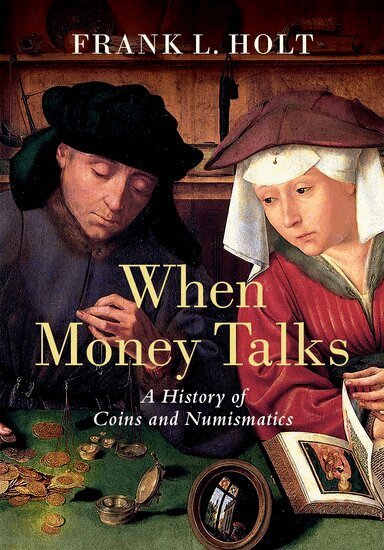
Coinage - it is one of the most successful and consistent technologies ever invented. Nothing else we still use in everyday life has a history quite like it. Look around at all the things that would bewilder a Greek, Roman, or Renaissance ancestor; then, dig into your purse or pocket for that one artifact that they would immediately recognize as part of their world. Historian Frank L. Holt takes us on a lively journey through the history of numismatics, the study of coins - one of the oldest and most important contributions to the arts and humanities. For 2600 years, poets, economists, philosophers, historians, and theologians have pondered the mysteries of money. Who invented coins, and why? Does coinage function beyond our control as if it had a mind of its own? How has it changed world history and culture? What does numismatics reveal about our past that could never be discovered from any other source? How has numismatics advanced using modern science? Does it still suffer from racist ideas about physiognomy and phrenology? What does its future hold? The approach taken in this richly illustrated book is as multi-faceted as coined money itself. Coins are integral to our economic, social, political, religious, and cultural history. When Money Talks: The History of Coins explores each aspect of coinage, and takes a special interest in how coins have appeared in literature and pop culture, ranging in its analysis from Greek drama and the New Testament to T.V. sitcoms and meme theory.
236 kr
Skickas inom 5-8 vardagar
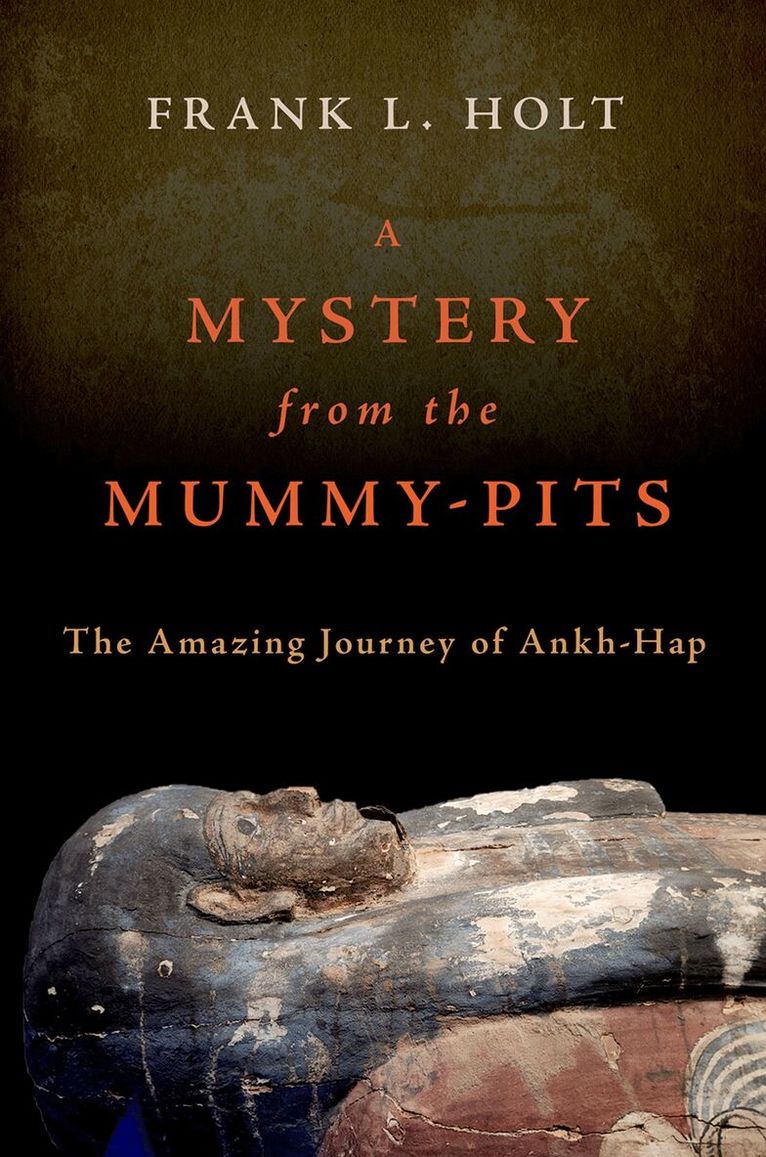
As the world recently commemorated the hundredth anniversary of the discovery of the tomb of Tutankhamun, our fascination with the pharaoh begs for a balanced view. Most Egyptian tombs are not royal; most were never carefully cleared and documented; most have not had their occupants treated with respect or returned to their sepulchers; and most recovered mummies have not escaped the modern trafficking in ancient bodies and body parts. The story of Ankh-Hap, a Ptolemaic-era mummy seized in the nineteenth century from the infamous mummy-pits of Egypt, provides a salutary example of what most mummies have endured.Like a detective, Frank Holt makes use of a robust combination of scientific tools and archival research to tell the story of Ankh-Hap's life, death, and his mummified remains, which ended up in the back of an American college classroom. A Mystery from the Mummy-Pits takes the reader into a forgotten world of mummy trafficking by an American entrepreneur named Henry Augustus Ward (1834-1906). In Rochester, N.Y., his company's shelves were stocked with mummies, coffins, and even ancient body parts such as mummies' heads ($10 each), legs ($4 each), and arms ($5 each). Customers could piece together their own "Frankenmummy" with authentic wrappings and amulets sold separately. A Mystery from the Mummy-Pits contextualizes this fascinating information by surveying the history of similar mummies from antiquity to the twentieth century, moving from ancient tomb robbers and medieval apothecaries to modern dime museums, traveling shows, pulp fiction, films, and pop culture. The book offers readers a new glimpse inside a dark chapter of mummy history.
398 kr
Skickas inom 5-8 vardagar
War, the most profitable economic activity in the ancient world, transferred wealth violently from the vanquished to the victor. Invasions, massacres, confiscations, deportations, the sacking of cities, and the selling of survivors into slavery all redistributed property with epic consequences for kings and commoners alike. The most notable example occurred in the late fourth century BC, when Alexander the Great conquered the Persian Empire. For all of its savagery, this invasion has generally been heralded as a positive economic event for all concerned. Even those harshly critical of the king today tend to praise his plundering of Persia as a means of liberating the moribund resources of the East. To test that popular interpretation, this book investigates the kinds and quantities of treasure seized by the Macedonian king, from gold and silver to land and slaves. It reveals what became of the king's wealth, and what Alexander's redistribution of these vast resources can tell us about his much-disputed policies and personality. Although war made Alexander unbelievably wealthy, it distracted him from managing his spoils competently. Much was wasted, embezzled, deliberately destroyed, or idled again unprofitably. These facts force us to reassess the notion, prevalent since the nineteenth century, that Alexander the Great used the profits of war to improve the ancient economies in the lands that he conquered.
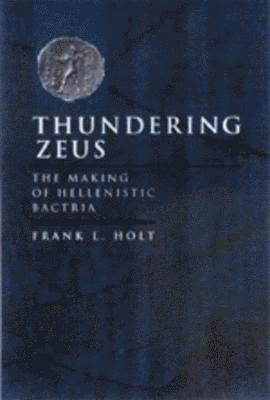
Del 32 - Hellenistic Culture and Society
Thundering Zeus
The Making of Hellenistic Bactria
Inbunden, Engelska, 1999
604 kr
Skickas inom 7-10 vardagar
"Thundering Zeus" uses an innovative, interdisciplinary approach to resolve one of the greatest puzzles in all of Hellenistic history. This book explores the remarkable rise of a Greek-ruled kingdom in ancient Bactria (modern Afghanistan) during the third century B.C. Diodotus I and II, whose dynasty emblazoned its coins with the dynamic image of Thundering Zeus, led this historic movement by breaking free of the Seleucid Empire and building a strong independent state in Central Asia. The chronology and crises that defined their reigns have been established here for the first time, and Frank Holt sets this new history into the larger context of Hellenistic studies. The best sources for understanding Hellenistic Bactria are archaeological, and they include a magnificent trove of coins. In addition to giving a history of Bactria, "Thundering Zeus" provides a catalog of these coins, as well as an introduction to the study of numismatics itself. Holt presents this fascinating material with the precision and acuity of a specialist and with the delight of an admirer, providing an up-to-date full catalog of known Diodotid coinage, and illustrating twenty-three coins.This succinct, energetic narrative thunders across the history of Hellenistic Bactria, exhuming coins, kingdoms, and customs as it goes. The result is a book that is both a history and a history of discovery, with much to offer those interested in ancient texts, archaeology, and coins.
Del 44 - Hellenistic Culture and Society
Alexander the Great and the Mystery of the Elephant Medallions
Häftad, Engelska, 2003
550 kr
Skickas inom 3-6 vardagar
To all those who witnessed his extraordinary conquests, from Albania to India, Alexander the Great appeared invincible. How Alexander himself promoted this appearance - how he abetted the belief that he enjoyed divine favor and commanded even the forces of nature against his enemies - is the subject of Frank L. Holt's absorbing book. Solid evidence for the "supernaturalized" Alexander lies in a rare series of medallions that depict the triumphant young king at war against the elephants, archers, and chariots of Rajah Porus of India at the Battle of the Hydaspes River. Recovered from Afghanistan and Iraq in sensational and sometimes perilous circumstances, these ancient artifacts have long animated the modern historical debate about Alexander. Holt's book, the first devoted to the mystery of these ancient medallions, takes us into the history of their discovery and interpretation, into the knowable facts of their manufacture and meaning, and, ultimately, into the king's own psyche and his frightening theology of war. The result is a valuable analysis of Alexander history and myth, a vivid account of numismatics, and a spellbinding look into the age-old mechanics of megalomania.
Del 47 - Hellenistic Culture and Society
Into the Land of Bones
Alexander the Great in Afghanistan
Inbunden, Engelska, 2005
1 063 kr
Skickas inom 3-6 vardagar
What George W. Bush called the 'first war of the twenty-first century' actually began more than 2,300 years ago when Alexander the Great led his army into what is now a sprawling ruin in northern Afghanistan. Accounts of Alexander's invasion of ancient Bactria read eerily like news from our own day. In this vivid, meticulously researched, and elegantly narrated book, Frank L. Holt follows Alexander's historical, archaeological, and numismatic legacy back and forth between ancient Bactria and modern Afghanistan. Recounting the plight of the most powerful leader of the time as he led the most sophisticated army of its day into the treacherous world of tribal warlords, Holt describes those grueling campaigns and the impact they had on Alexander, his generals, their troops, and the world. "Into the Land of Bones" also examines the conflict from the point of view of the local warlords who pushed the invading Greeks to the limits of their endurance - and sometimes beyond, into mania and mutiny. The lively narrative situates the current war in Afghanistan in a broader historical perspective.Holt explains how the three modern superpowers that have invaded Afghanistan - Britain in the nineteenth century, the Soviets in the twentieth, and the United States in the twenty-first - are continuing the struggle that Alexander began centuries ago. That this legacy continues to play itself out today is a testament to the timeliness of Holt's fascinating and original account.
Del 53 - Hellenistic Culture and Society
Lost World of the Golden King
In Search of Ancient Afghanistan
Inbunden, Engelska, 2012
330 kr
Skickas inom 7-10 vardagar
Drawing on ancient historical writings, the vast array of information gleaned in recent years from the study of Hellenistic coins, and startling archaeological evidence newly unearthed in Afghanistan, Frank L. Holt sets out to rediscover the ancient civilization of Bactria. In a gripping narrative informed by the author's deep knowledge of his subject, this book covers two centuries of Bactria's history, from its colonization by remnants of Alexander the Greats army to the kingdom's collapse at the time of a devastating series of nomadic invasions. Beginning with the few tantalizing traces left behind when the 'empire of a thousand cities' vanished, Holt takes up that trail and follows the remarkable and sometimes perilous journey of rediscovery. Lost World of the Ancient King describes how a single bit of evidence - a Greek coin - launched a search that drew explorers to the region occupied by the tumultuous warring tribes of eighteenth- and nineteenth-century Afghanistan. Coin by coin, king by king, the history of Bactria was reconstructed using the emerging methodologies of numismatics. In the twentieth century, extraordinary ancient texts added to the evidence.Finally, one of the 'thousand cities' was discovered and excavated, revealing an opulent palace, treasury, temple, and other buildings. Though these great discoveries soon fell victim to the Afghan political crisis that continues today, this book provides a thrilling chronicle of the search for one of the world's most enigmatic empires.
Del 47 - Hellenistic Culture and Society
Into the Land of Bones
Alexander the Great in Afghanistan
Häftad, Engelska, 2012
249 kr
Skickas inom 7-10 vardagar
The so-called first war of the twenty-first century actually began more than 2,300 years ago when Alexander the Great led his army into what is now a sprawling ruin in northern Afghanistan. Frank L. Holt vividly recounts Alexander's invasion of ancient Bactria, situating in a broader historical perspective America's war in Afghanistan.
Del 104 - Mnemosyne, Supplements
Alexander the Great and Bactria
The Formation of a Greek Frontier in Central Asia
Häftad, Engelska, 1993
1 100 kr
Skickas inom 5-8 vardagar
The creation of a Greek Frontier in Central Asia was one of the most famous and far-reaching achievements of Alexander the Great. Yet the process was shaped as much by the political traditions of the natives as by the cultural traditions of the newcomers. This book examines this key historical clash from both sides, and shows that the birth of Hellenistic Bactria was a traumatic one eliciting more bitterness than 'brotherhood'.The book is composed of four major parts: Part I provides an introduction to both Bactrian and Alexander studies; Part II surveys the land and peoples of Central Asia prior to Alexander's 'conquest'; Part III covers the Graeco-Macedonian invasion and the effects of colonization; Part IV treats the aftermath, from the death of Alexander to the accession of Seleucus.