Fred Cooper – författare
Visar alla böcker från författaren Fred Cooper. Handla med fri frakt och snabb leverans.
6 produkter
COVID-19 and Shame
Political Emotions and Public Health in the UK
Av Fred Cooper, Luna Dolezal m. fl.
Häftad, 2023
240 kr
Lägg i varukorg
This open access book examines the various ways that shame, shaming and stigma became an integral part of the United Kingdom’s public health response to COVID-19 during 2020. As the Covid-19 pandemic unfolded in 2020, it quickly became clear that experiences of shame, shaming and stigma dominated …
COVID-19 and Shame
Political Emotions and Public Health in the UK
Av Fred Cooper, Luna Dolezal m. fl.
Inbunden, 2023
678 kr
Lägg i varukorg
This open access book examines the various ways that shame, shaming and stigma became an integral part of the United Kingdom’s public health response to COVID-19 during 2020. As the Covid-19 pandemic unfolded in 2020, it quickly became clear that experiences of shame, shaming and stigma dominated …
Knowing Covid-19
The Pandemic and Beyond
Av Fred Cooper, Des Fitzgerald
Inbunden, 2024
573 kr
Lägg i varukorg
Knowing COVID-19 demonstrates how researchers in the humanities shone a light on some of the many hidden problems of COVID-19, in the very depths of the pandemic crisis. Drawing on eight COVID-19 research projects, the volume shows how humanities researchers, alongside colleagues in the clinical …
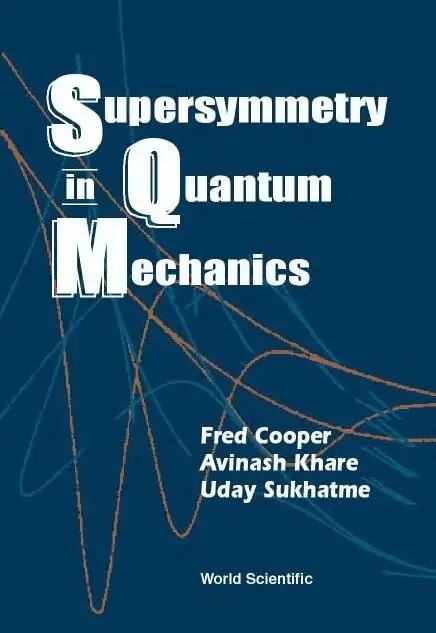
SUPERSYMMETRY IN QUANTUM MECHANICS
Av Fred Cooper, Avinash Khare m. fl.
Inbunden, 2001
1402 kr
Lägg i varukorg
This invaluable book provides an elementary description of supersymmetric quantum mechanics which complements the traditional coverage found in the existing quantum mechanics textbooks. It gives physicists a fresh outlook and new ways of handling quantum-mechanical problems, and also leads to …
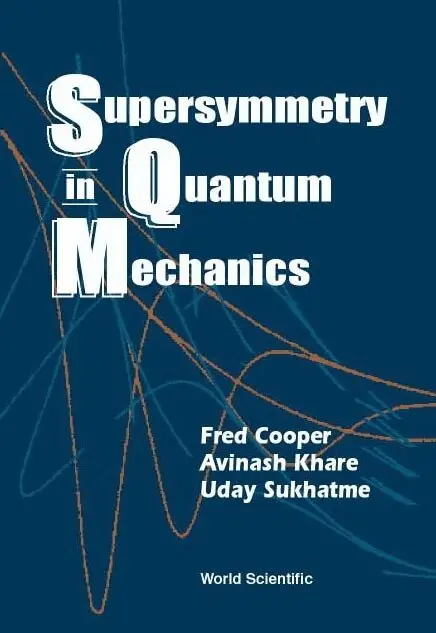
SUPERSYMMETRY IN QUANTUM MECHANICS
Av Fred Cooper, Avinash Khare m. fl.
Häftad, 2001
716 kr
Lägg i varukorg
This invaluable book provides an elementary description of supersymmetric quantum mechanics which complements the traditional coverage found in the existing quantum mechanics textbooks. It gives physicists a fresh outlook and new ways of handling quantum-mechanical problems, and also leads to …
STATE OF PHYSICS AT THE END OF THE 20TH CENTURY, THE: IN HONOR OF PETER CARRUTHERS' 61ST BIRTHDAY
Av . WEST SARCEVIC. . . . . . F COOPER, Fred Cooper m. fl.
Inbunden, 1999
1556 kr
Tillfälligt slut
This is a volume in honor of Professor Peter Carruthers on the occasion of his 61st birthday. It is a unique collection of papers by the world's leading experts, describing the most exciting developments in many areas of theoretical physics. While traditionally physics is driven to ever smaller and …