Fred H. Gage – författare
Visar alla böcker från författaren Fred H. Gage. Handla med fri frakt och snabb leverans.
15 produkter
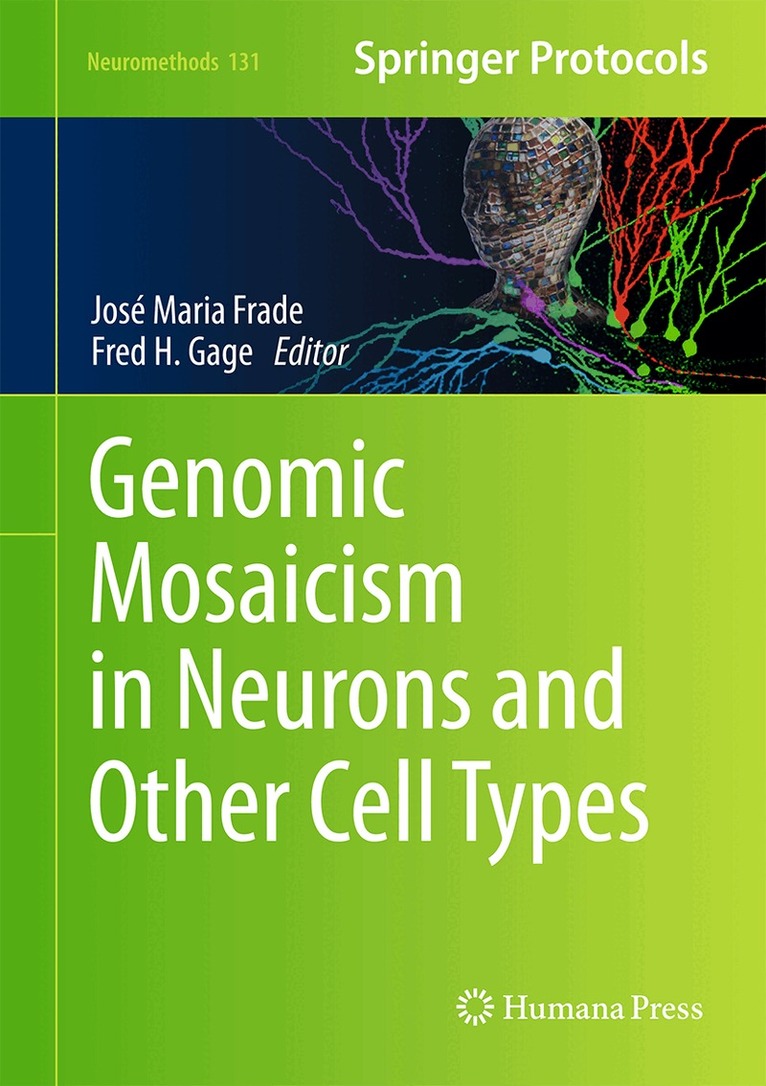
Genomic Mosaicism in Neurons and Other Cell Types
Av José María Frade, Fred H. Gage
Inbunden, 2017
1637 kr
Lägg i varukorg
This volume presents methods for the analysis of genomic variability in vertebrate neurons and broadens our knowledge in the ways we understand the brain and its neurons. The chapters in this book are divided into 5 parts, and cover the following topics: principles and approaches for discovery of …
Genomic Mosaicism in Neurons and Other Cell Types
Av Fred H. Gage, Jose Maria Frade
E-bok, 2017
1622 kr
Lägg i varukorg
This volume presents methods for the analysis of genomic variability in vertebrate neurons and broadens our knowledge in the ways we understand the brain and its neurons. The chapters in this book are divided into 5 parts, and cover the following topics: principles and approaches for discovery of …
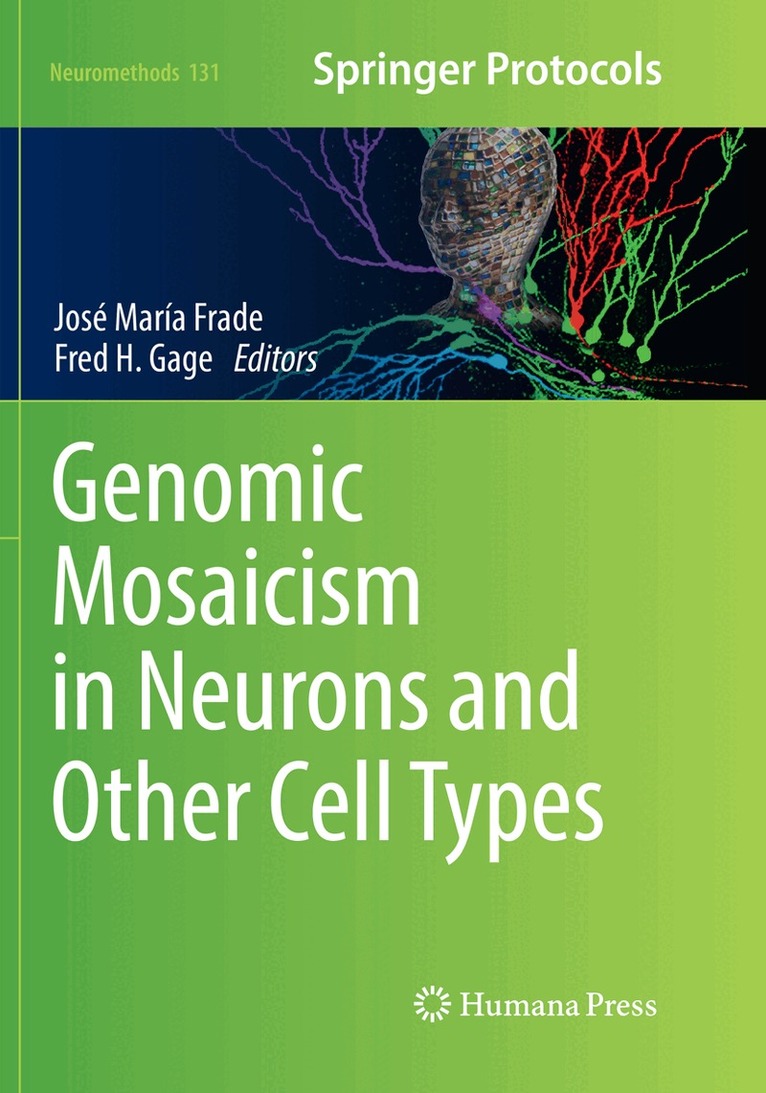
Genomic Mosaicism in Neurons and Other Cell Types
Av José María Frade, Fred H. Gage
Häftad, 2018
1202 kr
Lägg i varukorg
This volume presents methods for the analysis of genomic variability in vertebrate neurons and broadens our knowledge in the ways we understand the brain and its neurons. The chapters in this book are divided into 5 parts, and cover the following topics: principles and approaches for discovery of …
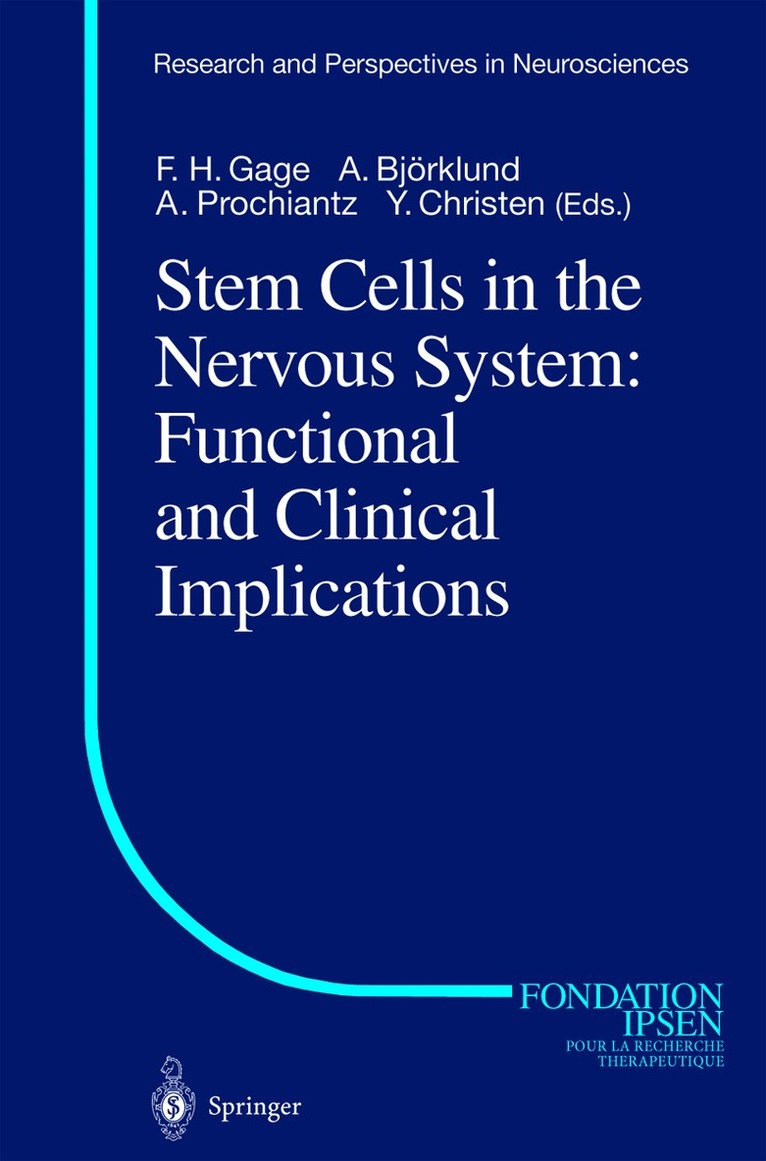
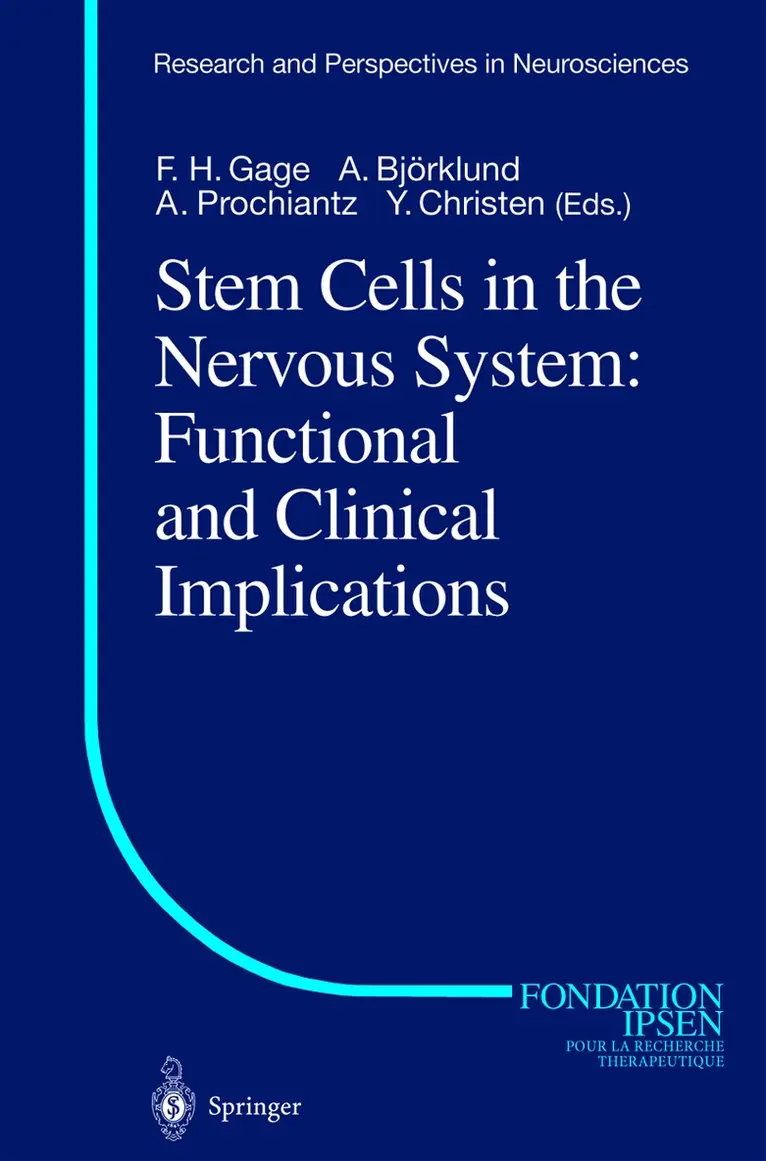
Stem Cells in the Nervous System: Functional and Clinical Implications
Av Fred H. Gage, Anders Bjorklund m. fl.
Inbunden, 2004
2185 kr
Lägg i varukorg
After 40 years of research, scientists have confirmed that persistent neurogenesis occurs in the adult mammalian brain. The obvious next question is: "Are the newly generated neurons functional?" If so, "What are the functions of these new neurons?" This volume intends to clarify both questions by …
Retrotransposition, Diversity and the Brain
Av Fred H. Gage
Inbunden, 2007
1129 kr
Lägg i varukorg
The human brain is remarkably complex, permitting sophisticated behavioural rep- toires, such as languages, tool use, self-awareness, symbolic thought, cultural learning and consciousness. Each human being is different, due in part to the uniqueness of the neuronal heterogeneity and …
Retrotransposition, Diversity and the Brain
Av Fred H. Gage
E-bok, 2007
1502 kr
Lägg i varukorg
The human brain is remarkably complex, permitting sophisticated behavioural rep- toires, such as languages, tool use, self-awareness, symbolic thought, cultural learning and consciousness. Each human being is different, due in part to the uniqueness of the neuronal heterogeneity and …
Retrotransposition, Diversity and the Brain
Av Fred H. Gage
Häftad, 2010
1129 kr
Lägg i varukorg
The human brain is remarkably complex, permitting sophisticated behavioural rep- toires, such as languages, tool use, self-awareness, symbolic thought, cultural learning and consciousness. Each human being is different, due in part to the uniqueness of the neuronal heterogeneity and …
Stem Cells in the Nervous System: Functional and Clinical Implications
Av Alain Prochiantz, Anders Bjorklund m. fl.
E-bok, 2012
2925 kr
Lägg i varukorg
After 40 years of research, scientists have confirmed that persistent neurogenesis occurs in the adult mammalian brain. The obvious next question is: "Are the newly generated neurons functional?" If so, "What are the functions of these new neurons?" This volume intends to clarify both questions by …
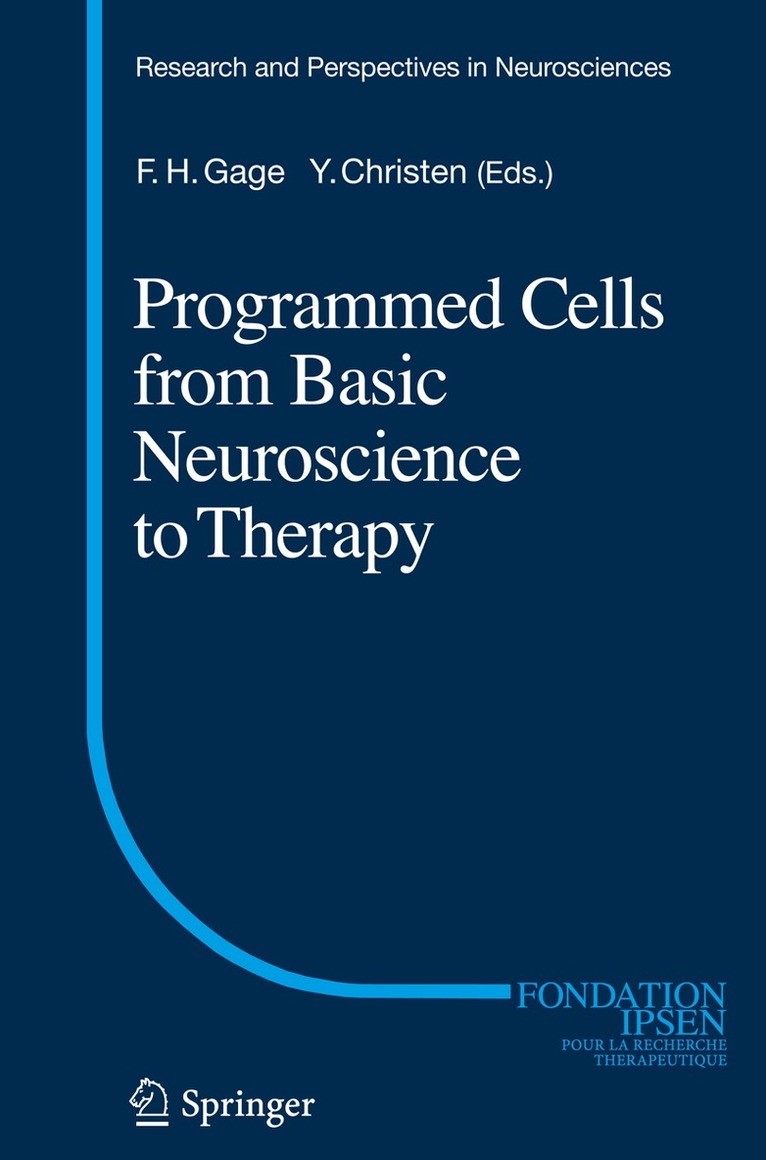
Programmed Cells from Basic Neuroscience to Therapy
Av Fred H. Gage, Yves Christen
Inbunden, 2013
1690 kr
Lägg i varukorg
The recent advances in Programming Somatic Cell (PSC) including induced Pluripotent Stem Cells (iPS) and Induced Neuronal phenotypes (iN), has changed our experimental landscape and opened new possibilities. The advances in PSC have provided an important tool for the study of human neuronal …
Programmed Cells from Basic Neuroscience to Therapy
Av Yves Christen, Fred H. Gage
E-bok, 2013
2174 kr
Lägg i varukorg
The recent advances in Programming Somatic Cell (PSC) including induced Pluripotent Stem Cells (iPS) and Induced Neuronal phenotypes (iN), has changed our experimental landscape and opened new possibilities. The advances in PSC have provided an important tool for the study of human neuronal …
Stem Cells in the Nervous System: Functional and Clinical Implications
Av Fred H. Gage, Anders Björklund m. fl.
Häftad, 2012
2185 kr
Lägg i varukorg
After 40 years of research, scientists have confirmed that persistent neurogenesis occurs in the adult mammalian brain. The obvious next question is: "Are the newly generated neurons functional?" If so, "What are the functions of these new neurons?" This volume intends to clarify both questions by …
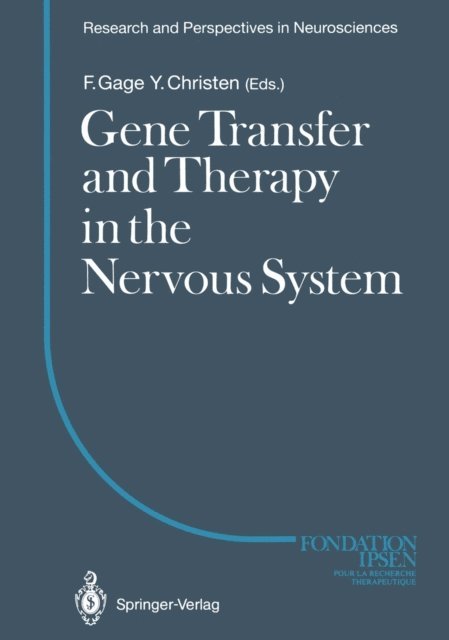
Gene Transfer and Therapy in the Nervous System
Häftad, 2011
1129 kr
Lägg i varukorg
Gene transfer technology is a powerful tool for increasing our understandingof brain functions. It is also the basis of gene therapy, which is now technically possible for the correction of many human diseases, including several disorders of the nervous (and muscular) system such as Alzheimer's …
Programmed Cells from Basic Neuroscience to Therapy
Av Fred H. Gage, Yves Christen
Häftad, 2016
1690 kr
Lägg i varukorg
The recent advances in Programming Somatic Cell (PSC) including induced Pluripotent Stem Cells (iPS) and Induced Neuronal phenotypes (iN), has changed our experimental landscape and opened new possibilities. The advances in PSC have provided an important tool for the study of human neuronal …