Fred H. Lawson - Böcker
Visar alla böcker från författaren Fred H. Lawson. Handla med fri frakt och snabb leverans.
9 produkter
9 produkter
475 kr
Skickas inom 10-15 vardagar
This timely study examines the forces at play in one of the world's most explosive nations, helping readers understand why Syria's popular uprising has been the most violent and hard-fought in the Middle East.In this insightful work, a noted expert goes behind the headlines to examine the complexities of Syrian politics and their impact on the modern world. Beginning with an overview of political and economic change after 1963 when the Ba'th Party came to power, the book focuses on developments in Syria since Bashar al-Assad assumed the presidency in 2000. It probes the evolution of the Islamist opposition and the course of the popular uprising that broke out in 2011 and explores Syria's multilayered relations with Israel, Turkey, Iran, Russia, and the United States.Readers will learn why rebellion in Syria has taken a much different path than movements that overturned autocratic regimes in Tunisia, Egypt, and Yemen. They will also come away with a more nuanced understanding of the pivotal role Syria plays in both the Arab-Israeli conflict and inter-Arab relations, as well as the confluence of domestic challenges and foreign threats that make Syria the most vulnerable state in the contemporary Middle East.
2 103 kr
Skickas inom 10-15 vardagar
First published in 1989. Bahrain is at the same time unique among the Arab oil-producing Gulf states and indicative of future developments in these emirates. Its uniqueness lies in the social, political, and economic structures of the country: The indigenous population is characterized by a peculiar set of overlapping cleavages; the country's industrial work force has a history of militant action and a degree of political consciousness unmatched in neighbouring states; and the islands' economy has achieved a level of diversification into non-petroleum-related activities that is the envy of planners in the surrounding area. This study provides an overview of current trends on the islands and of the social and historical context from which they have emerged. It is intended as an introduction to Bahraini affairs for the general reader and thus makes use of the existing literature wherever possible.
575 kr
Skickas inom 10-15 vardagar
This study provides an overview of trends on Bahrain islands and of the social and historical context from which they have emerged. It is intended as an introduction to Bahraini affairs for the general reader and thus makes use of the existing literature wherever possible.
4 651 kr
Skickas inom 7-10 vardagar
Regionalism has regained momentum in the post-Cold War era. New economic groupings continue to spring up across the globe, while older regional organizations have strengthened their institutional bases and broadened their scope. Explaining the reinvigoration of regionalism requires comparative analyses that not only highlight the commonalities that characterize various regional experiments but also account for the differential outcomes and divergent trajectories such projects exhibit. This collection of seminal articles on regionalism advances theoretical concepts that can stimulate useful comparisons, along with scholarly surveys of important instances of regionalism in the contemporary world. Besides classic studies of the European Union, the volume includes authoritative overviews and case studies of regionalist projects in East Asia, Sub-Saharan Africa, Latin America, the Middle East and Central Eurasia. An introductory essay situates these articles in the context of the five decade-long research program on regional integration theory.
899 kr
Skickas inom 10-15 vardagar
Rejecting conventional explanations for Syrian foreign policy, which emphasize the personalities and attitudes of leaders, cultural factors peculiar to Arab societies, or the machinations of the great powers, Fred H. Lawson describes key shifts in Damascus's response to regional adversaries in terms of changes in the intensity of political struggles at home. Periodic eruptions of domestic conflict have inspired Syria's ruling coalition to adopt a wide range of programs designed to buy off domestic rivals and perpetuate the predominance of individual coalition members. These programs have undermined the unity of the Ba'thi regime, increasing the chances that opponents will overturn the established order. Challenges to the Ba'thi regime become most threatening whenever crises of accumulation shake the domestic political economy, Lawson contends. Opposition forces gain strength when the state cannot sustain new investment or when competition increases between public and private enterprises. Political and economic trends inside Syria have determined why Damascus has since 1963 alternately escalated tensions with regional rivals and adopted more accommodating postures. Lawson traces this dynamic through five major episodes: the 1967 war with Israel; limited intervention in Jordan in 1970; the widening conflict in Lebanon in 1976; the defusing of conflict with Iraq in 1982; and the rapprochement with Turkey over Kurdish separatism in 1994. These patterns, Lawson suggests, may be characteristic of nations changing from one domestic economic system to a radically different one, as Syria has in the transition from state socialism to a privatized political economy.
647 kr
Skickas inom 10-15 vardagar
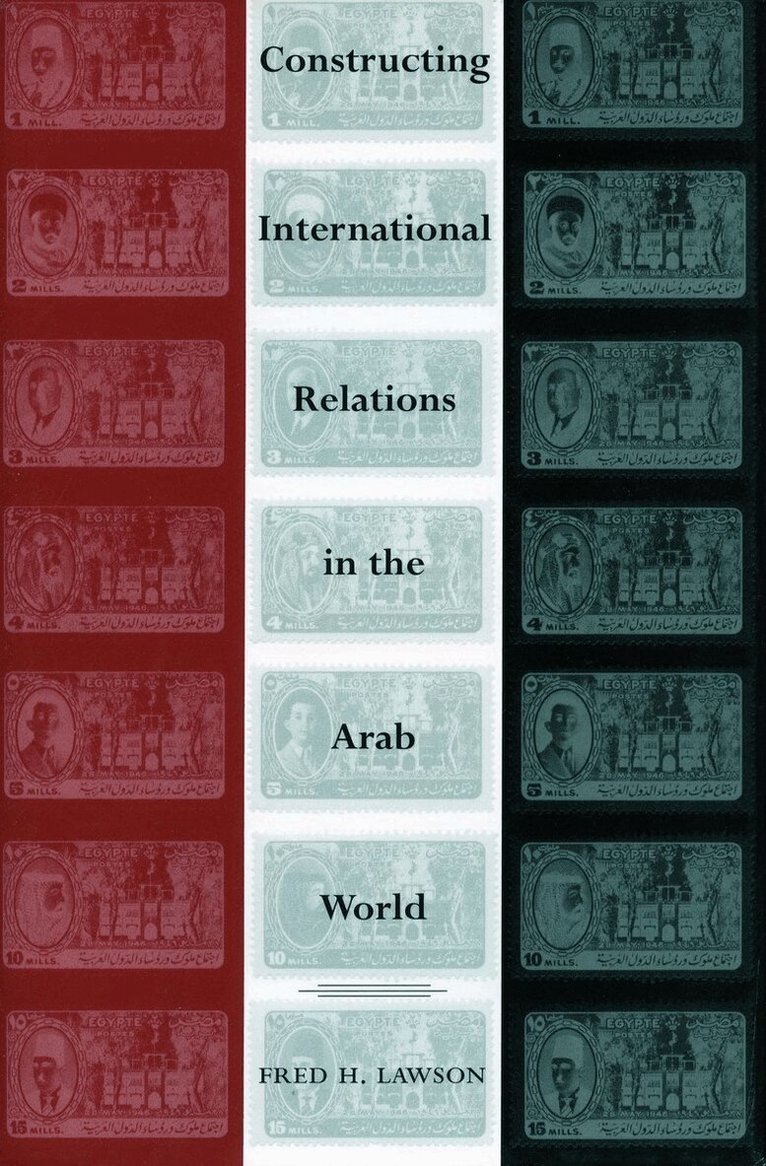
This book explores the emergence of an anarchic states-system in the twentieth-century Arab world. Following the collapse of the Ottoman Empire, Arab nationalist movements first considered establishing a unified regional arrangement to take the empire's place and present a common front to outside powers. But over time different Arab leaderships abandoned this project and instead adopted policies characteristic of self-interested, territorially limited states. In his explanation of this phenomenon, the author shifts attention away from older debates about the origins and development of Arab nationalism and analyzes instead how different nationalist leaderships changed the ways that they carried on diplomatic and strategic relations. He situates this shift in the context of influential sociological theories of state formation, while showing how labor movements and other forms of popular mobilization shaped the origins of the regional states-system.
830 kr
Skickas inom 10-15 vardagar
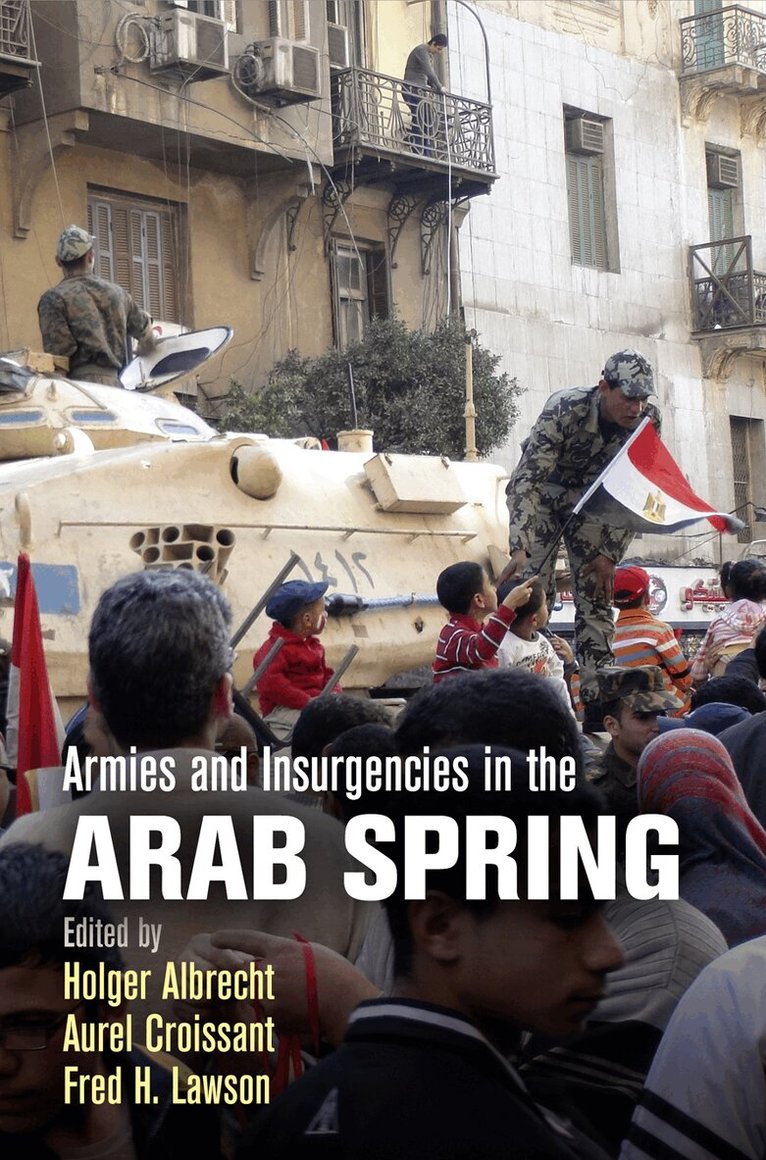
Following the popular uprisings that swept across the Arab world beginning in 2010, armed forces remained pivotal actors in politics throughout the region. As demonstrators started to challenge entrenched autocratic rulers in Tunis, Cairo, Sana'a, and Manama, the militaries stormed back into the limelight and largely determined whether any given ruler survived the protests. In Tunisia, Egypt, and Yemen, senior officers pulled away from their presidents, while in Algeria, Bahrain, and Syria, they did not. More important, military officers took command in shaping the new order and conflict trajectories throughout that region.Armies and Insurgencies in the Arab Spring explores the central problems surrounding the role of armed forces in the contemporary Arab world. How and why do military apparatuses actively intervene in politics? What explains the fact that in some countries, military officers and rank-and-file take steps to defend an incumbent, while in others they defect and refrain from suppressing popular protest? What are the institutional legacies of the military's engagement during, and in the immediate aftermath of, mass uprisings?Focusing on these questions, editors Holger Albrecht, Aurel Croissant, and Fred H. Lawson have organized Armies and Insurgencies in the Arab Spring into three sections. The first employs case studies to make comparisons within and between regions; the second examines military engagements in the Arab uprisings in Yemen, Bahrain, and Syria; and the third looks at political developments following the cresting of the protest wave in Egypt, Tunisia, Libya, and the Gulf. The collection promotes better understanding not only of the particular history of military engagement in the Arab Spring but also of significant aspects of the transformation of political-military relations in other regions of the contemporary world.Contributors: Holger Albrecht, Risa A. Brooks, Cherine Chams El-Dine, Virginie Collombier, Aurel Croissant, Philippe Droz-Vincent, Kevin Koehler, Fred H. Lawson, Shana Marshall, Dorothy Ohl, David Pion-Berlin, Tobias Selge, Robert Springborg.
11 157 kr
Tillfälligt slut
This interdisciplinary resource brings together important works from the fields of international relations theory and Middle East studies - it promotes a stronger dialogue and cross-fertilisation between the two areas of study. The work’s esteemed editorial team has structured the volumes thematically, to allow for ease of navigation and clear understanding of the different key aspects:Volume One addresses the more fundamental and (meta)theoretical issues relating to the debate about the study of Middle East international relationsVolume Two looks at the history of the field, addressing the debate about the emergence and evolution of the modern Middle East state system.Volume Three examines more recent debates, and primarily the issue about the role of identity politics in international relations.Volume Four engages with more classic and well-known issues from the general IR debate and explores to what extent assumptions and approaches from these debates are also useful in the study of Middle East international relations.The articles are framed by an introductory essay written by the editors, which helps to guide the reader through the volumes by providing further context and explaining the rationale behind the selection of literature.
483 kr
Skickas inom 10-15 vardagar
This Brief revisits the question of whether states tend to resist a threatening adversary. It begins by assessing one influential contribution to the debate that offers an elegant reformulation of the problem, and then advances a plausible alternative analytical framework. It surveys three situations in which several states faced the choice of mobilizing against or aligning with a prospective aggressor. In each case, proximity to the expansionist state and the clarity of the danger it posed to the existing order might well have prompted adjacent states to engage in balancing. The fact that balancing did not predominate in any of these situations challenges the orthodox view of how states respond to evident threats and compels a reconsideration of the circumstances under which bandwagoning is likely to occur in the anarchic international arena.Building on influential studies of bandwagoning in international politics, the volume reassesses states' responses to aggressive adversaries. It offers an alternative explanation for why states often—indeed, usually—choose not to resist aggressors, and illustrates this argument by revisiting East Asia in 1931 and Central and Eastern Europe in 1938. It also provides a new perspective on the reactions of the Arab Gulf states to the abrogation of the Joint Comprehensive Plan of Action.