
Fredrick B. Pike – författare
Visar alla böcker från författaren Fredrick B. Pike. Handla med fri frakt och snabb leverans.
3 produkter
3 produkter
Häftad, Engelska, 1995
444 kr
Skickas inom 10-15 vardagar
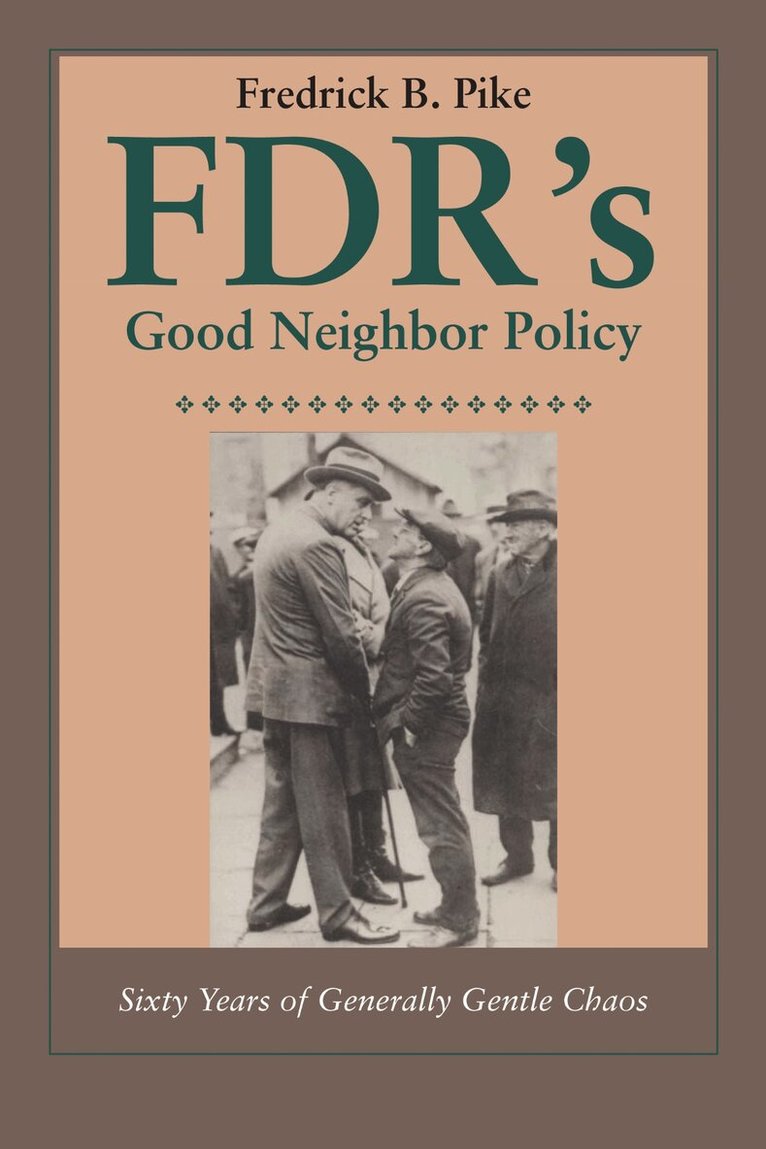
During the 1930s, the United States began to look more favorably on its southern neighbors. Latin America offered expanded markets to an economy crippled by the Great Depression, while threats of war abroad nurtured in many Americans isolationist tendencies and a desire for improved hemispheric relations.One of these Americans was Franklin Delano Roosevelt, the primary author of America's Good Neighbor Policy. In this thought-provoking book, Fredrick Pike takes a wide-ranging look at FDR's motives for pursuing the Good Neighbor Policy, at how he implemented it, and at how its themes have played out up to the mid-1990s.Pike's investigation goes far beyond standard studies of foreign and economic policy. He explores how FDR's personality and Eleanor Roosevelt's social activism made them uniquely simpÁtico to Latin Americans. He also demonstrates how Latin culture flowed north to influence U.S. literature, film, and opera. The book will be essential reading for everyone interested in hemispheric relations.
Häftad, Engelska, 1992
458 kr
Skickas inom 10-15 vardagar
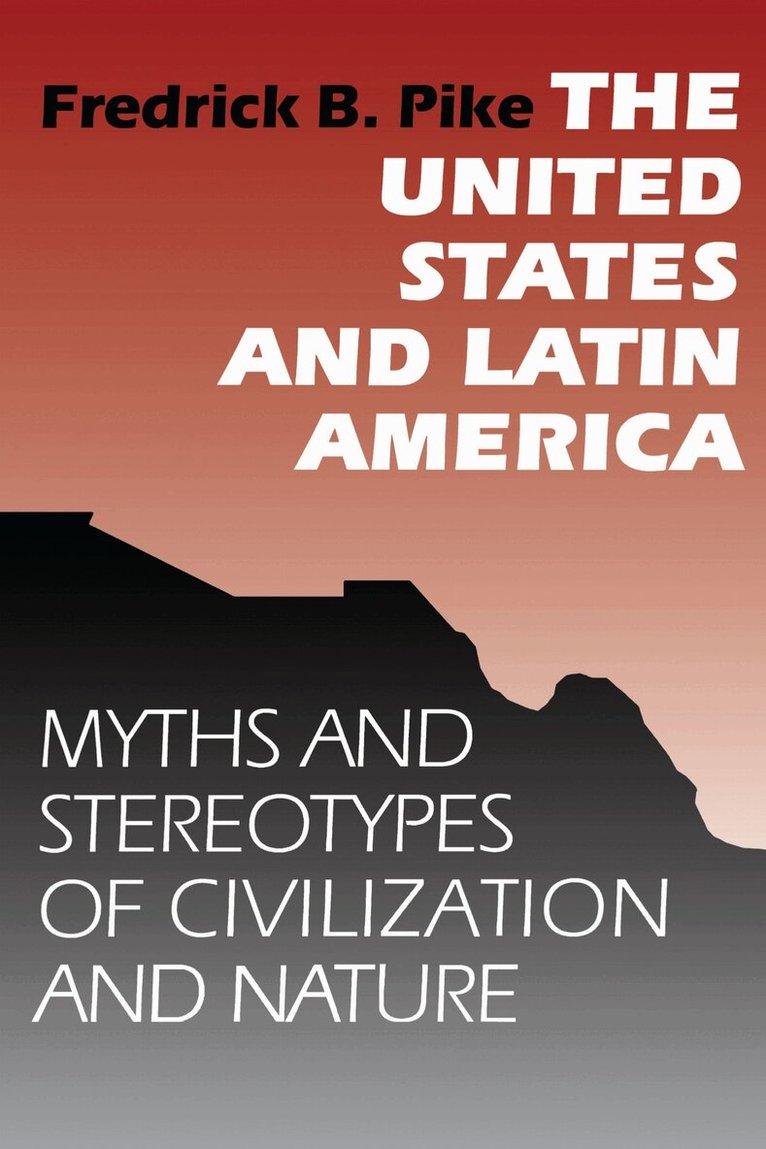
The lazy greaser asleep under a sombrero and the avaricious gringo with money-stuffed pockets are only two of the negative stereotypes that North Americans and Latin Americans have cherished during several centuries of mutual misunderstanding. This unique study probes the origins of these stereotypes and myths and explores how they have shaped North American impressions of Latin America from the time of the Pilgrims up to the end of the twentieth century.Fredrick Pike's central thesis is that North Americans have identified themselves with "civilization" in all its manifestations, while viewing Latin Americans as hopelessly trapped in primitivism, the victims of nature rather than its masters. He shows how this civilization-nature duality arose from the first European settlers' perception that nature-and everything identified with it, including American Indians, African slaves, all women, and all children-was something to be conquered and dominated. This myth eventually came to color the North American establishment view of both immigrants to the United States and all our neighbors to the south.

Inbunden, Engelska, 1977
879 kr
Tillfälligt slut
Analyzing the political culture of the Andean republics of Peru, Bolivia, and Ecuador and of the United States, Fredrick Pike finds in their relationships deep divergencies in values and goals. Andeans, he shows, have traditionally viewed with suspicion the tenets associated with liberal democracy, secularism, and individualistic capitalism. In a detailed study of Andean politics, economics, social classes, and cultural patterns in the nineteenth and twentieth centuries, Pike determines that revolutionary ideology often merely masked the ambitions of aspiring elites anxious to retain the traditional order but wishing to wrest its advantages from incumbent elites. He shows the appeal of Marxism and of recent external-domination, internal-dependency theories, as well as the basic conservatism of land-reform programs and approaches to the "Indian problem." Pike also speculates on whether an "iron law of dependency" is involved in Andean relations with the United States. He discusses the role of multinational corporations and the increasing "privatization of dependency." In the emerging postmodern era, Pike suggests, the values of Western-style modernity are even less viable in Andean America and indeed may not be able to survive in the United States.