Furio C. Rosati – författare
Visar alla böcker från författaren Furio C. Rosati. Handla med fri frakt och snabb leverans.
5 produkter
5 produkter
Häftad, Engelska, 2024
529 kr
Skickas inom 5-8 vardagar
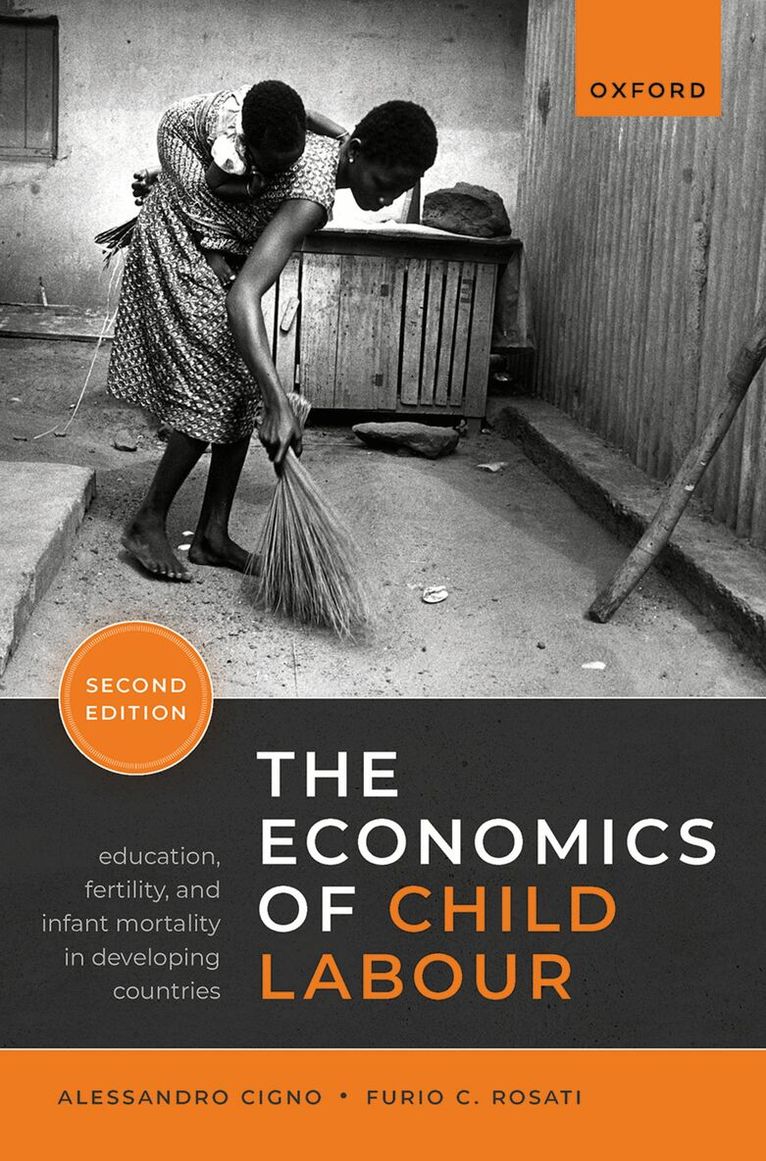
Children throughout the world are engaged in a variety of activities classifiable as work. These range from relatively harmless, even laudable, activities like helping parents in the home, to morally or physically dangerous ones. Many forms of child labour have valuable learning-by-doing elements, but they all conflict with formal education. If the family is credit constrained, child labour relaxes the liquidity constraint and may be necessary to avoid starvation. Statistically and theoretically, child labour is associated with high fertility, high infant mortality, and low productivity. By contrast, education is associated with low fertility, low infant mortality, and high productivity. Suitable as an advanced development economics or development microeconomics textbook, the book lays out the theory as it now stands and examines the available evidence within an integrated framework. This second edition emphasizes the interplay between child labour, education, fertility, and mortality. The empirical aspects have been expanded to include new evidence available since the previous edition and an assessment of the impact of policy and programs. There are new chapters on the emergence and implications of family rules and social norms, and on policy optimization, and an expanded chapter on international trade examines the effects of foreign direct investment.
E-bok
PDF, Engelska, 2024385 kr
Läs direkt efter köp
Children throughout the world are engaged in a variety of activities classifiable as work. These range from relatively harmless, even laudable, activities like helping parents in the home, to morally or physically dangerous ones. Many forms of child labour have valuable learning-by-doing elements, but they all conflict with formal education. If the family is credit constrained, child labour relaxes the liquidity constraint and may be necessary to avoid starvation. Statistically and theoretically, child labour is associated with high fertility, high infant mortality, and low productivity. By contrast, education is associated with low fertility, low infant mortality, and high productivity. Suitable as an advanced development economics or development microeconomics textbook, the book lays out the theory as it now stands and examines the available evidence within an integrated framework. This second edition emphasizes the interplay between child labour, education, fertility, and mortality. The empirical aspects have been expanded to include new evidence available since the previous edition and an assessment of the impact of policy and programs. There are new chapters on the emergence and implications of family rules and social norms, and on policy optimization, and an expanded chapter on international trade examines the effects of foreign direct investment.
E-bok
Engelska, 2024372 kr
Läs direkt efter köp
Children throughout the world are engaged in a variety of activities classifiable as work. These range from relatively harmless, even laudable, activities like helping parents in the home, to morally or physically dangerous ones. Many forms of child labour have valuable learning-by-doing elements, but they all conflict with formal education. If the family is credit constrained, child labour relaxes the liquidity constraint and may be necessary to avoid starvation. Statistically and theoretically, child labour is associated with high fertility, high infant mortality, and low productivity. By contrast, education is associated with low fertility, low infant mortality, and high productivity. Suitable as an advanced development economics or development microeconomics textbook, the book lays out the theory as it now stands and examines the available evidence within an integrated framework. This second edition emphasizes the interplay between child labour, education, fertility, and mortality. The empirical aspects have been expanded to include new evidence available since the previous edition and an assessment of the impact of policy and programs. There are new chapters on the emergence and implications of family rules and social norms, and on policy optimization, and an expanded chapter on international trade examines the effects of foreign direct investment.
E-bok
PDF, Engelska, 2012734 kr
Läs direkt efter köp
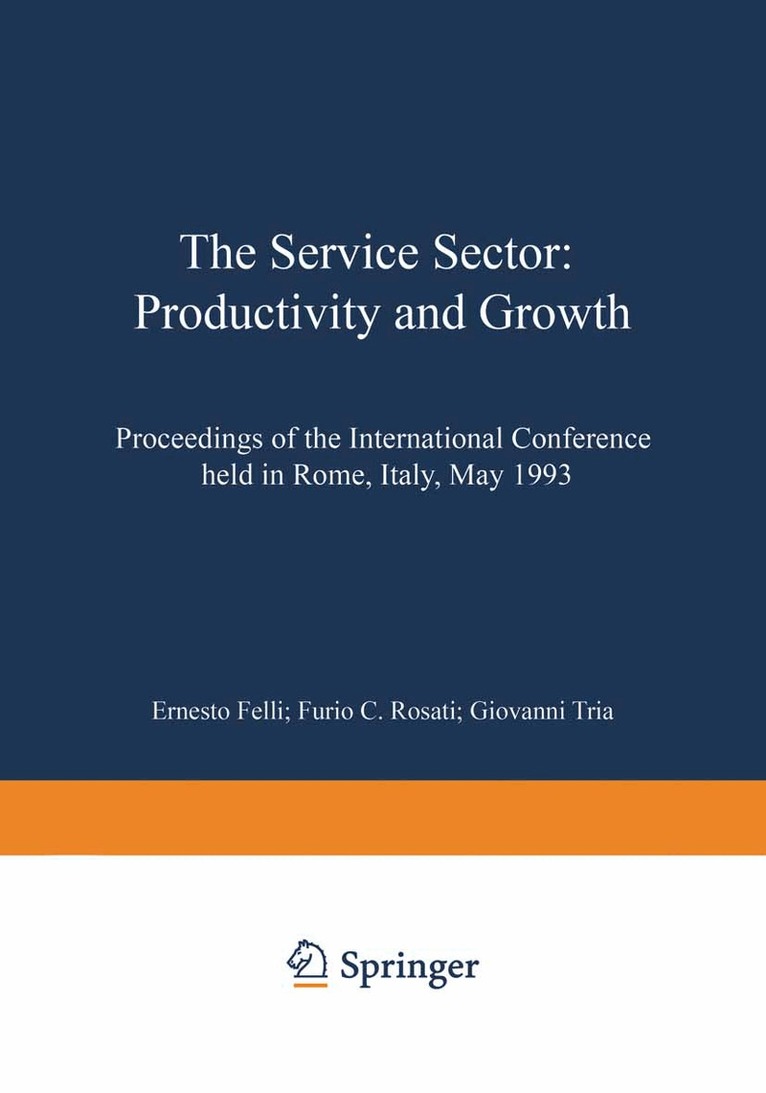
The economics of the service sector has recently attracted a large attention. At a macroeconomic level, the discussion has been focused on the issues concerning the relationship between the expansion of the service industry and the potential for a stable and sustained growth. Slow productivity growth, due to the largely non tradable nature of the output, lack of competition due either to regulations or to barriers to entry are among the "bads" sometimes associated with a "service led" growth. On the other hand new working places are created in the service industries at a rate much higher than in the industrial ones. Is a lower rate of technological change and the continuing of inflationary tensions the price to pay for a sustained expansion of employment in the service sector? These are in a nutshell the questions that led CElS (Centre for International Studies on Economic Growth - University of Rome "Tor Vergata") to organize the International Seminar on "The Service Sector: Productivity and Growth" held in Rome in May 1993, whose revised proceedings are published in this volume. The economists and academicians invited to the conference have faced the issues mentioned above from different perspectives, but they concentrated especially on the problems relative to growth and productivity.
Häftad, Engelska, 1995
559 kr
Skickas inom 10-15 vardagar
The economics of the service sector has recently attracted a large attention. At a macroeconomic level, the discussion has been focused on the issues concerning the relationship between the expansion of the service industry and the potential for a stable and sustained growth. Slow productivity growth, due to the largely non tradable nature of the output, lack of competition due either to regulations or to barriers to entry are among the "bads" sometimes associated with a "service led" growth. On the other hand new working places are created in the service industries at a rate much higher than in the industrial ones. Is a lower rate of technological change and the continuing of inflationary tensions the price to pay for a sustained expansion of employment in the service sector? These are in a nutshell the questions that led CElS (Centre for International Studies on Economic Growth - University of Rome "Tor Vergata") to organize the International Seminar on "The Service Sector: Productivity and Growth" held in Rome in May 1993, whose revised proceedings are published in this volume. The economists and academicians invited to the conference have faced the issues mentioned above from different perspectives, but they concentrated especially on the problems relative to growth and productivity.