G. C. Peden - Böcker
Visar alla böcker från författaren G. C. Peden. Handla med fri frakt och snabb leverans.
6 produkter
6 produkter
Del 36 - Records of Social and Economic History
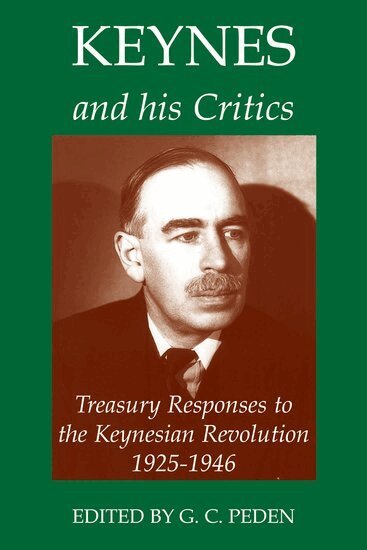
Keynes and his Critics
Treasury Responses to the Keynesian Revolution, 1925-1946
Inbunden, Engelska, 2004
1 338 kr
Skickas inom 7-10 vardagar
These documents, published here for the first time, present the Treasury's counter-arguments during the period when Keynes was developing the ideas that led to the Keynesian revolution in economic policy. Keynes spent much effort trying to persuade the Treasury to adopt policies designed to raise employment and stabilise prices, and to create an international monetary system that would favour these objectives. His arguments are set out fully in the Royal Economic Society's 30-volume set of The Collected Writings of John Maynard Keynes. In contrast, the views of his Treasury critics have hitherto been much less accessible.Economists and historians have tended to assume that Keynes was right and the Treasury was wrong; this volume shows that the Treasury anticipated the political problems that would be encountered in putting Keynes's ideas into practice. Much of what Keynes published was deliberately polemical: he believed that words should be 'a little wild', for they were 'the assault of thought on the unthinking'. Treasury officials were by no means as unthinking as Keynes tended to portray them, and they had a coherent and intellectually respectable understanding of public finance. Ministers in the inter-war period and early in the Second World War were sensitive to the use that political opponents might make of Keynes's arguments; officials had to provide counter-arguments, and in doing so they revealed much about their views on economics and public finance. Once Keynes became an adviser to the Chancellor of the Exchequer in 1940, the debate became internal to the Treasury, but officials continued to subject Keynes's ideas to critical analysis.The documents in this volume show Treasury responses to Keynes on a range of issues crucial to understanding the period and the context of the Keynesian revolution in public policy. The topics covered include: the return to the gold standard; the use of public expenditure to cure unemployment in the inter-war period; how to avoid inflation in the war; planning for the post-war international economy; and the 1944 white paper on employment policy. This edition is an essential tool for the study of a formative period of British history and a great intellectual debate.
1 817 kr
Skickas inom 3-6 vardagar
This authoritative history of the Treasury provides a new perspective on public policy-making in the twentieth century as it explores the role and functions of the Chancellor of the Exchequer and the consequent implications for the changing role of the Treasury. As the central department in British government, the Treasury plays a key role in decisions on public expenditure, and on raising taxes and loans. Professor Peden traces the development of the Treasury's responsibility for managing the national economy and looks at how it became increasingly involved in international relations from the time of the First World War. In further examining the relations between ministers and their official advisers, this history explores the growing influence of economists in Whitehall.
645 kr
Skickas inom 7-10 vardagar
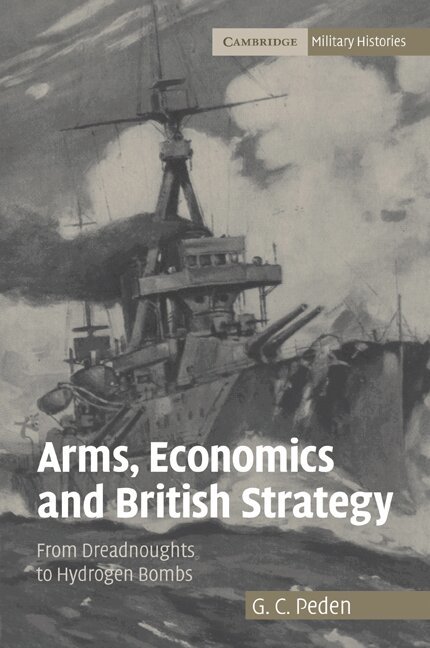
This book integrates strategy, technology and economics and presents a new way of looking at twentieth-century military history and Britain's decline as a great power. G. C. Peden explores how from the Edwardian era to the 1960s warfare was transformed by a series of innovations, including dreadnoughts, submarines, aircraft, tanks, radar, nuclear weapons and guided missiles. He shows that the cost of these new weapons tended to rise more quickly than national income and argues that strategy had to be adapted to take account of both the increased potency of new weapons and the economy's diminishing ability to sustain armed forces of a given size. Prior to the development of nuclear weapons, British strategy was based on an ability to wear down an enemy through blockade, attrition (in the First World War) and strategic bombing (in the Second), and therefore power rested as much on economic strength as on armaments.
1 485 kr
Skickas inom 7-10 vardagar
This book integrates strategy, technology and economics and presents a new way of looking at twentieth-century military history and Britain's decline as a great power. G. C. Peden explores how from the Edwardian era to the 1960s warfare was transformed by a series of innovations, including dreadnoughts, submarines, aircraft, tanks, radar, nuclear weapons and guided missiles. He shows that the cost of these new weapons tended to rise more quickly than national income and argues that strategy had to be adapted to take account of both the increased potency of new weapons and the economy's diminishing ability to sustain armed forces of a given size. Prior to the development of nuclear weapons, British strategy was based on an ability to wear down an enemy through blockade, attrition (in the First World War) and strategic bombing (in the Second), and therefore power rested as much on economic strength as on armaments.
396 kr
Skickas inom 7-10 vardagar
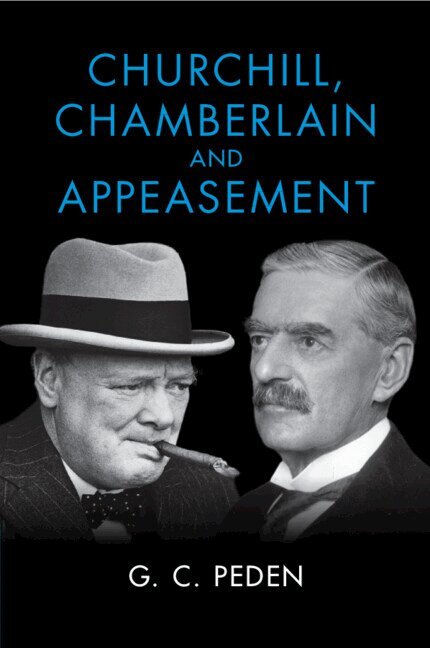
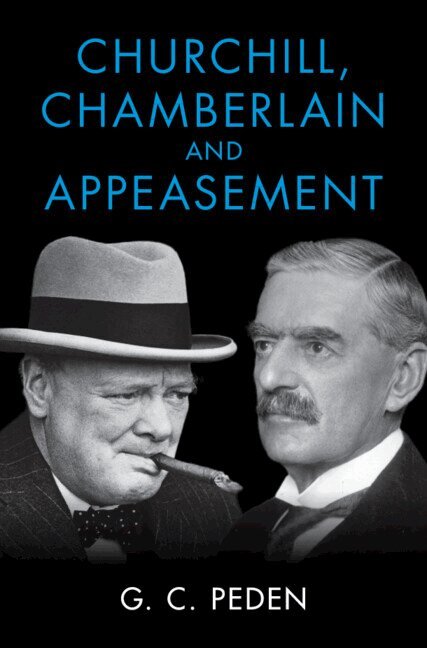
Was Churchill correct when he claimed the Second World War could easily have been prevented if Chamberlain had not appeased Hitler? How far did Churchill and Chamberlain differ on defence and foreign policy? To what extent was Chamberlain responsible for military defeats in 1940? In this new account of appeasement, G. C. Peden addresses these questions and provides a comparative analysis of Chamberlain and Churchill's views on foreign policy and strategic priorities, explores what deterrence and appeasement meant in the military, economic and political context of the 1930s and where Chamberlain and Churchill agreed and disagreed on how best to deter Germany. Beginning in 1931 when Chamberlain became Chancellor of the Exchequer, this book explores the evolution of British policy towards Germany through to the Munich Agreement and its aftermath within the context of Britain's power to influence international affairs in the 1930s and of contemporary intelligence.
409 kr
Skickas inom 7-10 vardagar
Was Churchill correct when he claimed the Second World War could easily have been prevented if Chamberlain had not appeased Hitler? How far did Churchill and Chamberlain differ on defence and foreign policy? To what extent was Chamberlain responsible for military defeats in 1940? In this new account of appeasement, G. C. Peden addresses these questions and provides a comparative analysis of Chamberlain and Churchill's views on foreign policy and strategic priorities, explores what deterrence and appeasement meant in the military, economic and political context of the 1930s and where Chamberlain and Churchill agreed and disagreed on how best to deter Germany. Beginning in 1931 when Chamberlain became Chancellor of the Exchequer, this book explores the evolution of British policy towards Germany through to the Munich Agreement and its aftermath within the context of Britain's power to influence international affairs in the 1930s and of contemporary intelligence.