G. Edward White – författare
Visar alla böcker från författaren G. Edward White. Handla med fri frakt och snabb leverans.
19 produkter
19 produkter
Inbunden, Engelska, 2019
661 kr
Skickas inom 5-8 vardagar
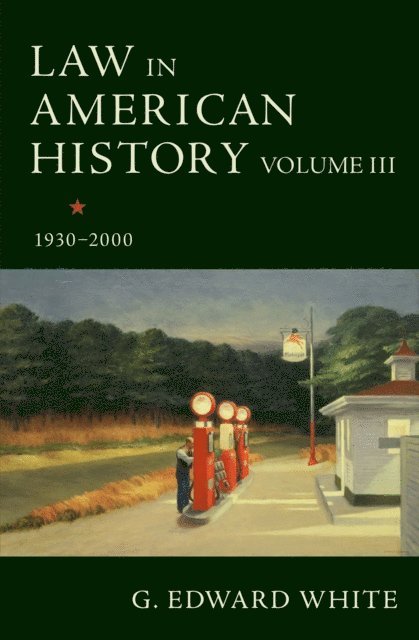
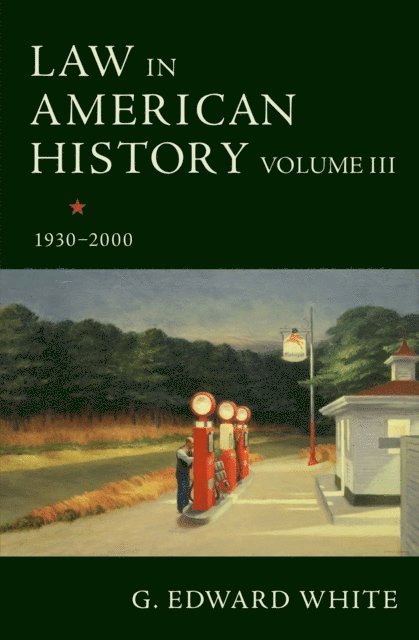
In Law in American History, Volume III: 1930-2000, the eminent legal scholar G. Edward White concludes his sweeping history of law in America, from the colonial era to the near-present. Picking up where his previous volume left off, at the end of the 1920s, White turns his attention to modern developments in both public and private law. One of his findings is that despite the massive changes in American society since the New Deal, some of the landmark constitutional decisions from that period remain salient today. An illustration is the Court's sweeping interpretation of the reach of Congress's power under the Commerce Clause in Wickard v. Filburn (1942), a decision that figured prominently in the Supreme Court's recent decision to uphold the Affordable Care Act.In these formative years of modern American jurisprudence, courts responded to, and affected, the emerging role of the state and federal governments as regulatory and redistributive institutions and the growing participation of the United States in world affairs. They extended their reach into domains they had mostly ignored: foreign policy, executive power, criminal procedure, and the rights of speech, sexuality, and voting. Today, the United States continues to grapple with changing legal issues in each of those domains. Law in American History, Volume III provides an authoritative introduction to how modern American jurisprudence emerged and evolved of the course of the twentieth century, and the impact of law on every major feature of American life in that century. White's two preceding volumes and this one constitute a definitive treatment of the role of law in American history.
Häftad, Engelska, 1987
738 kr
Skickas inom 5-8 vardagar
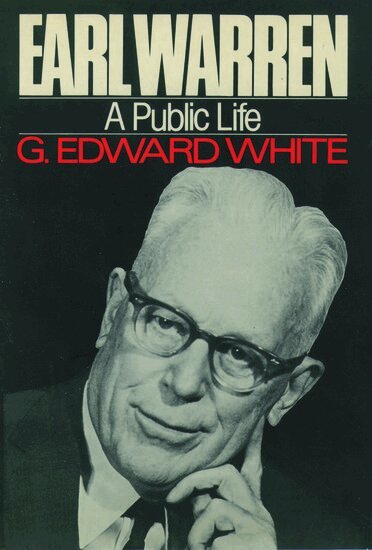
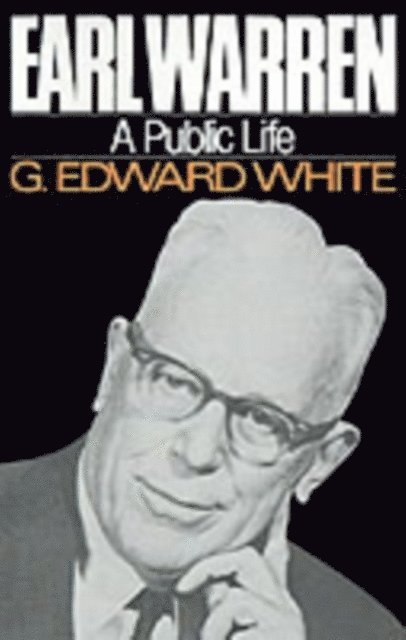
This is a major biography of one of America's most influential and respected Supreme Court justices by a leading law scholar. In the late 1970s, Earl Warren's papers were opened and G. Edward White, a former law clerk of Warren, was given complete access to research this book. The result is the first study of the Chief Justice to cover his entire political career and to examine aspects of Warren's character that have seemed paradoxical. White goes back to Warren's roots in California Progressivism to illuminate his mid-century liberalism and the controversial decisions over which he presided in the Supreme Court. Based on a wealth of newly available information and White's understanding of Warren's work and personality, this is a fascinating, original portrait of Chief Justice Earl Warren.
Häftad, Engelska, 1989
259 kr
Skickas inom 5-8 vardagar
Now available in a newly revised and updated edition, this highly acclaimed volume presents a series of portraits of the most famous appellate judges in American history from John Marshall to the Burger court.
Inbunden, Engelska
3 016 kr
Skickas inom 3-6 vardagar
1 551 kr
Skickas inom 3-6 vardagar
Inbunden, Engelska, 2012
643 kr
Skickas inom 5-8 vardagar
In speaking about the law, Oliver Wendell Holmes, Jr. once said, "To know what it is, we must know what it has been, and what it tends to become." G. Edward White, a leading legal historian, presents Law in American History, a two-volume, comprehensive narrative history of American law from the colonial period to the present. In this first volume, White explores the key turning points in roughly the first half of the American legal system, from the development of order in the colonies, to the signing of the Constitution, to the dissolution of the Union just before the Civil War. In addition to these events, White analyzes issues like race, gender, and slavery that undergird the development of American jurisprudence. Along the way, he provides a compelling case for why law can be seen as the key to understanding the development of American life as we know it, shaping virtually every aspect of the American experience from the way we handle international relations to the food we choose to eat and drink. Thought-provoking and artfully written, Law in American History, Vol. 1 is an essential text for both students of law and general readers alike.
Häftad, Engelska, 2007
407 kr
Skickas inom 5-8 vardagar
In this revised third edition of a classic in American jurisprudence, G. Edward White updates his series of portraits of the most famous appellate judges in American history from John Marshall to Oliver W. Holmes to Warren E. Burger, with a new chapter on the Rehnquist Court. White traces the development of the American judicial tradition through biographical sketches of the careers and contributions of these renowned judges. In this updated edition, he argues that the Rehnquist Court's approach to constitutional interpretation may have ushered in a new stage in the American judicial tradition. The update also includes a new preface and revised bibliographic note.
Inbunden, Engelska, 2006
235 kr
Skickas inom 5-8 vardagar
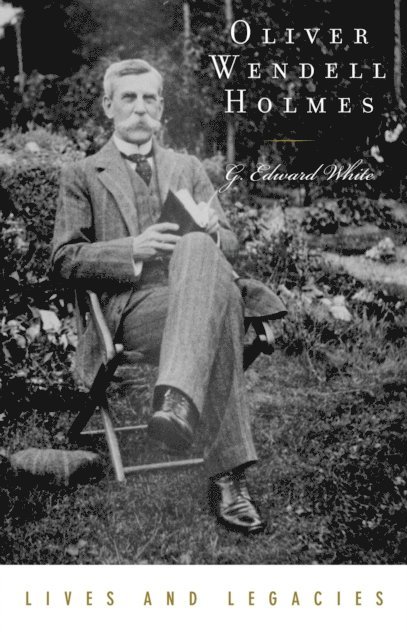
Known as the "Great Dissenter," Oliver Wendell Holmes, Jr. wrote some of the most eloquent opinions in the history of the United States Supreme Court. A brilliant legal mind who served on the high court into his nineties, Holmes was responsible for some of the most important judicial opinions of the twentieth century.Now, in this superb short biography, G. Edward White offers readers a lively, informative portrait of this singular individual. The book first sketches Holmes's early years--his childhood in Boston, his undergraduate years at Harvard (which his father and both grandfathers also attended), and his valiant service in the Civil War, during which he was severely wounded three times. After the war, Holmes went into private law practice, wrote his landmark treatise The Common Law in 1881, had a short tenure on the Harvard Law School faculty, and spent 20 years as a judge on the Supreme Judicial Court of Massachusetts before being named to the U.S. Supreme Court. The author focuses on his remarkable 30-year service as a Supreme Court Justice, beginning in 1902, and details Holmes's most significant cases--Abrams v. United States, Northern Securities Co. v. United States, Lochner v. New York, Schenck v. United States, and others--which limited working hours, set a mandatory minimum wage, protected women's rights, legalized labor unions, and defined freedom of speech. These decisions--as well as The Common Law--are highly regarded to this day. A new volume in the Lives and Legacy series, this marvelous short biography offers an ideal introduction to a towering figure in American law.
Inbunden, Engelska, 2026
377 kr
Skickas inom 5-8 vardagar
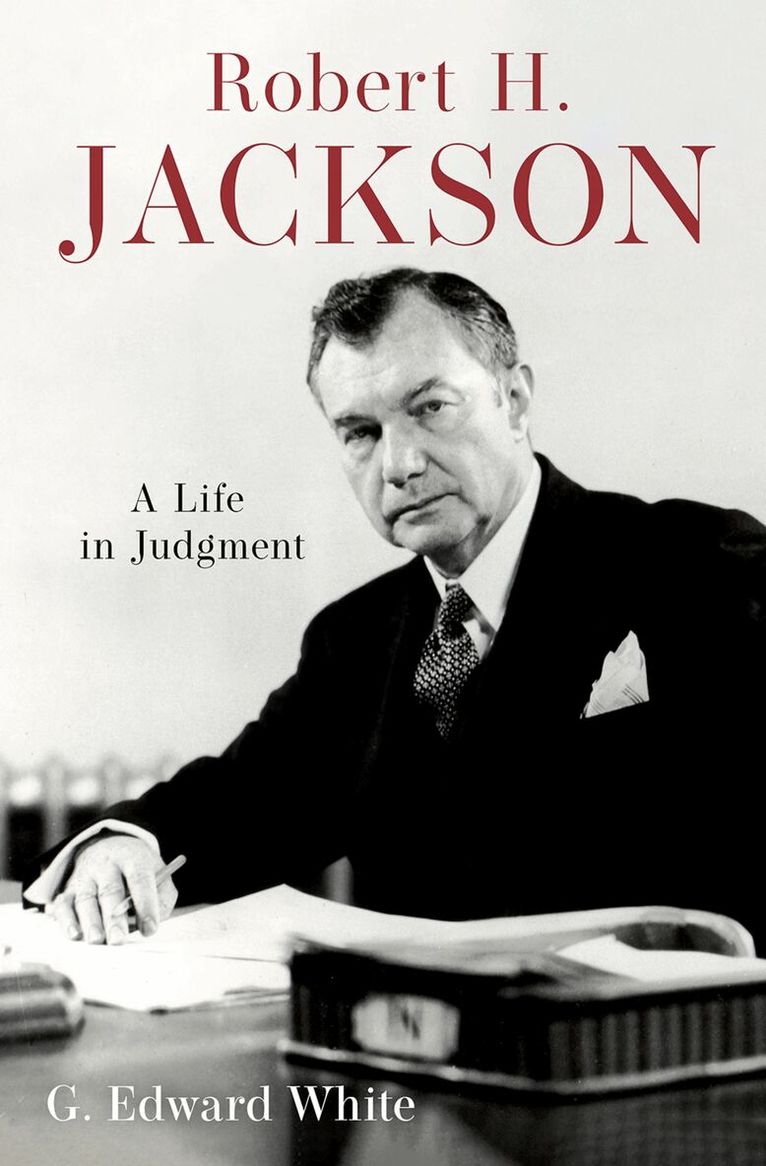
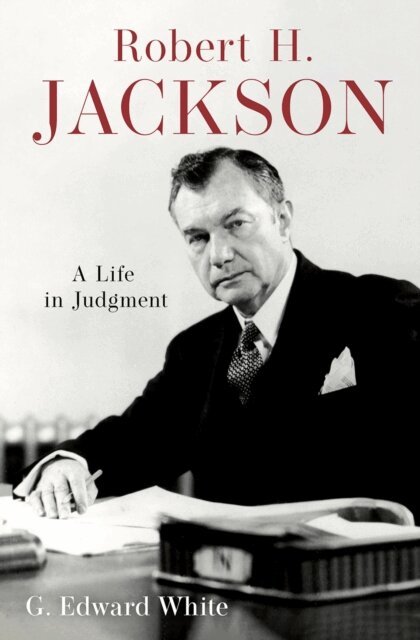
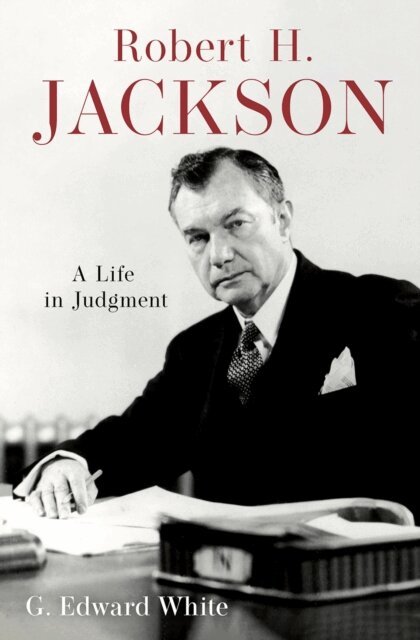
Discover the meteoric rise of one of the most extraordinary and singular figures in American jurisprudence, Robert H. Jackson, from self-trained lawyer to influential Supreme Court Justice and chief U.S. prosecutor at the Nuremberg trials, in this compelling new biography.Until he joined the U.S. government in 1934, Robert H. Jackson had been a lawyer in private practice in Upstate New York who was admitted to the bar without going to college and after completing only one year of law school. Once part of FDR's administration, Jackson became, in rapid succession, United States Solicitor General and United States Attorney General, where he successfully defended New Deal programs before the Supreme Court, including the legality of Lend Lease, which helped the U.S. give war supplies to England in exchange for grants of territory and harbors. Jackson played a central role in formulating the arguments justifying a number of initiatives on constitutional grounds and in drafting the policy statements that accompanied them. In 1941, FDR nominated him to be Associate Justice of the Supreme Court, on which he served until his death in 1954, only months after his adding his vote to the unanimous decision in Brown V. Board of Education. It was a meteoric rise for someone from outside the elite, and essentially self-trained. That didn't stop Jackson from becoming one of the most influential and independent-minded judges of his day, unafraid to question the status quo and leave his mark on a number of landmark cases, including West Virginia State Board of Education v. Barnett, which guaranteed First Amendment rights by holding that students in public schools did not have to salute the flag or recite the Pledge of Allegiance. He dissented from the notorious decision in Korematsu v. U.S., which condoned the internment of Japanese-Americans during World War Two. To many, however, Jackson's most significant contribution was as chief U.S. prosecutor at the Nuremberg war trials following the war. Drawing on Jackson's extensive personal papers in the Library of Congress and the Jackson Center, as well as a substantial oral history, G. Edward White's biography offers the first full-length portrait in decades of this fascinating and seminal figure.
Häftad, Engelska, 2013
114 kr
Skickas inom 5-8 vardagar
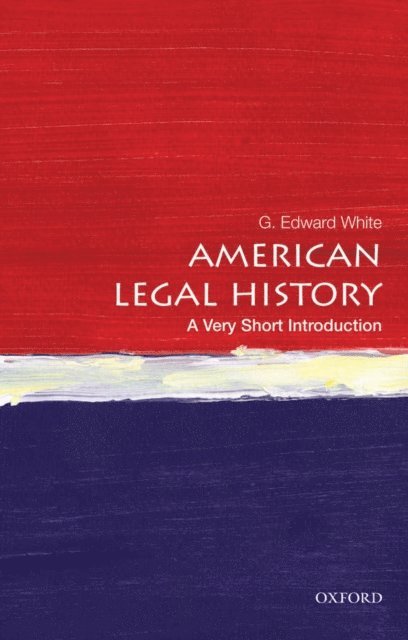
Law has played a central role in American history. From colonial times to the present, law has not just reflected the changing society in which legal decisions have been made-it has played a powerful role in shaping that society, though not always in positive ways. In this Very Short Introduction, eminent legal scholar G. Edward White-author of the ongoing, multi-volume Law in American History-offers a compact overview that sheds light on the impact of law on a number of key social issues. Rather than offer a straight chronological history, the book instead traces important threads woven throughout our nation's past, looking at how law shaped Native American affairs, slavery, business, and home life, as well as how it has dealt with criminal and civil offenses. White shows that law has not always been used to exemplary ends. For instance, a series of decisions by the Marshall court essentially marginalized Amerindians, indigenous people of the Americas, reducing tribes to wards of the government. Likewise, law initially legitimated slavery in the United States, and legal institutions, including the Supreme Court, failed to resolve the tensions stirred up by the westward expansion of slavery, eventually sparking the Civil War. White also looks at the expansion of laws regarding property rights, which were vitally important to the colonists, many of whom left Europe hoping to become land owners; the evolution of criminal punishment from a public display (the stocks, the gallows) to a private prison system; the rise of tort law after the Civil War; and the progress in legal education, moving from informal apprenticeships and lax standards to modern law schools and rigorous bar exams.In this illuminating look at the pivotal role of law in American life, White offers us an excellent first step to a better appreciation of the function of law in our society.About the Series:Oxford's Very Short Introductions series offers concise and original introductions to a wide range of subjects--from Islam to Sociology, Politics to Classics, Literary Theory to History, and Archaeology to the Bible. Not simply a textbook of definitions, each volume in this series provides trenchant and provocative--yet always balanced and complete--discussions of the central issues in a given discipline or field. Every Very Short Introduction gives a readable evolution of the subject in question, demonstrating how the subject has developed and how it has influenced society. Eventually, the series will encompass every major academic discipline, offering all students an accessible and abundant reference library. Whatever the area of study that one deems important or appealing, whatever the topic that fascinates the general reader, the Very Short Introductions series has a handy and affordable guide that will likely prove indispensable.ABOUT THE SERIES: The Very Short Introductions series from Oxford University Press contains hundreds of titles in almost every subject area. These pocket-sized books are the perfect way to get ahead in a new subject quickly. Our expert authors combine facts, analysis, perspective, new ideas, and enthusiasm to make interesting and challenging topics highly readable.
Inbunden, Engelska, 2016
567 kr
Skickas inom 5-8 vardagar
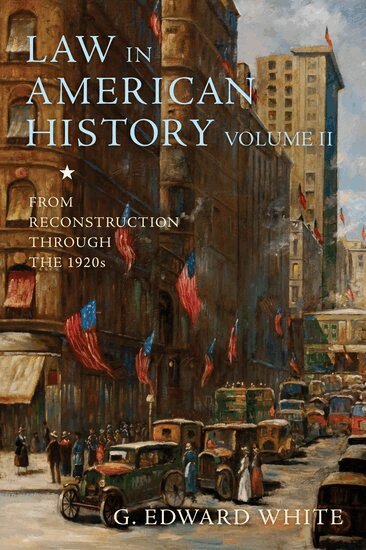
In this second installment of G. Edward White's sweeping history of law in America from the colonial era to the present, White, covers the period between 1865-1929, which encompasses Reconstruction, rapid industrialization, a huge influx of immigrants, the rise of Jim Crow, the emergence of an American territorial empire, World War I, and the booming yet xenophobic 1920s. As in the first volume, he connects the evolution of American law to the major political, economic, cultural, social, and demographic developments of the era. To enrich his account, White draws from the latest research from across the social sciences--economic history, anthropology, and sociology--yet weave those insights into a highly accessible narrative. Along the way he provides a compelling case for why law can be seen as the key to understanding the development of American life as we know it. Law in American History, Volume II will be an essential text for both students of law and general readers.
Häftad, Engelska, 1989
272 kr
Skickas inom 10-15 vardagar
First published in 1968, The Eastern Establishment and the Western Experience has become a classic in the field of American studies.G. Edward White traces the origins of “the West of the imagination” to the adolescent experiences of Frederic Remington, Theodore Roosevelt, and Owen Wister-three Easterners from upper-class backgrounds who went West in the 1880s in search of an alternative way of life.Each of the three men came to identify with a somewhat idealized “Wild West” that embodied the virtues of individualism, self-reliance, and rugged masculinity. When they returned East, they popularized this image of the West through art, literature, politics, and even their public personae. Moreover, these Western virtues soon became and have remained American virtues-a patriotic ideal that links Easterners with Westerners.With a multidisciplinary blend of history, biography, sociology, psychology, and literary criticism, The Eastern Establishment and the Western Experience will appeal to a wide audience. The author has written a new preface, offering additional perspectives on the mythology of the West and its effect on the American character.
Inbunden, Engelska, 2009
2 219 kr
Skickas inom 7-10 vardagar
The Marshall Court and Cultural Change, 1815-1835 comprises the third and fourth volumes of the Oliver Wendell Holmes Devise History of the Supreme Court of the United States. G. Edward White completes the series' coverage of the Marshall Court, tracing the last two decades of John Marshall's term as Chief Justice. White describes the intellectual climate of the Marshall Court's work and analyzes the Court's decisions. Throughout, White stresses that the Marshall Court, despite its much-celebrated influence, must be seen as part of a unique cultural period when the heritage of the Revolution confronted the radical political, demographic, and intellectual changes of the nineteenth century. The Marshall Court itself was also unique and unlike the modern Court in that it used an informal set of deliberative procedures that gave the justices' personal predilections more influence in the Court's rulings than at any other time in Supreme Court history.
Häftad, Engelska, 2002
360 kr
Skickas inom 10-15 vardagar
In a powerful new narrative, G. Edward White challenges the reigning understanding of twentieth-century Supreme Court decisions, particularly in the New Deal period. He does this by rejecting such misleading characterizations as "liberal," "conservative," and "reactionary," and by reexamining several key topics in constitutional law.Through a close reading of sources and analysis of the minds and sensibilities of a wide array of justices, including Holmes, Brandeis, Sutherland, Butler, Van Devanter, and McReynolds, White rediscovers the world of early-twentieth-century constitutional law and jurisprudence. He provides a counter-story to that of the triumphalist New Dealers. The deep conflicts over constitutional ideas that took place in the first half of the twentieth century are sensitively recovered, and the morality play of good liberals vs. mossbacks is replaced. This is the only thoroughly researched and fully realized history of the constitutional thought and practice of all the Supreme Court justices during the turbulent period that made America modern.
Häftad, Engelska, 1998
473 kr
Skickas inom 5-8 vardagar
At a time when many baseball fans wish for the game to return to a purer past, G. Edward White shows how seemingly irrational business decisions, inspired in part by the self-interest of the owners but also by their nostalgia for the game, transformed baseball into the national pastime. Not simply a professional sport, baseball has been treated as a focus of childhood rituals and an emblem of American individuality and fair play throughout much of the twentieth century. It started out, however, as a marginal urban sport associated with drinking and gambling. White describes its progression to an almost mythic status as an idyllic game, popular among people of all ages and classes. He then recounts the owner's efforts, often supported by the legal system, to preserve this image. Baseball grew up in the midst of urban industrialization during the Progressive Era, and the emerging steel and concrete baseball parks encapsulated feelings of neighborliness and associations with the rural leisure of bygone times.According to White, these nostalgic themes, together with personal financial concerns, guided owners toward practices that in retrospect appear unfair to players and detrimental to the progress of the game. Reserve clauses, blacklisting, and limiting franchise territories, for example, were meant to keep a consistent roster of players on a team, build fan loyalty, and maintain the game's local flavor. These practices also violated anti-trust laws and significantly restricted the economic power of the players. Owners vigorously fought against innovations, ranging from the night games and radio broadcasts to the inclusion of African-American players. Nonetheless, the image of baseball as a spirited civic endeavor persisted, even in the face of outright corruption, as witnessed in the courts' leniency toward the participants in the Black Sox scandal of 1919. White's story of baseball is intertwined with changes in technology and business in America and with changing attitudes toward race and ethnicity. The time is fast approaching, he concludes, when we must consider whether baseball is still regarded as the national pastime and whether protecting its image is worth the effort.
Inbunden, Engelska, 2022
352 kr
Skickas inom 5-8 vardagar
Tort Law and the Construction of Change studies the interaction of law and social change in American history. Tort law—civil law made by judges, not legislators—is traditionally thought to arise out of legal precedent. But Kenneth S. Abraham and G. Edward White show that American judges over the course of the previous two centuries also paid close attention to changing societal contexts in which lawsuits for civil injuries arose. They argue that two versions of history–one grounded in the application of previous legal rules and the other responsive to larger societal changes—must be considered in tandem to grasp fully how American civil law has evolved over time.In five fascinating chapters, they cover understudied areas of tort law, such as liability for nonphysical harm—including lawsuits for defamation, privacy, emotional distress, sexual harassment, and the hacking of confidential information—and aspects of tort litigation that have now disappeared, such as the prohibition against ""interested"" parties testifying in civil actions or the intentional infliction of temporal damage without justification. What emerges is a picture of the complicated legal dance American judges performed to cloak their decisions to make at times radical changes in tort law in response to social transformations. When confronting established tort doctrines under pressure from emerging social changes, they found ways to preserve at least the appearance of doctrinal continuity.
Häftad, Engelska, 2024
345 kr
Skickas inom 10-15 vardagar
Tort Law and the Construction of Change studies the interaction of law and social change in American history. Tort law—civil law made by judges, not legislators—is traditionally thought to arise out of legal precedent. But Kenneth S. Abraham and G. Edward White show that American judges over the course of the previous two centuries also paid close attention to changing societal contexts in which lawsuits for civil injuries arose. They argue that two versions of history–one grounded in the application of previous legal rules and the other responsive to larger societal changes—must be considered in tandem to grasp fully how American civil law has evolved over time. In five fascinating chapters, they cover understudied areas of tort law, such as liability for nonphysical harm—including lawsuits for defamation, privacy, emotional distress, sexual harassment, and the hacking of confidential information—and aspects of tort litigation that have now disappeared, such as the prohibition against "interested" parties testifying in civil actions or the intentional infliction of temporal damage without justification. What emerges is a picture of the complicated legal dance American judges performed to cloak their decisions to make at times radical changes in tort law in response to social transformations. When confronting established tort doctrines under pressure from emerging social changes, they found ways to preserve at least the appearance of doctrinal continuity.
Häftad, Engelska, 2023
253 kr
Skickas inom 5-8 vardagar
2022 Choice Outstanding Academic TitleIn Soccer in American Culture: The Beautiful Game’s Struggle for Status, G. Edward White seeks to answer two questions. The first is why the sport of soccer failed to take root in the United States when it spread from England around much of the rest of the world in the late nineteenth and twentieth centuries. The second is why the sport has had a significant renaissance in America since the last decade of the twentieth century, to the point where it is now the 4th largest participatory sport in the United States and is thriving, in both men’s and women’s versions, at the high school, college, and professional levels.White considers the early history of “Association football” (soccer) in England, the persistent struggles by the sport to establish itself in America for much of the twentieth century, the role of public high schools and colleges in marginalizing the sport, the part played by FIFA, the international organization charged with developing soccer around the globe, in encumbering the development of the sport in the United States, and the unusual history of women’s soccer in America, which evolved in the twentieth century from a virtually nonexistent sport to a major factor in the emergence of men’s--as well as women's--soccer in the U.S. in the twentieth century.Incorporating insights from sociology and economics, White explores the multiple factors that have resulted in the sport of soccer struggling to achieve major status in America and why it currently has nothing like the cultural impact of other popular American sports--baseball and American football--which can be seen by the comparative lack of attention paid to it in sports media, its low television ratings, and virtually nonexistent radio broadcast coverage.
Häftad, Engelska
292 kr
Skickas inom 3-6 vardagar