Jerry White - Böcker
Visar alla böcker från författaren Jerry White. Handla med fri frakt och snabb leverans.
21 produkter
21 produkter
301 kr
Tillfälligt slut
‘Zeppelin Nights is social history at its best… White creates a vivid picture of a city changed forever by war’ The Times2018 marks the centenary of the end of the First World War. In those four decisive years, London was irrevocably changed. Soldiers passed through the capital on their way to the front and wounded men were brought back to be treated in London’s hospitals. At night, London plunged into darkness for fear of Zeppelins that raided the city. Meanwhile, women escaped the drudgery of domestic service to work as munitionettes. Full employment put money into the pockets of the poor for the first time. Self-appointed moral guardians seize the chance to clamp down on drink, frivolous entertainment and licentious behaviour. Even against a war-torn landscape, Londoners were determined to get on with their lives, firmly resolved not to let Germans or puritans spoil their enjoyment. Peopled with patriots and pacifists, clergymen and thieves, bluestockings and prostitutes, Jerry White’s magnificent panorama reveals a battle-scarred yet dynamic, flourishing city.‘Jerry White's name on a title page is a guarantee of a lively, compassionate book full of striking incidents and memorable images… This is a fast-paced social history that never stumbles… A well-orchestrated polyphony of voices that brings history alive’ Guardian
163 kr
Skickas
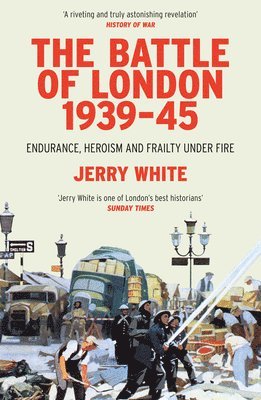
'Endlessly fascinating. . . White is such a brilliant historian' Mail on SundayLasting for six long years, the Blitz transformed life in the capital beyond recognition, marking a time of almost constant anxiety, disruption, deprivation and sacrifice for Londoners. With the capital the nation's frontline during the Second World War, by its end, 30,000 inhabitants had lost their lives.While much has been written about 'the Myth of the Blitz', its riveting social history has often been overlooked. Unearthing what it was actually like for those living through those tempestuous years, Jerry White paints a fascinating portrait of the daily lives of ordinary Londoners, telling the story through their own voices.'As a history of the capital in wartime, it is probably unsurpassable' Sunday Telegraph'An impressive history of the capital at war. . . White, an accomplished chronicler of London's history, tells it with brio and a confident mastery of the sources' Literary Review
214 kr
Skickas
For Londoners of the eighteenth and nineteenth centuries, debt was a part of everyday life. But when your creditors lost their patience, you might be thrown into one of the capital’s most notorious jails: the Marshalsea Debtors’ Prison.In Mansions of Misery, acclaimed chronicler of the capital Jerry White introduces us to the Marshalsea’s unfortunate prisoners – rich and poor; men and women; spongers, fraudsters and innocents. We get to know the trumpeter John Grano who wined and dined with the prison governor and continued to compose music whilst other prisoners were tortured and starved to death. We meet the bare-knuckle fighter known as the Bold Smuggler, who fell on hard times after being beaten by the Chelsea Snob. And then there’s Joshua Reeve Lowe, who saved Queen Victoria from assassination in Hyde Park in 1820, but whose heroism couldn’t save him from the Marshalsea. Told through these extraordinary lives, Mansions of Misery gives us a fascinating and unforgettable cross-section of London life from the early 1700s to the 1840s.
2 953 kr
Skickas inom 3-6 vardagar
351 kr
Skickas inom 7-10 vardagar
Speaking at the Congress of African People in September 1970, Amiri Baraka said, “In Newark, when we greet each other on the streets, we say, ‘what time is it?’ We always say, ‘It’s nation time!’ Nationalism is about land and nation, a way of life trying to free itself.” National identity and nationhood are too often easily dismissed as retrograde populism or racist exclusion. Instead, they need to be understood as a key part of a vision of globalization that holds the imperatives of diversity and solidarity in a delicate balance.Jerry White offers a defence of the nation based on the assumption that struggles for national identity have often unfolded in ways that should be familiar to those who defend the political standpoint of the progressive left. Having evolved into something that a wide variety of actors have sought to defend, nations can also serve as a defence against the homogenizing forces of globalization and as havens of diversity in opposition to more singularly minded forms of affiliation. It’s Nation Time is structured as a series of specific case studies that speak to theories of nation and their historical and cultural manifestations. It includes examples as varied as Black nationalism, Simone Weil’s hopes for a postwar France, the first independence period of Georgia, the Bollywood cinema of Nehru-era India, and small or stateless nations such as New Zealand, Quebec, Ireland, Catalonia, the Métis, the Mohawk, and the Inuit to argue that nationalism is a social form that has much potential and life in it.Broadly internationalist but also deeply insightful about the particular cultures and politics of small nations, It’s Nation Time defends an idea of nation, and a form of nationalism that are rooted in the potential for diversity, flexibility, and progressive politics.
165 kr
Skickas inom 5-8 vardagar
The loss of a loved one, a painful divorce, or a serious physical injury - we must all, at one point, face tragedy - unavoidable moments that divide our lives into 'before' and 'after'. How do we muscle our way through tough times and emerge stronger, wiser - even grateful for our struggle? In 1984, author Jerry White lost his leg and almost his life in a tragic accident. As co-founder of Survivors Corps, White has interviewed thousands of victims of tragedy. With this book, he shares what he has learned. White outlines his successful five-step program for coping with life's worst, and for turning tragedy into triumph. And then in their own words, his survivor friends and colleagues share their stories. It's a group that includes the well known, like Lance Armstrong, Nelson Mandela, and the late Princess Diana, and also everyday survivors. Through their stories and the author's words, the book takes you step by step through the process of not only surviving tragedy and victimhood, but going on to thrive.
1 638 kr
Skickas inom 10-15 vardagar
The book analyses and evaluates the development role and impact of the state in East Asia, in both capitalist (South Korea and Taiwan) and socialist (China) contexts.
809 kr
Skickas inom 10-15 vardagar
437 kr
Skickas inom 10-15 vardagar
Revisioning Europe is among the few existing English-language discussions of the films made by British novelist John Berger and Swiss film director Alain Tanner. It brings to light a political cinema that was unsentimental about the possibilities of revolutionary struggle and unsparing in its critique of the European left, and at the same time optimistic about the ability of radicalism - and radical art - to transform the world.Jerry White argues that Berger and Tanner's work is preoccupied with ideas that were both central to the Enlightenment and at the same time characteristically Swiss. Translations of previously unpublished essays by both John Berger and Alain Tanner are included as appendices.
1 053 kr
Skickas inom 11-20 vardagar
The Radio Eye: Cinema in the North Atlantic, 1958-1988, examines the way in which media experiments in Quebec, Newfoundland, the Faroe Islands, and the Irish-Gaelic-speaking communities of Ireland use film, video, and television to advocate for marginalized communities and often for ""smaller languages."" The Radio Eye is not, however, a set of isolated case studies. Author Jerry White illustrates the degree to which these experiments are interconnected, sometimes implicitly but more often quite explicitly. Media makers in the North Atlantic during the period 1958-1988 were very aware of each other's cultures and aspirations, and, by structuring the book in two interlocking parts, White illustrates the degree to which a common project emerged during those three decades. The book is bound together by White's belief that these experiments are following in the idealism of Soviet silent filmmaker Dziga Vertov, who wrote about his notion of ""the Radio Eye."" White also puts these experiments in the context of work by the Cuban filmmaker and theorist Julio García Espinosa and his notion of ""imperfect cinema,"" Jürgen Habermas and his notions of the ""public sphere,"" and Édourard Glissant's ideas about ""créolité"" as the defining aspect of modern culture. This is a genuinely internationalist moment, and these experiments are in conversation with a wide array of thought across a number of languages.
501 kr
Skickas inom 11-20 vardagar
The Radio Eye: Cinema in the North Atlantic, 1958-1988, examines the way in which media experiments in Quebec, Newfoundland, the Faroe Islands, and the Irish-Gaelic-speaking communities of Ireland use film, video, and television to advocate for marginalized communities and often for ""smaller languages."" The Radio Eye is not, however, a set of isolated case studies. Author Jerry White illustrates the degree to which these experiments are interconnected, sometimes implicitly but more often quite explicitly. Media makers in the North Atlantic during the period 1958-1988 were very aware of each other's cultures and aspirations, and, by structuring the book in two interlocking parts, White illustrates the degree to which a common project emerged during those three decades. The book is bound together by White's belief that these experiments are following in the idealism of Soviet silent filmmaker Dziga Vertov, who wrote about his notion of ""the Radio Eye."" White also puts these experiments in the context of work by the Cuban filmmaker and theorist Julio García Espinosa and his notion of ""imperfect cinema,"" Jürgen Habermas and his notions of the ""public sphere,"" and Édourard Glissant's ideas about ""créolité"" as the defining aspect of modern culture. This is a genuinely internationalist moment, and these experiments are in conversation with a wide array of thought across a number of languages.
464 kr
Skickas inom 10-15 vardagar
Jean-Luc Godard and Anne-Marie Miéville are among the most important postwar filmmakers; they have worked across forms, across media, and across countries. This book, the first to be devoted specifically to the work they did together, examines the way they expanded the possibilities of cinema by using cutting-edge video equipment in a constant search for a new kind of filmmaking.Two Bicycles examines all of the films, videos, and television works that the two did together, and moves slowly across France and Switzerland, with detours in Quebec, Mozambique, and Palestine. Their amazingly varied body of work includes a twelve-hour television series, some experimental videos, an acclaimed feature film with Isabelle Huppert, a cigarette commercial, and much else. Overall the book shows the degree to which this work departs radically from the legacy of the French New Wave, and in many ways shows signs of having been formed by the distinct culture of Switzerland, to which Godard and Miéville returned in the 1970s to set up their ""atelier,"" Sonimage.Two Bicycles offers a chance to explore a body of work that is as unique and demanding as it is rich and revelatory. Godard and Miéville have worked together for four decades but have never seemed more relevant.
390 kr
Kommande
205 kr
Skickas inom 5-8 vardagar
182 kr
Skickas
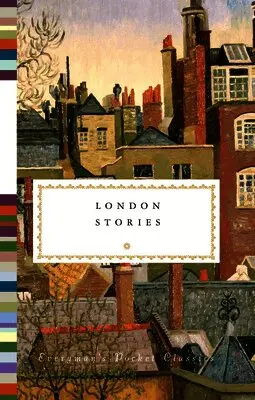
London has the greatest literary tradition of any city in the world. Its roll-call of story-tellers includes cultural giants who changed the way the world thought about writing, like Shakespeare, Defoe and Dickens. But there has also been an innumerable host of writers who have sought to capture the essence of London and what it meant for the people who lived there or were merely passing through. They found a city of boundless wealth and ragged squalor, of moving tragedy and riotous joy; and they faithfully transcribed what they saw and felt in the stories they told of London town. They are stories of fact and fiction and occasionally something in between. Some voices will be familiar to many readers and others practically unknown. But all give us insights into these writers’ very varied Londons; and all tell their stories gratifyingly well.Authors include John Evelyn, Thomas de Quincey, W. M. Thackeray, Henry Mayhew, Sir Arthur Conan Doyle, George Gissing, J. B. Priestley, Jean Rhys, Graham Greene, Muriel Spark, Maeve Binchy, Doris Lessing, Hanif Kureishi and Shena Mackay.
318 kr
Skickas
Jerry White's London in the Nineteenth Century is the richest and most absorbing account of the city's greatest century by its leading expert.London in the nineteenth century was the greatest city mankind had ever seen. Its growth was stupendous. Its wealth was dazzling. Its horrors shocked the world. This was the London of Blake, Thackeray and Mayhew, of Nash, Faraday and Disraeli. Most of all it was the London of Dickens. As William Blake put it, London was 'a Human awful wonder of God'.In Jerry White's dazzling history we witness the city's unparalleled metamorphosis over the course of the century through the daily lives of its inhabitants. We see how Londoners worked, played, and adapted to the demands of the metropolis during this century of dizzying change. The result is a panorama teeming with life.
318 kr
Kommande
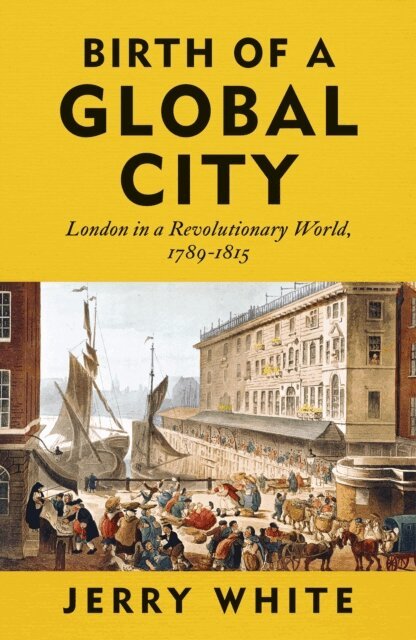
How the turmoil of revolution and war created the London we know today – the world’s first truly global city.The French Revolutionary and Napoleonic Wars changed London beyond recognition, turning it into the capital of the world – the focal point of international finance and trade. Victory over France in 1815 ushered in the ‘British Century’: the next hundred years would be defined by Britain’s capitalist innovation and financial might, naval supremacy and imperial ambition.In this brilliant portrait of these pivotal years, Jerry White looks at how revolution and war on the Continent transformed the capital. While the manufacture of war materials brought wealth for some, high food prices led to bread riots. The war divided public opinion, with ultra-patriots clamouring for the defeat of ‘Bony’, while others sought to emulate the democratic reforms pioneered across the Channel. Crucially, the chaos and uncertainty on the Continent led to a mass flight of foreign bankers and merchants to London, which would help turn London into the world’s leading financial centre -- contemporaries called it ‘The Modern Rome’.Yet Birth of a Global City takes in the wider world too. Who was feeding London, in the British Isles and across the empire? How instrumental was Britain’s financial might in victory over France? What impact did the abolition of the slave trade in 1807 have on London, Britain and its empire? And how dangerous were the political ideas coming from the Continent? It was this turbulent period of war and political turmoil that created London as we know it today.
254 kr
Skickas inom 7-10 vardagar
799 kr
Tillfälligt slut
208 kr
Skickas inom 11-20 vardagar
262 kr
Skickas inom 3-6 vardagar