G. Freudenthal - Böcker
Visar alla böcker från författaren G. Freudenthal. Handla med fri frakt och snabb leverans.
4 produkter
4 produkter
1 593 kr
Skickas inom 10-15 vardagar
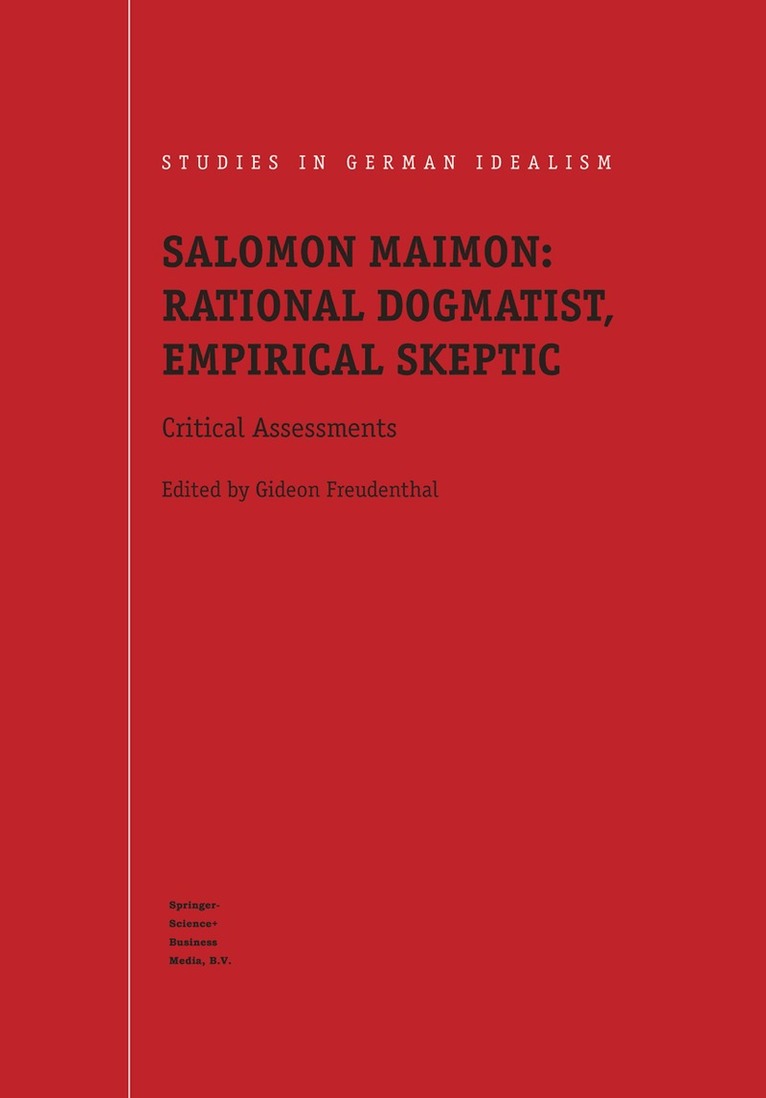
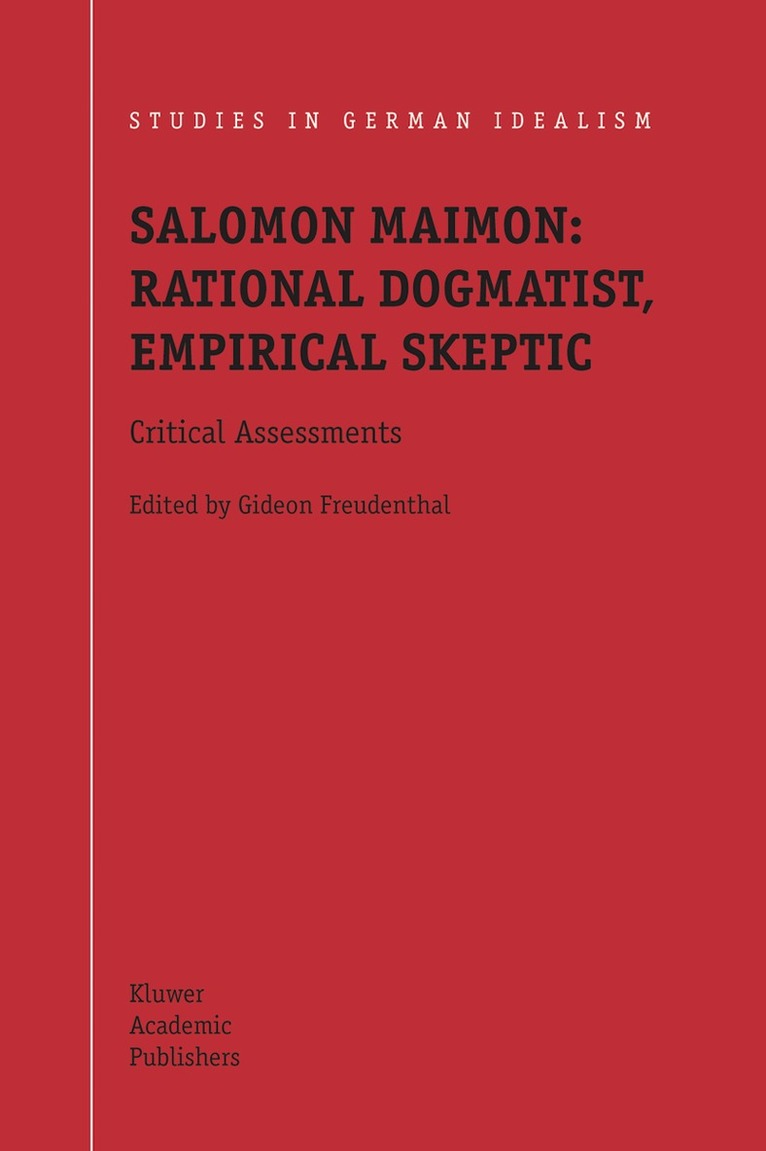
Salomon Maimon (1753-1800), one of the most fascinating characters of 18th-century intellectual history, came from a traditional orthodox Jewish community in Eastern Europe to Berlin to seek Enlightenment. Maimon remained an outsider: an "Ostjude" among the enlightened Jews in Berlin, a freethinker among observant Jews and a Jew among the non-Jews. His autobiography became a classic of autobiographical literature of the Enlightenment. His "inter-cultural" experience is reflected in his philosophy. Indebted to the Maimonidean as well as to the modern European (notably Kantian) philosophical tradition, he attempted a synthesis of normally exclusive orientations: "Rational Dogmatism" and "Empirical Skepticism". Maimon's importance in the development from Kant to German Idealism has been acknowledged, but the interpretation of his own philosophical position suffered much from this narrow perspective. The essays of scholars collected in this volume focus on his synthesis of "Rational Dogmatism" and "Empirical Skepticism".The collection should be of interest to scholars working in the fields of history of philosophy, metaphysics, epistemology, rationalism and empiricism as well as Jewish Studies.
Del 88 - Boston Studies in the Philosophy and History of Science
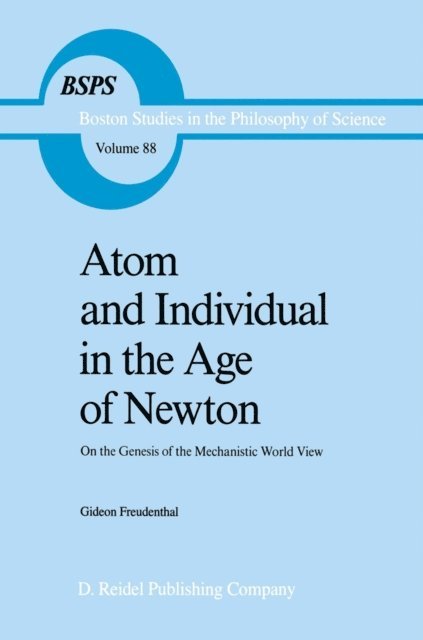
Atom and Individual in the Age of Newton
On the Genesis of the Mechanistic World View
Inbunden, Engelska, 1986
1 593 kr
Skickas inom 10-15 vardagar
In this stimulating investigation, Gideon Freudenthal has linked social history with the history of science by formulating an interesting proposal: that the supposed influence of social theory may be seen as actual through its co herence with the process of formation of physical concepts. The reinterpre tation of the development of science in the seventeenth century, now widely influential, receives at Freudenthal's hand its most persuasive statement, most significantly because of his attention to the theoretical form which is charac teristic. of classical Newtonian mechanics. He pursues the sources of the parallels that may be noted between that mechanics and the dominant philosophical systems and social theories of the time; and in a fascinating development Freudenthal shows how a quite precise method - as he descriptively labels it, the 'analytic-synthetic method' - which underlay the Newtonian form of theoretical argument, was due to certain interpretive premisses concerning particle mechanics. If he is right, these depend upon a particular stage of con ceptual achievement in the theories of both society and nature; further, that the conceptual was generalized philosophically; but, strikingly, Freudenthal shows that this concept-formation itself was linked to the specific social relations of the times of Newton and Hobbes.
1 593 kr
Skickas inom 10-15 vardagar
Salomon Maimon (1753-1800), one of the most fascinating characters of eighteenth-century intellectual history, came from a traditional orthodox Jewish community in Eastern Europe to Berlin to seek Enlightenment. Maimon remained an outsider: an 'Ostjude' among the enlightened Jews in Berlin, a freethinker among observant Jews and a Jew among the non-Jews. His autobiography became a classic of autobiographical literature of the Enlightenment. His 'inter-cultural' experience is reflected in his philosophy. Indebted to the Maimonidean as well as to the modern European (notably Kantian) philosophical tradition, he attempted a synthesis of normally exclusive orientations: 'Rational Dogmatism' and 'Empirical Skepticism'. Maimon's importance in the development from Kant to German Idealism has been acknowledged, but the interpretation of his own philosophical position suffered much from this narrow perspective. The essays of leading scholars collected in this volume focus on his synthesis of 'Rational Dogmatism' and 'Empirical Skepticism'.
Del 88 - Boston Studies in the Philosophy and History of Science
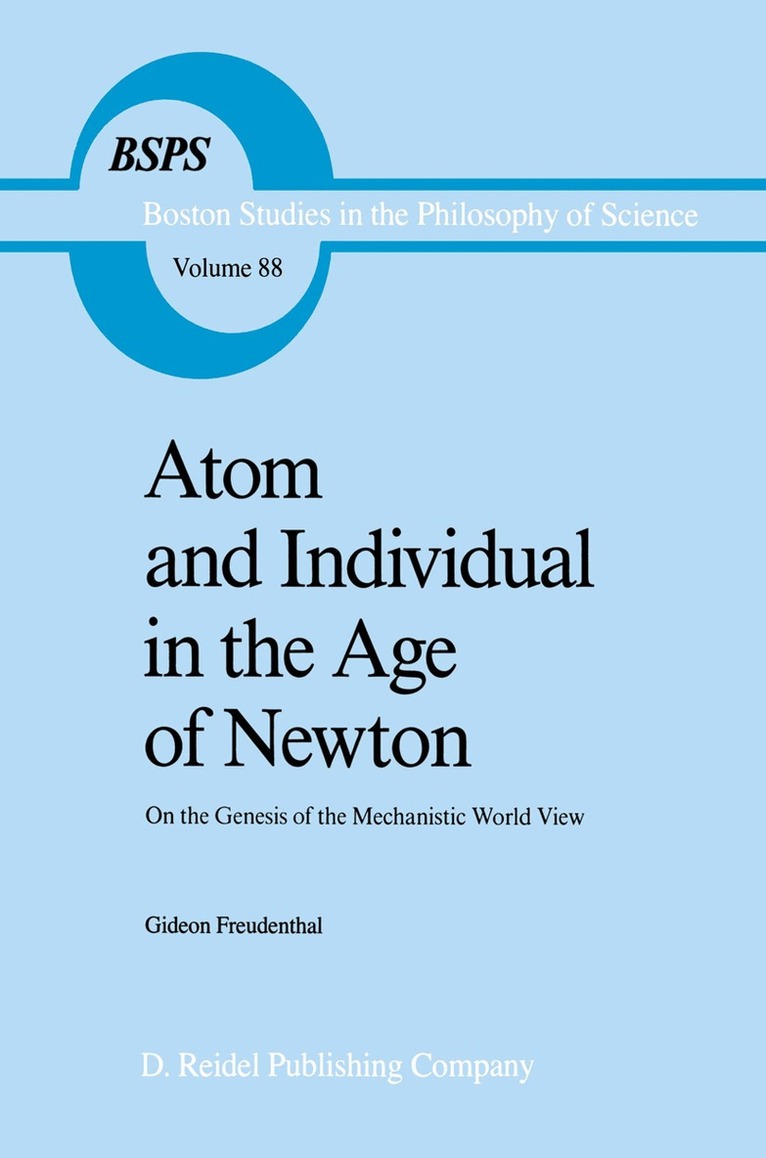
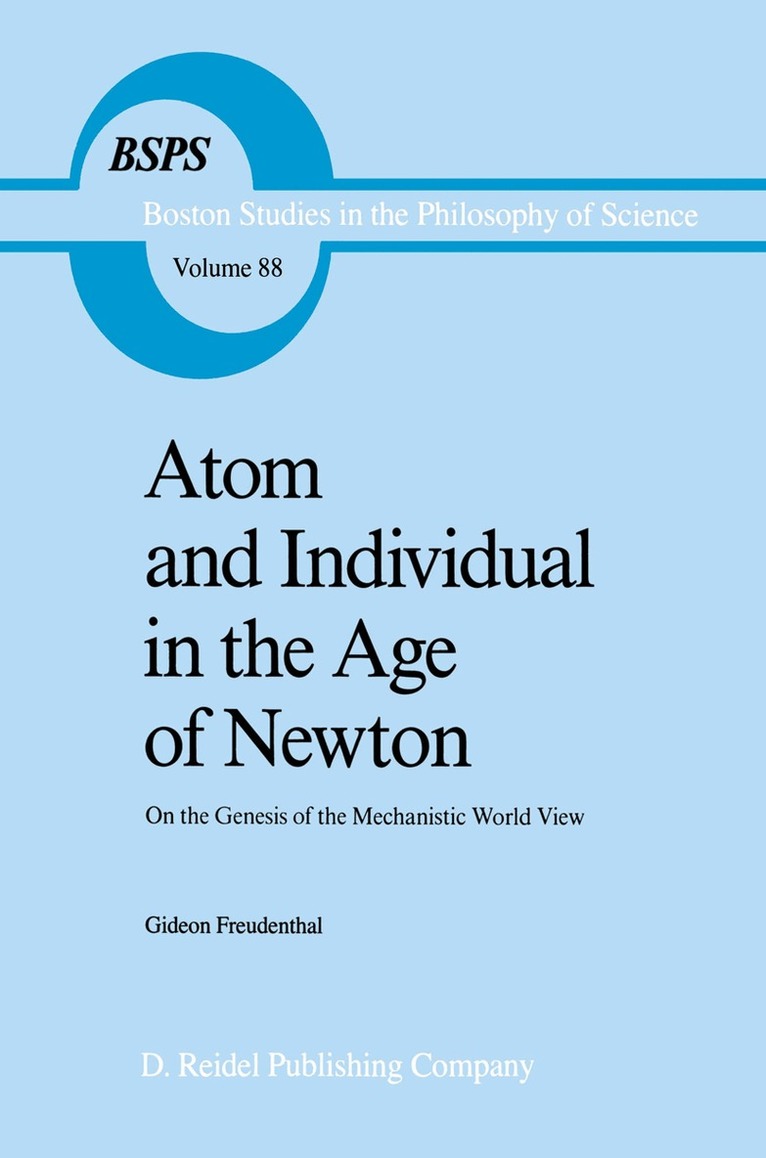
Atom and Individual in the Age of Newton
On the Genesis of the Mechanistic World View
Häftad, Engelska, 2011
1 640 kr
Skickas inom 10-15 vardagar
In this stimulating investigation, Gideon Freudenthal has linked social history with the history of science by formulating an interesting proposal: that the supposed influence of social theory may be seen as actual through its co herence with the process of formation of physical concepts. The reinterpre tation of the development of science in the seventeenth century, now widely influential, receives at Freudenthal's hand its most persuasive statement, most significantly because of his attention to the theoretical form which is charac teristic. of classical Newtonian mechanics. He pursues the sources of the parallels that may be noted between that mechanics and the dominant philosophical systems and social theories of the time; and in a fascinating development Freudenthal shows how a quite precise method - as he descriptively labels it, the 'analytic-synthetic method' - which underlay the Newtonian form of theoretical argument, was due to certain interpretive premisses concerning particle mechanics. If he is right, these depend upon a particular stage of con ceptual achievement in the theories of both society and nature; further, that the conceptual was generalized philosophically; but, strikingly, Freudenthal shows that this concept-formation itself was linked to the specific social relations of the times of Newton and Hobbes.