G. Michael Killenberg - Böcker
Visar alla böcker från författaren G. Michael Killenberg. Handla med fri frakt och snabb leverans.
3 produkter
3 produkter
1 451 kr
Skickas inom 5-8 vardagar
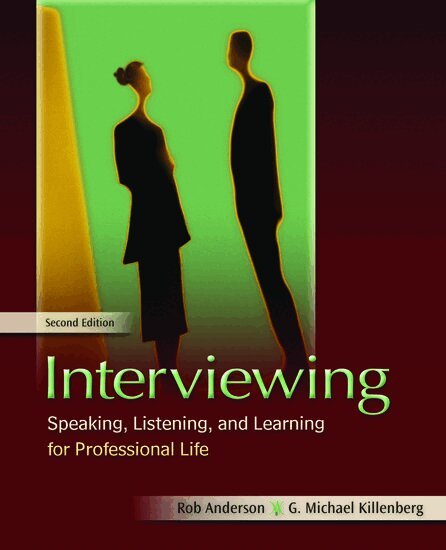
In the second edition of Interviewing, experienced educators Rob Anderson and G. Michael Killenberg explain and demystify the interviewing process, offering students a practical guide to the fascinating art of asking and answering questions. Throughout, they urge students not to view interviewing as a procedure or as a collection of techniques; instead, they present the process of interviewing as a fascinating opportunity for learning through dialogue. The basic motivation for interviewing is learning something new. Each chapter features two sections: "The Basics," which describes essential skills, and "Beyond the Basics," which places them into a relevant context. Moreover, interviewing skills are clearly divided into three interrelated types: Listening, Questioning, and Framing. To highlight the practical, real-world significance of interviewing, the authors encourage students to apply their learning actively and to connect their skills with ideas from other communication, social science, and humanities courses. This student-friendly text also includes the following features:* An emphasis on how interviewing contributes to the quality of public dialogue* An integrated approach to both interviewer and interviewee roles* In-depth coverage of culture and ethics* Innovative boxed supplements, including: - "Interviewers/Interviewees in Action" boxes, featuring first-person accounts- "Trying Out Your Skills" boxes- End-of-chapter "Making Your Decision" boxes, which present interactive hypothetical situations designed to generate class discussion In addition, each chapter includes "The Interview Bookshelf," an annotated section recommending books that students will find helpful for further reading or for future interviewing-related assignments in other classes. A comprehensive online Instructor's Resource Guide is also available and provides suggestions for class activities, resources, and assignments.
504 kr
Skickas inom 3-6 vardagar
Since the Founding, America’s faith in a democratic republic has depended on citizens who could be trusted to be communicators. Vigorous talk about equality, rights, and collaboration fueled the Revolution, the Declaration of Independence, and the Constitution with its amendments. In a republic, the people set the terms for their lives not individually, but in community. The genius of keeping it alive exists in how everyday citizens talk and listen, write and read, for a common good. Dialogue and deliberation—rather than an accumulation of individual preferences—sustains a republic, yet a diminished and scarred institution of journalism jeopardizes citizens’ access to shared and truthful information. A disturbing “what’s in it for me?” attitude has taken over many citizens, and a creeping, autocratic sense of dismissive accusation too often characterizes the political style of elected officials.The basic fuel for democracy is the willingness of informed citizens to take each other seriously as they talk about political choices. Once we begin to clam up, build walls, and dismiss each other, we unravel the threads tying us to the Founders’ vision of a republic. A free press and free speech become meaningless if not supported by sustained listening to multiple positions. There are those who profit by dividing citizens into two camps: a comfortable “us” versus a scary “them.” They make their case with accusations and often with lies. They warp the very meaning of communication, hoping citizens never truly discover each other’s humanity. Democracy’s News discusses today’s problems of public communication in the context of history, law, and interpersonal life. News should not be something to dread, mistrust, or shun. Aided by reliable, factual journalism, citizens can develop a community-based knowledge to cope with social issues great and small. They come to treat neighbors and strangers as more than stereotypes or opponents. They become collaborators with whom to identify and sustain a working republic where news, citizenship, and public discourse merge.
Democracy's News
A Primer on Journalism for Citizens Who Care about Democracy
Inbunden, Engelska, 2023
1 188 kr
Skickas inom 7-10 vardagar
Since the Founding, America’s faith in a democratic republic has depended on citizens who could be trusted to be communicators. Vigorous talk about equality, rights, and collaboration fueled the Revolution, the Declaration of Independence, and the Constitution with its amendments. In a republic, the people set the terms for their lives not individually, but in community. The genius of keeping it alive exists in how everyday citizens talk and listen, write and read, for a common good. Dialogue and deliberation—rather than an accumulation of individual preferences—sustains a republic, yet a diminished and scarred institution of journalism jeopardizes citizens’ access to shared and truthful information. A disturbing “what’s in it for me?” attitude has taken over many citizens, and a creeping, autocratic sense of dismissive accusation too often characterizes the political style of elected officials.The basic fuel for democracy is the willingness of informed citizens to take each other seriously as they talk about political choices. Once we begin to clam up, build walls, and dismiss each other, we unravel the threads tying us to the Founders’ vision of a republic. A free press and free speech become meaningless if not supported by sustained listening to multiple positions. There are those who profit by dividing citizens into two camps: a comfortable “us” versus a scary “them.” They make their case with accusations and often with lies. They warp the very meaning of communication, hoping citizens never truly discover each other’s humanity. Democracy’s News discusses today’s problems of public communication in the context of history, law, and interpersonal life. News should not be something to dread, mistrust, or shun. Aided by reliable, factual journalism, citizens can develop a community-based knowledge to cope with social issues great and small. They come to treat neighbors and strangers as more than stereotypes or opponents. They become collaborators with whom to identify and sustain a working republic where news, citizenship, and public discourse merge.