Gabriel Josipovici - Böcker
Visar alla böcker från författaren Gabriel Josipovici. Handla med fri frakt och snabb leverans.
11 produkter
11 produkter
286 kr
Skickas inom 3-6 vardagar
555 kr
Skickas inom 5-8 vardagar
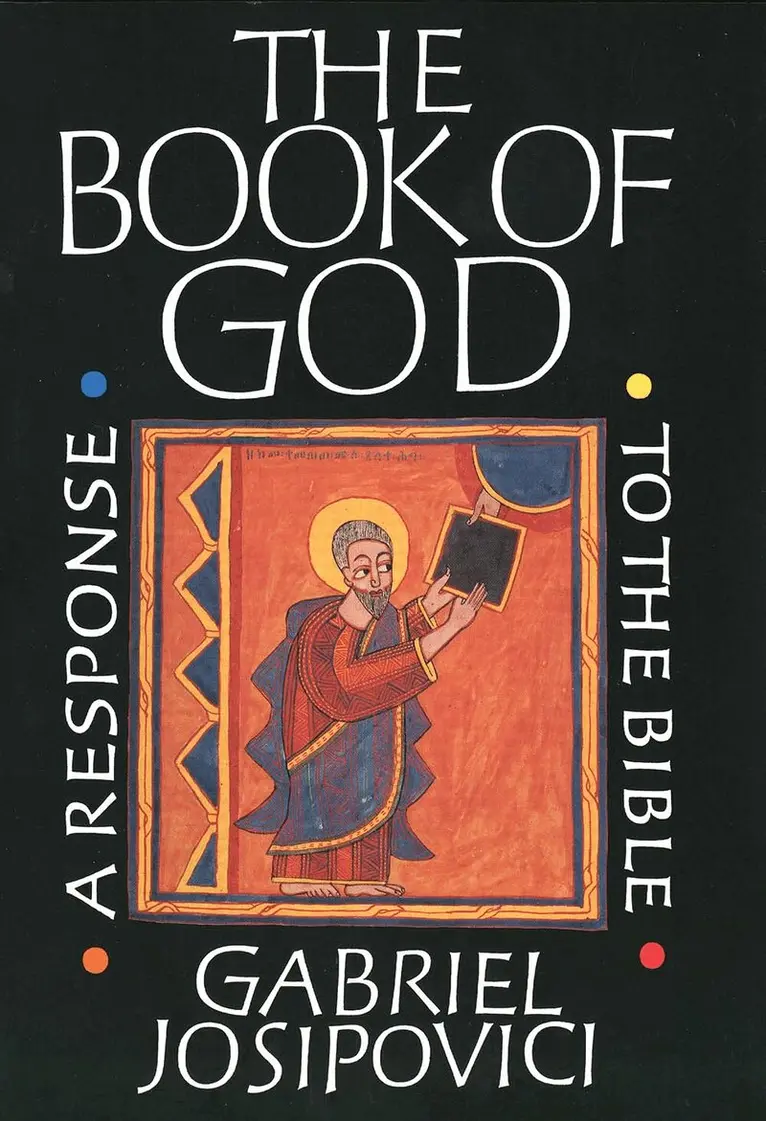
Is the Bible one book or a collection of writings? If it is a book, does it stand as a coherent piece of literature? Building on the recently renewed interest in biblical narrative associated with Erich Auerbach, Northrop Frye, and Robert Alter, Gabriel Josipovici here sets out to answer these and other equally fascinating questions. Developing his argument through close textual analysis, Josipovici draws on his deep knowledge and appreciation of medieval and modern art and literature and on his personal understanding of the possibilities of narrative. His beautifully written book not only lifts literary-biblical criticism to a new level but also makes the Bible accessible to our secular age. "This is a book to be grateful for: thoughtful, deeply felt, and beautifully written."—David Lodge, Independent "Full of such insights, which deserve and need to be pondered by both literary critics and Biblical scholars of the traditional sort."—John Barton, London Review of Books" His book is easy, intimate and direct, partly because he has digested all his learning, partly because his dissatisfaction with his predecessors' solutions never belittles them, and partly because his own readings are those of a cultivated contemporary who, though respectful, is not awestruck. Whatever he turns to, he illuminates."—The New Yorker"His urbane style, shrewd discernment, subtle humor, and above all, his passion for words lead us to listen in fresh ways."— Walter Brueggemann, Theology Today"As 'A Response to the Bible,' The Book of God is fresh and energetic, scattering insights in all directions, making original and unexpected connections between the Bible and such modern authors as Proust, casting new light upon such questions as the Bible's place in Western culture, the nature of its authority, the unity and discontinuities of the text, and the need for a perspective that at once transcends and unites historical-theological and aesthetic interpretation."—Northrop Frye
478 kr
Skickas inom 5-8 vardagar
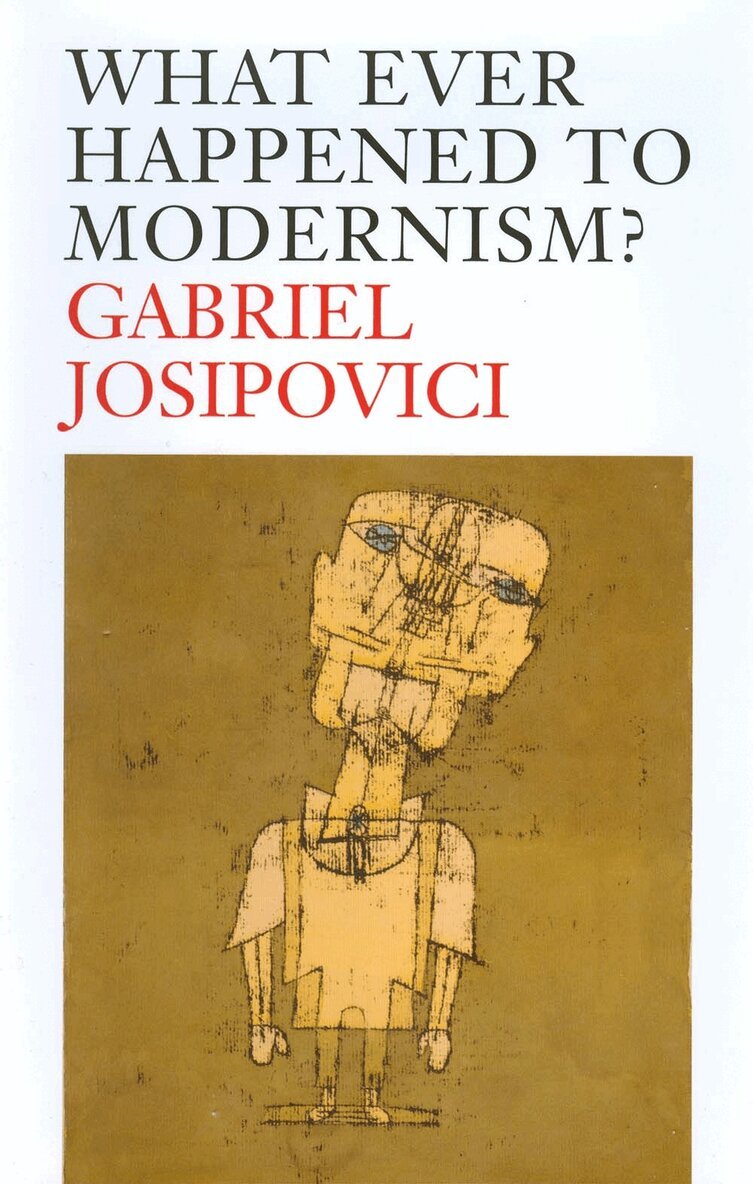
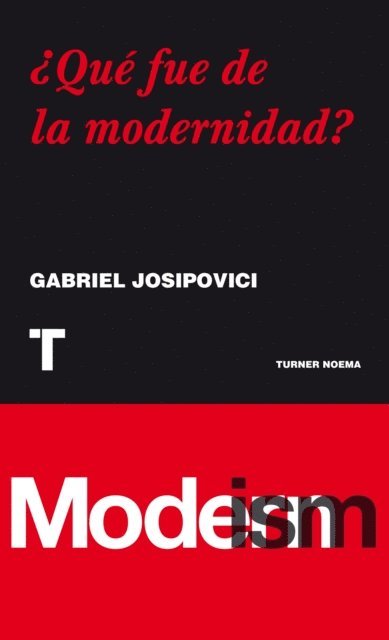
A personal, penetrating, and polemical account of what Modernism is and how contemporary literature has failed itThe quality of today’s literary writing arouses the strongest opinions. For novelist and critic Gabriel Josipovici, the contemporary novel in English is profoundly disappointing—a poor relation of its groundbreaking Modernist forebears. This agile and passionate book asks why.Modernism, Josipovici suggests, is only superficially a reaction to industrialization or a revolution in diction and form; essentially, it is art coming to consciousness of its own limits and responsibilities. And its origins are to be sought not in 1850 or 1800, but in the early 1500s, with the crisis of society and perception that also led to the rise of Protestantism. With sophistication and persuasiveness, Josipovici charts some of Modernism’s key stages, from Dürer, Rabelais, and Cervantes to the present, bringing together a rich array of artists, musicians, and writers both familiar and unexpected—including Beckett, Borges, Friedrich, Cézanne, Stevens, Robbe-Grillet, Beethoven, and Wordsworth. He concludes with a stinging attack on the current literary scene in Britain and America, which raises questions about not only national taste, but contemporary culture itself.Gabriel Josipovici has spent a lifetime writing, and writing about other writers. What Ever Happened to Modernism? is a strident call to arms, and a tour de force of literary, artistic, and philosophical explication that will stimulate anyone interested in art in the twentieth century and today.
398 kr
Skickas inom 5-8 vardagar
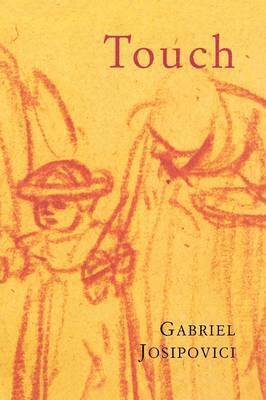
In this brilliant new book, a preeminent literary thinker muses over the central question of how we can feel at home in the world, given that the world is independent of and indifferent to our wishes. Drawing on books and films, cultural history and his own experiences, Gabriel Josipovici argues that it is possible to feel comfortable in the world and in our relationships with others only if we value touch over sight, if we respect distance but also work to overcome it.Josipovici moves from a Charlie Chaplin movie to passages from Proust, from the world of sport to the world of addiction, from medieval pilgrimages to the cult of relics, from a wedding photograph of his grandparents to some of Chardin's most enigmatic paintings. Through these seemingly disparate topics he provides engaging and wise commentary on connection and communication in life. Contrasting the senses of sight and touch, Josipovici notes that although sight seems to give us the totality of what we behold, it is only when we walk or feel our way across the distances that things become more than images and begin to constitute the world in which we as touchers and not mere observers are included. If we depend on sight—which seems to offer a frictionless domination over reality—we may avoid the pains and uncertainties of living, but we also lose our involvement with life.Lucid, imaginative, and daring, Josipovici's book will inspire and, yes, deeply touch us all.
368 kr
Skickas inom 7-10 vardagar
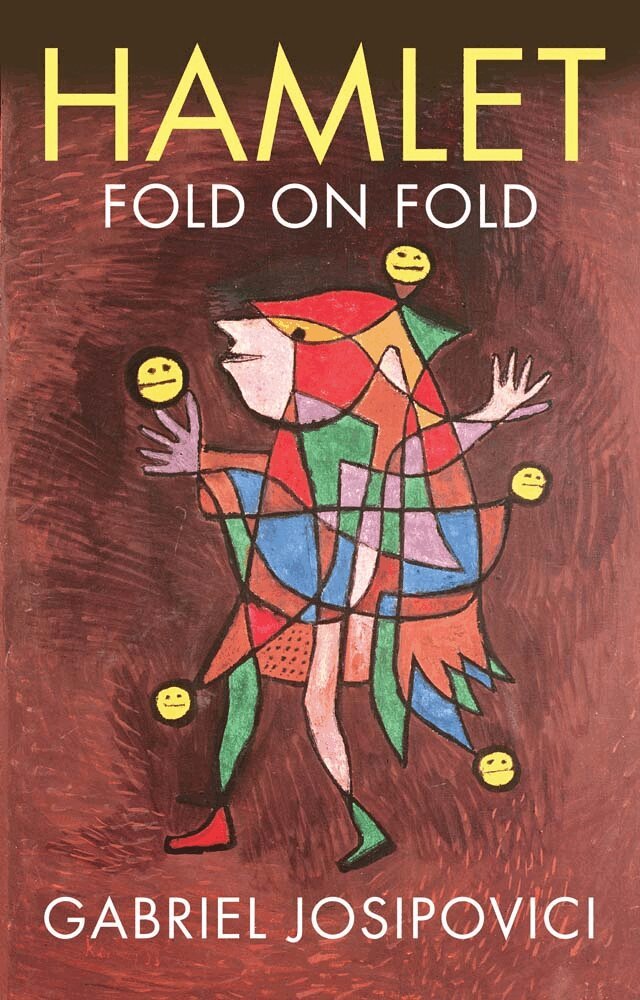
William Shakespeare's Hamlet is probably the best-known and most commented upon work of literature in Western culture. The paradox is that it is at once utterly familiar and strangely elusive—very like our own selves, argues Gabriel Josipovici in this stimulating and original study. Moreover, our desire to master this elusiveness, to “pluck the heart out of its mystery,” as Hamlet himself says, precisely mirrors what is going on in the play; and what Shakespeare's play demonstrates is that to conceive human character (and works of art) in this way is profoundly misguided. Rather than rushing to conclusions or setting out a theory of what Hamlet is “about,” therefore, we should read and watch patiently and openly, allowing the play to unfold before us in its own time and trying to see each moment in the context of the whole. Josipovici’s valuable book is thus an exercise in analysis which puts the physical experience of watching and reading at the heart of the critical process—at once a practical introduction to a great and much-loved play and a sophisticated intervention in some of the key questions of theory and aesthetics of our time.
135 kr
Skickas
We cannot understand the phenomenon of remembering without invoking its opposite, forgetting. Taking his cue from Beckett - 'only he who forgets remembers' - Josipovici uncovers a profound cultural shift from societies that celebrated ritual remembrance at fixed times and places, to our own Western world where the lack of such mechanisms leads to a fear of forgetting, to what Nietzsche diagnosed as an unhealthy sleeplessness that infects every aspect of our culture.Moving from the fear of Alzheimer's to invocations of 'Remember the Holocaust' and 'Remember Kosovo' by unscrupulous demagogues, from the burial rituals of rural societies to the Berlin and Vienna Holocaust Memorials, from eighteenth-century disquiet about the role of tombs and inscriptions to the late poems of Wallace Stevens, Josipovici has produced, in characteristic style, a small book with a very big punch.Gabriel Josipovici's novel The Cemetery in Barnes (2018) was shortlisted for the 2018 Goldsmiths Prize and longlisted for the 2019 Republic of Consciousness Prize.
221 kr
Skickas
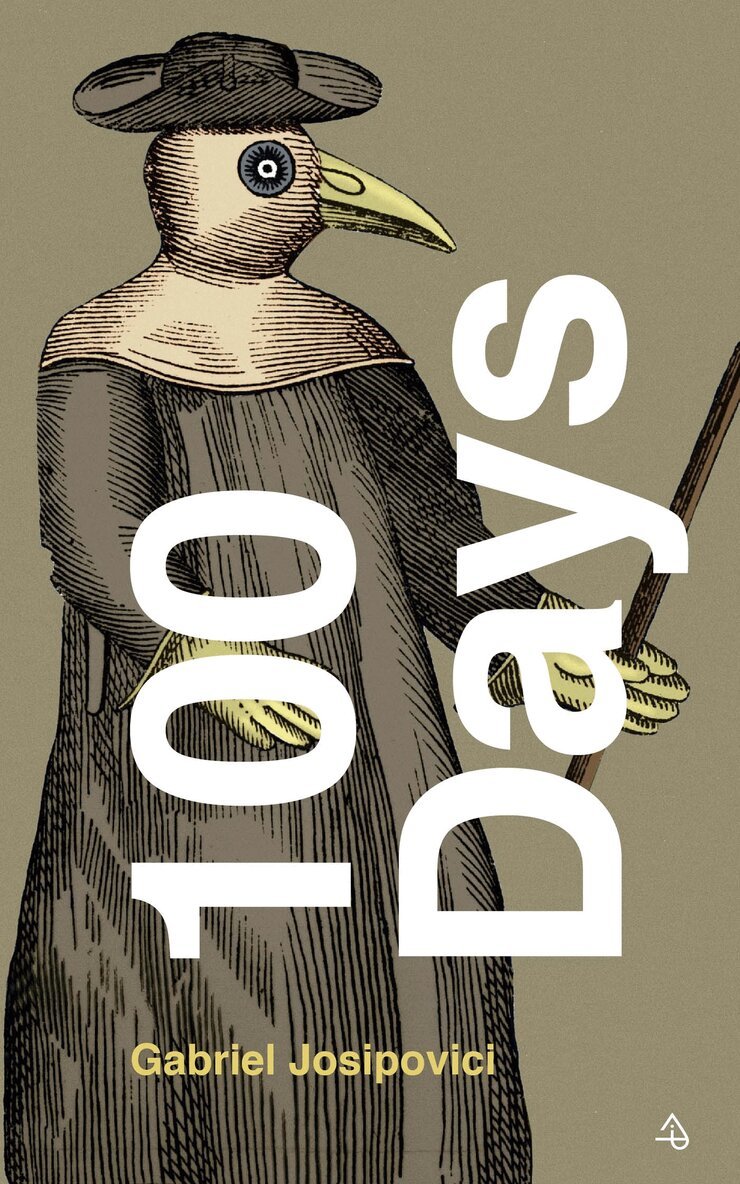
When in March 2020 the Covid pandemic led the Government to impose a total lockdown Gabriel Josipovici decided that he would respond to a unique situation by writing an essay a day for a hundred days, prefacing each with a diary entry, keeping track of the changing seasons as well as the pandemic. As organising and generating principle for the essays he chose the alphabet, and the result is a stimulating kaleidoscope of topics from Aachen to Zoos, passing by Alexandria, Luciano Berio, Ivy Compton-Burnett, reflections on his own early works The Echo-Chamber and Flow, Langland's Piers Plowman, the idea of repetition in life and art, and much else.Josipovici reminds us that he has previously 'plundered episodes in my life to illustrate the intertwining of memory and forgetting, the desire to remember and the need to forget', and here he has someone say to him: 'You don't seem to be afraid of revealing a great deal about yourself.' 'I don’t think I feel it that way,' he responds. 'I can "reveal" precisely because it does not seem to be part of me. It seems to belong to someone else, a writer I have lived with, an immigrant I have known.'Loquacious, funny and incautious, this surprising book is in effect a kind of expressionist self-portrait as well as a meditation on a hundred days of the pandemic.
181 kr
Skickas
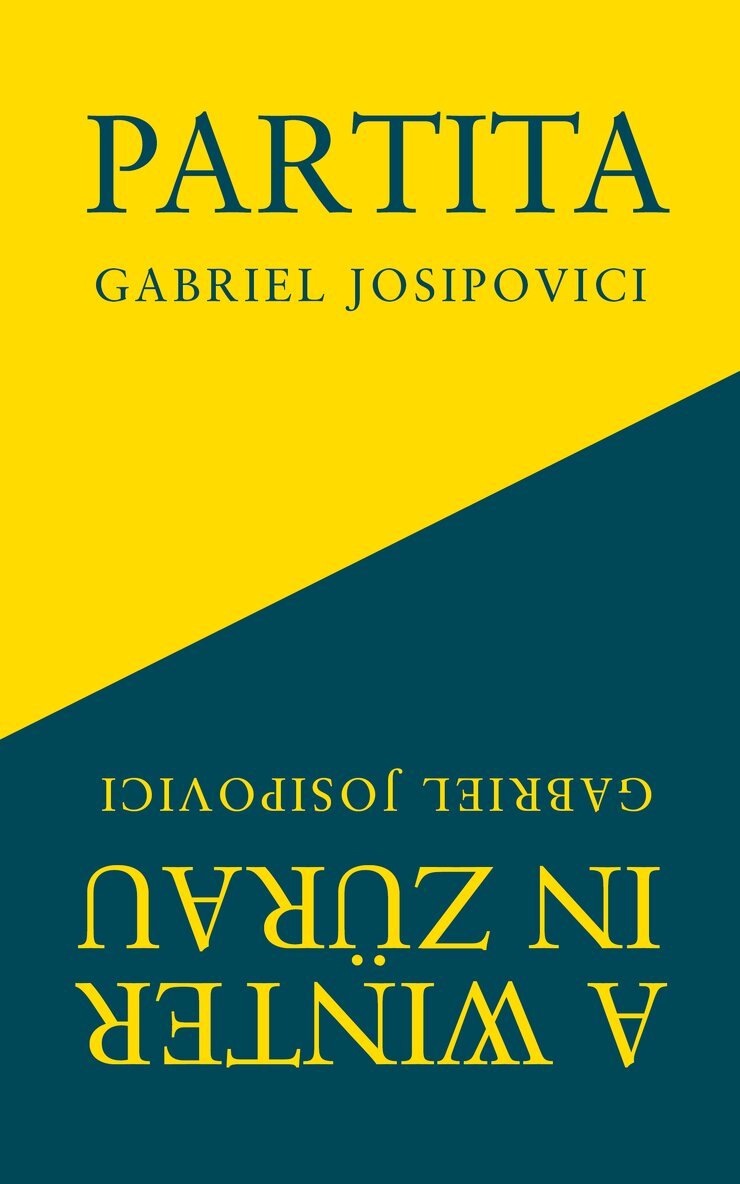
PartitaFiction and non-fiction are two sides of the same coin. Or are they? Michael Penderecki is in flight. Someone has threatened to kill him. But who is the woman dead in the bathtub? And why does the voice of Yves Montand singing 'Les Feuilles Mortes' surge from the horn of an antiquated phonograph in an otherwise silent villa in Sils Maria?This is the most enigmatic – and melodramatic – of Gabriel Josipovici's novels to date. It is as though one of Magritte's paintings had come to life to the rhythms of a Bach Partita.A Winter in ZürauFiction and non-fiction are two sides of the same coin. Or are they? Franz Kafka is in flight. After spitting blood and being diagnosed with tuberculosis in the summer of 1917, his thirty-fourth year, he escapes from Prague to join his sister Ottla in her smallholding in Upper Bohemia. He leaves behind, he hopes, a dreaded office job, a dominating father, an importunate fiancée and the hothouse literary culture of his native city. Free of all this, he believes, he will at last be able to make sense of his existence and of his strange compulsion to write stories and novels which, he knows, will bring him neither fame nor financial reward.But this is not fiction. It is an exploration of eight crucial months in the life of one of the greatest writers of the twentieth century, months of anguish and reflection preserved for us in his letters and journals of the time, and which resulted not just in the production of the famous Aphorisms but, as Josipovici shows in this compelling study, of some of his most resonant parables and story-fragments.
346 kr
Tillfälligt slut
Gabriel Josipovici's stories play hide and seek with the reader. Whether they take place in a seedy London nightclub in the sixties, in a brothel in Hamburg during the First World War, in the fevered world of Shakespeare's mind as he writes Twelfth Night or in that of the dying Borges as he dreams of Finland and the Kalevala, in an airport outside Berlin, in Bukovina in 1942...one thing is certain: you are never quite where you think you are and what is happening is never quite what you think is happening. No matter how short the story - and many are no more than two or three pages long - by the time you have finished reading you will have travelled an unimaginable distance, and will never be quite the same again. Heart's Wings gathers twenty-three stories written over the last fifteen years.
158 kr
Skickas
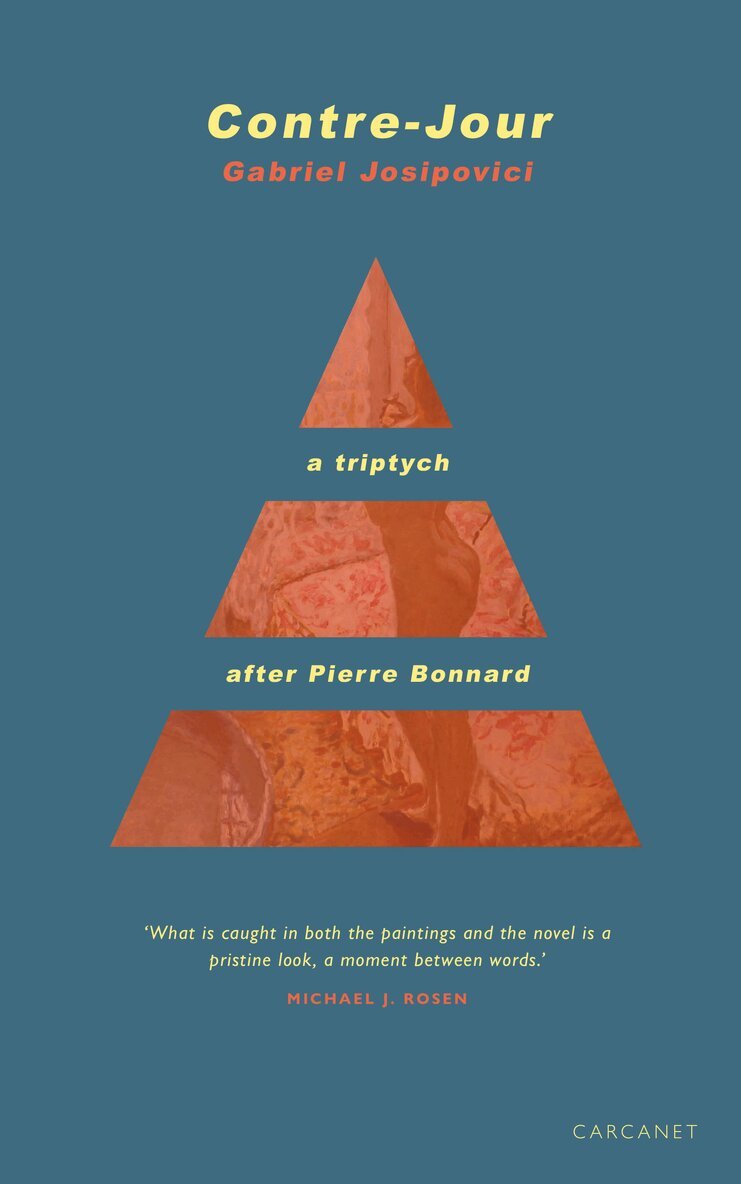
Gabriel Josipovici's acclaimed novel reissued in 2018.Josipovici's novel is based on the life of Pierre Bonnard, the painter of enchanting domestic interiors and innocently unsensual nudes. A thoughtful and deeply felt piece told in three parts from the perspectives of Bonnard's wife, daughter, and the painter himself.
513 kr
Skickas inom 5-8 vardagar