Gabriele Gramelsberger – författare
Visar alla böcker från författaren Gabriele Gramelsberger. Handla med fri frakt och snabb leverans.
10 produkter
10 produkter
Häftad, Engelska, 2019
681 kr
Skickas inom 10-15 vardagar
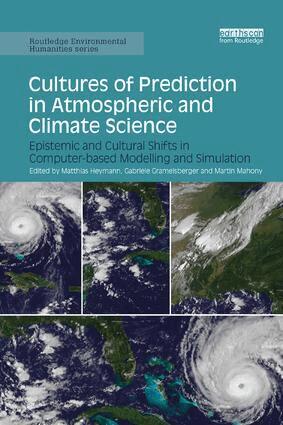
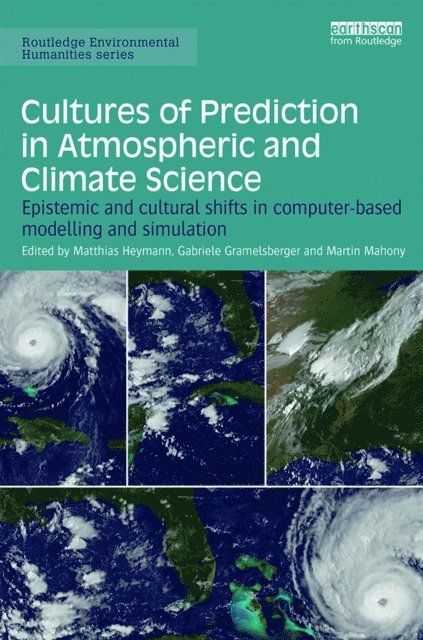
In recent decades, science has experienced a revolutionary shift. The development and extensive application of computer modelling and simulation has transformed the knowledge‐making practices of scientific fields as diverse as astro‐physics, genetics, robotics and demography. This epistemic transformation has brought with it a simultaneous heightening of political relevance and a renewal of international policy agendas, raising crucial questions about the nature and application of simulation knowledges throughout public policy. Through a diverse range of case studies, spanning over a century of theoretical and practical developments in the atmospheric and environmental sciences, this book argues that computer modelling and simulation have substantially changed scientific and cultural practices and shaped the emergence of novel ‘cultures of prediction’.Making an innovative, interdisciplinary contribution to understanding the impact of computer modelling on research practice, institutional configurations and broader cultures, this volume will be essential reading for anyone interested in the past, present and future of climate change and the environmental sciences.
Inbunden, Engelska, 2017
2 138 kr
Skickas inom 10-15 vardagar
In recent decades, science has experienced a revolutionary shift. The development and extensive application of computer modelling and simulation has transformed the knowledge‐making practices of scientific fields as diverse as astro‐physics, genetics, robotics and demography. This epistemic transformation has brought with it a simultaneous heightening of political relevance and a renewal of international policy agendas, raising crucial questions about the nature and application of simulation knowledges throughout public policy. Through a diverse range of case studies, spanning over a century of theoretical and practical developments in the atmospheric and environmental sciences, this book argues that computer modelling and simulation have substantially changed scientific and cultural practices and shaped the emergence of novel ‘cultures of prediction’.Making an innovative, interdisciplinary contribution to understanding the impact of computer modelling on research practice, institutional configurations and broader cultures, this volume will be essential reading for anyone interested in the past, present and future of climate change and the environmental sciences.
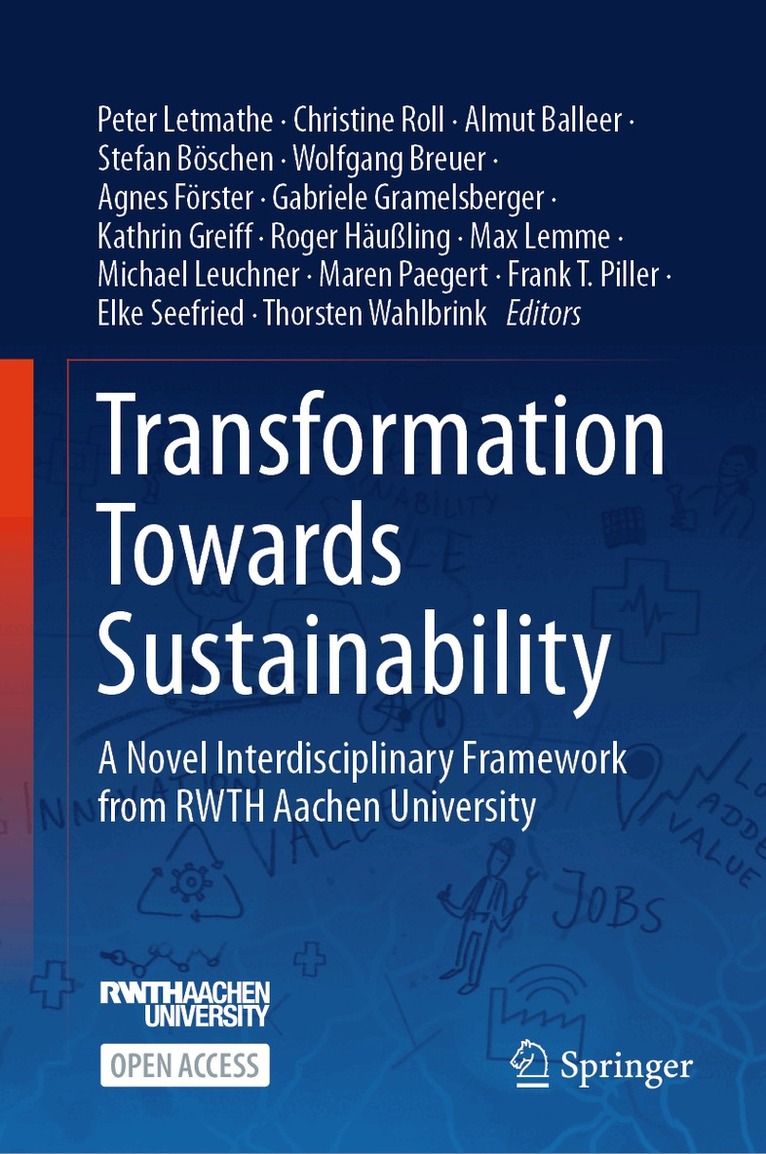
Transformation Towards Sustainability
A Novel Interdisciplinary Framework from RWTH Aachen University
Inbunden, Engelska, 2024
540 kr
Skickas inom 10-15 vardagar
A distinction is made between analysis, i.e., research on transformation processes, impact, i.e., transformational research, and change in research itself, i.e.
Transformation Towards Sustainability
A Novel Interdisciplinary Framework from RWTH Aachen University
Häftad, Engelska, 2025
434 kr
Skickas inom 10-15 vardagar
A distinction is made between analysis, i.e., research on transformation processes, impact, i.e., transformational research, and change in research itself, i.e.
Del 75 - Studies in Applied Philosophy, Epistemology and Rational Ethics
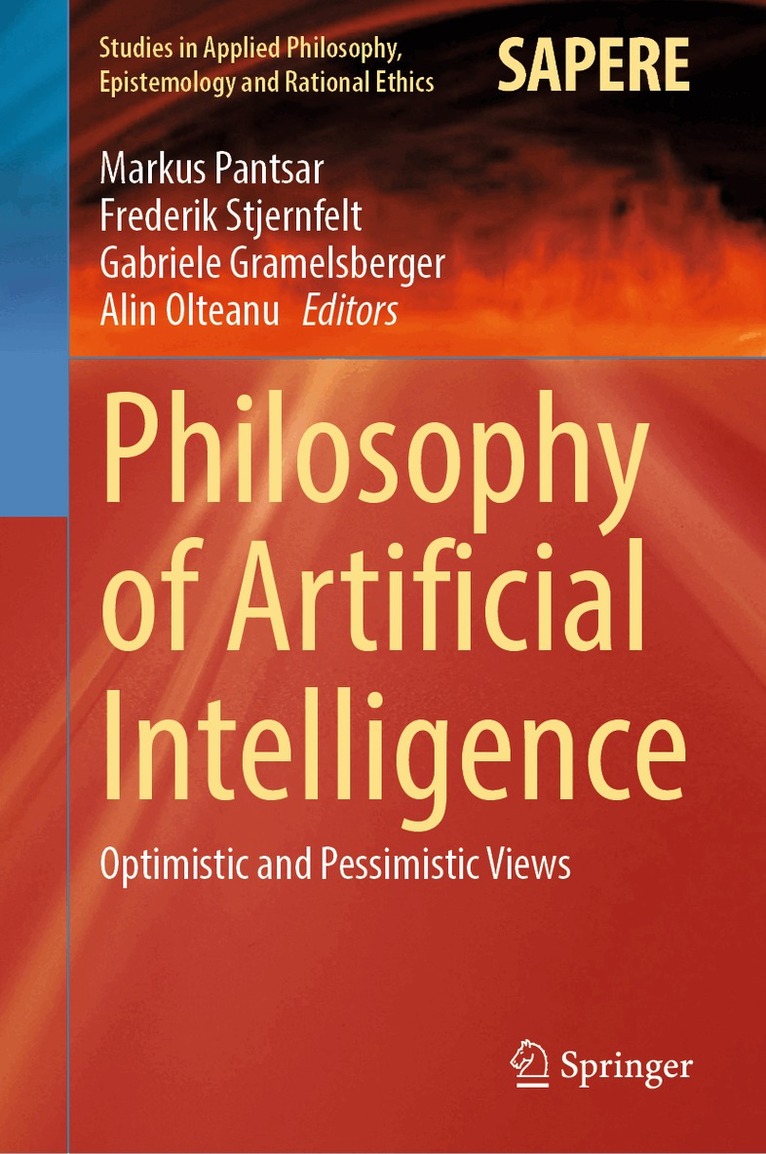
Philosophy of Artificial Intelligence
Optimistic and Pessimistic Views
Inbunden, Engelska, 2025
1 393 kr
Skickas inom 10-15 vardagar
This book discusses, from various angles, the new trends in Artificial intelligence (AI), given the current so-called golden period that this field is undergoing. Recent progress in machine learning applications, such as image recognition and natural language processing, have raised the level of optimism that one day an AI can exhibit genuine intelligence. In games like Go and chess, human players have been surpassed by computers. As during earlier periods of AI optimism, there is increasing talk about domain-general artificial intelligence being possible. But just how intelligent are current AI systems, and what can we expect in the future? What will a world with an increasingly important role for AI systems be like? Which shifts with regard to the concept of intelligence as well as the societal order do these developments have? Authors with different views on the present and future of AI research and the role of AI in society discuss these questions, illustrating the diversity of discussions on AI and the many ways our lives are influenced by it.
Häftad, Engelska, 2020
287 kr
Skickas inom 5-8 vardagar
Computer-based technologies for the production and analysis of data have been an integral part of biological research since the 1990s at the latest. This not only applies to genomics and its offshoots but also to less conspicuous subsections such as ecology. But little consideration has been given to how this new technology has changed research practically. How and when do data become questionable? To what extent does necessary infrastructure influence the research process? What status is given to software and algorithms in the production and analysis of data? These questions are discussed by the biologists Philipp Fischer and Hans Hofmann, the philosopher Gabriele Gramelsberger, the historian of science and biology Hans-Jörg Rheinberger, the science theorist Christoph Hoffmann, and the artist Hannes Rickli. The conditions of experimentation in the digital sphere are examined in four chapters—“Data,” “Software,” “Infrastructure,” and “in silico”—in which the different perspectives of the discussion partners complement one another. Rather than confirming any particular point of view, Natures of Data deepens understanding of the contemporary basis of biological research.
Inbunden, Engelska, 2011
1 073 kr
Skickas inom 10-15 vardagar
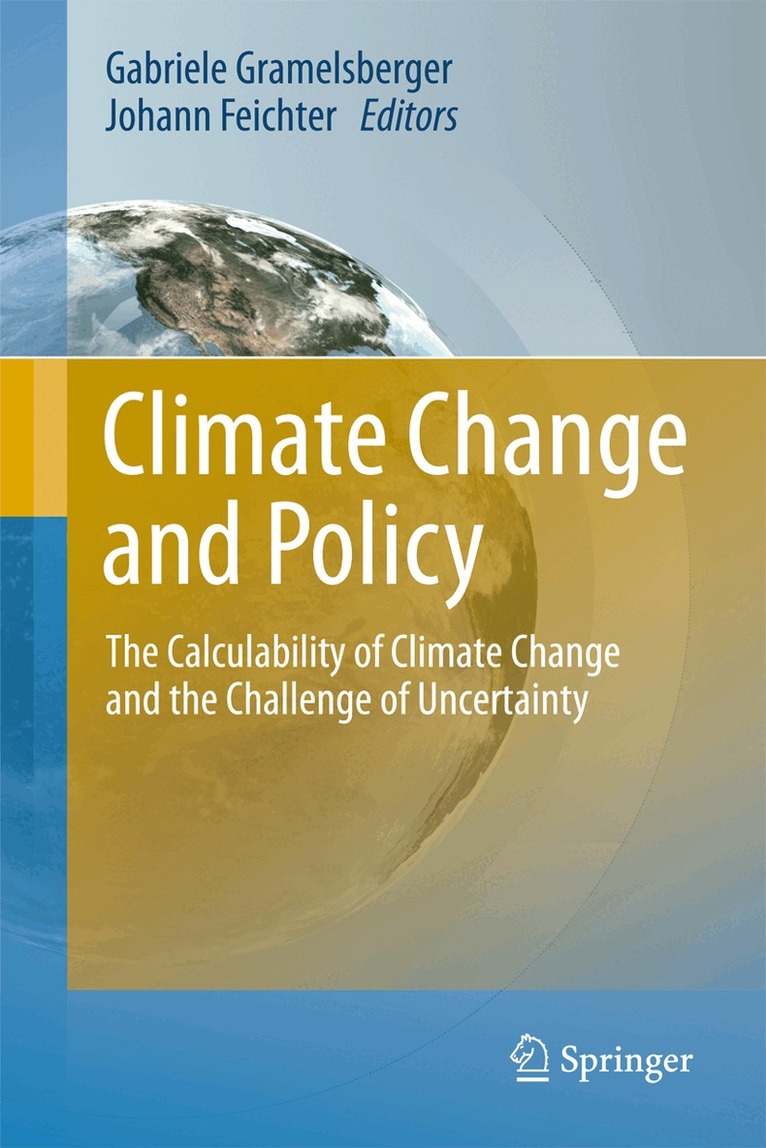
The debate on how mankind should respond to climate change is diverse, as the appropriate strategy depends on global as well as local circumstances.As scientists are denied the possibility of conducting experiments with the real climate, only climate models can give insights into man-induced climate change, by experimenting with digital climates under varying conditions and by extrapolating past and future states into the future. But the ‘nature’ of models is a purely representational one. A model is good if it is believed to represent the relevant processes of a natural system well. However, a model and its results, in particular in the case of climate models which interconnect countless hypotheses, is only to some extent testable, although an advanced infrastructure of evaluation strategies has been developed involving strategies of model intercomparison, ensemble prognoses, uncertainty metrics on the system and component levels. The complexity of climate models goes hand in hand with uncertainties, but uncertainty is in conflict with socio-political expectations. However, certain predictions belong to the realm of desires and ideals rather than to applied science. Today’s attempt to define and classify uncertainty in terms of likelihood and confidence reflect this awareness of uncertainty as an integral part of human knowledge, in particular on knowledge about possible future developments. The contributions in this book give a first hand insight into scientific strategies in dealing with uncertainty by using simulation models and into social, political and economical requirements in future projections on climate change. Do these strategies and requirements meet each other or fail?The debate on how mankind should respond to climate change is diverse, as the appropriate strategy depends on global as well as local circumstances. As scientists are denied the possibility of conducting experiments with the real climate, only climate models can give insights into man-induced climate change, by experimenting with digital climates under varying conditions and by extrapolating past and future states into the future. But the 'nature' of models is a purely representational one. A model is good if it is believed to represent the relevant processes of a natural system well. However, a model and its results, in particular in the case of climate models which interconnect countless hypotheses, is only to some extent testable, although an advanced infrastructure of evaluation strategies has been developed involving strategies of model intercomparison, ensemble prognoses, uncertainty metrics on the system and component levels. The complexity of climate models goes hand in hand with uncertainties, but uncertainty is in conflict with socio-political expectations. However, certain predictions belong to the realm of desires and ideals rather than to applied science. Today's attempt to define and classify uncertainty in terms of likelihood and confidence reflect this awareness of uncertainty as an integral part of human knowledge, in particular on knowledge about possible future developments. The contributions in this book give a first hand insight into scientific strategies in dealing with uncertainty by using simulation models and into social, political and economical requirements in future projections on climate change. Do these strategies and requirements meet each other or fail? Gabriele Gramelsberger is Principal Investigator of the Collaborative Research Project is Principal Investigator of the Collaborative Research Project
Häftad, Engelska, 2014
1 073 kr
Skickas inom 10-15 vardagar
The debate on how mankind should respond to climate change is diverse, as the appropriate strategy depends on global as well as local circumstances.As scientists are denied the possibility of conducting experiments with the real climate, only climate models can give insights into man-induced climate change, by experimenting with digital climates under varying conditions and by extrapolating past and future states into the future. But the ‘nature’ of models is a purely representational one. A model is good if it is believed to represent the relevant processes of a natural system well. However, a model and its results, in particular in the case of climate models which interconnect countless hypotheses, is only to some extent testable, although an advanced infrastructure of evaluation strategies has been developed involving strategies of model intercomparison, ensemble prognoses, uncertainty metrics on the system and component levels. The complexity of climate models goes hand in hand with uncertainties, but uncertainty is in conflict with socio-political expectations. However, certain predictions belong to the realm of desires and ideals rather than to applied science. Today’s attempt to define and classify uncertainty in terms of likelihood and confidence reflect this awareness of uncertainty as an integral part of human knowledge, in particular on knowledge about possible future developments. The contributions in this book give a first hand insight into scientific strategies in dealing with uncertainty by using simulation models and into social, political and economical requirements in future projections on climate change. Do these strategies and requirements meet each other or fail?The debate on how mankind should respond to climate change is diverse, as the appropriate strategy depends on global as well as local circumstances. As scientists are denied the possibility of conducting experiments with the real climate, only climate models can give insights into man-induced climate change, by experimenting with digital climates under varying conditions and by extrapolating past and future states into the future. But the 'nature' of models is a purely representational one. A model is good if it is believed to represent the relevant processes of a natural system well. However, a model and its results, in particular in the case of climate models which interconnect countless hypotheses, is only to some extent testable, although an advanced infrastructure of evaluation strategies has been developed involving strategies of model intercomparison, ensemble prognoses, uncertainty metrics on the system and component levels. The complexity of climate models goes hand in hand with uncertainties, but uncertainty is in conflict with socio-political expectations. However, certain predictions belong to the realm of desires and ideals rather than to applied science. Today's attempt to define and classify uncertainty in terms of likelihood and confidence reflect this awareness of uncertainty as an integral part of human knowledge, in particular on knowledge about possible future developments. The contributions in this book give a first hand insight into scientific strategies in dealing with uncertainty by using simulation models and into social, political and economical requirements in future projections on climate change. Do these strategies and requirements meet each other or fail? Gabriele Gramelsberger is Principal Investigator of the Collaborative Research Project is Principal Investigator of the Collaborative Research Project
Häftad, Tyska
197 kr
Skickas inom 3-6 vardagar
Häftad, Tyska
219 kr
Skickas inom 3-6 vardagar