Gaia Taffoni – författare
Visar alla böcker från författaren Gaia Taffoni. Handla med fri frakt och snabb leverans.
6 produkter
6 produkter
E-bok
PDF, Engelska, 20241 014 kr
Läs direkt efter köp
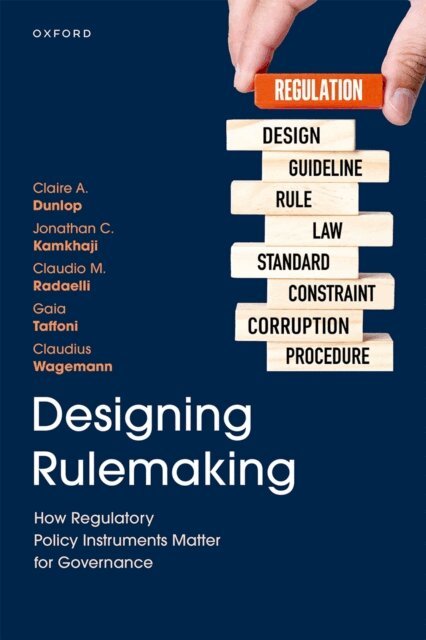
This is an open access title available under the terms of a CC BY-NC-ND 4.0 International licence. It is free to read on the Oxford Academic platform and offered as a free PDF download from OUP and selected open access locations.Over the last twenty-five years, many governments around the world have adopted access to information legislation, introduced or re-designed impact assessment procedures for proposed legislation, created ombudsman offices, and engaged stakeholders in various types of consultation. With a general aim of making rulemaking more transparent and inclusive and ultimately more efficient, these governments - nudged by the advocacy of International Organizations - have reformed the design of their rulemaking procedures and calibrated them in specific yet distinct ways. The question arises: do these innovations, designed to open up rulemaking process and make regulation better, have an actual effect on policy and governance outcomes? In Designing Rulemaking, the authors answer this question with a novel, purpose-built dataset on regulatory design based on the legal provisions disciplining four rulemaking procedures - impact assessment, stakeholder consultation, freedom of information, and ombudsman procedures. Examining twenty-eight countries (the EU twenty-seven plus the UK), the dataset operationalises rules as data and measures the design features of each procedure in each country. The authors then, using set-theoretic methods, consider the effects of these combinations of designs of rulemaking procedures on the quality of the business environment, perception of corruption, and environmental performance. Their findings shatter predominant views on policy change in Europe and offer a varied, detailed, granular account of the efficacy of regulatory design.
E-bok
Engelska, 20241 014 kr
Läs direkt efter köp
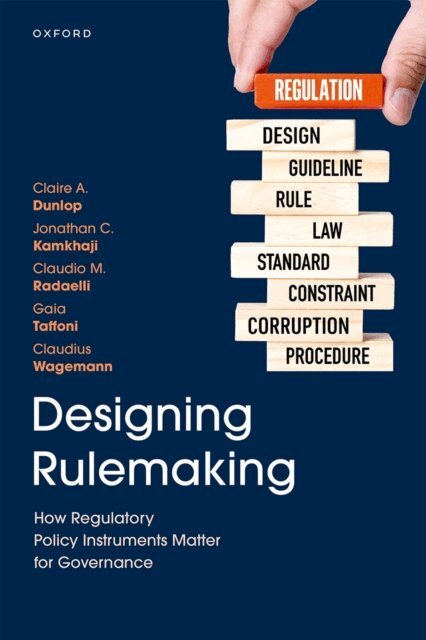
This is an open access title available under the terms of a CC BY-NC-ND 4.0 International licence. It is free to read on the Oxford Academic platform and offered as a free PDF download from OUP and selected open access locations.Over the last twenty-five years, many governments around the world have adopted access to information legislation, introduced or re-designed impact assessment procedures for proposed legislation, created ombudsman offices, and engaged stakeholders in various types of consultation. With a general aim of making rulemaking more transparent and inclusive and ultimately more efficient, these governments - nudged by the advocacy of International Organizations - have reformed the design of their rulemaking procedures and calibrated them in specific yet distinct ways. The question arises: do these innovations, designed to open up rulemaking process and make regulation better, have an actual effect on policy and governance outcomes? In Designing Rulemaking, the authors answer this question with a novel, purpose-built dataset on regulatory design based on the legal provisions disciplining four rulemaking procedures - impact assessment, stakeholder consultation, freedom of information, and ombudsman procedures. Examining twenty-eight countries (the EU twenty-seven plus the UK), the dataset operationalises rules as data and measures the design features of each procedure in each country. The authors then, using set-theoretic methods, consider the effects of these combinations of designs of rulemaking procedures on the quality of the business environment, perception of corruption, and environmental performance. Their findings shatter predominant views on policy change in Europe and offer a varied, detailed, granular account of the efficacy of regulatory design.
Inbunden, Engelska, 2024
1 196 kr
Skickas inom 5-8 vardagar
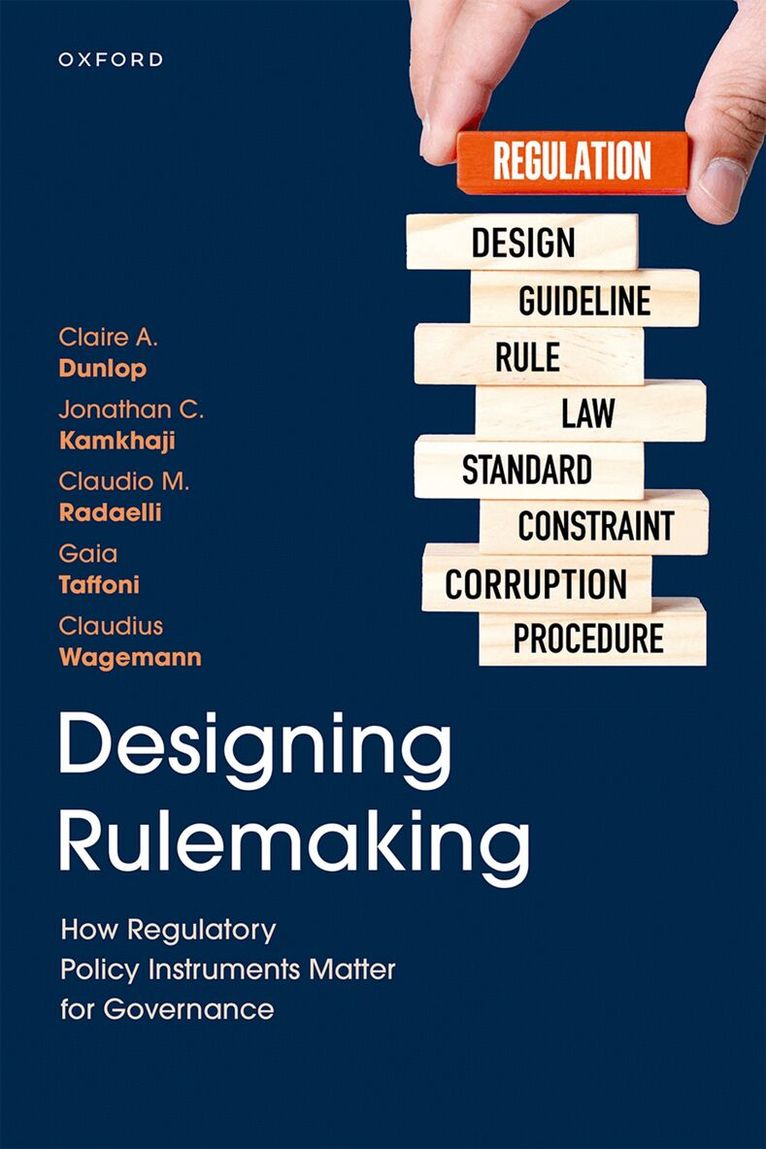
This is an open access title available under the terms of a CC BY-NC-ND 4.0 International licence. It is free to read on the Oxford Academic platform and offered as a free PDF download from OUP and selected open access locations.Over the last twenty-five years, many governments around the world have adopted access to information legislation, introduced or re-designed impact assessment procedures for proposed legislation, created ombudsman offices, and engaged stakeholders in various types of consultation. With a general aim of making rulemaking more transparent and inclusive and ultimately more efficient, these governments - nudged by the advocacy of International Organizations - have reformed the design of their rulemaking procedures and calibrated them in specific yet distinct ways. The question arises: do these innovations, designed to open up rulemaking process and make regulation better, have an actual effect on policy and governance outcomes? In Designing Rulemaking, the authors answer this question with a novel, purpose-built dataset on regulatory design based on the legal provisions disciplining four rulemaking procedures - impact assessment, stakeholder consultation, freedom of information, and ombudsman procedures. Examining twenty-eight countries (the EU twenty-seven plus the UK), the dataset operationalises rules as data and measures the design features of each procedure in each country. The authors then, using set-theoretic methods, consider the effects of these combinations of designs of rulemaking procedures on the quality of the business environment, perception of corruption, and environmental performance. Their findings shatter predominant views on policy change in Europe and offer a varied, detailed, granular account of the efficacy of regulatory design.
Inbunden, Engelska, 2020
549 kr
Skickas inom 10-15 vardagar
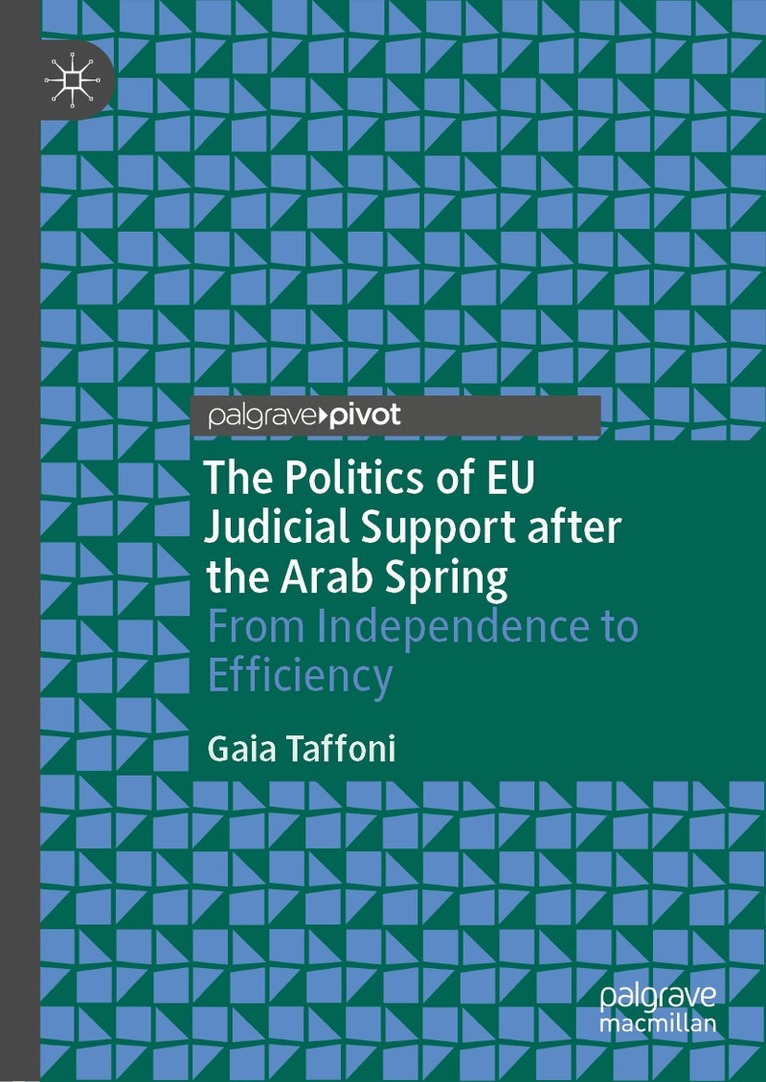
This book explores the judicial transformations in the Southern Mediterranean region and the mechanisms that trigger these changes. It analyses judicial reforms in Jordan and Morocco in the context of the EU policies to promote and diffuse democratic principles and practices in the MENA region. Based on original empirical research, the book reports findings on how networks of actors involved in the implementation of programs funded by the EU handle policy ideas and interests, and by doing so influence policy outcomes. This study covers both the institutional and the organizational/managerial dimensions of justice, thus shedding light on the two most relevant and critical factors for innovations in the domain of justice.
E-bok
Engelska, 2020687 kr
Läs direkt efter köp
This book explores the judicial transformations in the Southern Mediterranean region and the mechanisms that trigger these changes. It analyses judicial reforms in Jordan and Morocco in the context of the EU policies to promote and diffuse democratic principles and practices in the MENA region. Based on original empirical research, the book reports findings on how networks of actors involved in the implementation of programs funded by the EU handle policy ideas and interests, and by doing so influence policy outcomes. This study covers both the institutional and the organizational/managerial dimensions of justice, thus shedding light on the two most relevant and critical factors for innovations in the domain of justice.
Häftad, Engelska, 2021
549 kr
Skickas inom 10-15 vardagar
This book explores the judicial transformations in the Southern Mediterranean region and the mechanisms that trigger these changes. It analyses judicial reforms in Jordan and Morocco in the context of the EU policies to promote and diffuse democratic principles and practices in the MENA region. Based on original empirical research, the book reports findings on how networks of actors involved in the implementation of programs funded by the EU handle policy ideas and interests, and by doing so influence policy outcomes. This study covers both the institutional and the organizational/managerial dimensions of justice, thus shedding light on the two most relevant and critical factors for innovations in the domain of justice.