Gail L. Sunderman - Böcker
Visar alla böcker från författaren Gail L. Sunderman. Handla med fri frakt och snabb leverans.
5 produkter
5 produkter
589 kr
Skickas inom 3-6 vardagar
"A timely study on the implementation of NCLB in 6 states during the initial phase of the reform. The authors′ policy recommendations will be particularly useful to policy makers and practitioners in designing more effective strategies to improve schooling quality for the least advantaged children. This book will be widely adopted in graduate courses in educational policy and intergovernmental relations." —Kenneth Wong, Professor Peabody College, Vanderbilt University "This is an important, topical book that provides a deep look at fundamental issues in the design and implementation of No Child Left Behind." —Richard F. Elmore, Gregory Anrig Professor of Educational Leadership Harvard Graduate School of Education "The well-documented and thorough approach to collecting the data is a major strength. The material fit with my experiences as a practicing principal. This book can serve as a catalyst for quality conversation that is so drastically needed about how to make NCLB do what it is intended to do—ensure that every child is successful!" —Bonnie Tryon, Principal, Golding Elementary School, Cobleskill, NY Member, 2002-2003 NAESP Board of Directors The essential guide to understanding NCLB The No Child Left Behind Act of 2001 is one of the biggest educational forces of our time. So why is it one of the least understood? NCLB Meets School Realities is an essential resource for educators wanting to explore and understand the issues raised by NCLB. Based on original research of 11 districts across 6 states by The Civil Rights Project at Harvard University, this text details how NCLB is put into practice, the issues it raises, and how it affects minority and low-income students. The authors look closely at the implications of increased federal involvement in education, how states designed their accountability systems to meet the NCLB requirements, and the implications of the adequate yearly progress provisions for schools and students. They examine whether the transfer policy creates better schooling options for disadvantaged families, the ability of districts to implement supplemental educational services, and how teachers view the efficacy of NCLB′s reforms. They also review one provision—graduate rate accountability—in light of the national graduation rate crisis. NCLB Meets School Realities includes:Practical methods to understanding the political implications of NCLB A detailed look at how proficiency standards affect minority youth Revealing data from 11 school districts across 6 states
1 305 kr
Skickas inom 3-6 vardagar
"This text offers valuable information for understanding the intent of NCLB, the positive effects of the legislation, the shortcomings of NCLB as currently authorized, and specific recommendations for improvements."—Dolores Gribouski, PrincipalColumbus Park Elementary School, Worcester, MAA provocative examination of NCLB and how it can be improved.The pending reauthorization of the No Child Left Behind Act (NCLB) has generated a spirited debate among educators. In this volume, a team of noted education scholars assess NCLB′s performance-based system and the challenges of improving NCLB in order to meet the goals of the law. This edited resource by Gail L. Sunderman provides a comprehensive evaluation of NCLB and discusses options for modifying the legislation. With contributions from Gary Orfield, Linda Darling-Hammond, Catherine Snow, Robert Linn, and Daniel Koretz, among others, Holding NCLB Accountable examines the themes of capacity, accountability, school reform, and the law′s impact on educating all students, especially those from low-income and diverse backgrounds. This groundbreaking work assesses the efficacy of NCLB test-based accountability and responds to critical questions such as: How do we develop assessments and accountability systems that assist rather than interfere with educational progress?How do we promote change without being counterproductive? How do we create a viable educational agenda that is mindful of state and local capacity? Presenting a range of perspectives, the contributors identify how to revise NCLB in ways that will mitigate the negative aspects of the law and promote the conditions necessary for meaningful student learning.
612 kr
Skickas inom 3-6 vardagar
"This text offers valuable information for understanding the intent of NCLB, the positive effects of the legislation, the shortcomings of NCLB as currently authorized, and specific recommendations for improvements."—Dolores Gribouski, PrincipalColumbus Park Elementary School, Worcester, MAA provocative examination of NCLB and how it can be improved.The pending reauthorization of the No Child Left Behind Act (NCLB) has generated a spirited debate among educators. In this volume, a team of noted education scholars assess NCLB′s performance-based system and the challenges of improving NCLB in order to meet the goals of the law. This edited resource by Gail L. Sunderman provides a comprehensive evaluation of NCLB and discusses options for modifying the legislation. With contributions from Gary Orfield, Linda Darling-Hammond, Catherine Snow, Robert Linn, and Daniel Koretz, among others, Holding NCLB Accountable examines the themes of capacity, accountability, school reform, and the law′s impact on educating all students, especially those from low-income and diverse backgrounds. This groundbreaking work assesses the efficacy of NCLB test-based accountability and responds to critical questions such as: How do we develop assessments and accountability systems that assist rather than interfere with educational progress?How do we promote change without being counterproductive? How do we create a viable educational agenda that is mindful of state and local capacity? Presenting a range of perspectives, the contributors identify how to revise NCLB in ways that will mitigate the negative aspects of the law and promote the conditions necessary for meaningful student learning.
582 kr
Skickas inom 7-10 vardagar
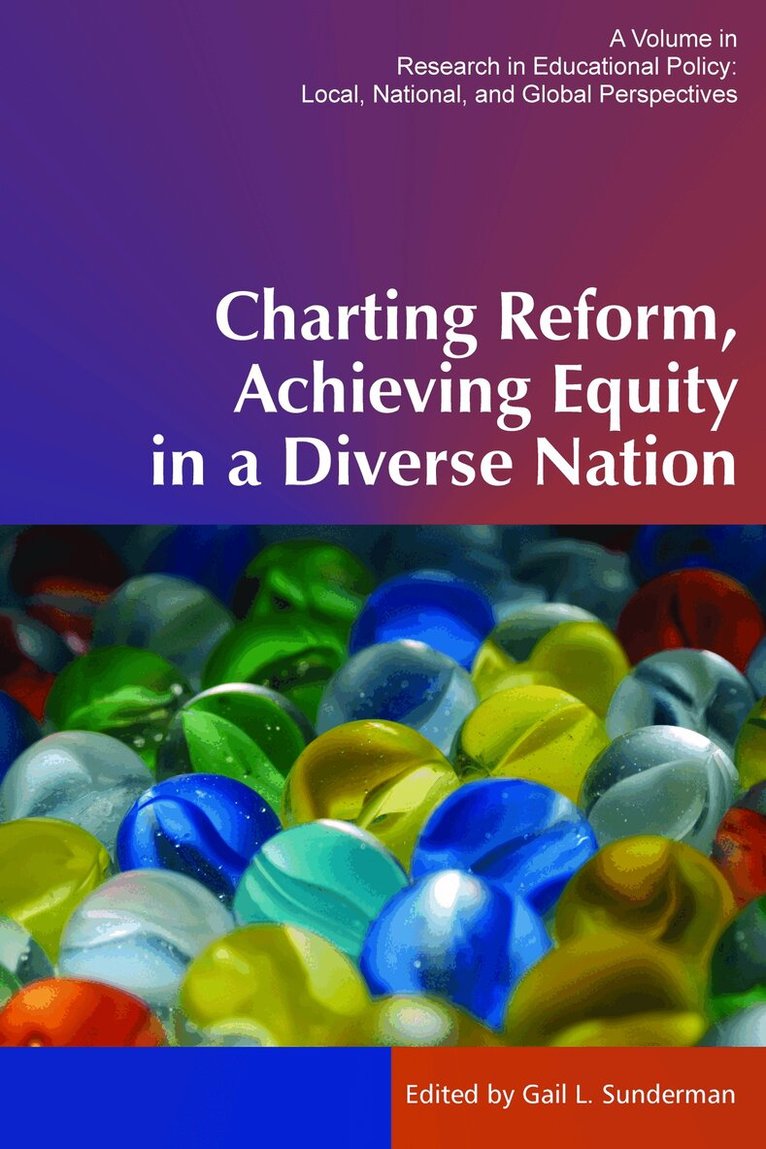
This book examines what equity means in a nation where the schools are becoming more diverse. The authors consider how well our educational reform policies, often framed in the language of equity and opportunity, measure up to the challenges of achieving equity in a diverse nation. While there is growing awareness of the increasing racial, ethnic, and socioeconomic diversity of the nation, there is little recognition of how these trends affect the schools, particularly in formerly homogeneous communities. At the same time, inequalities in student achievement between different racial, ethnic, and socioeconomic groups persist, even as educational policy has intensified the focus on the achievement gap. These two challenges make definitions of equity and opportunity as urban problems obsolete and call for a critical examination of educational policy and reform from an equity perspective. Central themes include the critical examination of how equity is conceived under the law and in policy, the experiences of minority students in suburban schools, and the impact of current reform policies and strategies for achieving greater educational opportunities for all students.This book is designed for graduate and undergraduate courses in educational policy and policy analysis, for policymakers interested in a critical examination of current reform policies and options, and educational leaders and administrators struggling with the implementation of reform mandates. From a policy perspective, it includes a survey of the evolution of educational policies and reforms since the 1960s and traces the mix of legal and legislative legacies that have informed educational policy and equity. It describes how trends in suburban diversification affect the schools, something that has largely escaped the attention of educational reformers. It provides school-based and non-school-based remedies for achieving equity in diversifying suburban communities and articulates alternatives to the current accountability for performance approach. It offers new and innovative analyses of current approaches to school reform, including an analysis of how accountability tests can create the illusion of reducing the achievement gap and an examination of the paradoxes of federally funded compensatory policies that incorporate market-based strategies. Novel approaches—such as social emotional learning and placed-based college access strategies—are examined through an equity lens.
1 029 kr
Skickas inom 7-10 vardagar
This book examines what equity means in a nation where the schools are becoming more diverse. The authors consider how well our educational reform policies, often framed in the language of equity and opportunity, measure up to the challenges of achieving equity in a diverse nation. While there is growing awareness of the increasing racial, ethnic, and socioeconomic diversity of the nation, there is little recognition of how these trends affect the schools, particularly in formerly homogeneous communities. At the same time, inequalities in student achievement between different racial, ethnic, and socioeconomic groups persist, even as educational policy has intensified the focus on the achievement gap. These two challenges make definitions of equity and opportunity as urban problems obsolete and call for a critical examination of educational policy and reform from an equity perspective. Central themes include the critical examination of how equity is conceived under the law and in policy, the experiences of minority students in suburban schools, and the impact of current reform policies and strategies for achieving greater educational opportunities for all students.This book is designed for graduate and undergraduate courses in educational policy and policy analysis, for policymakers interested in a critical examination of current reform policies and options, and educational leaders and administrators struggling with the implementation of reform mandates. From a policy perspective, it includes a survey of the evolution of educational policies and reforms since the 1960s and traces the mix of legal and legislative legacies that have informed educational policy and equity. It describes how trends in suburban diversification affect the schools, something that has largely escaped the attention of educational reformers. It provides school-based and non-school-based remedies for achieving equity in diversifying suburban communities and articulates alternatives to the current accountability for performance approach. It offers new and innovative analyses of current approaches to school reform, including an analysis of how accountability tests can create the illusion of reducing the achievement gap and an examination of the paradoxes of federally funded compensatory policies that incorporate market-based strategies. Novel approaches—such as social emotional learning and placed-based college access strategies—are examined through an equity lens.