
Gainesville) Hare, R. M. (Emeritus Professor of Philosophy, Emeritus Professor of Philosophy, University of Oxford and University of Florida – författare
Visar alla böcker från författaren Gainesville) Hare, R. M. (Emeritus Professor of Philosophy, Emeritus Professor of Philosophy, University of Oxford and University of Florida. Handla med fri frakt och snabb leverans.
2 produkter
2 produkter
722 kr
Skickas inom 7-10 vardagar
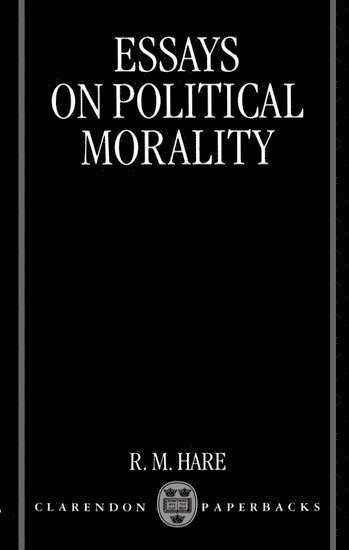
R. M. Hare, one of the most widely discussed of today's moral philosophers, presents a selection of essays in which he brings ethical theory lucidly to bear on moral problems arising in politics. He examines our obligation to obey the law; the limits of legitimate lawbreaking, civil violence, and war; rights of various sorts and their supposed conflict with utility; justice, distributive and retributive; and care of the environment. His arguments are amply illustrated by specific examples. The volume substantiates the author's claim that help with such problems can be found in philosophy, and particularly in his own ethical theory, which draws together the best insights of Kant and utilitarians.
962 kr
Skickas inom 7-10 vardagar
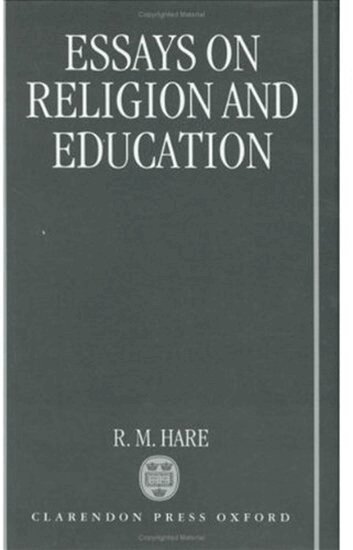
R. M. Hare is one of the most widely discussed of today's moral philosophers. In this volume he has collected his most important essays in the related fields of religion and education, some newly published and others now inaccessible. The book starts with an exposition of his ideas on the meaning of religious language. There follow several essays, theoretical and practical, on the relations between religion and morality, which have deep implications for moral education. The central question addressed in the rest of the volume is how children can be educated to think for themselves, freely but rationally, about moral questions, and the effects on society of failure to achieve this. Professor Hare argues that those who want to dispense with morality are in effect resigning from a vital educational task. Attitudes to euthanasia and to equality of educational opportunity are taken as examples of how our thinking can go wrong.