Gary A. Tobin - Böcker
Visar alla böcker från författaren Gary A. Tobin. Handla med fri frakt och snabb leverans.
8 produkter
8 produkter
537 kr
Skickas inom 10-15 vardagar
1 009 kr
Skickas inom 10-15 vardagar
1 009 kr
Skickas inom 10-15 vardagar
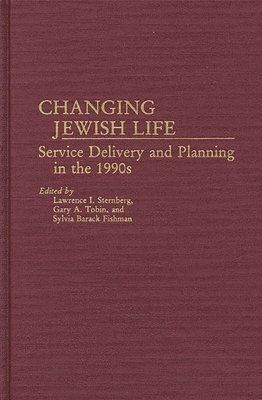
The Jewish community in America is currently undergoing profound changes, and American Jews are experiencing personal and communal realities that differ markedly from those of their parents and grandparents. To meet the needs of this population, a complex human service delivery system has evolved, with a vast array of agencies and organizations providing health care, housing, nutrition programs, counseling, child care, Jewish education, and many other services. In this work, the editors have brought together a collection of essays that explore the nature of these services, the profound implication they are having for the Jewish community, and the planning issues that confront today's American Jews.The editors have divided the essays into three subject groups, all of which explore the numerous issues crucial to understanding the nature of planning in contemporary Jewish communities. The first section examines transformations in the behavior of American Jews and Jewish identity, covering such topics as education and careers, ethnic clustering, and Jewish fundraising. Section two explores issues involved in providing services to specific populations, including social, educational, and recreational services for singles, families, and children. The final section addresses the planning strategies necessary to meet the changing needs of the community. The four essays here focus on understanding the planning paradigms and realities in the Jewish community, and the roles professionals play in implementing change. This work will be an important resource for students of sociology and Jewish studies, and a valuable addition to most library collections.
1 009 kr
Skickas inom 10-15 vardagar
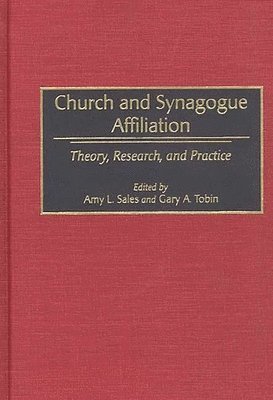
In this book, scholars and church and synagogue leaders examine religious affiliation in contemporary America. Their essays explore the dynamics of congregational affiliation: the motivations which impel people to join a congregation, drop out or remain unaffiliated; the practices within churches and synagogues which attract or repel membership; and the ways in which contextual religious, social, and cultural factors influence patterns of congregational affiliation. The book is principally concerned with churches and synagogues in the more liberal denominations of Christianity and Judaism, those where the greatest membership losses are occurring.Over the past few decades membership in mainline churches in the United States has declined, with some groups losing more than 20 percent of their membership. Similarly, four decades ago, 60 percent of all American Jews were religiously affiliated; today that number is below 40 percent. This book seeks not only to explain the reasons for declines in affiliation, but also to propose approaches that may combat the decline and showcase studies of congregations that have succeeded in holding their memberships. This work will be of great interest to scholars of religion in America as well as clerics, rabbis, and others actively involved in congregational life.
1 343 kr
Skickas inom 10-15 vardagar
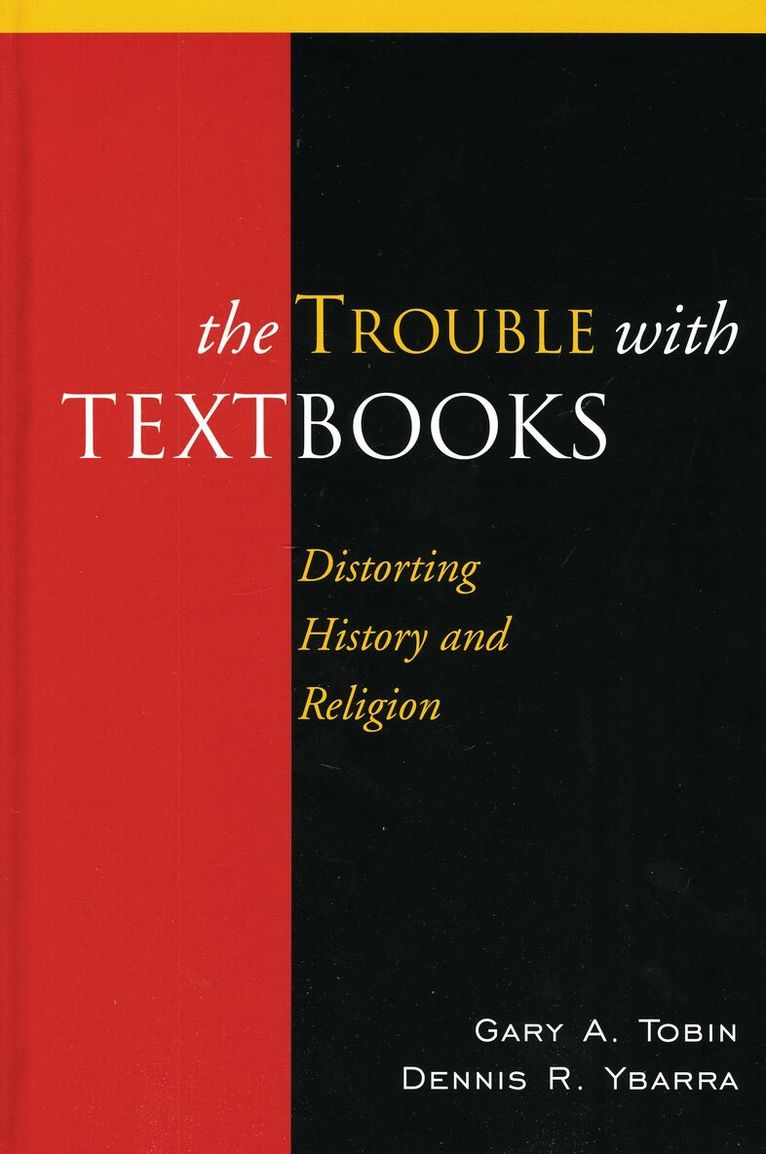
School textbooks in Iran, Saudi Arabia, Egypt and elsewhere in the Arab and Muslim worlds are filled with anti-Western and anti-Israel propaganda. Most readers will be shocked to discover that history and geography textbooks widely used in America's elementary and secondary classrooms contain some of the very same inaccuracies about Jews, Judaism, and Israel. Did you know that "there is no record of any important Jewish contribution to the sciences?" (World Civilizations, Thomson Wadsworth). Or that "Christianity was started by a young Palestinian named Jesus?" (The World, Scott Foresman/Pearson). Supplemental materials and other classroom influences are even worse.The Trouble with Textbooks exposes the poor scholarship and untruths in textbooks about Jews and Israel. The problems uncovered in this ground-breaking analysis are instructive, and illustrate the need for reform in the way textbooks are developed, written, marketed, and distributed. Substitute another area—how we teach American history, Western civilization, or comparative religion—and we have another, equally intriguing case study. The Trouble with Textbooks shows what can go terribly wrong in discussing religion, geography, culture, or history—and in this case—all of them.The Trouble with Textbooks tells a cautionary tale for all readers, whatever their background, of how textbooks that Americans depend on to infuse young people with the values for good citizenship and to help acculturate students into the multicultural salad that is American life, instead disparage some groups and teach historical distortions. With millions of young people using these textbooks each year, the denigration of some should be a concern for all.
581 kr
Skickas inom 10-15 vardagar
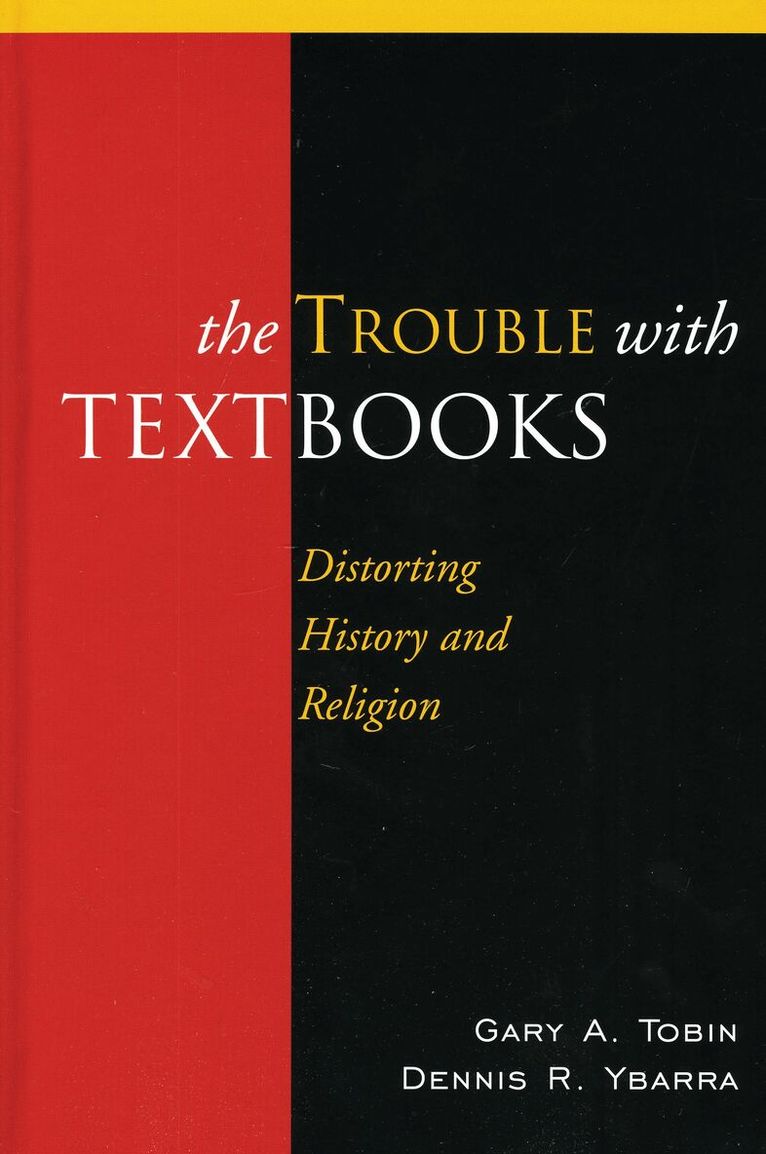
School textbooks in Iran, Saudi Arabia, Egypt and elsewhere in the Arab and Muslim worlds are filled with anti-Western and anti-Israel propaganda. Most readers will be shocked to discover that history and geography textbooks widely used in America's elementary and secondary classrooms contain some of the very same inaccuracies about Jews, Judaism, and Israel. Did you know that "there is no record of any important Jewish contribution to the sciences?" (World Civilizations, Thomson Wadsworth). Or that "Christianity was started by a young Palestinian named Jesus?" (The World, Scott Foresman/Pearson). Supplemental materials and other classroom influences are even worse.The Trouble with Textbooks exposes the poor scholarship and untruths in textbooks about Jews and Israel. The problems uncovered in this ground-breaking analysis are instructive, and illustrate the need for reform in the way textbooks are developed, written, marketed, and distributed. Substitute another area—how we teach American history, Western civilization, or comparative religion—and we have another, equally intriguing case study. The Trouble with Textbooks shows what can go terribly wrong in discussing religion, geography, culture, or history—and in this case—all of them.The Trouble with Textbooks tells a cautionary tale for all readers, whatever their background, of how textbooks that Americans depend on to infuse young people with the values for good citizenship and to help acculturate students into the multicultural salad that is American life, instead disparage some groups and teach historical distortions. With millions of young people using these textbooks each year, the denigration of some should be a concern for all.
656 kr
Skickas inom 10-15 vardagar
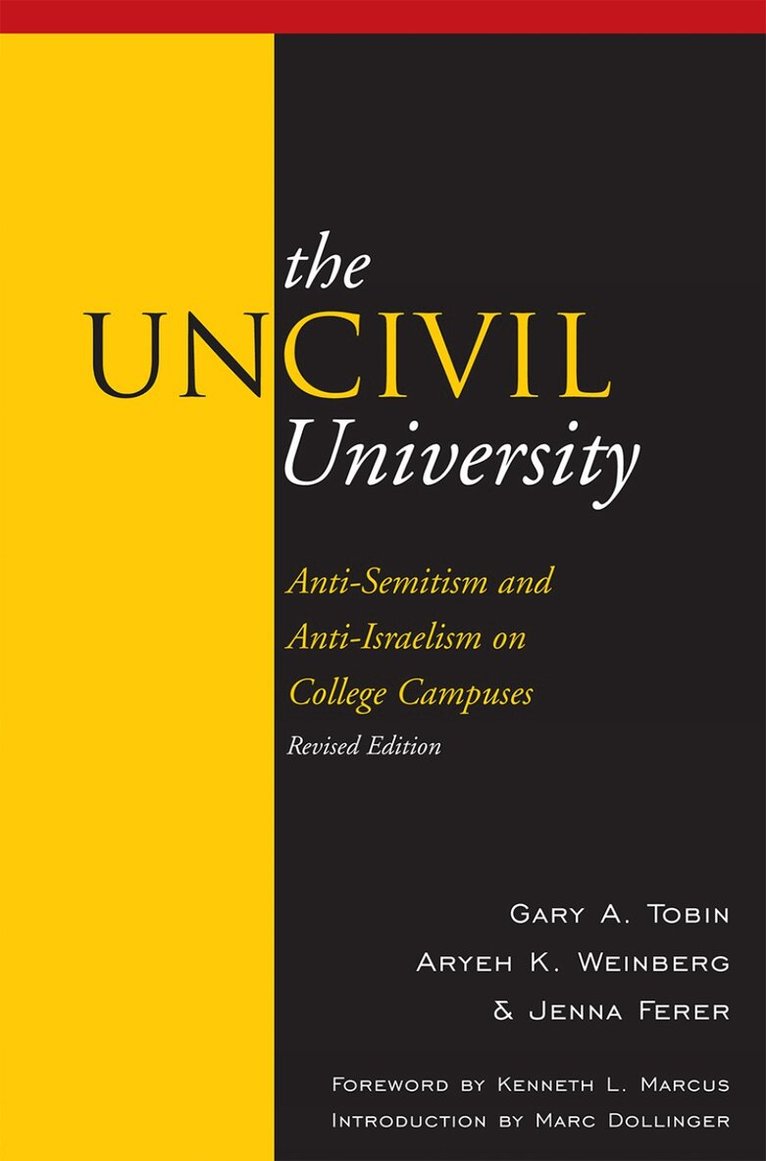
In the name of academic freedom, the core values of higher education—honest scholarship, unbiased research, and diversity of thought and person—have been corrupted by an academy more interested in preserving its privileges than in protecting its own integrity. The American university has lost its civility. Nowhere is this loss more apparent than in the rise of anti-Semitism and anti-Israelism on college campuses. This book documents the alarming rise in bigotry and bullying in the academy, using a range of evidence from first-hand accounts of intimidation of students by anti-Israel professors to anti-Semitic articles in student newspapers and marginalization of pro-Israel scholars. The UnCivil University exposes the unspoken world of double standards, bureaucratic paralysis, and abdication of leadership that not only allows but often supports a vocal minority of extremists on campus.
235 kr
Skickas inom 7-10 vardagar
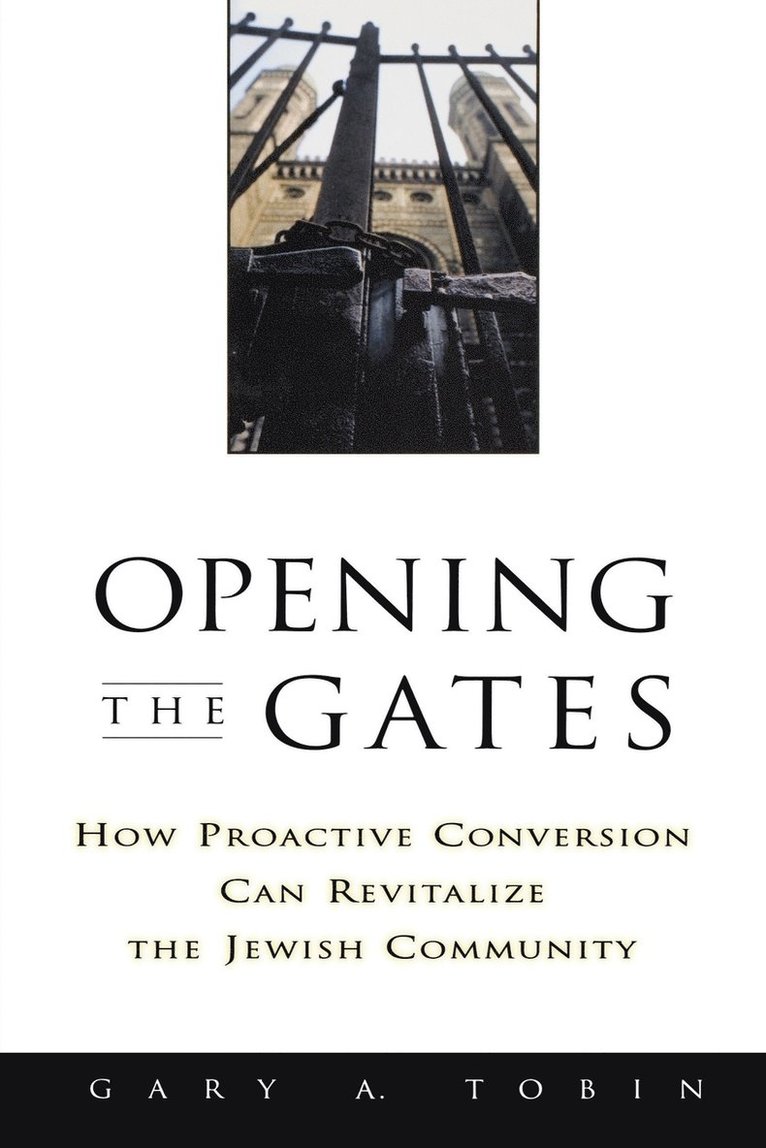
In Opening the Gates, Gary Tobin challenges his fellow AmericanJews to avoid the process of entropy that could take a devastatingtoll in the Jewish community. "This should be our primary task,"Tobin passionately argues. Tobin confronts his community with theeye-opening reality that "in order to rebuild and revitalizeJudaism in this country we must rethink our religion as somethingboth born Jews and converts must actively choose and stop blamingintermarriage for Judaism's decline." He implores the Jewishcommunity to shift its focus from preventing intermarriage toembracing an open, positive, accessible, and joyful process ofencouraging non-Jews to become Jews. As Tobin bluntly puts it, "Wemust abandon the paradigm that our children and grandchildren maybecome Gentiles and promote the thought that America is filled withmillions of potential Jews." Opening the Gates examines the role conversion should play in theJewish future. It looks at the way the Jewish community currentlyhandles issues of intermarriage and conversion and recommAndsstrategies to incorporate conversion into a larger vision ofbuilding the next Jewish civilization. Tobin suggests what Judaismmight look like if it were to promote itself as a positive choicefor both Jews and non-Jews in the marketplace of religiousaffiliation-and tells us what the community needs to do to moldthis future. Tobin's controversial plan is sure to spark productivedialogue throughout the Jewish community.