Gary B. Ferngren - Böcker
Visar alla böcker från författaren Gary B. Ferngren. Handla med fri frakt och snabb leverans.
8 produkter
8 produkter
391 kr
Tillfälligt slut
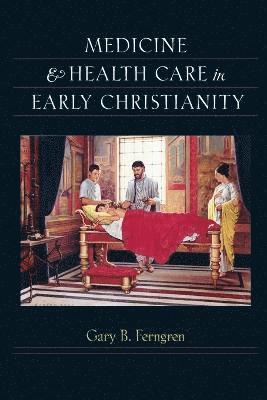
Drawing on New Testament studies and recent scholarship on the expansion of the Christian church, Gary B. Ferngren presents a comprehensive historical account of medicine and medical philanthropy in the first five centuries of the Christian era. Ferngren first describes how early Christians understood disease. He examines the relationship of early Christian medicine to the natural and supernatural modes of healing found in the Bible. Despite biblical accounts of demonic possession and miraculous healing, Ferngren argues that early Christians generally accepted naturalistic assumptions about disease and cared for the sick with medical knowledge gleaned from the Greeks and Romans. Ferngren also explores the origins of medical philanthropy in the early Christian church. Rather than viewing illness as punishment for sins, early Christians believed that the sick deserved both medical assistance and compassion. Even as they were being persecuted, Christians cared for the sick within and outside of their community. Their long experience in medical charity led to the creation of the first hospitals, a singular Christian contribution to health care.
2 647 kr
Tillfälligt slut
First comprehensive survey in the field The debate over evolution's place in the school science curriculum in the United States illustrates the ongoing importance of the relationship between science and religion in the West. Surprisingly, however, that relationship has not always been a locus of contention. It has been varied and multifaceted, with religion oftentimes nurturing and encouraging scientific progress. For the first time, this relationship, which has gone on in some form perhaps since the dawn of history itself, is chronicled-through the analysis of intellectual movements, Western religious traditions, and the evolving manifestations of science. A truly vast range of coverage Reaching back to Greece in the fifth century B.C.E. and proceeding to the late twentieth century, this volume describes the relationship of science and religion throughout history. From ancient cosmology and medieval occult sciences to modern physics and psychology, every major intellectual movement and discipline of study is covered. There is also comprehensive coverage of the foundational aspects of the study of science and religion, with, for example, detailed discussions of the demarcation of science and religion, of epistemology, and of causation. Coverage of scientists' religious concerns Also included here are biographical studies of major scientific figures-among them Galileo, Newton, and Darwin-who were particularly concerned with the religious implications and dimensions of their scientific discoveries.
662 kr
Skickas inom 10-15 vardagar
First comprehensive survey in the field The debate over evolution's place in the school science curriculum in the United States illustrates the ongoing importance of the relationship between science and religion in the West. Surprisingly, however, that relationship has not always been a locus of contention. It has been varied and multifaceted, with religion oftentimes nurturing and encouraging scientific progress. For the first time, this relationship, which has gone on in some form perhaps since the dawn of history itself, is chronicled-through the analysis of intellectual movements, Western religious traditions, and the evolving manifestations of science. A truly vast range of coverage Reaching back to Greece in the fifth century B.C.E. and proceeding to the late twentieth century, this volume describes the relationship of science and religion throughout history. From ancient cosmology and medieval occult sciences to modern physics and psychology, every major intellectual movement and discipline of study is covered. There is also comprehensive coverage of the foundational aspects of the study of science and religion, with, for example, detailed discussions of the demarcation of science and religion, of epistemology, and of causation. Coverage of scientists' religious concerns Also included here are biographical studies of major scientific figures-among them Galileo, Newton, and Darwin-who were particularly concerned with the religious implications and dimensions of their scientific discoveries.
590 kr
Skickas inom 11-20 vardagar
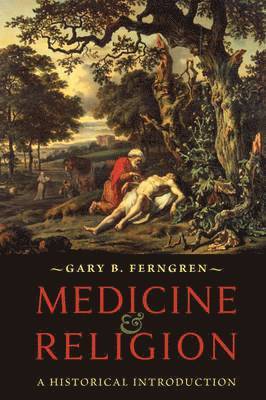
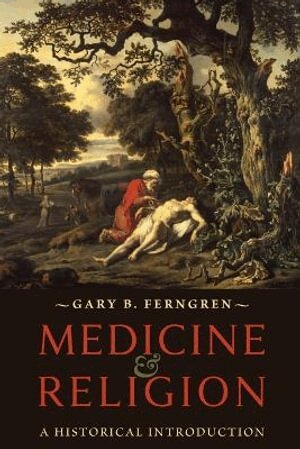
Medicine and Religion is the first book to comprehensively examine the relationship between medicine and religion in the Western tradition from ancient times to the modern era. Beginning with the earliest attempts to heal the body and account for the meaning of illness in the ancient Near East, historian Gary B. Ferngren describes how the polytheistic religions of ancient Mesopotamia, Egypt, Greece, and Rome and the monotheistic faiths of Judaism, Christianity, and Islam have complemented medicine in the ancient, medieval, and modern periods. Ferngren paints a broad and detailed portrait of how humans throughout the ages have drawn on specific values of diverse religious traditions in caring for the body. Religious perspectives have informed both the treatment of disease and the provision of health care. And, while tensions have sometimes existed, relations between medicine and religion have often been cooperative and mutually beneficial. Religious beliefs provided a framework for explaining disease and suffering that was larger than medicine alone could offer.These beliefs furnished a theological basis for a compassionate care of the sick that led to the creation of the hospital and a long tradition of charitable medicine. Praise for Medicine and Health Care in Early Christianity, by Gary B. Ferngren. "This fine work looks forward as well as backward; it invites fuller reflection of the many senses in which medicine and religion intersect and merits wide readership." (Jama). "An important book, for students of Christian theology who understand health and healing to be topics of theological interest, and for health care practitioners who seek a historical perspective on the development of the ethos of their vocation." (Journal of Religion and Health).
337 kr
Skickas inom 7-10 vardagar
Medicine and Religion is the first book to comprehensively examine the relationship between medicine and religion in the Western tradition from ancient times to the modern era. Beginning with the earliest attempts to heal the body and account for the meaning of illness in the ancient Near East, historian Gary B. Ferngren describes how the polytheistic religions of ancient Mesopotamia, Egypt, Greece, and Rome and the monotheistic faiths of Judaism, Christianity, and Islam have complemented medicine in the ancient, medieval, and modern periods. Ferngren paints a broad and detailed portrait of how humans throughout the ages have drawn on specific values of diverse religious traditions in caring for the body. Religious perspectives have informed both the treatment of disease and the provision of health care. And, while tensions have sometimes existed, relations between medicine and religion have often been cooperative and mutually beneficial. Religious beliefs provided a framework for explaining disease and suffering that was larger than medicine alone could offer.These beliefs furnished a theological basis for a compassionate care of the sick that led to the creation of the hospital and a long tradition of charitable medicine. Praise for Medicine and Health Care in Early Christianity, by Gary B. Ferngren: "This fine work looks forward as well as backward; it invites fuller reflection of the many senses in which medicine and religion intersect and merits wide readership." (Jama). "An important book, for students of Christian theology who understand health and healing to be topics of theological interest, and for health care practitioners who seek a historical perspective on the development of the ethos of their vocation." (Journal of Religion and Health).
358 kr
Skickas inom 7-10 vardagar
Drawing on New Testament studies and recent scholarship on the expansion of the Christian church, Gary B. Ferngren presents a comprehensive historical account of medicine and medical philanthropy in the first five centuries of the Christian era. Ferngren first describes how early Christians understood disease. He examines the relationship of early Christian medicine to the natural and supernatural modes of healing found in the Bible. Despite biblical accounts of demonic possession and miraculous healing, Ferngren argues that early Christians generally accepted naturalistic assumptions about disease and cared for the sick with medical knowledge gleaned from the Greeks and Romans. Ferngren also explores the origins of medical philanthropy in the early Christian church. Rather than viewing illness as punishment for sins, early Christians believed that the sick deserved both medical assistance and compassion. Even as they were being persecuted, Christians cared for the sick within and outside of their community. Their long experience in medical charity led to the creation of the first hospitals, a singular Christian contribution to health care.
412 kr
Skickas inom 7-10 vardagar
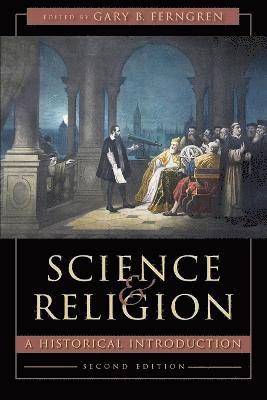
Since its publication in 2002, Science and Religion has proven to be a widely admired survey of the complex relationship of Western religious traditions to science from the beginning of the Christian era to the late twentieth century. In the second edition, eleven new essays expand the scope and enhance the analysis of this enduringly popular book. Tracing the rise of science from its birth in the medieval West through the scientific revolution, the contributors here assess historical changes in scientific understanding brought about by transformations in physics, anthropology, and the neurosciences and major shifts marked by the discoveries of Copernicus, Galileo, Isaac Newton, Charles Darwin, and others. In seeking to appreciate the intersection of scientific discovery and the responses of religious groups, contributors also explore the theological implications of contemporary science and evaluate approaches such as the Bible in science and the modern synthesis in evolution, which are at the center of debates in the historiography, understanding, and application of science.The second edition provides chapters that have been revised to reflect current scholarship along with new chapters that bring fresh perspectives on a diverse range of topics, including new scientific approaches and disciplines and non-Christian traditions such as Judaism, Islam, Asiatic religions, and atheism. This indispensible classroom guide is now more useful than ever before. Contributors: Richard J. Blackwell, Peter J. Bowler, John Hedley Brooke, Glen M. Cooper, Edward B. Davis, Alnoor Dhanani, Diarmid A. Finnegan, Noah Efron, Owen Gingerich, Edward Grant, Steven J. Harris, Matthew S. Hedstrom, John Henry, Peter M. Hess, Edward J. Larsen, Timothy Larson, David C. Lindberg, David N. Livingstone, Craig Martin, Craig Sean McConnell, James Moore, Joshua M. Moritz, Mark A. Noll, Ronald L. Numbers, Richard Olson, Christopher M. Rios, Nicolaas A. Rupke, Michael H. Shank, Stephen David Snobelen, John Stenhouse, Peter J. Susalla, Mariusz Tabaczek, Alan C. Weissenbacher, Stephen P. Weldon, and Tomoko Yoshida
326 kr
Tillfälligt slut
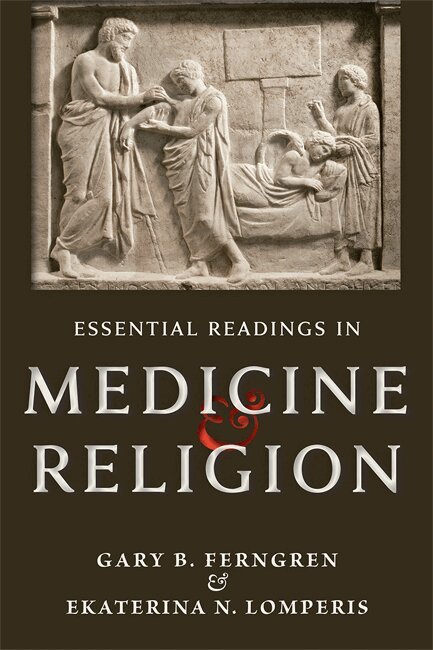
Gary B. Ferngren and Ekaterina N. Lomperis have gathered a rich collection of annotated primary sources that illustrate the intersection of medicine and religion. Intended as a companion volume to Ferngren's classic Medicine and Religion, which traces the history of the relationship of medicine to religion in the Western world from the earliest ancient Near Eastern societies to the twenty-first century, this useful and extensive sourcebook places each key document in historical context. Drawing from more than 160 texts, the book explores a number of themes, including concepts of health, the causes and cure of disease, medical ethics, theodicy, beneficence, religious healing, consolation, and death and dying. Each chapter begins with an introduction that furnishes a basic historical setting for the period covered. Modern translations, some of which have been made especially for this volume, are used whenever possible. The texts are numbered sequentially within each chapter and preceded by a short introduction to both the author and the subject.Touching on Mesopotamia, Egypt, Israel, Greece, Rome, the European Middle Ages, Islam, early modern Europe, and the modern era, Essential Readings in Medicine and Religion brings a wide range of sources together to expand on the crucial lessons of Medicine and Religion. This book is a useful introduction for all students of history, divinity, medicine, and health.