Gary Remer – författare
Visar alla böcker från författaren Gary Remer. Handla med fri frakt och snabb leverans.
3 produkter
3 produkter
481 kr
Skickas inom 7-10 vardagar
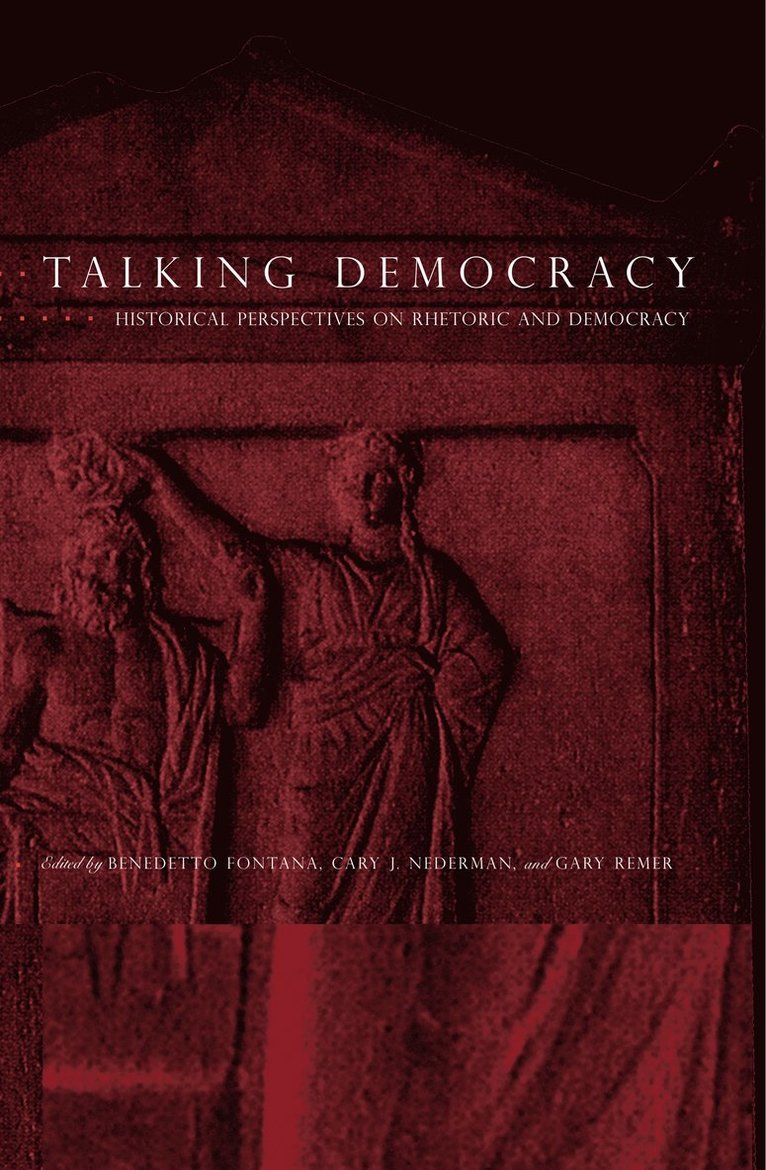
In their efforts to uncover the principles of a robust conception of democracy, theorists of deliberative democracy place a premium on the role of political expression—public speech and reasoned debate—as the key to democratic processes. They also frequently hark back to historical antecedents (as in the Habermasian invocation of the “public sphere” of eighteenth-century bourgeois society and the Arendtian valorization of the classical Athenian polis) in their quest to establish that deliberative procedures are more than “merely theoretical” and instead have a practical application. But for all this emphasis on the discursive and historical dimensions of democracy, these theorists have generally neglected the rich resources available in the history of rhetorical theory and practice. It is the purpose of Talking Democracy to resurrect this history and show how attention to rhetoric can help lead to a better understanding of both the strengths and limitations of current theories of deliberative democracy. Contributors, besides the editors, are Russell Bentley, Tsae Lan Lee Dow, Tom Murphy, Arlene Saxonhouse, Gary Shiffman, John Uhr, Nadia Urbinati, John von Heyking, and Douglas Walton.
502 kr
Skickas inom 5-8 vardagar
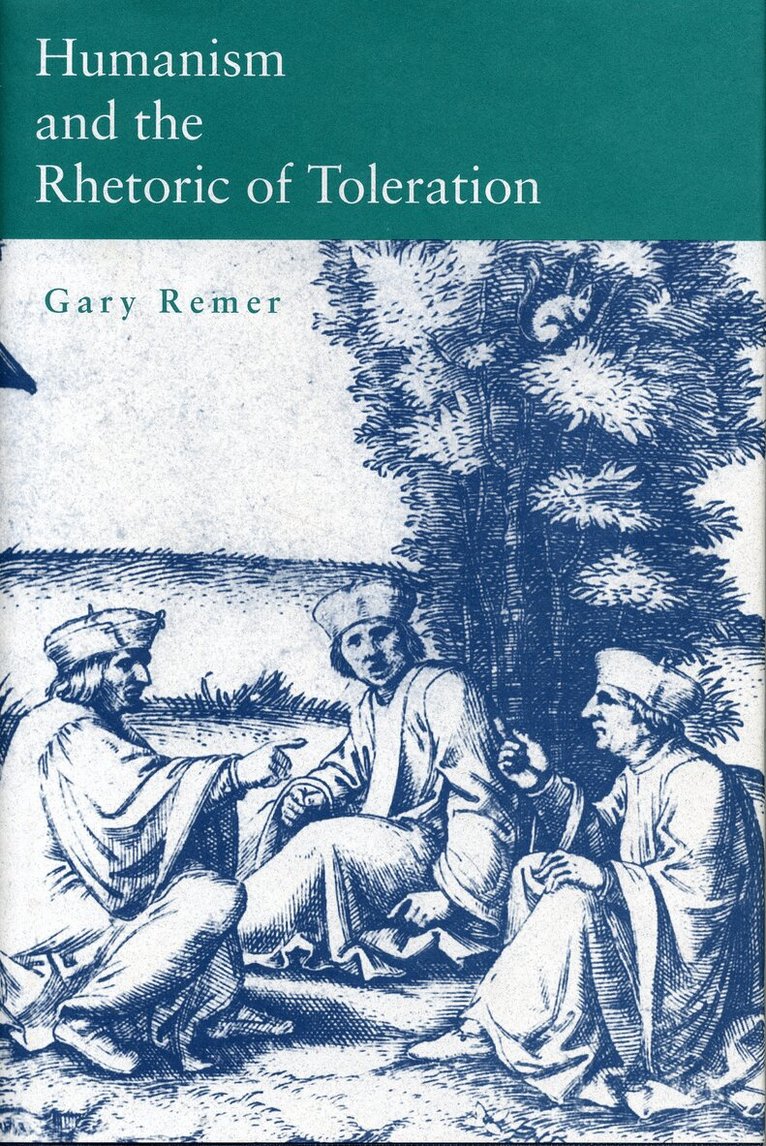
Religious toleration is much discussed these days. But where did the Western notion of toleration come from? In this thought-provoking book Gary Remer traces arguments for religious toleration back to the Renaissance, demonstrating how humanist thinkers initiated an intellectual tradition that has persisted even to our present day. Although toleration has long been recognized as an important theme in Renaissance humanist thinking, many scholars have mistakenly portrayed the humanists as proto-Englightenment rationalists and nascent liberals. Remer, however, offers the surprising conclusion that humanist thinking on toleration was actually founded on the classical tradition of rhetoric. It was the rhetorician's commitment to decorum, the ability to argue both sides of an issue, and the search for an acceptable epistemological standard in probability and consensus that grounded humanist arguments for toleration. Remer also finds that the primary humanist model for a full-fledged theory of toleration was the Ciceronian rhetorical category of sermo (conversation).The historical scope of this book is wide-ranging. Remer begins by focusing on the works of four humanists: Desiderius Erasmus, Jacobus Acontius, William Chillingworth, and Jean Bodin. Then he considers the challenge posed to the humanist defense of toleration by Thomas Hobbes and Pierre Bayle. Finally, he shows how humanist ideas have continued to influence arguments for toleration even after the passing of humanism—from John Locke to contemporary American discussions of freedom of speech.
1 077 kr
Skickas inom 10-15 vardagar
Cicero is one of the most influential thinkers in the history of Western political thought, and interest in his work has been undergoing a renaissance in recent years. The Ciceronian Tradition in Political Theory focuses entirely on Cicero's influence and reception in the realm of political thought.Individual chapters examine the ways thinkers throughout history, specifically Augustine, John of Salisbury, Thomas More, Machiavelli, Montaigne, Hobbes, Locke, Adam Smith, and Edmund Burke, have engaged with and been influenced by Cicero. A final chapter surveys the impact of Cicero's ideas on political thought in the second half of the twentieth century. By tracing the long reception of these ideas, the collection demonstrates not only Cicero's importance to both medieval and modern political theorists but also the comprehensive breadth and applicability of his philosophy.