Gary W. Bowman - Böcker
Visar alla böcker från författaren Gary W. Bowman. Handla med fri frakt och snabb leverans.
4 produkter
4 produkter
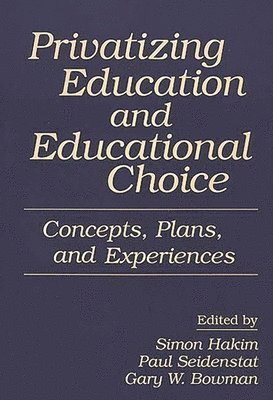
Privatizing Education and Educational Choice
Concepts, Plans, and Experiences
Inbunden, Engelska, 1994
980 kr
Skickas inom 10-15 vardagar
Eighteen experts, including Albert Shanker, Ernest L. Boyer, Thomas Kean, and John Menge, examine the issues surrounding educational choice in public school systems and the voucher system for private schools. They discuss when choice should be considered, methods of implementation, and the extent to which government should be involved. Descriptions and evaluations of choice programs that have been implemented are presented. The book includes contributions from both supporters and opponents of choice presented within an academic framework to enhance examination, debate, and analysis. Since 37 states have adopted legislation that provides some kind of choice in the public education system, the issues involved will be important to school boards, educational administrators, public policy makers, parents, and taxpayers.
448 kr
Skickas inom 10-15 vardagar
Eighteen experts, including Albert Shanker, Ernest L. Boyer, Thomas Kean, and John Menge, examine the issues surrounding educational choice in public school systems and the voucher system for private schools. They discuss when choice should be considered, methods of implementation, and the extent to which government should be involved. Descriptions and evaluations of choice programs that have been implemented are presented. The book includes contributions from both supporters and opponents of choice presented within an academic framework to enhance examination, debate, and analysis. Since 37 states have adopted legislation that provides some kind of choice in the public education system, the issues involved will be important to school boards, educational administrators, public policy makers, parents, and taxpayers.
616 kr
Skickas inom 10-15 vardagar
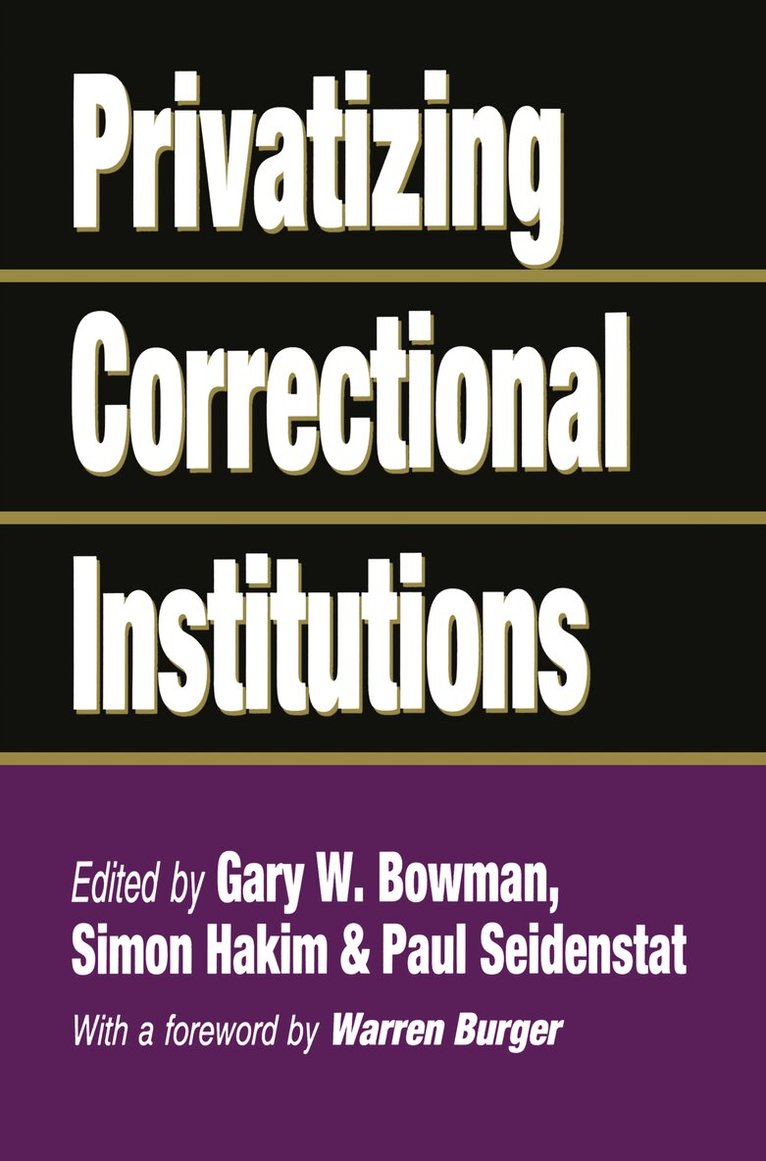
With more than one million people behind bars, the United States imprisons a larger share of its population than any other industrialized nation. This has precipitated a serious overcrowding problem with federal and state prisons currently operating well beyond capacity. Conventional efforts appear unable to cope with the increasing shortage of beds or with inadequate rehabilitation services. A bold solution is required; increasingly it is being seen to reside in the private sector. This timely volume explores the issues of private versus public financing, construction, and management of medium-and high-security prisons.Private prisons are not a new concept in the United States. They have existed in several forms since the eighteenth century. The opening chapters evaluate historical cases of prisons for profit, examining the concerns of labor, abuses of inmates, and the source and resolution of disputes between private and public sectors. These chapters argue that the experience gained through privatization does not justify current opposition from civil libertarians or labor unions.Chapters dealing with the modern contracting out of complete management and limited services document the growing trend toward privatization and instances of public/private partnership in prison industries.The assembled evidence indicates clearly that privately run prisons have shown significant cost savings and good quality of provision for prisoners while still being profitable. However, the authors caution that these promising results must be reinforced by public safeguards in the contracting stage and monitoring to assure good service and security. With the American prison system in disarray, the public interest demands that government look beyond the public or private identity of those who wish to provide correctional services and focus instead on who can provide the best services at a given cost. It is essential to state that correctional services should attain several objectives and not merely cost minimization. The analysis and recommendations presented here will aid in the task. Privatizing Correctional Institutions will be of interest to law-enforcement officials, public policy analysts, penologists, and criminologists.
969 kr
Tillfälligt slut
With more than one million people behind bars, the United States imprisons a larger share of its population than any other industrialized nation. This has precipitated a serious overcrowding problem with federal and state prisons currently operating well beyond capacity. Conventional efforts appear unable to cope with the increasing shortage of beds or with inadequate rehabilitation services. A bold solution is required; increasingly it is being seen to reside in the private sector. This timely volume explores the issues of private versus public financing, construction, and management of medium-and high-security prisons.Private prisons are not a new concept in the United States. They have existed in several forms since the eighteenth century. The opening chapters evaluate historical cases of prisons for profit, examining the concerns of labor, abuses of inmates, and the source and resolution of disputes between private and public sectors. These chapters argue that the experience gained through privatization does not justify current opposition from civil libertarians or labor unions.Chapters dealing with the modern contracting out of complete management and limited services document the growing trend toward privatization and instances of public/private partnership in prison industries.The assembled evidence indicates clearly that privately run prisons have shown significant cost savings and good quality of provision for prisoners while still being profitable. However, the authors caution that these promising results must be reinforced by public safeguards in the contracting stage and monitoring to assure good service and security. With the American prison system in disarray, the public interest demands that government look beyond the public or private identity of those who wish to provide correctional services and focus instead on who can provide the best services at a given cost. It is essential to state that correctional services should attain several objectives and not merely cost minimization. The analysis and recommendations presented here will aid in the task. Privatizing Correctional Institutions will be of interest to law-enforcement officials, public policy analysts, penologists, and criminologists.