Gavin Selerie - Böcker
Visar alla böcker från författaren Gavin Selerie. Handla med fri frakt och snabb leverans.
5 produkter
5 produkter
392 kr
Skickas inom 10-15 vardagar
281 kr
Skickas inom 5-8 vardagar
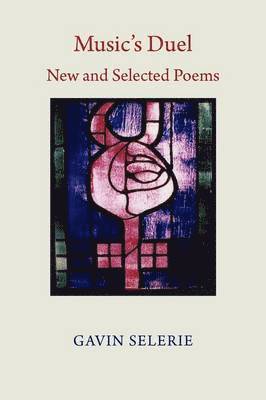
"Music's Duel" gathers work from across the Gavin Selerie's career, combining major sequences or extracts with a range of less available material, some previously unpublished. Placed together for the first time, these texts form an extended record of self and world, their focus twisting to reflect thought and language process. From a complex weave the book yields clarity and beauty, as in the treatment of landscape, death and desire. It is possible to see a development from heady, romantic pastoral to more satirical, closely-wrought urban texts, although continuities of concern and technique are evident. Distinguished by metaphysical wit and wordplay, Selerie's poetry excites both ear and eye. Genres and devices are torqued so as to enable the lyric tradition to operate within a fragmented sound and social context. Born in London, Selerie has long been involved with the city's network of experimental writing and performance. His charting of territory has parallels with that undertaken by Iain Sinclair, Bill Griffiths and Allen Fisher, and this exploration, through an overlay of voices, fuses past and present in a distinctly different way.Gritty, brash terms jostle with more polished expression, while jumbled syntax retains elements of fluent discourse.Awareness of the poem as construct tempers but does not erase an emotional base which drives the areas of engagement.
202 kr
Skickas inom 5-8 vardagar
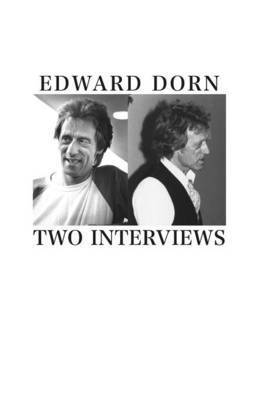
As its title announces, this book collects two interviews with the American poet Edward Dorn (1929-99). 'The Peak Interview' (1971) was published in a Vancouver student newspaper and contains contributions from Ralph Maud and J.H. Prynne, among others. Following it is a selection of four texts from The Day & Night Report, Dorn's unpublished daybook from 1971. 'The Riverside Interview' (1981) was intended for publication in the Riverside Interviews series and is supplemented here with an introduction by Gavin Selerie, the interviewer. Following it is a selection of two chapters from Dorn's unpublished prose work Juneau in June (1980-81), as well as three uncollected poems from the English magazine Spectacular Diseases, 6 (1981).
245 kr
Skickas inom 5-8 vardagar
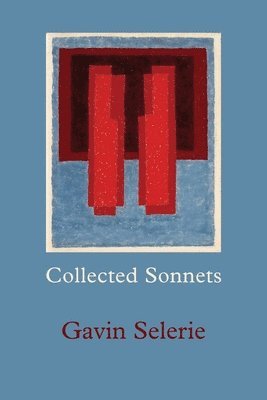
Collected Sonnets gathers nine main sequences, along with extracts and fugitive pieces, from a 50-year span. It includes takes on poems from other languages and a large number of previously unpublished texts. Praised by Peter Porter in The Observer for richly re-working Elizabethan elements, Selerie's sonnets have appealed equally to readers with a modernist bent. Standard themes-love, death, time, in land- and sea-scape-are given a radical slant. These poems grapple with emotions and ideas, shaped to give the personal public force. Motifs that emerge in individual sonnets also weave through the whole."`What are forms?' asks Gavin Selerie teasingly towards the end of his Collected Sonnets. Long an admirer of American examples by the likes of e.e. cummings, Ted Berrigan and Bernadette Mayer, Selerie re-injects a distinctive English intelligence and sensibility into the sonnet form, working staunchly through a plurality of configurations, subject matters and tones. What are sonnets? `Only a frame and skin for the beating', `a stretched square' or `what's filled with moving'. This is a major and hugely rewarding book by one of the UK's most singular poets."-Jeff Hilson, editor, Reality Street Book of Sonnets "Selerie is a poet of place, describing urban and rural settings with accuracy and craft ... he's a poet of relationships, creating tender lyrics ... and he's a restlessly experimental writer, always wanting to expand what a poem can do." -Ian McMillan, Shadowtrain
188 kr
Skickas inom 5-8 vardagar
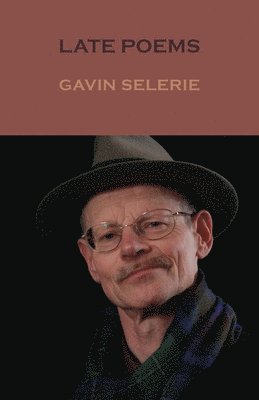
"Finis coronat opus. Gavin Selerie's Late Poems mark a fitting end to his poetic career. The opening section, 'Pandemic Poems', approach that apocalyptic period of anxiety, separation and death, of political incompetence and spivy corruption, of mediated experiences and the ragged tags of public discourse, with the resources of a lifetime's reading and writing. This is manifested in the eloquence of the Audenesque 'Biocalypse'; the verve and energy of 'November 1918', which approaches the influenza epidemic of that year through Yeats and his new bride; and, best of all, in 'Logodaedale', Gavin's poignant response to the first of Ovid's poems in exile. The second section, 'A Cricklewood Sequence', celebrates other inhabitants of the area where he made his home (from Leon Kossoff to Ken Livingstone via the Kinks) with Gavin's characteristic formal inventiveness. The final section, 'Political Poems & Tribute Poems', commemorates an important part of Gavin's practice and also fittingly summons up some of the poets, musicians and academics who meant so much to him." -Robert Hampson