Geir Kaufmann – författare
Visar alla böcker från författaren Geir Kaufmann. Handla med fri frakt och snabb leverans.
4 produkter
4 produkter
Häftad, Svenska, 2025
853 kr
Skickas
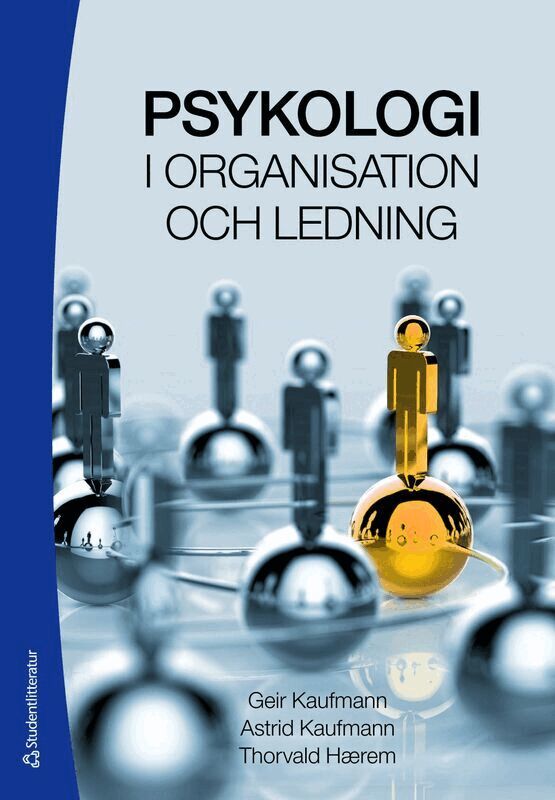
Psykologi i organisation och ledning ger en bred och grundlig introduktion till organisations- och ledarskapspsykologi. Författarnas utgångspunkt är, som i tidigare upplagor, att redogöra för psykologiska principer och teorier som har stor betydelse för att vi ska förstå oss själva och andra bättre i arbetslivet.I denna upplaga har författarna byggt vidare på de innehållsmässiga och pedagogiska grepp som har gjort boken till det mest använda introduktionsverket i organisationsbeteende i Skandinavien. Innehållet har vidareutvecklats och uppdaterats så att det ger en representativ bild av dagens kunskap inom fältet.Psykologi i organisation och ledning är gediget forskningsbaserad. De teoretiska kunskaperna illustreras genom praktiska problemställningar rörande till exempel motivation hos medarbetare, teamarbete, arbetsmiljö, arbetsengagemang, stress, konflikter och konflikthantering, mobbning, organisationsförändringar och ledarskap. Psykologi i organisation och ledning riktar sig främst till studenter inom arbets- och organisationspsykologi, ledarskap och företagsekonomi. Den lämpar sig även för andra intresserade som vill ha en introduktion i ämnet.
Inbunden, Engelska, 1996
881 kr
Skickas inom 7-10 vardagar
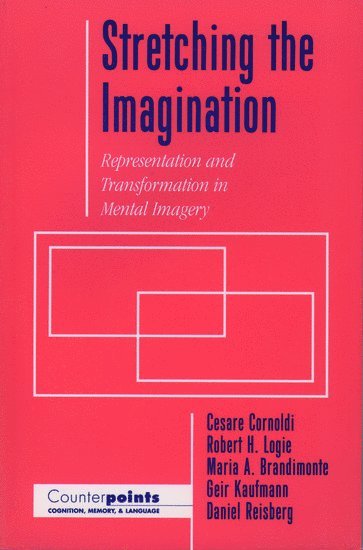
One of the most lively areas of debate in psychology today concerns the relationship between perception and mental representation. This issue spans virtually all domains of psychological investigation, from development to perception, from computer to neuropsychological models of human cognition.Recent studies have shown that there is a strong relationship between memory and mental representation, but others have shown that images are open to reinterpretation and manipulation, and therefore are not merely static images or mental representations of memories. Core chapters by three researchers in the midst of this debate, Maria Brandimonte, Geir Kaufmann, and Dan Reisberg, make up the central portion of this fascinating book.
Häftad, Engelska, 1996
784 kr
Skickas inom 5-8 vardagar
One of the most lively areas of debate in psychology today concerns the relationship between perception and mental representation. This issue spans virtually all domains of psychological investigation, from development to perception, from computer to neuropsychological models of human cognition. Recent studies have shown that there is a strong relationship between memory and mental representation, but others have shown that images are open to reinterpretation and manipulation, and therefore are not merely static images or mental representations of memories. Core chapters by three researchers in the midst of this debate, Maria Brandimonte, Geir Kaufmann, and Dan Reisberg, make up the central portion of this fascinating book.
E-bok
PDF, Engelska, 1996519 kr
Läs direkt efter köp
This is the first volume in the Counterpoints Series, which explores the issues being debated in psychology, child development, linguistics, and neuroscience. Each volume consists of the presentation of three or four extensive chapters by researchers representing key points of view on the issue. This text examines one of the liveliest areas of debate in psychology today, the relationship between perception and mental imagery. A variety of recent studies have pointed to the existence of a strong relationship between memory and mental representation, while others have shown that images are open to reinterpretation and manipulation, and are therefore not merely static impressions or mental representations of memories. Three core chapters by researchers in the midst of this debate--Maria Brandimonte, Geir Kaufmann, and Dan Reisberg--make up the central portion of this text. The first chapter is a historical overview of the problem as well as a review of the research in psychology and the argument as it has developed in related fields, such as philosophy and artificial intelligence. The last chapter pulls together all of the positions and points to new areas of research which may help uncover an explanation for the apparent contradictions in the research. Students and researchers in psychology and cognitive psychology will benefit from this comprehensive look at this heated debate.