Robert H. Logie - Böcker
Visar alla böcker från författaren Robert H. Logie. Handla med fri frakt och snabb leverans.
14 produkter
14 produkter
Stretching the Imagination
Representation and Transformation in Mental Imagery
Inbunden, Engelska, 1996
613 kr
Skickas inom 7-10 vardagar
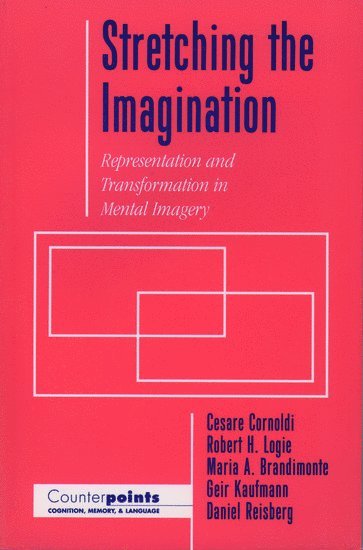
One of the most lively areas of debate in psychology today concerns the relationship between perception and mental representation. This issue spans virtually all domains of psychological investigation, from development to perception, from computer to neuropsychological models of human cognition.Recent studies have shown that there is a strong relationship between memory and mental representation, but others have shown that images are open to reinterpretation and manipulation, and therefore are not merely static images or mental representations of memories. Core chapters by three researchers in the midst of this debate, Maria Brandimonte, Geir Kaufmann, and Dan Reisberg, make up the central portion of this fascinating book.
768 kr
Skickas inom 5-8 vardagar
One of the most lively areas of debate in psychology today concerns the relationship between perception and mental representation. This issue spans virtually all domains of psychological investigation, from development to perception, from computer to neuropsychological models of human cognition. Recent studies have shown that there is a strong relationship between memory and mental representation, but others have shown that images are open to reinterpretation and manipulation, and therefore are not merely static images or mental representations of memories. Core chapters by three researchers in the midst of this debate, Maria Brandimonte, Geir Kaufmann, and Dan Reisberg, make up the central portion of this fascinating book.
771 kr
Skickas inom 7-10 vardagar
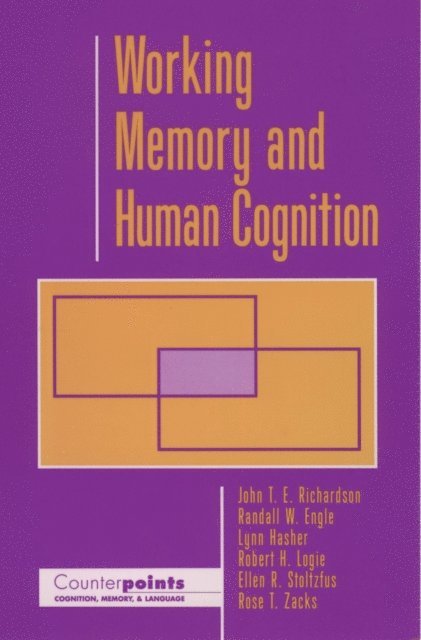
This book compares and contrasts different conceptions of working memory. This is one of the most important notions to have informed cognitive psychology over the last 20 years or so. Primarily, 'working memory' has referred to the human cognitive system responsible for temporary storage of verbal information, but this book goes further and includes proponents of several different yet dominant views of working memory. Contents include: The Seven Ages of Working Memory, Working Memory and Aging, Working Memory and Retrieval.Both the conceptual and methodological basis of the study of working memory relevant to advanced undergraduates, postgraduates, and research workers in the fields of cognition, intellectual development, and cognitive neuropsychology are covered.
1 115 kr
Skickas inom 5-8 vardagar
The purpose of this contribution to the Counterpoints series is to compare and contrast different conceptions of working memory. This is one of the most important notions to have informed cognitive psychology over the last 20 years or so, and yet it has been used in a wide variety of ways. This, in part, is undoubtedly because contemporary usage of the phrase `working memory, encapsulates various themes that have appeared at different points in the history of research into human memory and cognition. This book presents three dominant views of working memory.
2 081 kr
Skickas inom 7-10 vardagar
Working memory has been one of the most intensively studied systems in cognitive psychology. It is only relatively recently however that researchers have been able to study the neural processes might underlie working memory, leading to a proliferation of research in this domain.The Cognitive Neuroscience of Working Memory brings together leading researchers from around the world to summarize current knowledge of this field, and directions for future research. An historical opening chapter by Alan Baddeley and Graham Hitch sets the context for the subsequent chapters. The scope of the book is exceptionally broad, providing a showcase for cutting edge research on all contemporary concepts of working memory, using techniques from experimental psychology, single cell recording, neuropsychology, cognitive neuroimaging and computational modelling.The Cognitive Neuroscience of Working Memory will be an important reference text for all those seeking an authoritative and comprehensive synthesis of this field.
2 029 kr
Skickas inom 10-15 vardagar
Representation of the visual and spatial properties of our environment is a pivotal requirement of everyday cognition. We can mentally represent the visual form of objects. We can extract information from several of the senses as to the location of objects in relation to ourselves and to other objects nearby. For some of those objects we can reach out and manipulate them. We can also imagine ourselves manipulating objects in advance of doing so, or even when it would be impossible to do so physically. The problem posed to science is how these cognitive operations are accomplished, and proffered accounts lie in two essentially parallel research endeavours, working memory and imagery. Working memory is thought to pervade everyday cognition, to provide on-line processing and temporary storage, and to update, moment to moment, our representation of the current state of our environment and our interactions with that environment.There is now a strong case for the claims of working memory in the area of phonological and articulatory functions, all of which appear to contribute to everyday activities such as counting, arithmetic, vocabulary acquisition, and some aspects of reading and language comprehension. The claims for visual and spatial working memory functions are less convincing. Most notable has been the assumption that visual and spatial working memory are intimately involved in the generation, retention and manipulations of visual images. There has until recently been little hard evidence to justify that assumption, and the research on visual and spatial working memory has focused on a relatively restricted range of imagery tasks and phenomena.In a more or less independent development, the literature on visual imagery has now amassed a voluminous corpus of data and theory about a wide range of imagery phenomena. Despite this, few books on imagery refer to the concept of working memory in any detail, or specify the nature of the working memory system that might be involved in mental imagery.This essay follows a line of reconciliation and positive critiquing in exploring the possible overlap between mental imagery and working memory. Theoretical development in the book draws on data from both cognitive psychology and cognitive neuropsychology. The aim is to stimulate debate, to address directly a number of assumptions that hitherto have been implicit, and to assess the contribution of the concept of working memory to our understanding of these intriguing core aspects of human cognition.
1 637 kr
Skickas inom 10-15 vardagar
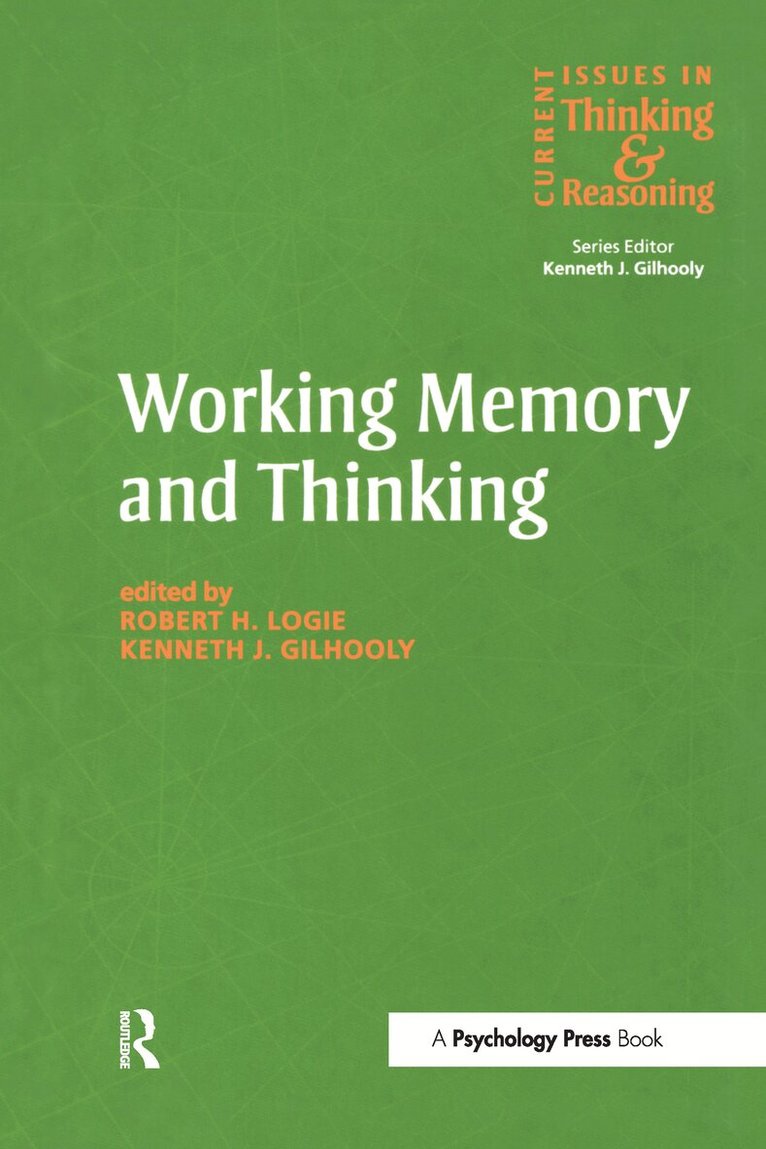
Thinking and memory are inextricably linked. However, a "divide and rule" approach has led cognitive psychologists to study these two areas in relative isolation. With contributions from some of the leading international researchers on working memory and thinking, the present volume aims to break down the scientific divisions and foster scientific integration in the connections between these two core functions of cognition. Broadly defined, thinking comprises mentally driven change in current representations. The processes involved in such change include application of logical rules, heuristics, problem solving strategies, decision making, planning and comprehension of complex material. Memory involves the encoding, retention and retrieval of information, and the retention may be temporary or in a long-term knowledge base.; Thinking cannot occur in a vacuum; it relies on the long-term memory base and a temporary mental workspace. Despite the apparent limitations on mental workspace, humans can drive a car and hold a conversation, or store partial solutions while tackling other aspects of a problem. So too, some aspects of thinking are relatively resilient in the face of quite extensive brain damage, yet other aspects are remarkably vulnerable to neuroanatomical insults. Humans can solve complex problems with many alternative choice points and yet seem to be able to consider only a few hypotheses at any one time. These apparent paradoxes present significant scientific challenges as to how humans can be such successful thinkers despite their very limited working memory. The chapters herein represent a diversity of views as regards the nature or working memory and forms of human thinking. The links between working memory and thinking are directly addressed and made explicit, and in so doing this volume offers an increasingly integrated understanding of human thinking and memory.
Imagery in Working Memory and Mental Discovery
A Special Issue of the European Cognitive Psychology
Inbunden, Engelska, 1999
648 kr
Tillfälligt slut
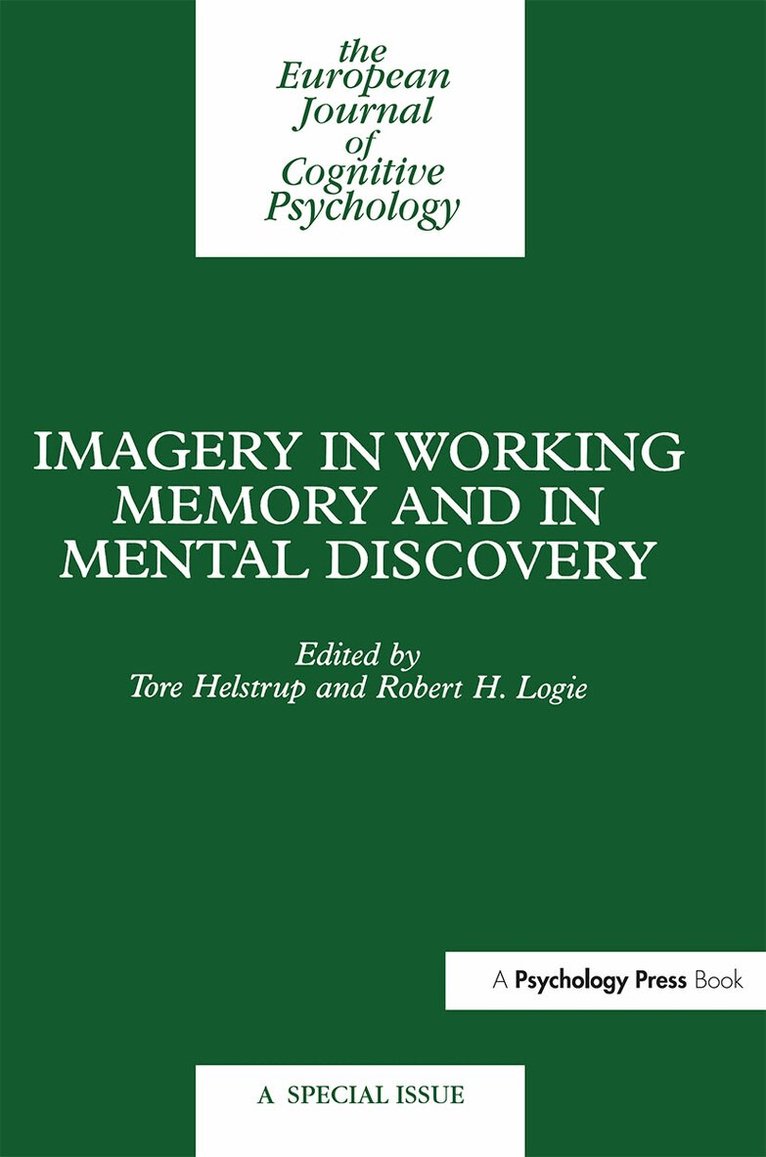
The topic of mental imagery has reached a stage of considerable maturity with a large published literature and a wide range of experimental paradigms now available. In recent years there has been a growing interest in uses for imagery in mental discovery and in the link between imagery and visuo-spatial working memory. Mental discovery offers insights into creative thinking, while the study of mental imagery in working memory offers a scientific understanding of important aspects of on-line cognition both in the laboratory and in everyday life. These cognate topics have been the subject of numerous scientific meetings, and there is now a well established network of imagery researchers across Europe. The idea for this special issue arose from a meeting of European imagery researchers that took place in Oslo, Norway in the summer of 1997. The topics for the special issue were chosen to reflect predominant themes represented at the meeting, but submission of papers was open to all readers of the European Journal of Cognitive Psychology whether or not they attended the conference. All the papers were subject to the normal strict reviewing process for the journal. The result is a sample of the exciting developments that are benefiting from significant growth in European based cognitive psychology.
744 kr
Skickas inom 10-15 vardagar
Representation of the visual and spatial properties of our environment is a pivotal requirement of everyday cognition. We can mentally represent the visual form of objects. We can extract information from several of the senses as to the location of objects in relation to ourselves and to other objects nearby. For some of those objects we can reach out and manipulate them. We can also imagine ourselves manipulating objects in advance of doing so, or even when it would be impossible to do so physically. The problem posed to science is how these cognitive operations are accomplished, and proffered accounts lie in two essentially parallel research endeavours, working memory and imagery. Working memory is thought to pervade everyday cognition, to provide on-line processing and temporary storage, and to update, moment to moment, our representation of the current state of our environment and our interactions with that environment.There is now a strong case for the claims of working memory in the area of phonological and articulatory functions, all of which appear to contribute to everyday activities such as counting, arithmetic, vocabulary acquisition, and some aspects of reading and language comprehension. The claims for visual and spatial working memory functions are less convincing. Most notable has been the assumption that visual and spatial working memory are intimately involved in the generation, retention and manipulations of visual images. There has until recently been little hard evidence to justify that assumption, and the research on visual and spatial working memory has focused on a relatively restricted range of imagery tasks and phenomena.In a more or less independent development, the literature on visual imagery has now amassed a voluminous corpus of data and theory about a wide range of imagery phenomena. Despite this, few books on imagery refer to the concept of working memory in any detail, or specify the nature of the working memory system that might be involved in mental imagery.This essay follows a line of reconciliation and positive critiquing in exploring the possible overlap between mental imagery and working memory. Theoretical development in the book draws on data from both cognitive psychology and cognitive neuropsychology. The aim is to stimulate debate, to address directly a number of assumptions that hitherto have been implicit, and to assess the contribution of the concept of working memory to our understanding of these intriguing core aspects of human cognition.
468 kr
Skickas inom 10-15 vardagar
Thinking and memory are inextricably linked. However, a "divide and rule" approach has led cognitive psychologists to study these two areas in relative isolation. With contributions from some of the leading international researchers on working memory and thinking, the present volume aims to break down the scientific divisions and foster scientific integration in the connections between these two core functions of cognition. Broadly defined, thinking comprises mentally driven change in current representations. The processes involved in such change include application of logical rules, heuristics, problem solving strategies, decision making, planning and comprehension of complex material. Memory involves the encoding, retention and retrieval of information, and the retention may be temporary or in a long-term knowledge base.; Thinking cannot occur in a vacuum; it relies on the long-term memory base and a temporary mental workspace. Despite the apparent limitations on mental workspace, humans can drive a car and hold a conversation, or store partial solutions while tackling other aspects of a problem. So too, some aspects of thinking are relatively resilient in the face of quite extensive brain damage, yet other aspects are remarkably vulnerable to neuroanatomical insults. Humans can solve complex problems with many alternative choice points and yet seem to be able to consider only a few hypotheses at any one time. These apparent paradoxes present significant scientific challenges as to how humans can be such successful thinkers despite their very limited working memory. The chapters herein represent a diversity of views as regards the nature or working memory and forms of human thinking. The links between working memory and thinking are directly addressed and made explicit, and in so doing this volume offers an increasingly integrated understanding of human thinking and memory.
2 029 kr
Skickas inom 10-15 vardagar
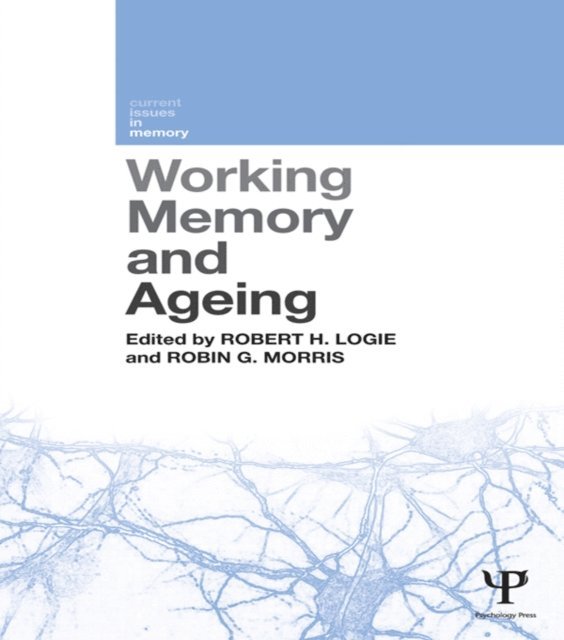
The rapid growth in the numbers of older people worldwide has led to an equally rapid growth in research on the changes across age in cognitive function, including the processes of moment to moment cognition known as working memory. This book brings together international research leaders who address major questions about how age affects working memory: Why is working memory function much better preserved in some people than others? In all healthy adults, which aspects of working memory are retained in later years and which aspects start declining in early adulthood? Can cognitive training help slow cognitive decline with age? How are changes in brain structures, connectivity and activation patterns related to important changes in working memory function?Impairments of cognition, and particularly of working memory, can be major barriers to independent living. The chapters of this book dispel some popular myths about cognitive ageing, while presenting the state of the science on how and why working memory functions as it does throughout the adult lifespan.Working Memory and Aging is the first volume to provide an overview of the burgeoning literature on changes in working memory function across healthy and pathological ageing, and it will be of great interest to advanced undergraduates, postgraduates and researchers in psychology and related subject areas concerned with the effects of human ageing, including several areas of medicine.
784 kr
Skickas inom 10-15 vardagar
The rapid growth in the numbers of older people worldwide has led to an equally rapid growth in research on the changes across age in cognitive function, including the processes of moment to moment cognition known as working memory. This book brings together international research leaders who address major questions about how age affects working memory: Why is working memory function much better preserved in some people than others? In all healthy adults, which aspects of working memory are retained in later years and which aspects start declining in early adulthood? Can cognitive training help slow cognitive decline with age? How are changes in brain structures, connectivity and activation patterns related to important changes in working memory function?Impairments of cognition, and particularly of working memory, can be major barriers to independent living. The chapters of this book dispel some popular myths about cognitive ageing, while presenting the state of the science on how and why working memory functions as it does throughout the adult lifespan.Working Memory and Aging is the first volume to provide an overview of the burgeoning literature on changes in working memory function across healthy and pathological ageing, and it will be of great interest to advanced undergraduates, postgraduates and researchers in psychology and related subject areas concerned with the effects of human ageing, including several areas of medicine.
1 137 kr
Skickas inom 10-15 vardagar
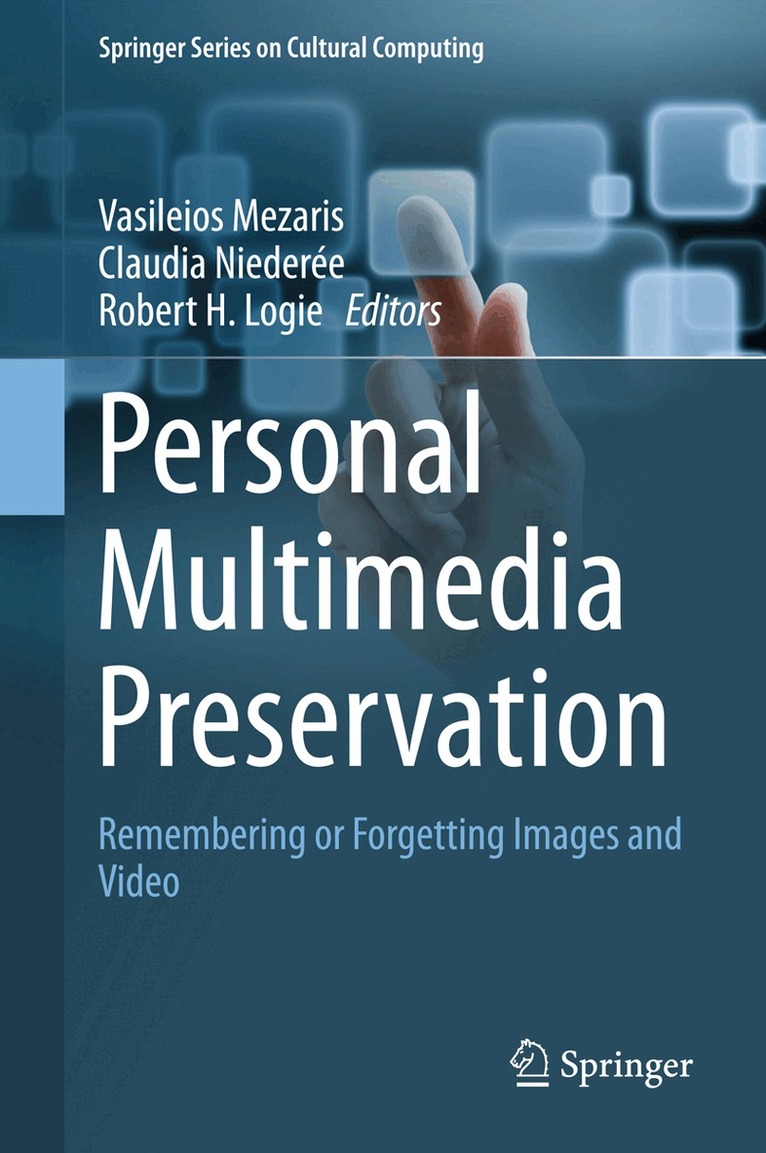
This unique text/reference advocates a novel forgetful approach to dealing with personal multimedia content in the long run, which is inspired by the effectiveness of human forgetting as a mechanism for helping us to stay focused on important things. The text presents theoretical foundations, technologies, applications, and case study results that help the reader to understand the problems and challenges associated with personal digital preservation, and the solutions that can be developed in response to these challenges.Topics and features: Highlights the value of an intelligent and selective approach to personal multimedia preservation, involving managed forgetting and contextualized remembering; considers how a conceptual understanding of human memory function can be used to inspire the design of digital managed preservation and forgetting; discusses methods that endow computers with capabilities to understand digital content, in order to support intelligent preservation decisions; examines the assessment of the importance of information items, introducing the concepts of memory buoyancy and preservation value; reviews methods for preserving the context associated with a digital item, and for assessing how this context evolves over time; proposes a reference model for the Preserve-or-Forget (PoF) approach which is integrative, value-driven, brain-inspired, forgetful, and evolution-aware; describes the integration of preservation functionalities in a Personal Information Management (PIM) application; presents a user study on a photo selection task, using the results to design methods for automatically selecting important photos from personal collections.This interdisciplinary volume provides significant insights from computer science, engineering and psychology that will be of great interest to researchers involved in multimedia and software engineering, multimedia preservation, cultural informatics, digital heritage, and the digital humanities.
1 096 kr
Skickas inom 10-15 vardagar
This unique text/reference advocates a novel forgetful approach to dealing with personal multimedia content in the long run, which is inspired by the effectiveness of human forgetting as a mechanism for helping us to stay focused on important things. The text presents theoretical foundations, technologies, applications, and case study results that help the reader to understand the problems and challenges associated with personal digital preservation, and the solutions that can be developed in response to these challenges.Topics and features: Highlights the value of an intelligent and selective approach to personal multimedia preservation, involving managed forgetting and contextualized remembering; considers how a conceptual understanding of human memory function can be used to inspire the design of digital managed preservation and forgetting; discusses methods that endow computers with capabilities to understand digital content, in order to support intelligent preservation decisions; examines the assessment of the importance of information items, introducing the concepts of memory buoyancy and preservation value; reviews methods for preserving the context associated with a digital item, and for assessing how this context evolves over time; proposes a reference model for the Preserve-or-Forget (PoF) approach which is integrative, value-driven, brain-inspired, forgetful, and evolution-aware; describes the integration of preservation functionalities in a Personal Information Management (PIM) application; presents a user study on a photo selection task, using the results to design methods for automatically selecting important photos from personal collections.This interdisciplinary volume provides significant insights from computer science, engineering and psychology that will be of great interest to researchers involved in multimedia and software engineering, multimedia preservation, cultural informatics, digital heritage, and the digital humanities.