Geneviève Sellier – författare
Visar alla böcker från författaren Geneviève Sellier. Handla med fri frakt och snabb leverans.
7 produkter
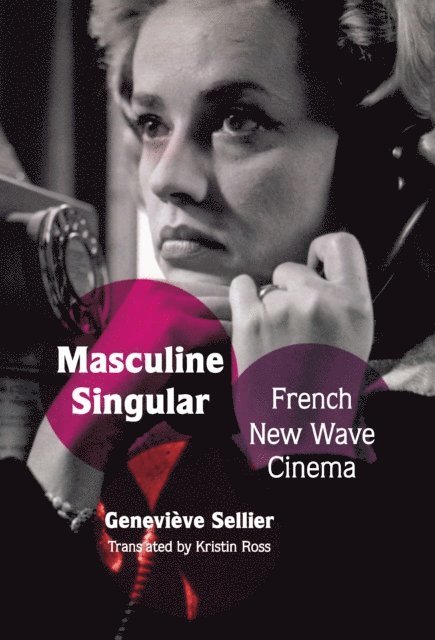
Masculine Singular
French New Wave Cinema
Inbunden, 2008
1151 kr
Lägg i varukorg
Masculine Singular is an original interpretation of French New Wave cinema by one of France’s leading feminist film scholars. While most criticism of the New Wave has concentrated on the filmmakers and their films, GeneviÈve Sellier focuses on the social and cultural turbulence of the cinema’s …
Masculine Singular
French New Wave Cinema
Häftad, 2008
300 kr
Lägg i varukorg
Masculine Singular is an original interpretation of French New Wave cinema by one of France’s leading feminist film scholars. While most criticism of the New Wave has concentrated on the filmmakers and their films, GeneviÈve Sellier focuses on the social and cultural turbulence of the cinema’s …
Battle of the Sexes in French Cinema, 1930–1956
Av Noël Burch, Geneviève Sellier
Häftad, 2013
352 kr
Lägg i varukorg
In The Battle of the Sexes in French Cinema, 1930–1956, NoËl Burch and GeneviÈve Sellier adopt a sociocultural approach to films made in France before, during, and after World War II, paying particular attention to the Occupation years (1940–44). The authors contend that the films produced from the …
Battle of the Sexes in French Cinema, 1930-1956
Av Genevieve Sellier, Noel Burch
E-bok, 2013
536 kr
Lägg i varukorg
In The Battle of the Sexes in French Cinema, 1930–1956 , Noël Burch and Geneviève Sellier adopt a sociocultural approach to films made in France before, during, and after World War II, paying particular attention to the Occupation years (1940–44). The authors contend that the films produced from …
Masculine Singular
French New Wave Cinema
E-bok, 2008
470 kr
Lägg i varukorg
Masculine Singular is an original interpretation of French New Wave cinema by one of France’s leading feminist film scholars. While most criticism of the New Wave has concentrated on the filmmakers and their films, Geneviève Sellier focuses on the social and cultural turbulence of the cinema’s …
Battle of the Sexes in French Cinema, 1930–1956
Av Noël Burch, Geneviève Sellier
Inbunden, 2013
1329 kr
Tillfälligt slut
In The Battle of the Sexes in French Cinema, 1930–1956, NoËl Burch and GeneviÈve Sellier adopt a sociocultural approach to films made in France before, during, and after World War II, paying particular attention to the Occupation years (1940–44). The authors contend that the films produced from the …