Geo Maher - Böcker
Visar alla böcker från författaren Geo Maher. Handla med fri frakt och snabb leverans.
9 produkter
9 produkter
Del 15 - American Studies Now: Critical Histories of the Present
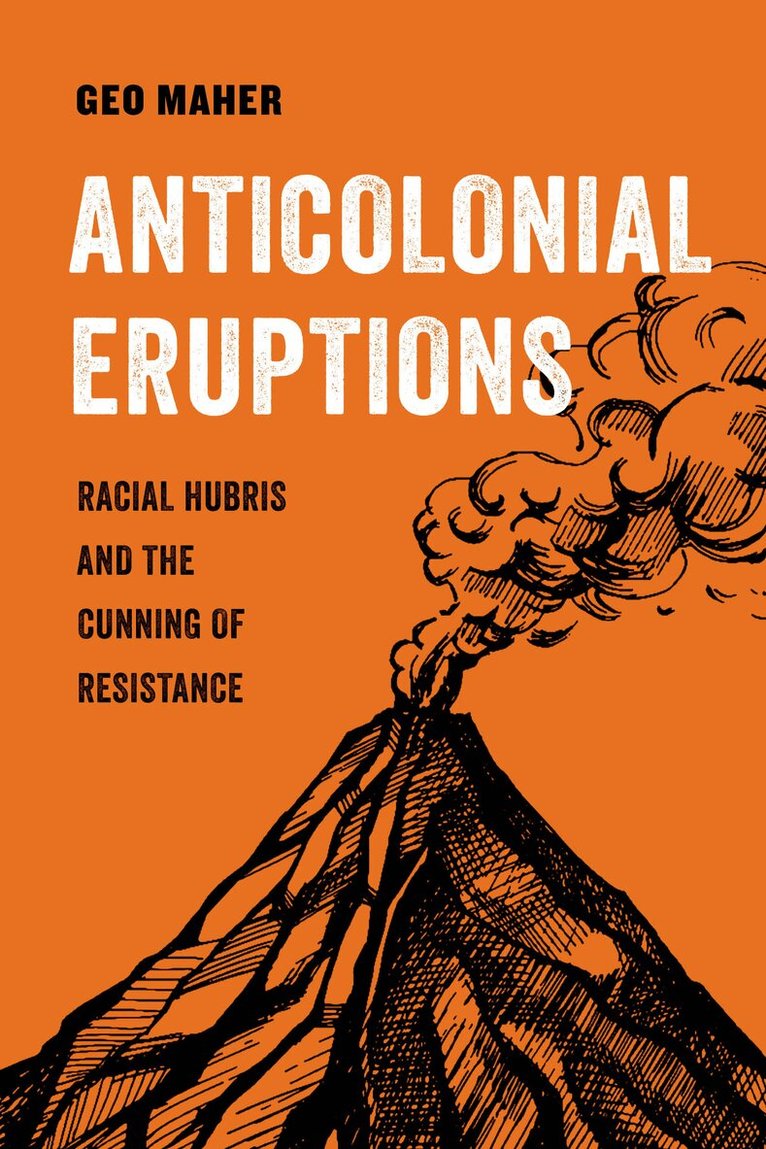
Anticolonial Eruptions
Racial Hubris and the Cunning of Resistance
Häftad, Engelska, 2022
161 kr
Skickas inom 7-10 vardagar
This incisive study reveals the fundamental, paradoxical weakness of colonialism and the enduring power of anticolonial resistance.Resistance is everywhere, but everywhere a surprise, especially when the agents of struggle are the colonized, the enslaved, the wretched of the earth. Anticolonial revolts and slave rebellions have often been described by those in power as “eruptions”—volcanic shocks to a system that does not, cannot, see them coming. In Anticolonial Eruptions, Geo Maher diagnoses a paradoxical weakness built right into the foundations of white supremacist power, a colonial blind spot that grows as domination seems more complete. Anticolonial Eruptions argues that the colonizer’s weakness is rooted in dehumanization. When the oppressed and excluded rise up in explosive rebellion, with the very human demands for life and liberation, the powerful are ill-prepared. This colonial blind spot is, ironically, self-imposed: the more oppressive and expansive the colonial power, the lesser-than-human the colonized are believed to be, the greater the opportunity for resistance. Maher calls this paradox the cunning of decolonization, an unwitting reversal of the balance of power between the oppressor and the oppressed. Where colonial power asserts itself as unshakable, total, and perpetual, a blind spot provides strategic cover for revolutionary possibility; where race or gender make the colonized invisible, they organize, unseen. Anticolonial Eruptions shows that this fundamental weakness of colonialism is not a bug, but a permanent feature of the system, providing grounds for optimism in a contemporary moment roiled by global struggles for liberation.
Del 15 - American Studies Now: Critical Histories of the Present
Anticolonial Eruptions
Racial Hubris and the Cunning of Resistance
Inbunden, Engelska, 2022
780 kr
Skickas inom 7-10 vardagar
This incisive study reveals the fundamental, paradoxical weakness of colonialism and the enduring power of anticolonial resistance.Resistance is everywhere, but everywhere a surprise, especially when the agents of struggle are the colonized, the enslaved, the wretched of the earth. Anticolonial revolts and slave rebellions have often been described by those in power as “eruptions”—volcanic shocks to a system that does not, cannot, see them coming. In Anticolonial Eruptions, Geo Maher diagnoses a paradoxical weakness built right into the foundations of white supremacist power, a colonial blind spot that grows as domination seems more complete. Anticolonial Eruptions argues that the colonizer’s weakness is rooted in dehumanization. When the oppressed and excluded rise up in explosive rebellion, with the very human demands for life and liberation, the powerful are ill-prepared. This colonial blind spot is, ironically, self-imposed: the more oppressive and expansive the colonial power, the lesser-than-human the colonized are believed to be, the greater the opportunity for resistance. Maher calls this paradox the cunning of decolonization, an unwitting reversal of the balance of power between the oppressor and the oppressed. Where colonial power asserts itself as unshakable, total, and perpetual, a blind spot provides strategic cover for revolutionary possibility; where race or gender make the colonized invisible, they organize, unseen. Anticolonial Eruptions shows that this fundamental weakness of colonialism is not a bug, but a permanent feature of the system, providing grounds for optimism in a contemporary moment roiled by global struggles for liberation.
1 012 kr
Kommande
A free ebook version of this title is available through Luminos, University of California Press's Open Access publishing program. Visit www.luminosoa.org to learn more.We are living through a period of perpetual crises and explosive struggles for liberation on a global scale. This transdisciplinary collection explores what W. E. B. Du Bois's groundbreaking 1935 work, Black Reconstruction in America, tells us about repression and resistance across the world, asking: What do abolition and reconstruction mean today? What would it take for these concepts to become a global reality? How can we make sense of our political moment, from the resurgence of Black consciousness across the Americas, to the rise of neofascism in Europe and beyond, to the fight against land dispossession in Africa? Reading "Black Reconstruction" Today draws together a group of leading scholars and activists to explore the lasting relevance of Du Bois's political masterwork.
384 kr
Kommande
A free ebook version of this title is available through Luminos, University of California Press's Open Access publishing program. Visit www.luminosoa.org to learn more.We are living through a period of perpetual crises and explosive struggles for liberation on a global scale. This transdisciplinary collection explores what W. E. B. Du Bois's groundbreaking 1935 work, Black Reconstruction in America, tells us about repression and resistance across the world, asking: What do abolition and reconstruction mean today? What would it take for these concepts to become a global reality? How can we make sense of our political moment, from the resurgence of Black consciousness across the Americas, to the rise of neofascism in Europe and beyond, to the fight against land dispossession in Africa? Reading "Black Reconstruction" Today draws together a group of leading scholars and activists to explore the lasting relevance of Du Bois's political masterwork.
417 kr
Skickas inom 7-10 vardagar
Since being elected president in 1998, Hugo ChÁvez has become the face of contemporary Venezuela and, more broadly, anticapitalist revolution. George Ciccariello-Maher contends that this focus on ChÁvez has obscured the inner dynamics and historical development of the country’s Bolivarian Revolution. In We Created ChÁvez, by examining social movements and revolutionary groups active before and during the ChÁvez era, Ciccariello-Maher provides a broader, more nuanced account of ChÁvez’s rise to power and the years of activism that preceded it.Based on interviews with grassroots organizers, former guerrillas, members of neighborhood militias, and government officials, Ciccariello-Maher presents a new history of Venezuelan political activism, one told from below. Led by leftist guerrillas, women, Afro-Venezuelans, indigenous people, and students, the social movements he discusses have been struggling against corruption and repression since 1958. Ciccariello-Maher pays particular attention to the dynamic interplay between the ChÁvez government, revolutionary social movements, and the Venezuelan people, recasting the Bolivarian Revolution as a long-term and multifaceted process of political transformation.
1 473 kr
Skickas inom 7-10 vardagar
Anticolonial theorists and revolutionaries have long turned to dialectical thought as a central weapon in their fight against oppressive structures and conditions. This relationship was never easy, however, as anticolonial thinkers have resisted the historical determinism, teleology, Eurocentrism, and singular emphasis that some Marxisms place on class identity at the expense of race, nation, and popular identity. In recent decades, the conflict between dialectics and postcolonial theory has only deepened. In Decolonizing Dialectics Geo Maher breaks this impasse by bringing the work of Georges Sorel, Frantz Fanon, and Enrique Dussel together with contemporary Venezuelan politics to formulate a dialectics suited to the struggle against the legacies of colonialism and slavery. This is a decolonized dialectics premised on constant struggle in which progress must be fought for and where the struggles of the wretched of the earth themselves provide the only guarantee of historical motion.
364 kr
Skickas inom 7-10 vardagar
Anticolonial theorists and revolutionaries have long turned to dialectical thought as a central weapon in their fight against oppressive structures and conditions. This relationship was never easy, however, as anticolonial thinkers have resisted the historical determinism, teleology, Eurocentrism, and singular emphasis that some Marxisms place on class identity at the expense of race, nation, and popular identity. In recent decades, the conflict between dialectics and postcolonial theory has only deepened. In Decolonizing Dialectics Geo Maher breaks this impasse by bringing the work of Georges Sorel, Frantz Fanon, and Enrique Dussel together with contemporary Venezuelan politics to formulate a dialectics suited to the struggle against the legacies of colonialism and slavery. This is a decolonized dialectics premised on constant struggle in which progress must be fought for and where the struggles of the wretched of the earth themselves provide the only guarantee of historical motion.
267 kr
Skickas inom 3-6 vardagar
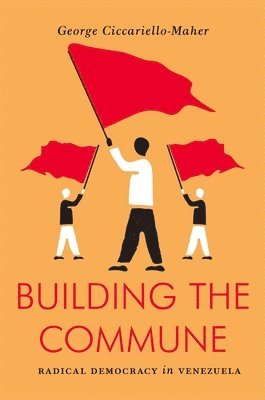
Since 2011, a wave of popular mobilizations has swept the globe, from Occupy to the Arab Spring, 15M in Spain and the uprisings in Greece. Their demands were varied, but what they share is a commitment to ideals of radical democracy, and a willingness to experiment with new forms of organization to achieve this. In fact, the countries of Latin America have been experimenting with such projects since 1989-just as left projects of all stripes fell into decline across Europe-in what was a moment of rebirth. Poor residents of Venezuela's barrios took history into their own hands in a mass popular rebellion against neoliberalism, much as the movements appearing worldwide are doing today. Twenty-five years since the experiments began, Latin America is hardly recognizable, with leftist governments consolidating a new hegemony and radical movements surging forth from below. In Building the Commune, George Ciccariello-Maher travels through the many radical experiments of Venezuela, assessing how they have succeeded and failed, and how they are continuing to operate. Speaking to community members, workers, students and government officials, Ciccariello-Maher provides a balance sheet of these projects, that movements throughout the world can look to for lessons and inspiration.
142 kr
Skickas inom 7-10 vardagar
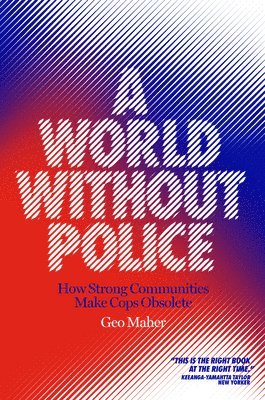
Compellingly argued and lyrically charged, A World without Police offers concrete strategies for confronting and breaking police power, as a first step toward building community alternatives that make the police obsolete. Surveying the post-protest landscape in Minneapolis, Philadelphia, Chicago, and Oakland, as well as the people who have experimented with policing alternatives at a mass scale in Latin America, Maher details the institutions we can count on to deliver security without the disorganizing interventions of cops: neighborhood response networks, community-based restorative justice practices, democratically organized self-defense projects, and well-resourced social services.Tens of millions of people poured onto the streets for Black Lives Matter, bringing with them a wholly new idea of public safety, common security, and the delivery of justice, communicating that vision in the fiery vernacular of riot, rebellion, and protest. A World without Police transcribes these new ideas-written in slogans and chants, over occupied bridges and hastily assembled barricades-into a compelling, must-read manifesto for police abolition.A World without Police argues that abolition is not a distant dream or an unreachable horizon but an attainable reality. In communities around the world, we are beginning to glimpse a real, lasting justice in which we keep us safe.