Geoffrey A. Clark - Böcker
Visar alla böcker från författaren Geoffrey A. Clark. Handla med fri frakt och snabb leverans.
5 produkter
5 produkter
Perspectives on the Past
Theoretical Biases in Mediterranean Hunter-Gatherer Research
Inbunden, Engelska, 1991
992 kr
Skickas inom 10-15 vardagar
Perspectives on the Past shows how knowledge of the past is contingent and is largely determined by the social and intellectual milieu in which those who study it have received their training. In the original essays that comprise the volume, field archaeologists discuss their own biases and the effects these biases have on the way they conduct their research on hunter-gatherers in the Mediterranean.
Del 16 - Archaeological Reports
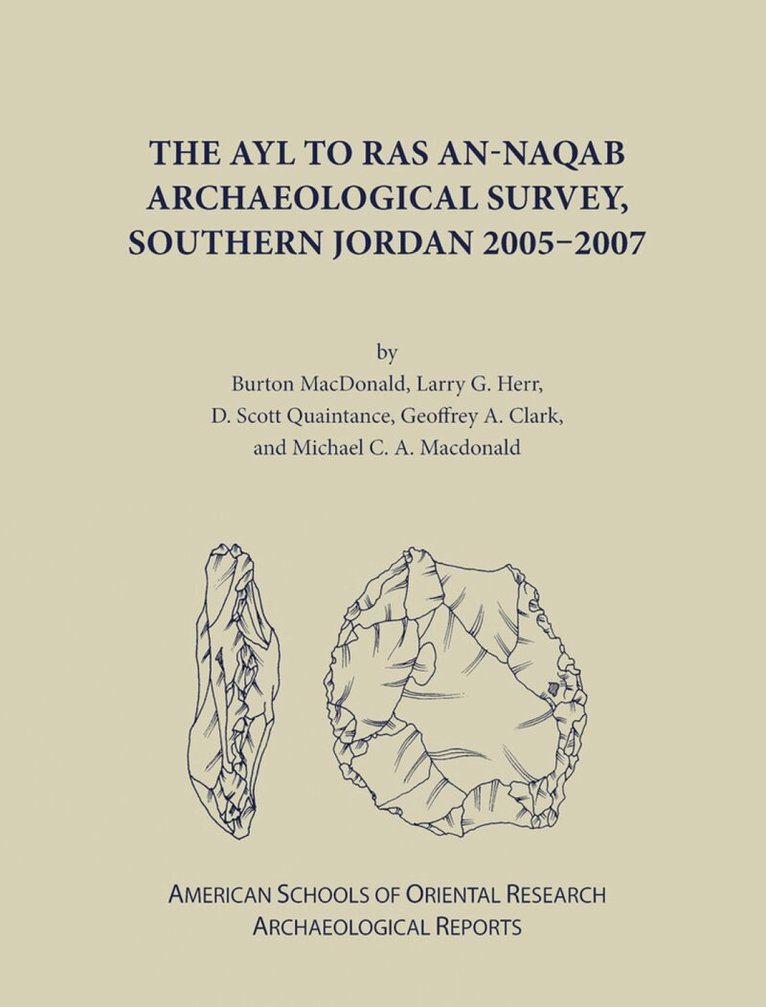
Ayl to Ras an-Naqab Archaeological Survey, Southern Jordan 2005-2007
Inbunden, Engelska, 2012
326 kr
Skickas inom 5-8 vardagar
Two volumes, with DVD. Includes 74 figures, 24 tables and 100+ lithic drawings. Although segments of the ARNAS territory have been investigated for the past one hundred years, a comprehensive and systematic survey of the area had never been undertaken prior to the work of the ARNAS team members. The main goal of the project was to discover, record, and interpret archaeological sites within the survey territory. Some other objectives included: the discovery, on the basis of the artifactual material identified, the area's settlement patterns from the Lower Paleolithic (ca. 1.4mya) to the end of the Late Islamic period (AD 1918); a study of surface trends to determine, on the basis of the number of sites and the amount of lithics and/or sherds collected, where in the territory "settlements" were concentrated in antiquity; an investigation of the Khatt Shabib or "Shabib's Wall," a low stone wall running in a generally north-south direction to the east, ca. 5-10 km, of the Via Nova Traiana (Trajan's road built between AD 111-114); and to document the rock art, tribal markings, and inscriptional material of the region. ARNAS team members accomplished the objectives of the project by transecting and recording the archaeological remains found in 140 randomly-chosen squares (500 x 500 m), covering around five percent of each of the three topographical zones of the survey territory. This resulted in a statistically valid sample of the archaeological materials of the area. In addition, team members recorded 389 archaeological sites encountered within, adjacent to, or on their way to-from the squares. Lithic archaeological periods/cultural-temporal units represented in the survey territory are: Lower Paleolithic; Lower Paleolithic/Middle Paleolithic; Middle Paleolithic; Middle Paleolithic/Upper Paleolithic; Upper Paleolithic; Upper Paleolithic/Epipaleolithic; Epipaleolithic; Pre-Pottery Neolithic; and Chalolithic/Early Bronze I. As is often the case in the deflated landscapes of Jordan, Middle Paleolithic and Middle/Upper Paleolithic combined samples are the most prevalent lithic analytical units identified in the survey. Ceramic archaeological periods/cultural-temporal units represented in the survey territory are: Chalcolithic-Early Bronze; Iron II; Nabataean; Roman; Byzantine; and Late Islamic. In addition, sherds, in small numbers and at only a few sites, from the Late Bronze, Iron I, Hellenistic, Early Islamic, and Middle Islamic are also represented. The types of sites recorded included: agriculture villages or hamlets; aqueducts; camps -probably seasonal and pastoralists; caves; cemeteries and individual tombs/graves; check dams and terraces; cisterns; farms; forts; inscriptions; knapping areas; lithic and sherd scatters; milestones; reservoirs; roads; rock art and/or tribal markings; walls; watchtowers; water catchment facilities; and winnowing areas. The accompanying DVD contains Random Square Descriptions and Images, Site Descriptions and Images, a table compiling all debitage, cores, and retouched pieces, and Settlement Pattern Maps for all of the Cultural-Temporal Unites represented at ARNAS sites.
Del 24 - Archaeological Reports
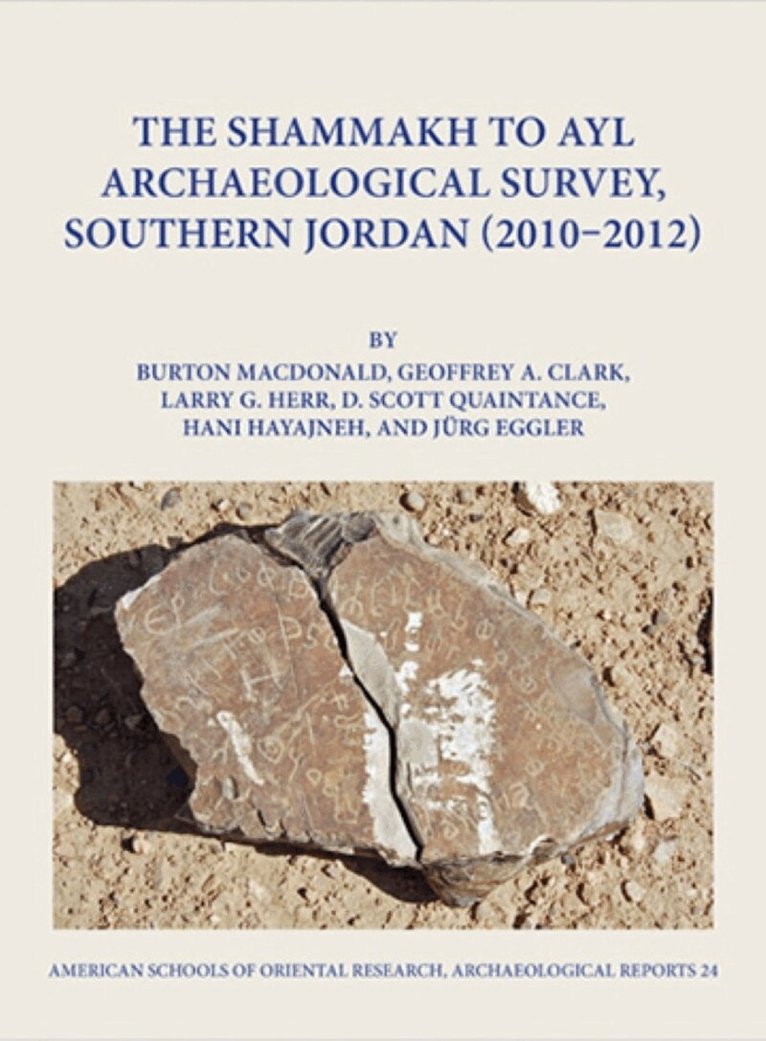
Shammakh to Ayl Archaeological Survey, Southern Jordan 2010-2012
Inbunden, Engelska, 2016
1 435 kr
Tillfälligt slut
Analysis of the materials, primarily lithics and sherds, collected in the course of this project indicate that the area experienced its highest density of population during the Middle Paleolithic, Neolithic/Chalcolithic, Iron II, Nabataean and Roman, Byzantine, and Late Islamic periods. Relative to the settlement patterns of the area, it can be concluded that the area was a rural one where the chief activities were agriculture and pastoralism. The many farms, hamlets, villages, and camp sites documented show that the area most probably provisioned, during various archaeological periods, the major international sites of the area. The project has particular relevance for understanding the major site of Petra during the Nabataean, Roman, and Byzantine periods. In addition, it is important relative to the site of Udhruh during these three periods plus the Early and Late Islamic periods and the site of ash-Shawbak, located immediately to the north of the project's territory, during the Middle Islamic period. The objectives of The Shammakh to Ayl Archaeological Survey, Southern Jordan project were: to discover, record, and interpret archaeological sites in an area of approximately 590 km between Shammakh in the north and Ayl in the south in the southern segment of the Transjordan Plateau;to determine the area's settlement patterns from the Lower Paleolithic (ca. 1.4 mya) to the end of the Late Islamic period (AD 1918); to investigate the Pleistocene (as late as ca. 10,000 B.C.) sediments and lakes in the eastern segment of the survey territory;to document the many farms, hamlets, and villages that provisioned the major international sites of the area, for example, Ash-Shawbak, Petra, and Udhruh;to investigate further the Khatt Shabib or ‘Shabib's Wall,’ a low stone wall running in a generally north-south direction through the area;to record the inscriptions, rock drawings, and wasms (tribal brands) within the area;and to link up with previous work that the project director and others have carried out in southern Jordan.These objectives were accomplished by the transecting of 108 random squares and the documenting of 366 sites that range in date from the Lower Paleaolithic to the end of the Late Islamic period. Finally, the project contributed to the writing of the archaeological history of southern Jordan from Wadi al-Hasa in the north to Ras an-Naqab in the south and from the desert on the east to the international border between Jordan and Israel on the west.
New Approaches to the Study of Early Upper Paleolithic 'Transitional' Industries in Western Eurasia
Transitions great and small
Häftad, Engelska, 2007
765 kr
Skickas inom 5-8 vardagar
1 620 kr
Skickas inom 5-8 vardagar
The objective of Walking through Jordan is to acknowledge and honor the singular achievements and wider impacts of Jordan's most prominent survey archaeologist, Burton MacDonald. MacDonald is a biblical scholar by training who has written extensively about the Iron Age and early Christianity. However, unlike many biblical scholars, MacDonald has also undertaken large regional survey projects which encompass the entire gamut of Jordanian prehistory and history. Thus, his work is unique in that it attracts the interest of a wide range of scholars.Contributing scholars from around the world reflect on three important areas of MacDonald's archaeological contributions: on archaeological survey in general, including those focusing on methodology and/or field projects that depend to a large extent on surveys, MacDonald's five major surveys- papers that incorporate data from his field projects and sites tested or excavated by others that were first identified by his work, and the archaeology of the Bronze and Iron Ages, as well as the Roman Period and the early Christian era.Despite his important contributions to prehistoric archaeology, the early historical periods constitute the main emphasis of Burton's scholarly output.