Geoffrey Jukes - Böcker
Visar alla böcker från författaren Geoffrey Jukes. Handla med fri frakt och snabb leverans.
10 produkter
10 produkter
Northern Territories, Asia-Pacific Regional Conflicts and the Aland Experience
Untying the Kurillian Knot
Inbunden, Engelska, 2009
2 125 kr
Skickas inom 10-15 vardagar
This volume is the fruit of an international collaborative study, which considers the Åland islands settlement in northern Europe as a resolution model for the major Asia-Pacific regional conflicts that derived from the post-World War II disposition of Japan, with particular focus on the territorial dispute between Japan and Russia, the Northern Territories/Southern Kuriles problem.The contributors provide analysis of the Åland settlement, the Japan-Russia territorial dispute and Åland-inspired solution ideas by experts from all over the world, including government officials, scholars and military specialists. Northern Territories, Asia-Pacific Regional Conflicts and the Aland Experience will be of interest to advanced undergraduate and postgraduate students, as well as academics working in Asian studies, politics, international relations, conflict resolution and security studies.
Northern Territories, Asia-Pacific Regional Conflicts and the Aland Experience
Untying the Kurillian Knot
Häftad, Engelska, 2016
549 kr
Skickas inom 10-15 vardagar
This volume is the fruit of an international collaborative study, which considers the Åland islands settlement in northern Europe as a resolution model for the major Asia-Pacific regional conflicts that derived from the post-World War II disposition of Japan, with particular focus on the territorial dispute between Japan and Russia, the Northern Territories/Southern Kuriles problem.The contributors provide analysis of the Åland settlement, the Japan-Russia territorial dispute and Åland-inspired solution ideas by experts from all over the world, including government officials, scholars and military specialists. Northern Territories, Asia-Pacific Regional Conflicts and the Aland Experience will be of interest to advanced undergraduate and postgraduate students, as well as academics working in Asian studies, politics, international relations, conflict resolution and security studies.
2 151 kr
Skickas inom 10-15 vardagar
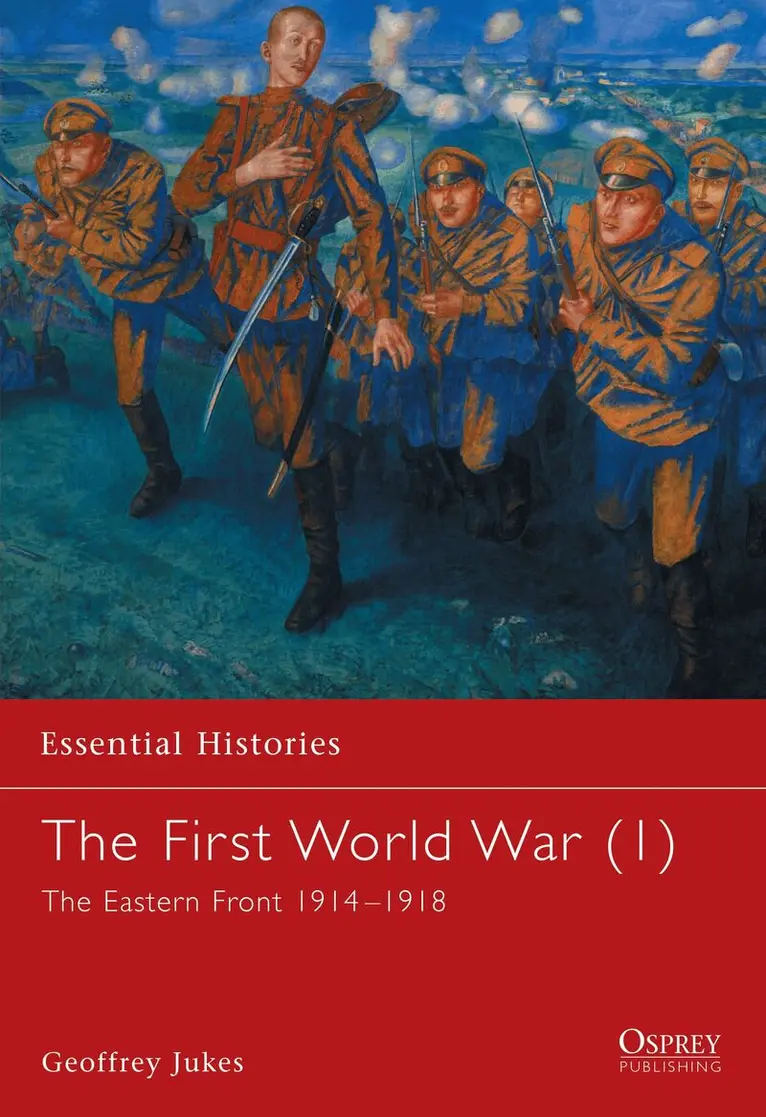
The first of four volumes that together provide a comprehensive account of World War I, this book unravels the complicated and tragic events of the war's Eastern Front. In particular, this book details the history of conflict between Germany and Russia, which proved disastrous for the Russian forces and would ultimately pave the way for the Bolshevik seizure of power in 1917.
1 361 kr
Skickas inom 10-15 vardagar
In 1940, fresh from the success in France, Hitler turned his attention to the East. In this volume, Geoffrey Jukes explains what led to Hitler's decision to invade the Soviet Union (Operation Barbarossa) and offers an account of the campaign that followed. The Germans expected to conquer Russia in only four months, but at Stalingrad and then at Kursk the Russians held their ground. At a human cost of 27 million Russian lives, Hitler was forced into a humiliating retreat, while the Soviet Union emerged from the war as a global superpower.
684 kr
Skickas inom 3-6 vardagar
Hitler's Stalingrad Decisions is an incisive examination of one of the most pivotal moments in World War II, focusing not on the military tactics of the Battle of Stalingrad but on Adolf Hitler’s decision-making during this extraordinary crisis. Framed within the concept of an "Intra-War Crisis" (IWC), the book explores the escalating perceptions of threat, time constraints, and shifts in military balance that defined German leadership's response to the unfolding catastrophe. Jukes uses a multidisciplinary approach, integrating historical analysis with political science methodologies to shed light on how centralized Nazi decision-making, heavily dominated by Hitler, shaped the outcome of this historic confrontation.Relying on rich primary sources, including the multi-volume War Diary of the High Command of the Armed Forces, the book meticulously analyzes three distinct phases of the Stalingrad crisis: the pre-crisis period marked by strategic misjudgments, the peak crisis when the German forces became besieged, and the post-crisis phase characterized by efforts to salvage what remained of the German position. Jukes evaluates these periods through detailed accounts of Führer Directives, High Command conferences, and the interplay of escalating stress and cognitive performance under Hitler’s autocratic leadership. By comparing these events to other international crises, both wartime and peacetime, the book provides a nuanced understanding of decision-making under extreme pressure, offering valuable insights into the dynamics of leadership, strategy, and crisis behavior. This work is an essential resource for historians, political scientists, and readers intrigued by the interplay of military and political decision-making during moments of historical significance.This title is part of UC Press's Voices Revived program, which commemorates University of California Press’s mission to seek out and cultivate the brightest minds and give them voice, reach, and impact. Drawing on a backlist dating to 1893, Voices Revived makes high-quality, peer-reviewed scholarship accessible once again using print-on-demand technology. This title was originally published in 1985.
1 513 kr
Skickas inom 3-6 vardagar
Hitler's Stalingrad Decisions is an incisive examination of one of the most pivotal moments in World War II, focusing not on the military tactics of the Battle of Stalingrad but on Adolf Hitler’s decision-making during this extraordinary crisis. Framed within the concept of an "Intra-War Crisis" (IWC), the book explores the escalating perceptions of threat, time constraints, and shifts in military balance that defined German leadership's response to the unfolding catastrophe. Jukes uses a multidisciplinary approach, integrating historical analysis with political science methodologies to shed light on how centralized Nazi decision-making, heavily dominated by Hitler, shaped the outcome of this historic confrontation.Relying on rich primary sources, including the multi-volume War Diary of the High Command of the Armed Forces, the book meticulously analyzes three distinct phases of the Stalingrad crisis: the pre-crisis period marked by strategic misjudgments, the peak crisis when the German forces became besieged, and the post-crisis phase characterized by efforts to salvage what remained of the German position. Jukes evaluates these periods through detailed accounts of Führer Directives, High Command conferences, and the interplay of escalating stress and cognitive performance under Hitler’s autocratic leadership. By comparing these events to other international crises, both wartime and peacetime, the book provides a nuanced understanding of decision-making under extreme pressure, offering valuable insights into the dynamics of leadership, strategy, and crisis behavior. This work is an essential resource for historians, political scientists, and readers intrigued by the interplay of military and political decision-making during moments of historical significance.This title is part of UC Press's Voices Revived program, which commemorates University of California Press’s mission to seek out and cultivate the brightest minds and give them voice, reach, and impact. Drawing on a backlist dating to 1893, Voices Revived makes high-quality, peer-reviewed scholarship accessible once again using print-on-demand technology. This title was originally published in 1985.
277 kr
Skickas
Bringing together the work of nine leading historians, and superbly illustrated with contemporary photography and colour maps, The Second World War gives readers a comprehensive understanding of all aspects of history’s greatest conflict.The period from 1939 to 1945 saw some of the most devastating and remarkable events in living memory. Labouring beneath a daily burden of fear, sacrifice, deprivation and uncertainty, soldiers and civilians of all nationalities were driven to extremes of selfless loyalty, dogged determination or bitter cruelty by the demands of a world at war. This book tells the stories of the men and women who lived and died during the Second World War, from politicians to factory workers, and from High Command to the conscripted men on the front lines. The experience of war is brought to life through a wealth of contemporary documentation, private writings and historical research, whilst the political, military and historical significance of the war is assessed and examined. From Europe's Western and Eastern Fronts to the war at sea, and from the Pacific to the Mediterranean and North Africa, every fighting front of the Second World War is covered in this truly comprehensive volume.
175 kr
Skickas inom 10-15 vardagar
In 1914 a series of complicated and tragic events saw Russia and Germany embark on a war that was to engulf the whole of Europe and be labelled by history as World War I. A tangle of international treaties that bound the major powers meant that, once started, widespread conflict was inevitable and on the largest and most costly scale yet seen by a modern Europe. For Russia, humiliated by defeat after defeat, the price was too high. Civic unrest forced the abdication of the Tsar and paved the way for the Bolsheviks to seize power. This is a concise guide to a complicated chapter in World War I history.
175 kr
Skickas inom 10-15 vardagar
In 1940, fresh from the success in France, Hitler turned his attention to the East. In this volume Geoffrey Jukes explains what led to Hitler's decision to instigate the invasion of the Soviet Union (Operation Barbarossa) and offers a concise account of the campaign that followed. The Germans expected to conquer Russia in only four months, but at Stalingrad and then Kursk the Russians fought back. At a human cost of 27 million Soviet lives Hitler was forced into a humiliating retreat and Russia emerged from the war as a super power ready to take on the capitalist world.
175 kr
Skickas inom 10-15 vardagar
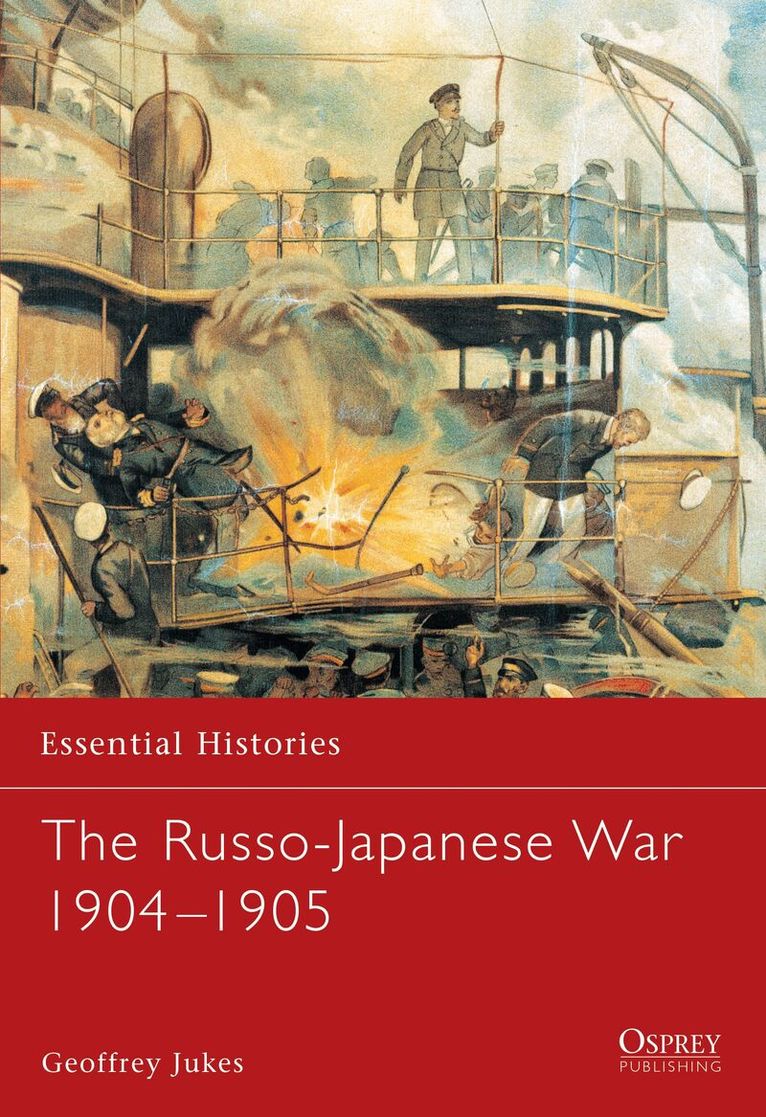
The Russo-Japanese war saw the first defeat of a major European imperialist power by an Asian country. When Japanese and Russian expansionist interests collided over Manchuria and Korea, the Tsar assumed Japan would never dare to fight. However, after years of planning, Japan launched a surprise attack on the Russian Port Arthur, on the Liaoyang Peninsula in 1904 and the war that followed saw Japan win major battles against Russia. This book explains the background and outbreak of the war, then follows the course of the fighting at Yalu River, Sha-ho, and finally Mukden, the largest battle anywhere in the world before the First World War.