Geoffrey Wiseman - Böcker
Visar alla böcker från författaren Geoffrey Wiseman. Handla med fri frakt och snabb leverans.
3 produkter
3 produkter
Isolate or Engage
Adversarial States, US Foreign Policy, and Public Diplomacy
Inbunden, Engelska, 2015
1 394 kr
Skickas inom 10-15 vardagar
The U.S. government has essentially two choices when dealing with adversarial states: isolate them or engage them. Isolate or Engage systematically examines the challenges to and opportunities for U.S. diplomatic relations with nine intensely adversarial states—China, Cuba, Iran, Libya, North Korea, U.S.S.R./Russia, Syria, Venezuela, and Vietnam: states where the situation is short of conventional war and where the U.S. maintains limited or no formal diplomatic relations with the government.In such circumstances, "public diplomacy"—the means by which the U.S. engages with citizens in other countries so they will push their own governments to adopt less hostile and more favorable views of U.S. foreign policies—becomes extremely important for shaping the context within which the adversarial government makes important decisions affecting U.S. national security interests. At a time when the norm of not talking to the enemy is a matter of public debate, the book examines the role of both traditional and public diplomacy with adversarial states and reviews the costs and benefits of U.S. diplomatic engagement with the publics of these countries. It concludes that while public diplomacy is not a panacea for easing conflict in interstate relations, it is one of many productive channels that a government can use in order to stay informed about the status of its relations with an adversarial state, and to seek to improve those relations.
327 kr
Skickas inom 10-15 vardagar
The U.S. government has essentially two choices when dealing with adversarial states: isolate them or engage them. Isolate or Engage systematically examines the challenges to and opportunities for U.S. diplomatic relations with nine intensely adversarial states—China, Cuba, Iran, Libya, North Korea, U.S.S.R./Russia, Syria, Venezuela, and Vietnam: states where the situation is short of conventional war and where the U.S. maintains limited or no formal diplomatic relations with the government.In such circumstances, "public diplomacy"—the means by which the U.S. engages with citizens in other countries so they will push their own governments to adopt less hostile and more favorable views of U.S. foreign policies—becomes extremely important for shaping the context within which the adversarial government makes important decisions affecting U.S. national security interests. At a time when the norm of not talking to the enemy is a matter of public debate, the book examines the role of both traditional and public diplomacy with adversarial states and reviews the costs and benefits of U.S. diplomatic engagement with the publics of these countries. It concludes that while public diplomacy is not a panacea for easing conflict in interstate relations, it is one of many productive channels that a government can use in order to stay informed about the status of its relations with an adversarial state, and to seek to improve those relations.
1 032 kr
Skickas inom 5-8 vardagar
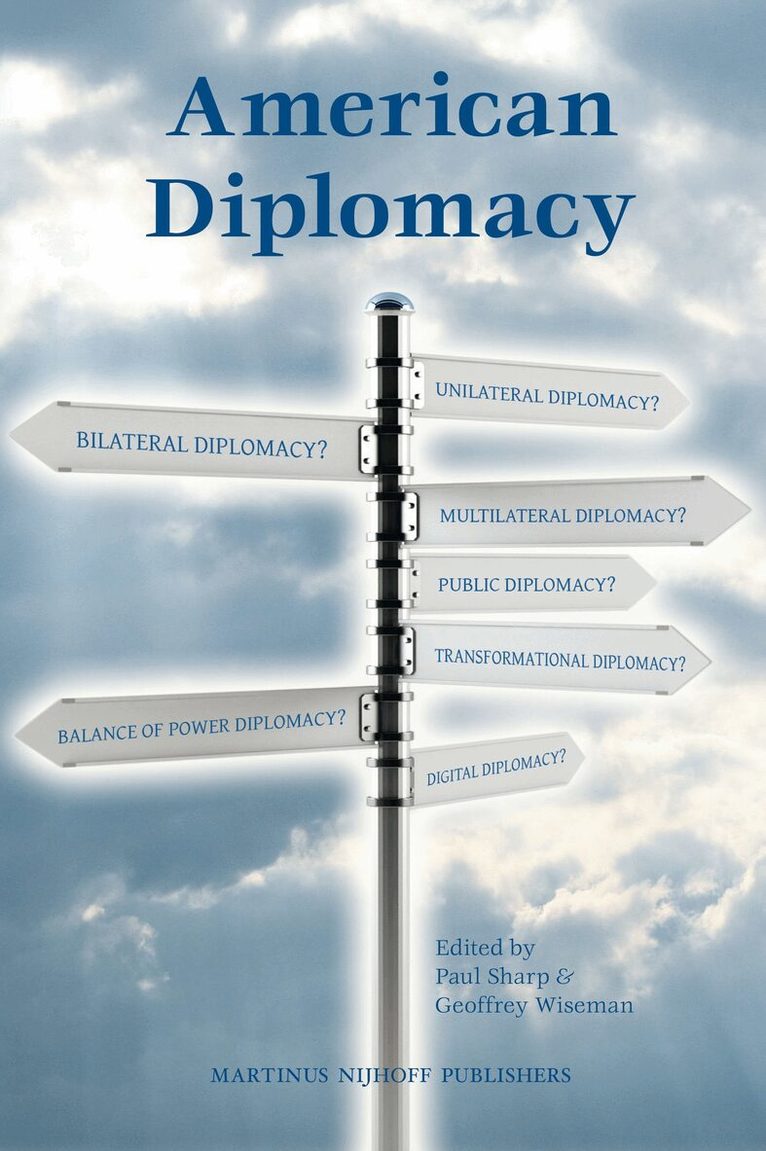
These essays examine questions arising from the Obama administration's efforts to revive American diplomacy and its response to the ways in which diplomacy itself is being transformed. The essays examine these questions from a variety of theoretical and practical perspectives provided by scholars and diplomats from around the world and within the United States. A common focus of the collection is on how diplomacy's contribution to the effectiveness of foreign policy has been undervalued in the United States by governments, the foreign policy community, and academics. Together, the essays seek to raise awareness of American diplomacy conducted at all levels of government and society. They consider its future prospects in the context of America's economic difficulties and the anticipated further erosion of its international position. And they ask how American diplomacy may be strengthened in the interests of international peace and security, whether under a second term Obama administration or the leadership of a new president.