George Asimellis - Böcker
Visar alla böcker från författaren George Asimellis. Handla med fri frakt och snabb leverans.
4 produkter
4 produkter
915 kr
Skickas inom 7-10 vardagar
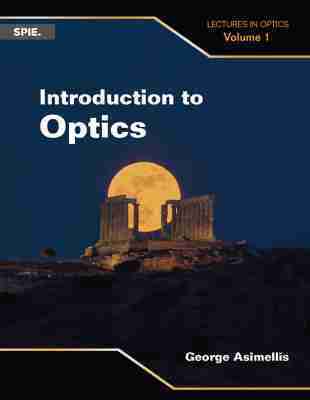
This first volume of the series Lectures in Optics introduces the simplest optical phenomena and the simplest optical instruments. Among these phenomena, rectilinear propagation, reflection, and refraction dominate the optical effects in nature and are essential to understanding the function of simple optical devices. Introduction to Optics presents the arguments relating to the nature of light and its propagation, the basic interactions between light and matter, and the energy aspect of light in relation to the quantitative measurement of visible radiation (photometry). It covers the fundamental laws governing reflection and refraction, as well as their applications in prisms and atmospheric phenomena. Simple optical instruments such as the pinhole camera, the human eye, the microscope, the telescope, and the photographic camera are covered. The text is accompanied by copious diagrams and striking photographs whose visual appeal entices readers to delve into the concepts. This book is suitable for various levels of instruction, from high school upper-level STEM classes to entry-level college optics 101 courses. Practice examples throughout the chapters reinforce an understanding of the presented material.
1 046 kr
Skickas inom 7-10 vardagar
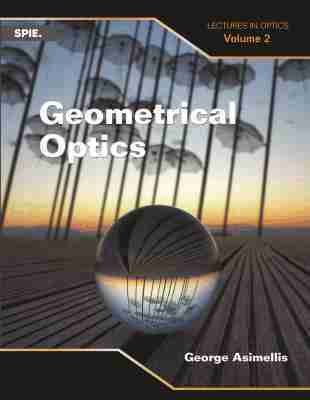
This second volume of the series Lectures in Optics develops a thorough presentation of geometrical optics effects. The book begins by discussing refraction and reflection off single surfaces, both flat and spherical. Presented next are the essential building elements, optical power and beam vergence, which are paramount in imaging because the incident vergence is added to the element’s power to produce the vergence leaving the optical element. Imaging definitions and formulation are covered next, followed by the power configurations and imaging arrangements possible with a single element, a single lens, and a mirror for real and virtual objects. Next, two more parameters are introduced: the extent of an element along the optical axis (thick lenses and lens systems) and the extent of an element perpendicular to the optical axis (stops and pupils). The way image quality is affected by the transverse restriction of light is then discussed, including resolution and image blur. Finally, the book introduces the concepts of optical aberrations as a consequence of a violation of the paraxial approximations. This book is suitable for all Geometrical Optics courses at college, graduate school, or professional school levels, such as physics, engineering, visual science, or optometry programs. Comprehensive practice examples, exercises, and quizzes throughout the chapters reinforce an understanding of the covered material.
1 159 kr
Skickas inom 7-10 vardagar
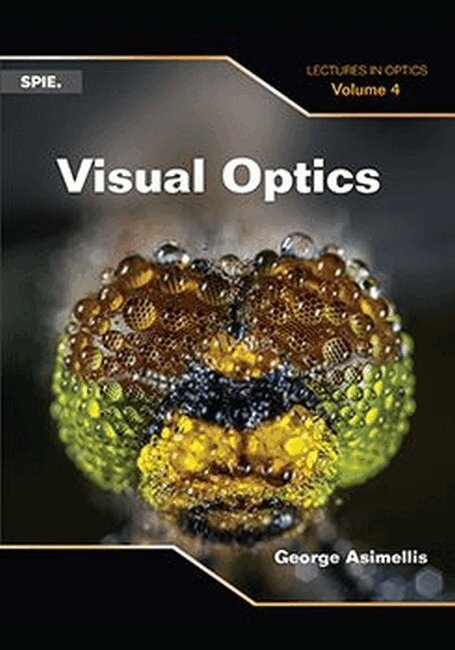
This fourth volume in the series Lectures in Optics provides comprehensive coverage of Visual Optics, which is the field of optics as applied to the function of the eye, a magnificent and highly complicated optical system. The optics part of vision in a 'well-performing' eye pertains to the effects responsible for formation and initial detection of the retinal image—the picture of the world as it is projected onto the photosensitive layer of the eye, the retina.The book presents the necessary concepts and definitions that explain retinal image properties, including aspects such as visual acuity and color perception. It discusses the optics of the eye in the presence of refractive errors such as myopia, hyperopia, and astigmatism, certain limitations to vision such as accommodation and near vision, and effects of aging on vision such as presbyopia and low vision. Finally, chapters devoted to ophthalmic optics and prismatic effects provide in-depth coverage of the optics involved in the correction of refractive vision disorders.
980 kr
Skickas inom 7-10 vardagar
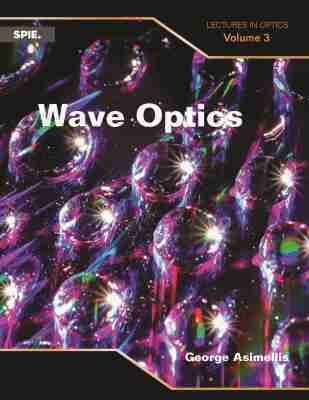
This third volume of the series Lectures in Optics provides a comprehensive presentation of the wave optics effects. The arguments underlying the concept of light—as either a wave or a particle—were part of the greatest revolution in physics, which, in the early 20th century, bore modern quantum and atomic optics. These fundamental advances set the stage for a crucial outcome, the laser. Many aspects of optics are strongly dependent on light’s wave nature, including polarization (owing to the vector nature of light), absorption and dispersion (owing to the complex nature of the refractive index and the quantum nature of the photon), as well as interference and diffraction. The latter two effects are perhaps the greatest manifestations of the wave nature of light and provide an excellent demonstration of the power and simplicity of Fourier optics. After covering all of these effects in detail, Wave Optics introduces the concepts involved in laser light and its applications, engaging a historical and didactic approach.This book is suitable for advanced levels of Wave Optics courses in physics and engineering curricula, graduate programs, and professional programs, including optometric education. Each chapter ends with a simple yet adequate summary of the main points, aiming to reinforce an understanding of the covered material. Selfassessment is facilitated by ample practice examples, exercises, and quizzes.