George B. Stauffer – författare
Visar alla böcker från författaren George B. Stauffer. Handla med fri frakt och snabb leverans.
8 produkter
8 produkter
Inbunden, Engelska, 2024
530 kr
Skickas inom 5-8 vardagar
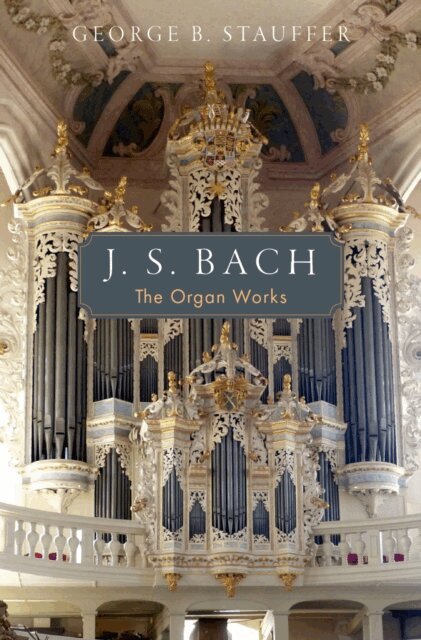
In the obituary that appeared soon after his death, Johann Sebastian Bach was described as "the world-famous organist" and "the greatest organist...we have ever had." In Hamburg, Dresden, and other big cities, Bach dazzled audiences with his organ playing, performing passages with his feet that many thought impossible for the hands. One eyewitness declared that he had never seen anything like it. His extant organ works--more than 250 chorale settings and free pieces--are filled with bold, dramatic passages and fully independent pedal parts. They represent the most important body of music in the organ repertoire and the only genre that Bach turned to continuously throughout his life, from his earliest efforts as a teenager in Ohrdruf to his final deathbed revisions as a cantor in Leipzig.In this new survey, leading musicologist George B. Stauffer traces the evolution of Bach's organ works within the broad spectrum of his development as a composer. With detailed discussions of the individual pieces, the book shows how Bach initially drew on contemporary models from Germany and France before evolving a personal idiom based on the concertos of Antonio Vivaldi. In Leipzig, he went still further, synthesizing national and historical styles to produce cosmopolitan masterpieces that exude sophistication and elegance. Serving as a backdrop to this growth was the emergence of the Central German pre-Romantic organ, which inspired Bach to write pieces with unique chamber-music, choral, and orchestral qualities. Stauffer follows these developments step-by-step, showing how Bach's unending quest for novelty, innovation, and refinement resulted in organ works that continue to reward and awe listeners today.
Häftad, Engelska, 2000
642 kr
Skickas inom 5-8 vardagar
The authors' new approach to learning two playing techniques offers a systematic method for mastering the modern, legato technique needed for organ music composed arter 1750, as well as an articulated technique for earlier works. The authors also present useful information on accompanying anthems and solos and on adapting piano and orchestral accompaniments to the organ.
E-bok
PDF, Engelska, 2024489 kr
Läs direkt efter köp
In the obituary that appeared soon after his death, Johann Sebastian Bach was described as "e;the world-famous organist"e; and "e;the greatest organist...we have ever had."e; In Hamburg, Dresden, and other big cities, Bach dazzled audiences with his organ playing, performing passages with his feet that many thought impossible for the hands. One eyewitness declared that he had never seen anything like it. His extant organ works--more than 250 chorale settings and free pieces--are filled with bold, dramatic passages and fully independent pedal parts. They represent the most important body of music in the organ repertoire and the only genre that Bach turned to continuously throughout his life, from his earliest efforts as a teenager in Ohrdruf to his final deathbed revisions as a cantor in Leipzig. In this new survey, leading musicologist George B. Stauffer traces the evolution of Bach's organ works within the broad spectrum of his development as a composer. With detailed discussions of the individual pieces, the book shows how Bach initially drew on contemporary models from Germany and France before evolving a personal idiom based on the concertos of Antonio Vivaldi. In Leipzig, he went still further, synthesizing national and historical styles to produce cosmopolitan masterpieces that exude sophistication and elegance. Serving as a backdrop to this growth was the emergence of the Central German pre-Romantic organ, which inspired Bach to write pieces with unique chamber-music, choral, and orchestral qualities. Stauffer follows these developments step-by-step, showing how Bach's unending quest for novelty, innovation, and refinement resulted in organ works that continue to reward and awe listeners today.
E-bok
Engelska, 2024489 kr
Läs direkt efter köp
In the obituary that appeared soon after his death, Johann Sebastian Bach was described as "e;the world-famous organist"e; and "e;the greatest organist...we have ever had."e; In Hamburg, Dresden, and other big cities, Bach dazzled audiences with his organ playing, performing passages with his feet that many thought impossible for the hands. One eyewitness declared that he had never seen anything like it. His extant organ works--more than 250 chorale settings and free pieces--are filled with bold, dramatic passages and fully independent pedal parts. They represent the most important body of music in the organ repertoire and the only genre that Bach turned to continuously throughout his life, from his earliest efforts as a teenager in Ohrdruf to his final deathbed revisions as a cantor in Leipzig. In this new survey, leading musicologist George B. Stauffer traces the evolution of Bach's organ works within the broad spectrum of his development as a composer. With detailed discussions of the individual pieces, the book shows how Bach initially drew on contemporary models from Germany and France before evolving a personal idiom based on the concertos of Antonio Vivaldi. In Leipzig, he went still further, synthesizing national and historical styles to produce cosmopolitan masterpieces that exude sophistication and elegance. Serving as a backdrop to this growth was the emergence of the Central German pre-Romantic organ, which inspired Bach to write pieces with unique chamber-music, choral, and orchestral qualities. Stauffer follows these developments step-by-step, showing how Bach's unending quest for novelty, innovation, and refinement resulted in organ works that continue to reward and awe listeners today.
Inbunden, Engelska, 2027
977 kr
Kommande
The six concertos that Johann Sebastian Bach presented to Christian Ludwig, Margrave of Brandenburg, in 1721 are among his most beloved works. First termed the "Brandenburg Concertos" by Philipp Spitta in his monumental nineteenth-century Bach biography, they have become household names. To many, they are the essence of Bach's music: irrepressibly upbeat, animatedly vibrant, and astonishingly contrapuntal. Together with Handel's Messiah and Vivaldi's The Four Seasons, they represent the very heart of the Baroque repertory.In this new and lively account, leading musicologist George B. Stauffer takes the reader into the world of the Brandenburg Concertos. He begins by tracing the emergence of the instrumental concerto in Italy toward the end of the seventeenth century before describing Bach's compositional epiphany upon discovering the concertos of Antonio Vivaldi around 1713, an encounter that resulted in the Brandenburg project eight years later. Stauffer then delves into the music itself, looking at the diverse ensembles and sometimes unusual instruments (such as the piccolo violin and echo flute) of each work. He analyzes the individual movements in detail, using diagrams and audio examples to supplement the discussion. He concludes by exploring Bach's recycling of Brandenburg music in his cantatas and instrumental works and the slow posthumous rise of the collection, which languished in obscurity for almost a century before achieving global prominence in our time.Written in an accessible style for general readers as well as specialists, Bach's Brandenburg Concertos opens the door to understanding and appreciating these extraordinary pieces and the magical effect they have on performers and listeners.
Häftad, Engelska, 2027
193 kr
Kommande
The six concertos that Johann Sebastian Bach presented to Christian Ludwig, Margrave of Brandenburg, in 1721 are among his most beloved works. First termed the "Brandenburg Concertos" by Philipp Spitta in his monumental nineteenth-century Bach biography, they have become household names. To many, they are the essence of Bach's music: irrepressibly upbeat, animatedly vibrant, and astonishingly contrapuntal. Together with Handel's Messiah and Vivaldi's The Four Seasons, they represent the very heart of the Baroque repertory.In this new and lively account, leading musicologist George B. Stauffer takes the reader into the world of the Brandenburg Concertos. He begins by tracing the emergence of the instrumental concerto in Italy toward the end of the seventeenth century before describing Bach's compositional epiphany upon discovering the concertos of Antonio Vivaldi around 1713, an encounter that resulted in the Brandenburg project eight years later. Stauffer then delves into the music itself, looking at the diverse ensembles and sometimes unusual instruments (such as the piccolo violin and echo flute) of each work. He analyzes the individual movements in detail, using diagrams and audio examples to supplement the discussion. He concludes by exploring Bach's recycling of Brandenburg music in his cantatas and instrumental works and the slow posthumous rise of the collection, which languished in obscurity for almost a century before achieving global prominence in our time.Written in an accessible style for general readers as well as specialists, Bach's Brandenburg Concertos opens the door to understanding and appreciating these extraordinary pieces and the magical effect they have on performers and listeners.
Häftad, Engelska, 2000
279 kr
Skickas inom 10-15 vardagar
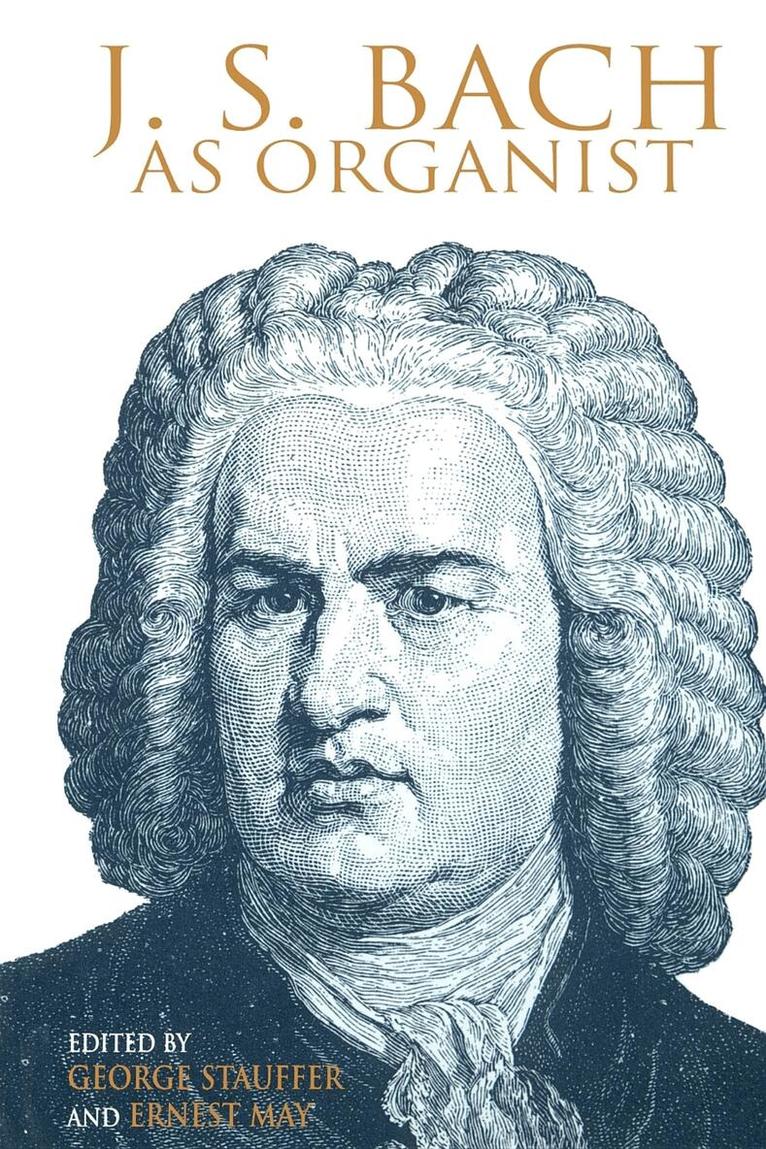
" . . . a valuable book of scholarly yet highly readable studies . . . every organist and anyone interested in the music of J. S. Bach should have it." —Early Keyboard Journal" . . . a very perceptive and informative guide . . . " —Early Music" . . . this book is a must." —The American Organist" . . . invaluable and entertaining . . . " —American Music Teacher" . . . among the most important and accomplished studies on eighteenth-century performance. Its comprehensiveness, clarity, and scholarship make it indispensable." —Performance Practice ReviewIn J. S. Bach as Organist, specialists from six countries explore Bach's relationship to his favorite instrument during all periods of his career. J. S. Bach as Organist is a book for scholars, performers, and students. Authoritative and wide-ranging.
Häftad, Engelska, 2004
547 kr
Skickas inom 5-8 vardagar
In this book George B. Stauffer explores the music and complex history of Bach’s last and possibly greatest masterpiece. Stauffer examines the B-Minor Mass in greater detail than ever before, demonstrating for the first time Bach’s reliance on contemporary models from the Dresden Mass repertory and his brilliantly innovative methods of unifying his immense composition. Musicians, music scholars, students, and music lovers will find in this engagingly written book a wealth of information about Bach’s extraordinary choral work.Stauffer surveys the roots of the Mass Ordinary text and its treatment in settings known to Bach. He looks at the events that led to the writing of the B-Minor Mass and places the work within the context of the composer’s late style. In three deeply informed chapters, Stauffer considers the individual sections of the Mass—the Kyrie and Gloria, the Credo, and the Sanctus and Agnus Dei. The book also traces the history of the work after Bach’s death, addresses specific issues of performance practice, and investigates the qualities that give the B-Minor Mass its universal appeal.