George C Frison - Böcker
Visar alla böcker från författaren George C Frison. Handla med fri frakt och snabb leverans.
6 produkter
6 produkter
593 kr
Skickas inom 10-15 vardagar
George Frison’s Prehistoric Hunters of the High Plains has been the standard text on plains prehistory since its first publication in 1978, influencing generations of archaeologists. Now, a third edition of this classic work is available for scholars, students, and avocational archaeologists. Thorough and comprehensive, extensively illustrated, the book provides an introduction to the archaeology of the more than 13,000 year long history of the western Plains and the adjacent Rocky Mountains. Reflecting the boom in recent archaeological data, it reports on studies at a wide array of sites from deep prehistory to recent times examining the variability in the archeological record as well as in field, analytical, and interpretive methods. The 3rd edition brings the book up to date in a number of significant areas, as well as addressing several topics inadequately developed in previous editions.
636 kr
Skickas inom 5-8 vardagar
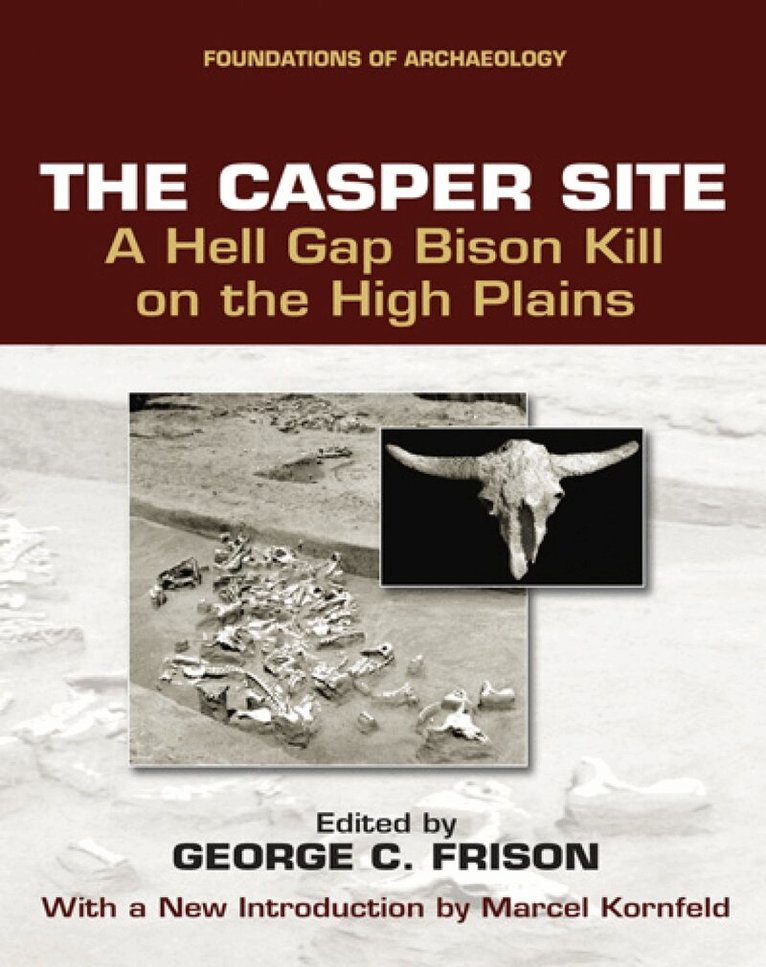
George Frison’s report on the 10,000-year-old Casper Site helped establish how large animal communal kill sites should be excavated, analyzed, and reported. With his background in ranching and hunting, Frison knows more about large animals than any other archaeologist. In The Casper Site Frison began to share that knowledge as well as the techniques of bone bed excavation; that, and the book’s interdisciplinary approach, make it a landmark in paleoindian archaeology and faunal analysis. As Marcel Kornfeld writes in his new introduction, 'One of Frison’s outstanding contributions to Great Plains prehistory has been in the arena of bison studies and bone beds in particular, and Casper is one of its finest examples.' The first edition of this book was published by Academic Press in 1975, and has been out of print for some years.
Agate Basin Site
A Record of the Paleoindian Occupation of the Northwestern High Plains
Häftad, Engelska, 2015
716 kr
Skickas inom 5-8 vardagar
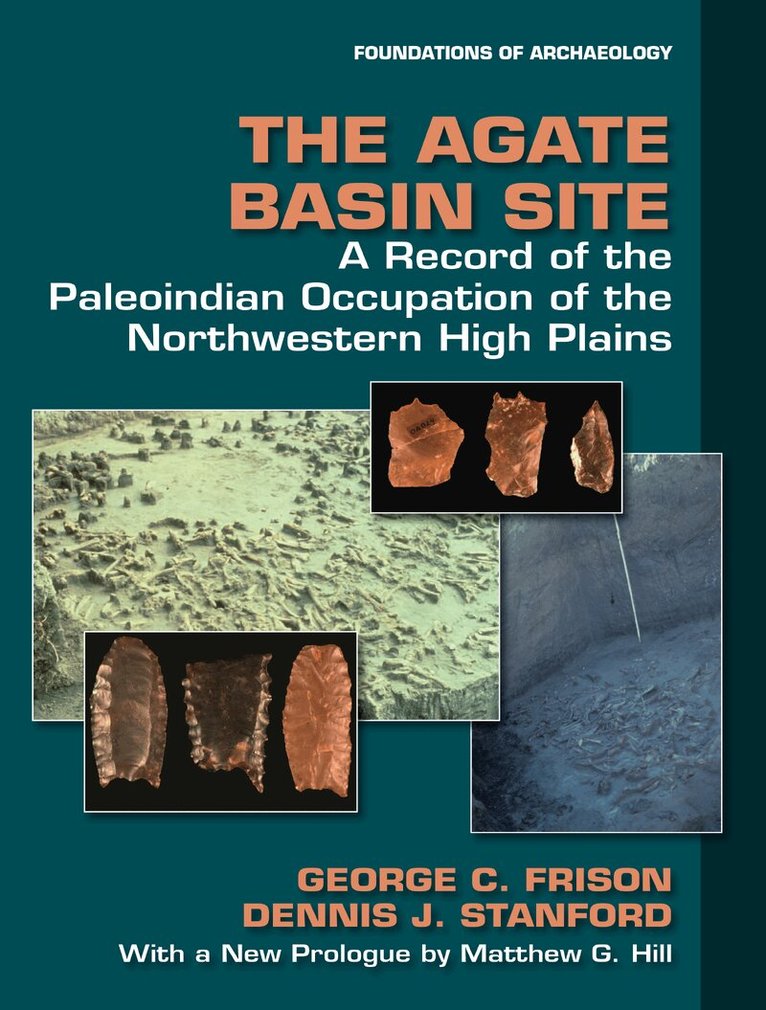
George Frison and Dennis Stanford's Agate Basin monograph is not only a classic of Plains paleoindian archaeology, but also of multidisciplinary research, geoarchaeology, zooarchaeology, and experimental archaeology. Lucid presentation of meticulously excavated and analyzed sediments, bones and artifacts convey an unmatched sense of the sights, sounds and smells of Paleoindian life on the High Plains—from brutal winters and blistering summers, to killing and butchering bison, and to making lethal weaponry. As Matthew Hill writes in his new prologue, 'Not merely an important volume of the Frison canon, Agate Basin stands as a foundational document in modern Americanist archaeology and a major accomplishment in American science.' Originally published by Academic Press in 1982
2 426 kr
Skickas inom 10-15 vardagar
George Frison’s Prehistoric Hunters of the High Plains has been the standard text on plains prehistory since its first publication in 1978, influencing generations of archaeologists. Now, a third edition of this classic work is available for scholars, students, and avocational archaeologists. Thorough and comprehensive, extensively illustrated, the book provides an introduction to the archaeology of the more than 13,000 year long history of the western Plains and the adjacent Rocky Mountains. Reflecting the boom in recent archaeological data, it reports on studies at a wide array of sites from deep prehistory to recent times examining the variability in the archeological record as well as in field, analytical, and interpretive methods. The 3rd edition brings the book up to date in a number of significant areas, as well as addressing several topics inadequately developed in previous editions.
583 kr
Skickas inom 11-20 vardagar
Sometimes childhood events can shape a person’s destiny. Such was the case for George Frison. His father’s accidental death meant that Frison was raised by his grandparents, thus experiencing life on a ranch instead of the small town childhood he otherwise would have had. He was fascinated by the wealth of prehistoric artifacts on the ranch; eventually, this interest prompted him to change his life’s course at age thirty-seven.In this memoir, Frison shares his work and his atypical journey from rancher to professor and archaeologist. Herding cattle, chopping watering holes in sub-zero weather, and guiding hunters in the fall were very different than teaching classes, performing laboratory work, and attending faculty and committee meetings in air-conditioned buildings. But his practical and observational experience around both domestic and wild animals proved a valuable asset to his research. His knowledge of specific animal behaviours added insight to his studies of the Paleoindians of the Northern Plains as he sought to understand how their stone tools were used most effectively for hunting and how bison jumps, mammoth kills, and sheep traps actually worked. Frison’s careful research and strong involvement in the scholarly and organisational aspects of archaeology made him influential not only as an authority on the prehistory of the Northern Plains but also as a leader in Wyoming archaeology and North American archaeology at large.This book will appeal to both the professional and the lay reader with interests in archaeology, anthropology, paleontology, plains history, animal science, hunting, or game management. Frison’s shift from ranching to academic archaeology serves as a reminder that you are never too old to change your life.
Wardell Buffalo Trap 48 SU 301
Communal Procurement in the Upper Green River Basin, Wyoming
Häftad, Engelska, 1973
109 kr
Skickas inom 7-10 vardagar
The Late Prehistoric buffalo trap and meat-processing area known as the Wardell site is in Sublette County, in western Wyoming. In this volume, George C. Frison reports on the 1970–1971 excavation at the site. He describes the artifact assemblage and botanical materials and offers radiocarbon dates and an archaeological interpretation of the site. Contribution by Charles A. Reher.