George Hutchinson - Böcker
Visar alla böcker från författaren George Hutchinson. Handla med fri frakt och snabb leverans.
11 produkter
11 produkter
460 kr
Skickas inom 7-10 vardagar
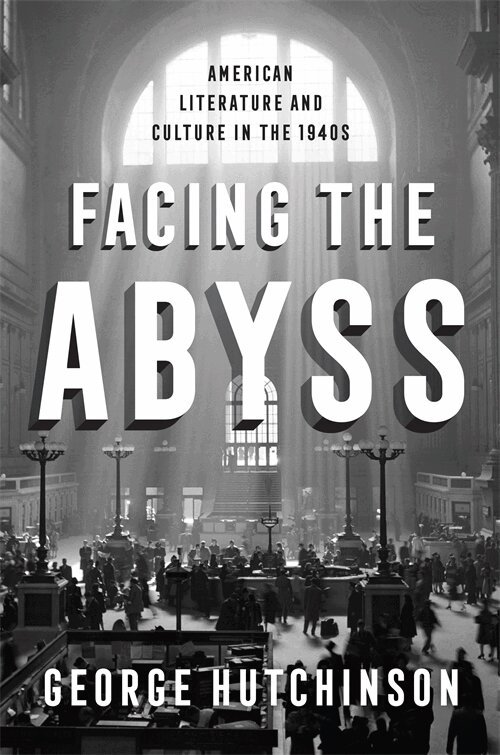
Mythologized as the era of the "good war" and the "Greatest Generation," the 1940s are frequently understood as a more heroic, uncomplicated time in American history. Yet just below the surface, a sense of dread, alienation, and the haunting specter of radical evil permeated American art and literature. Writers returned home from World War II and gave form to their disorienting experiences of violence and cruelty. They probed the darkness that the war opened up and confronted bigotry, existential guilt, ecological concerns, and fear about the nature and survival of the human race. In Facing the Abyss, George Hutchinson offers readings of individual works and the larger intellectual and cultural scene to reveal the 1940s as a period of profound and influential accomplishment. Facing the Abyss examines the relation of aesthetics to politics, the idea of universalism, and the connections among authors across racial, ethnic, and gender divisions. Modernist and avant-garde styles were absorbed into popular culture as writers and artists turned away from social realism to emphasize the process of artistic creation.Hutchinson explores a range of important writers, from Saul Bellow and Mary McCarthy to Richard Wright and James Baldwin. African American and Jewish novelists critiqued racism and anti-Semitism, women writers pushed back on the misogyny unleashed during the war, and authors such as Gore Vidal and Tennessee Williams reflected a new openness in the depiction of homosexuality. The decade also witnessed an awakening of American environmental and ecological consciousness. Hutchinson argues that despite the individualized experiences depicted in these works, a common belief in art's ability to communicate the universal in particulars united the most important works of literature and art during the 1940s. Hutchinson's capacious view of American literary and cultural history masterfully weaves together a wide range of creative and intellectual expression into a sweeping new narrative of this pivotal decade.
337 kr
Kommande
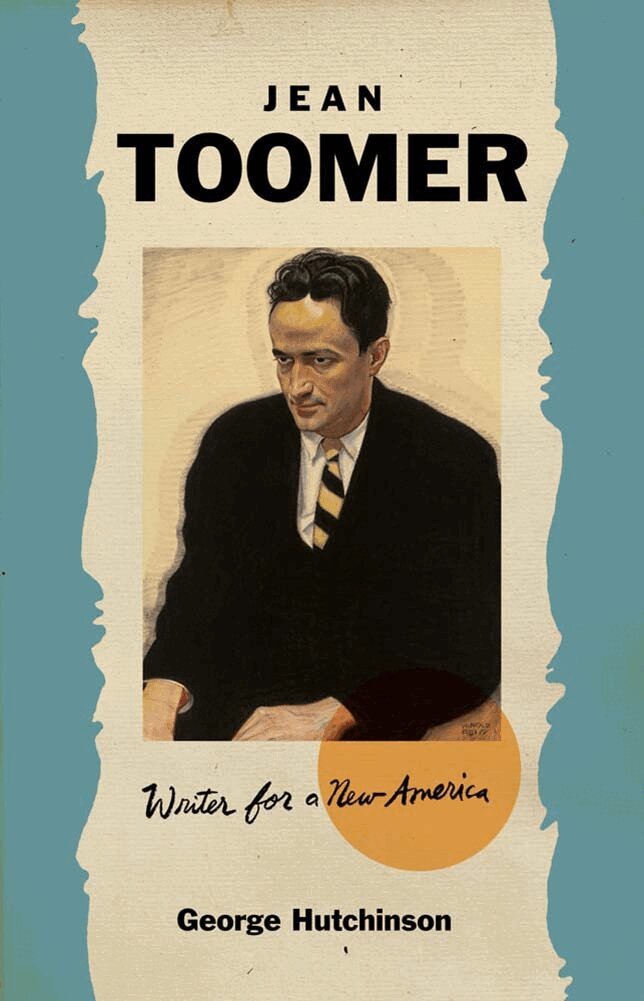
A critical biography of Harlem Renaissance writer Jean Toomer and his lifelong struggle to transcend race, by an award-winning author The poet and novelist Jean Toomer (1894–1967) was among the most influential figures of the Harlem Renaissance, inspiring generations of Black writers with his 1923 modernist masterwork Cane. Yet his mission was to awaken Americans to the formation of a new “American” race that would supersede the “old” racial categories. Award-winning biographer George Hutchinson reveals how Toomer’s racial theory shaped both his literary genius and his personal struggles. Born into the Black elite in Washington, D.C., Toomer was highly sensitive to the color line and able to move across it. Toomer engaged in a lifelong struggle to be released from this system, reinventing himself racially, spiritually, and artistically not as a Black man but as a “superman.” From his early attraction to physical culture through his search for Cosmic Consciousness, Toomer aspired to shape a new modern sensibility alongside his bohemian contemporaries Georgia O’Keeffe, Alfred Stieglitz, Langston Hughes, and Nella Larsen. Yet his refusal to identify as Black, in tandem with his messianic calling, came at the cost of his literary career and the women who loved him. Hutchinson shows how the tortures of American racism shaped Toomer’s life—and how the struggle to birth a new “American” identity marks his art.
917 kr
Skickas inom 7-10 vardagar
From the white editorial authentication of slave narratives, to the cultural hybridity of the Harlem Renaissance, to the overtly independent publications of the Black Arts Movement, to the commercial power of Oprah's Book Club, African American textuality has been uniquely shaped by the contests for cultural power inherent in literary production and distribution. Always haunted by the commodification of blackness, African American literary production interfaces with the processes of publication and distribution in particularly charged ways. An energetic exploration of the struggles and complexities of African American print culture, this collection ranges across the history of African American literature, and the authors have much to contribute on such issues as editorial and archival preservation, canonization, and the "packaging" and repackaging of black-authored texts. Publishing Blackness aims to project African Americanist scholarship into the discourse of textual scholarship, provoking further work in a vital area of literary study.
356 kr
Skickas inom 7-10 vardagar
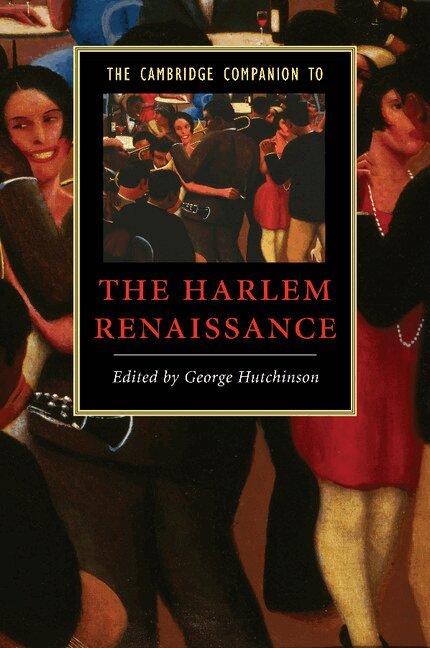
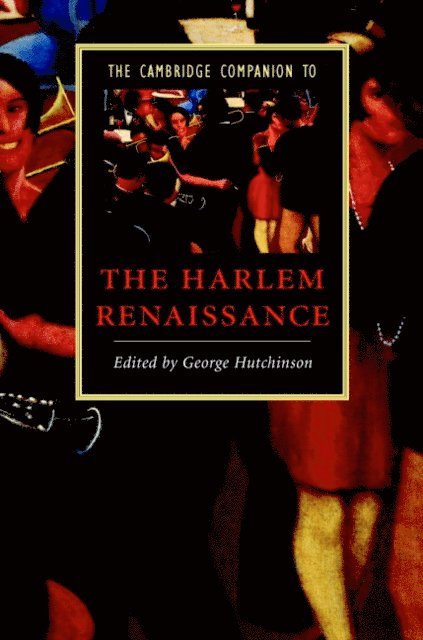
The Harlem Renaissance (1918-1937) was the most influential single movement in African American literary history. Its key figures include W. E. B. Du Bois, Nella Larsen, Zora Neale Hurston, Claude McKay, and Langston Hughes. The movement laid the groundwork for all later African American literature, and had an enormous impact on later black literature world-wide. With chapters by a wide range of well-known scholars, this 2007 Companion is an authoritative and engaging guide to the movement. It first discusses the historical contexts of the Harlem Renaissance, both national and international; then presents original discussions of a wide array of authors and texts; and finally treats the reputation of the movement in later years. Giving full play to the disagreements and differences that energized the renaissance, this Companion presents a set of new readings encouraging further exploration of this dynamic field.
1 356 kr
Skickas inom 7-10 vardagar
The Harlem Renaissance (1918-1937) was the most influential single movement in African American literary history. Its key figures include W. E. B. Du Bois, Nella Larsen, Zora Neale Hurston, Claude McKay, and Langston Hughes. The movement laid the groundwork for all later African American literature, and had an enormous impact on later black literature world-wide. With chapters by a wide range of well-known scholars, this 2007 Companion is an authoritative and engaging guide to the movement. It first discusses the historical contexts of the Harlem Renaissance, both national and international; then presents original discussions of a wide array of authors and texts; and finally treats the reputation of the movement in later years. Giving full play to the disagreements and differences that energized the renaissance, this Companion presents a set of new readings encouraging further exploration of this dynamic field.
463 kr
Skickas inom 10-15 vardagar
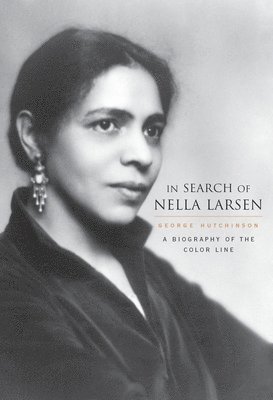
Born to a Danish seamstress and a black West Indian cook in one of the Western Hemisphere's most infamous vice districts, Nella Larsen (1891-1964) lived her life in the shadows of America's racial divide. She wrote about that life, was briefly celebrated in her time, then was lost to later generations--only to be rediscovered and hailed by many as the best black novelist of her generation. In his search for Nella Larsen, the "mystery woman of the Harlem Renaissance," George Hutchinson exposes the truths and half-truths surrounding this central figure of modern literary studies, as well as the complex reality they mask and mirror. His book is a cultural biography of the color line as it was lived by one person who truly embodied all of its ambiguities and complexities.Author of a landmark study of the Harlem Renaissance, Hutchinson here produces the definitive account of a life long obscured by misinterpretations, fabrications, and omissions. He brings Larsen to life as an often tormented modernist, from the trauma of her childhood to her emergence as a star of the Harlem Renaissance. Showing the links between her experiences and her writings, Hutchinson illuminates the singularity of her achievement and shatters previous notions of her position in the modernist landscape. Revealing the suppressions and misunderstandings that accompany the effort to separate black from white, his book addresses the vast consequences for all Americans of color-line culture's fundamental rule: race trumps family.
418 kr
Skickas inom 10-15 vardagar
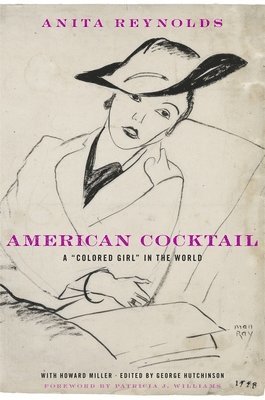
This is the rollicking, never-before-published memoir of a fascinating woman with an uncanny knack for being in the right place in the most interesting times. Of racially mixed heritage, Anita Reynolds was proudly African American but often passed for Indian, Mexican, or Creole. Actress, dancer, model, literary critic, psychologist, but above all free-spirited provocateur, she was, as her Parisian friends nicknamed her, an “American cocktail.”One of the first black stars of the silent era, she appeared in Hollywood movies with Rudolph Valentino, attended Charlie Chaplin’s anarchist meetings, and studied dance with Ruth St. Denis. She moved to New York in the 1920s and made a splash with both Harlem Renaissance elites and Greenwich Village bohemians. An émigré in Paris, she fell in with the Left Bank avant-garde, befriending Antonin Artaud, Man Ray, and Pablo Picasso. Next, she took up residence as a journalist in Barcelona during the Spanish Civil War and witnessed firsthand the growing menace of fascism. In 1940, as the Nazi panzers closed in on Paris, Reynolds spent the final days before the French capitulation as a Red Cross nurse, afterward making a mad dash for Lisbon to escape on the last ship departing Europe.In prose that perfectly captures the globetrotting nonchalance of its author, American Cocktail presents a stimulating, unforgettable self-portrait of a truly extraordinary woman.
740 kr
Skickas inom 7-10 vardagar
It wasn’t all black or white. It wasn’t a vogue. It wasn’t a failure. By restoring interracial dimensions left out of accounts of the Harlem Renaissance—or blamed for corrupting it—George Hutchinson transforms our understanding of black (and white) literary modernism, interracial literary relations, and twentieth-century cultural nationalism in the United States.What has been missing from literary histories of the time is a broader sense of the intellectual context of the Harlem Renaissance, and Hutchinson supplies that here: Boas’s anthropology, Park’s sociology, various strands of pragmatism and cultural nationalism—ideas that shaped the New Negro movement and the literary field, where the movement flourished. Hutchinson tracks the resulting transformation of literary institutions and organizations in the 1920s, offering a detailed account of the journals and presses, black and white, that published the work of the “New Negroes.” This cultural excavation discredits bedrock assumptions about the motives of white interest in the renaissance, and about black relationships to white intellectuals of the period. It also allows a more careful investigation than ever before of the tensions among black intellectuals of the 1920s. Hutchinson’s analysis shows that the general expansion of literature and the vogue of writing cannot be divorced from the explosion of black literature often attributed to the vogue of the New Negro—any more than the growing sense of “Negro” national consciousness can be divorced from expanding articulations and permutations of American nationality. The book concludes with the first full-scale interpretation of the landmark anthology The New Negro.A courageous work that exposes the oversimplifications and misrepresentations of popular readings of the Harlem Renaissance, this book reveals the truly composite nature of American literary culture.
391 kr
Skickas inom 5-8 vardagar
266 kr
Skickas inom 5-8 vardagar
396 kr
Skickas inom 3-6 vardagar