George K. Behlmer - Böcker
Visar alla böcker från författaren George K. Behlmer. Handla med fri frakt och snabb leverans.
3 produkter
3 produkter
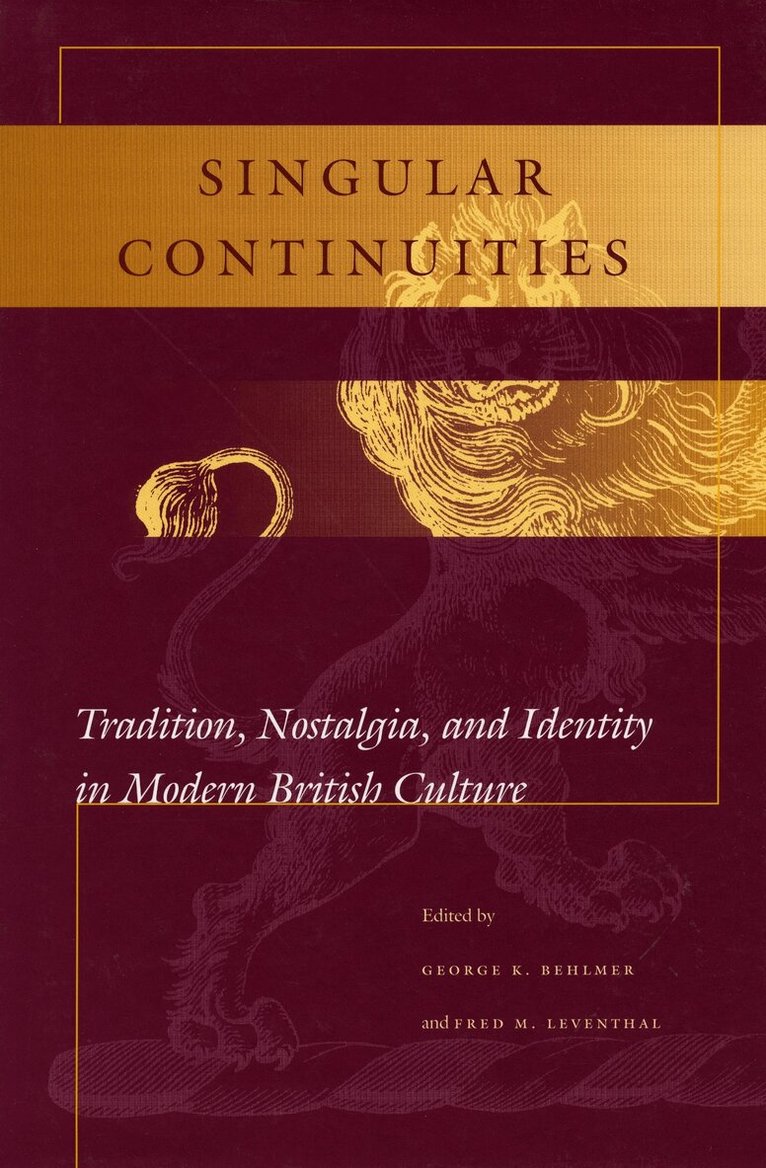
Singular Continuities
Tradition, Nostalgia, and Identity in Modern British Culture
Inbunden, Engelska, 2000
820 kr
Skickas inom 7-10 vardagar
This volume explores the appropriation of the past in modern British culture. Today, at the beginning of a new millennium, the mass media would have us believe that Britain is suffering an identity crisis. If the pundits are correct, we are witnessing a manipulation of British history at the hands of those keen to project a new national image—or in the language of commodification, to "rebrand" Britain.The twelve essays in Singular Continuities take a different tack. They argue that to distinguish between "the new" and "the traditional" in modern English culture often draws a false dichotomy, that British-ness, in fact, has been the product of continuous creation throughout the nineteenth and twentieth centuries. The contributors strongly suggest that "tradition" derives from constant reimagining, if not from calculated invention.Such reimagining has often assumed surprising forms. Thus, for example, at the end of Victoria's reign, an "enemy" culture—that of the Boer farmer—was recruited to the British ideal of pastoral self-sufficiency. Similarly, the iconoclastic surrealism of the interwar artist Humphrey Jennings was actually suffused with a celebratory sense of the British past. And during the 1970s and 1980s, working-class autobiography eulogized not the triumph of character over circumstance but rather an industrial nostalgia that recalled a cityscape where slum neighbors once knew their turf and the people who occupied it. Related themes are pursued in essays that range from the demonizing of Irish immigrants in early-Victorian London to the impact of reading on suffrage activism, from the professionalization of social work to the selling of the past in Thatcher's Britain.What has been termed "heritage-bashing" finds few echoes in this collection. "Heritage" is a remarkably protean notion, as useful to the political left as to the right, to feminists as well as to would-be patriarchs. It is the malleable nature of British cultural continuity that makes its heritage "singular."
1 415 kr
Skickas inom 7-10 vardagar
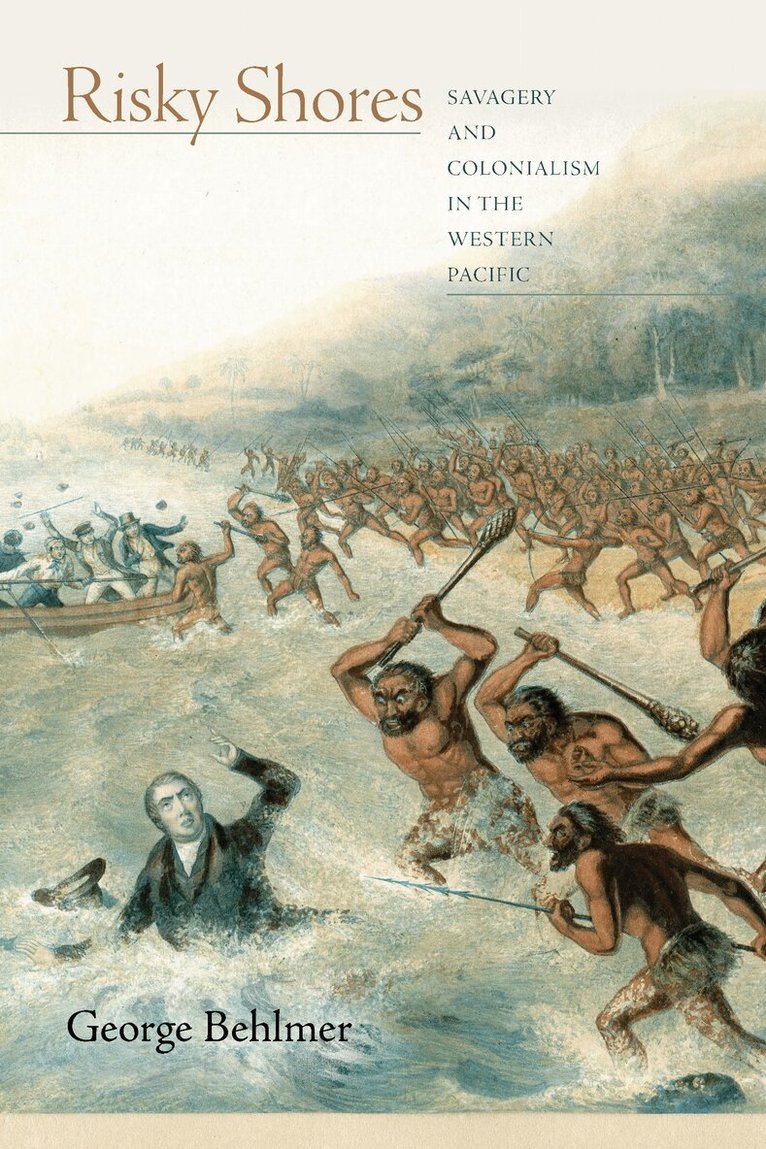
Why did the so-called "Cannibal Isles" of the Western Pacific fascinate Europeans for so long? Spanning three centuries—from Captain James Cook's death on a Hawaiian beach in 1779 to the end of World War II in 1945—this book considers the category of "the savage" in the context of British Empire in the Western Pacific, reassessing the conduct of Islanders and the English-speaking strangers who encountered them. Sensationalized depictions of Melanesian "savages" as cannibals and headhunters created a unifying sense of Britishness during the nineteenth and early twentieth centuries. These exotic people inhabited the edges of empire—and precisely because they did, Britons who never had and never would leave the home islands could imagine their nation's imperial reach.George Behlmer argues that Britain's early visitors to the Pacific—mainly cartographers and missionaries—wielded the notion of savagery to justify their own interests. But savage talk was not simply a way to objectify and marginalize native populations: it would later serve also to emphasize the fragility of indigenous cultures. Behlmer by turns considers cannibalism, headhunting, missionary activity, the labor trade, and Westerners' preoccupation with the perceived "primitiveness" of indigenous cultures, arguing that British representations of savagery were not merely straightforward expressions of colonial power, but also belied home-grown fears of social disorder.
332 kr
Skickas inom 7-10 vardagar
Why did the so-called "Cannibal Isles" of the Western Pacific fascinate Europeans for so long? Spanning three centuries—from Captain James Cook's death on a Hawaiian beach in 1779 to the end of World War II in 1945—this book considers the category of "the savage" in the context of British Empire in the Western Pacific, reassessing the conduct of Islanders and the English-speaking strangers who encountered them. Sensationalized depictions of Melanesian "savages" as cannibals and headhunters created a unifying sense of Britishness during the nineteenth and early twentieth centuries. These exotic people inhabited the edges of empire—and precisely because they did, Britons who never had and never would leave the home islands could imagine their nation's imperial reach.George Behlmer argues that Britain's early visitors to the Pacific—mainly cartographers and missionaries—wielded the notion of savagery to justify their own interests. But savage talk was not simply a way to objectify and marginalize native populations: it would later serve also to emphasize the fragility of indigenous cultures. Behlmer by turns considers cannibalism, headhunting, missionary activity, the labor trade, and Westerners' preoccupation with the perceived "primitiveness" of indigenous cultures, arguing that British representations of savagery were not merely straightforward expressions of colonial power, but also belied home-grown fears of social disorder.