George Roussos – författare
Visar alla böcker från författaren George Roussos. Handla med fri frakt och snabb leverans.
12 produkter
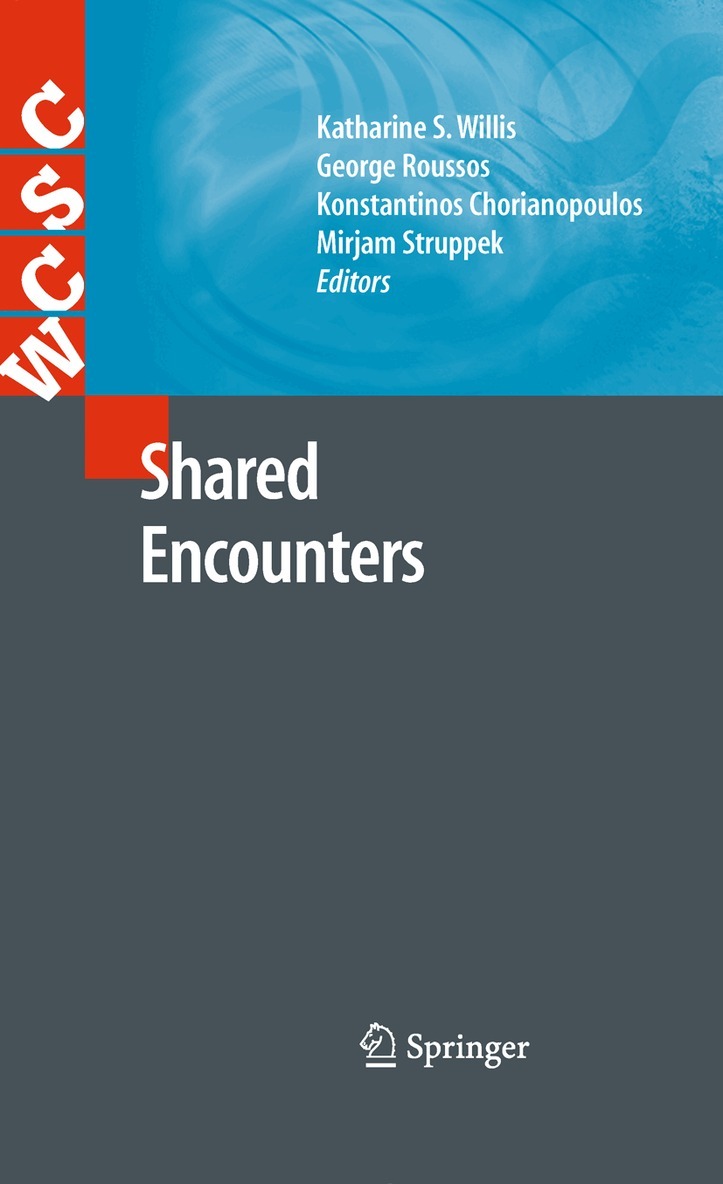
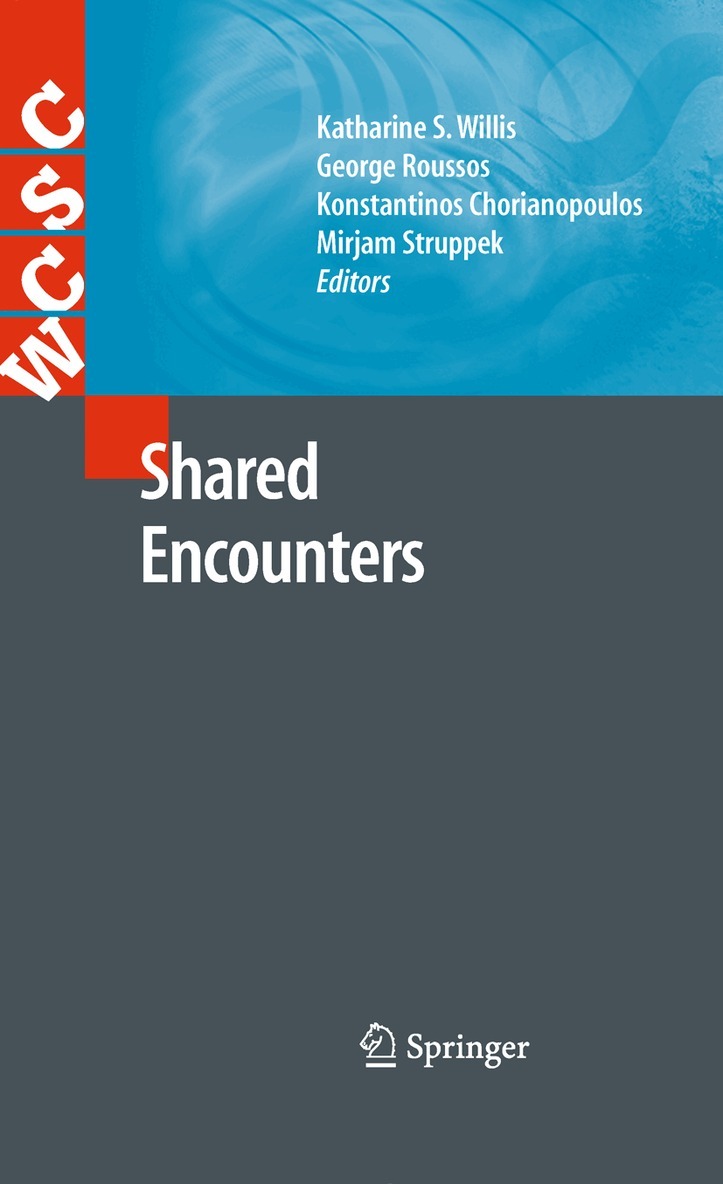
Shared Encounters
Av Katharine S. Willis, George Roussos m. fl.
Häftad, 2012
1641 kr
Lägg i varukorg
Every day we share encounters with others as we inhabit the space around us. In offering insights and knowledge on this increasingly important topic, this book introduces a range of empirical and theoretical approaches to the study of shared encounters. It highlights the multifaceted nature of …
Enriching Urban Spaces with Ambient computing, the Internet of Things, and Smart City Design
Av Shin'ichi Konomi, George Roussos
Inbunden, 2016
2834 kr
Lägg i varukorg
Enriching Urban Spaces with Ambient Computing, the Internet of Things, and Smart City Design
Av George Roussos, Shin'ichi Konomi
E-bok, 2016
3357 kr
Lägg i varukorg
Enriching Urban Spaces with Ambient Computing, the Internet of Things, and Smart City Design
Av George Roussos, Shin'ichi Konomi
E-bok, 2016
3250 kr
Lägg i varukorg
Ubiquitous and Pervasive Commerce
New Frontiers for Electronic Business
Häftad, 2005
1096 kr
Lägg i varukorg
At the core of this book is the interplay between technological and business innovation and social practice. Although the bene?ts of 50 years of rapid advances in digital telecommunications and computing technology have not bene?ted everyone equally, they have nevertheless transformed almost every …
Ubiquitous and Pervasive Commerce
New Frontiers for Electronic Business
E-bok, 2006
1502 kr
Lägg i varukorg
At the core of this book is the interplay between technological and business innovation and social practice. Although the bene?ts of 50 years of rapid advances in digital telecommunications and computing technology have not bene?ted everyone equally, they have nevertheless transformed almost every …
Networked RFID
Systems, Software and Services
Av George Roussos, A. J. Sammes
Häftad, 2008
1129 kr
Lägg i varukorg
The birth of RFID technology is credited to the 1948 research paper by H. Stockman on “Communication by Means of Re?ected Power” [109]. After describing the main principle of communication by re?ection and reporting his experiments, he concluded that “Evidently, considerable research and …
Networked RFID
Systems, Software and Services
E-bok, 2008
1502 kr
Lägg i varukorg
The birth of RFID technology is credited to the 1948 research paper by H. Stockman on “Communication by Means of Re?ected Power” [109]. After describing the main principle of communication by re?ection and reporting his experiments, he concluded that “Evidently, considerable research and …
Shared Encounters
Av Katharine S. Willis, George Roussos m. fl.
Inbunden, 2009
1641 kr
Lägg i varukorg
Every day we share encounters with others as we inhabit the space around us. In offering insights and knowledge on this increasingly important topic, this book introduces a range of empirical and theoretical approaches to the study of shared encounters. It highlights the multifaceted nature of …
Shared Encounters
Av Mirjam Struppek, Konstantinos Chorianopoulos m. fl.
E-bok, 2009
2174 kr
Lägg i varukorg
Every day we share encounters with others as we inhabit the space around us. In offering insights and knowledge on this increasingly important topic, this book introduces a range of empirical and theoretical approaches to the study of shared encounters. It highlights the multifaceted nature of …
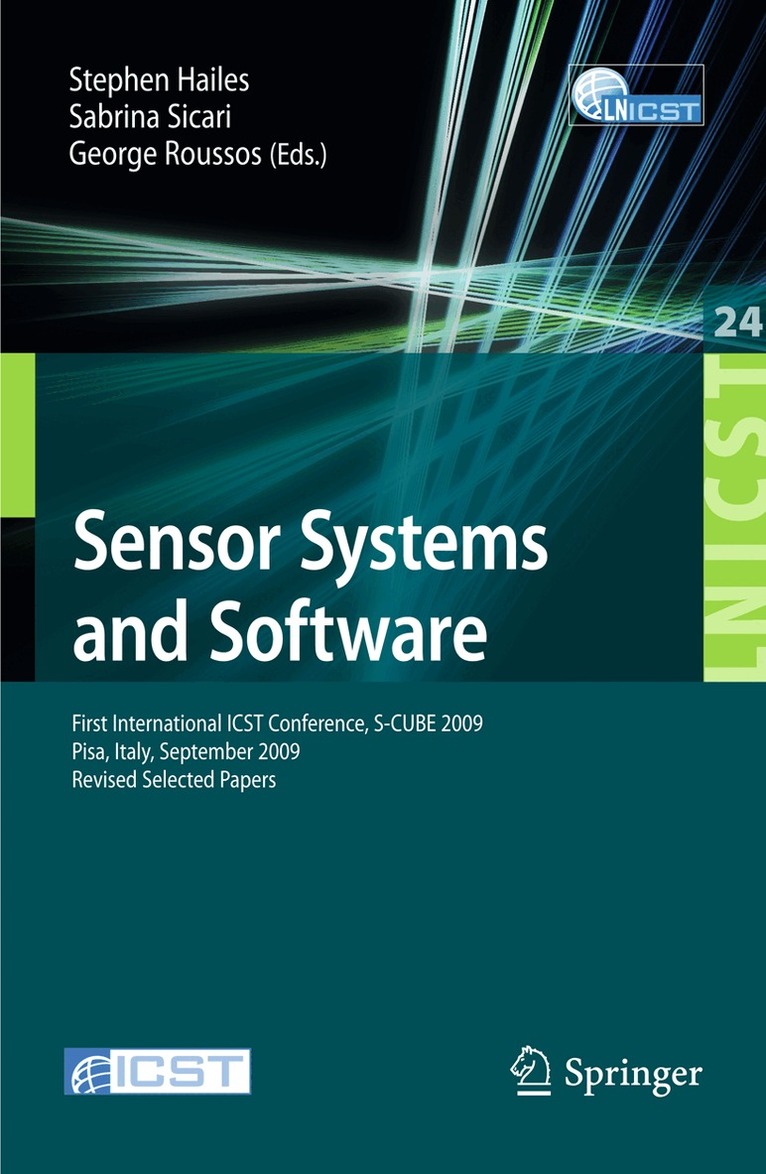
Sensor Systems and Software
First International ICST Conference, S-CUBE 2009, Pisa, Italy, September 7-9, 2009, Revised Selected Papers
Av Stephen Hailes, Sabrina Sicari m. fl.
Häftad, 2010
567 kr
Lägg i varukorg
The First International ICST Conference on Sensor Systems and Software (S-cube 2009) was held during 7–8 September in Pisa, Italy. This new international conference was dedicated to addressing the research challenges facing system dev- opment and software support for systems based on wireless …
Sensor Systems and Software
First International ICST Conference, S-CUBE 2009, Pisa, Italy, September 7-9, 2009, Revised Selected Papers
Av George Roussos, Sabrina Sicari m. fl.
E-bok, 2009
732 kr
Lägg i varukorg
The First International ICST Conference on Sensor Systems and Software (S-cube 2009) was held during 7–8 September in Pisa, Italy. This new international conference was dedicated to addressing the research challenges facing system dev- opment and software support for systems based on wireless …