George W. Stocking - Böcker
Visar alla böcker från författaren George W. Stocking. Handla med fri frakt och snabb leverans.
12 produkter
12 produkter
262 kr
Skickas inom 10-15 vardagar
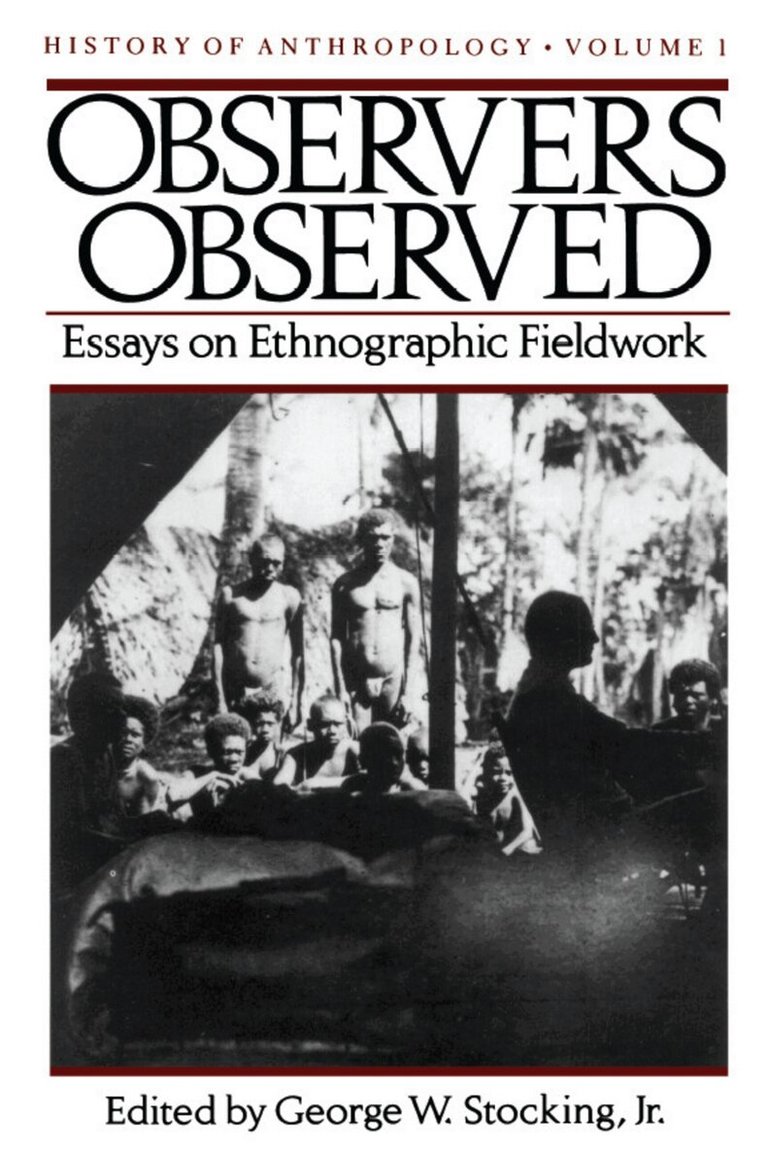
History of Anthropology is a series of annual volumes, each of which treats an important theme in the history of anthropological inquiry. For this initial volume, the editors have chosen to focus on the modern cultural anthropology: intensive fieldwork by “participant observation.” Observers Observed includes essays by a distinguished group of historians and anthropologists covering major episodes in the history of ethnographic fieldwork in the American, British, and French traditions since 1880. As the first work to investigate the development of modern fieldwork in a serious historical way, this collection will be of great interest and value to anthropologist, historians of science and the social sciences, and the general readers interested in the way in which modern anthropologists have perceived and described the cultures of “others.”
262 kr
Skickas inom 10-15 vardagar
262 kr
Skickas inom 10-15 vardagar
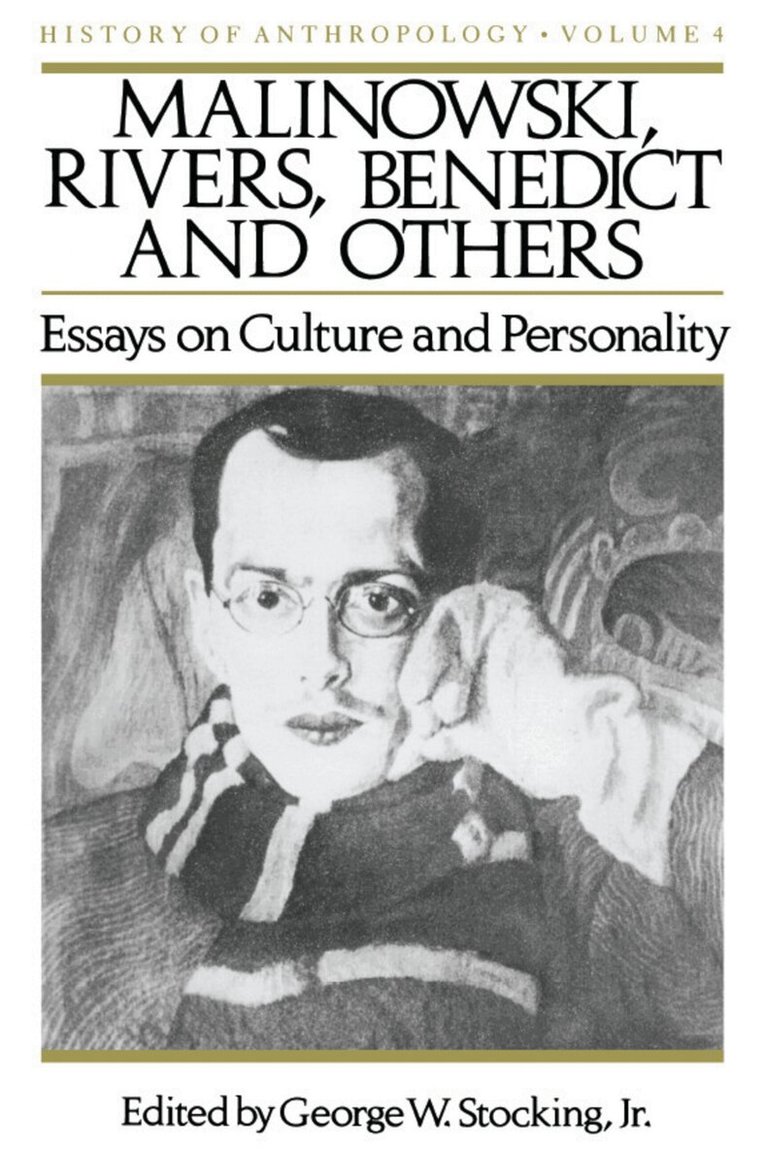
History of Anthropology is a series of annual volumes, inaugurated in 1983, each of which treats a theme of major importance in both the history and current practice of anthropological inquiry. Drawing its title from a poem of W. H. Auden’s, the present volume, Malinowski, Rivers, Benedict and Others focuses on the emergence of anthropological interest in “culture and personality” during the 1920s and 1930s. It also explores the historical, cultural, literary, and biological background of major figures associated with the movement, including Bronislaw Malinowski, Edward Sapir, Abram Kardiner, Ruth Benedict, Margaret Mead, and Gregory Bateson.Born in the aftermath of World War I, flowering in the years before and after World War II, severely attacked in the 1950s and 1960s, “culture and personality” was subsequently reborn as “psychological anthropology.” Whether this foreshadows the emergence of a major anthropological subdiscipline (equivalent to cultural, social, biological, or linguistic anthropology) from the current welter of “adjectival” anthropologies remain to be seen. In the meantime, the essays collected in the volume may encourage a rethinking of the historical roots of many issues of current concern.
262 kr
Skickas inom 10-15 vardagar
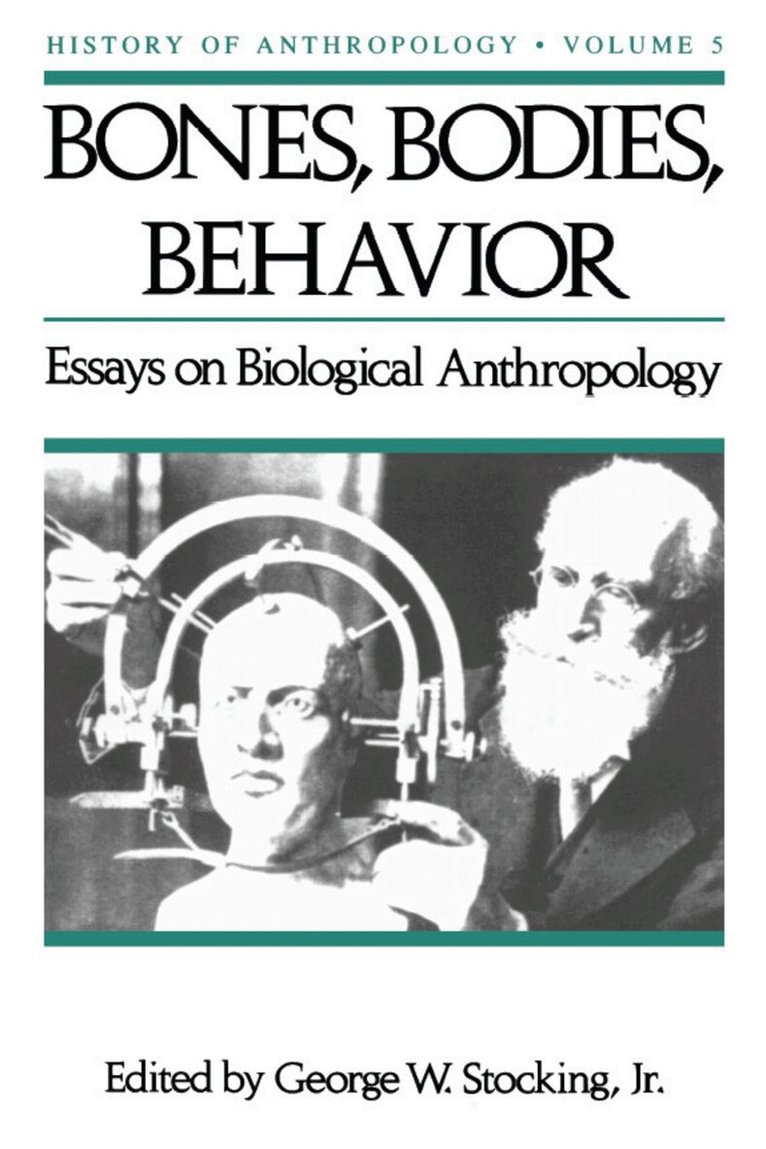
History of Anthropology is a series of annual volumes, inaugurated in 1983, each broadly unified around a theme of major importance to both the history and the present practice of anthropological inquiry. Bones, Bodies, Behavior, the fifth in the series, treats a number of issues relating to the history of biological or physical anthropology: the application of the “race” idea to humankind, the comparison of animals’ minds to those of humans, the evolution of humans from primate forms, and the relation of science to racial ideology.Following an introductory overview of biological anthropology in Western tradition, the seven essays focus on a series of particular historical episodes from 1830 to 1980: the emergence of the race idea in restoration France, the comparative psychological thought of the American ethnologist Lewis Henry Morgan, the archeological background of the forgery of the remains “discovered” at Piltdown in 1912, their impact on paleoanthropology in the interwar period, the background and development of physical anthropology in Nazi Germany, and the attempts of Franx Boas and others to organise a consensus against racialism among British and American scientists in the late 1930s. The volume concludes with a provocative essay on physical anthropology and primate studies in the United States in the years since such a consensus was established by the UNESCO “Statements on Race” of 1950 and 1951. Bringing together the contributions of a physical anthropologist (Frank Spencer), a historical sociologist (Michael Hammond), and a number of historians of science (Elazar Barkan, Claude Blanckaert, Donna Haraway, Robert Proctor, and Marc Swetlitz), this volume will appeal to a wide range of students, scholars, and general readers interested in the place of biological assumptions in the modern anthropological tradition, in the biological bases of human behaviour, in racial ideologies, and in the development of the modern human sciences.
270 kr
Skickas inom 10-15 vardagar
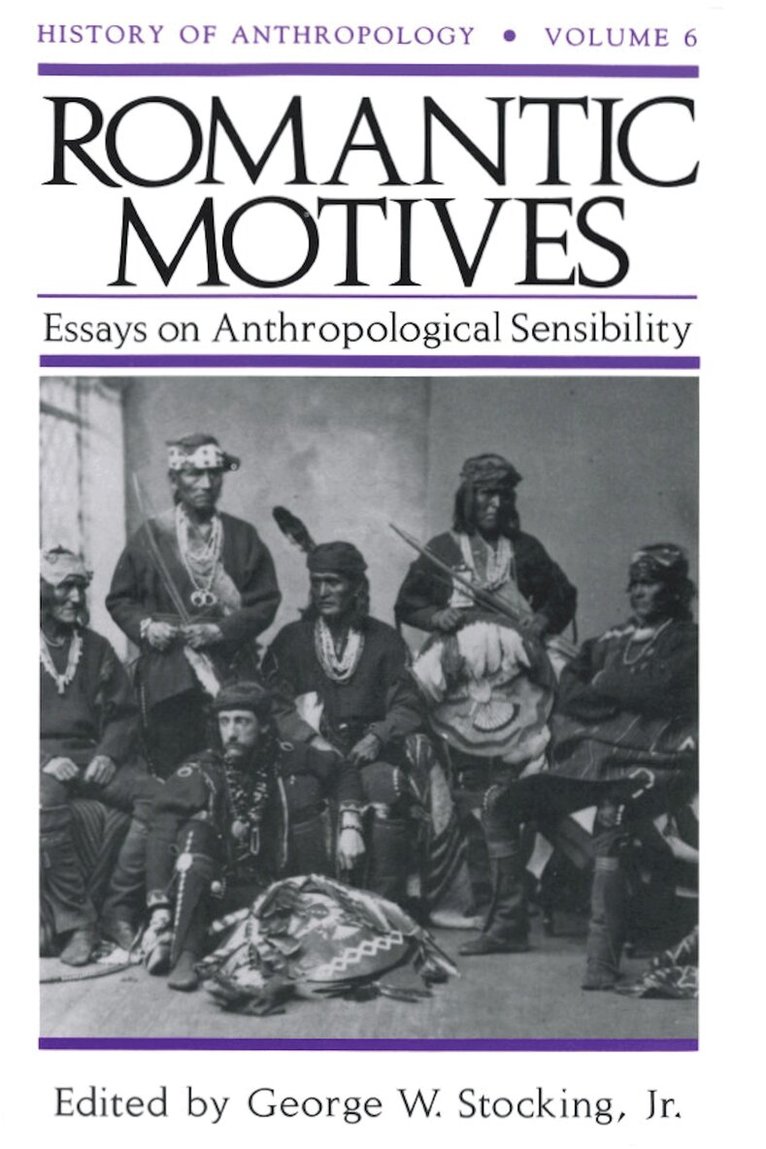
Tracking the Romantic strains in the writings of Rousseau, Herder, Cushing, Sapir, Benedict, Redfield, Mead, Levi-Strauss and others, these essays show Romanticism as a permanent and recurrent tendency within the anthropological tradition.
270 kr
Skickas inom 10-15 vardagar
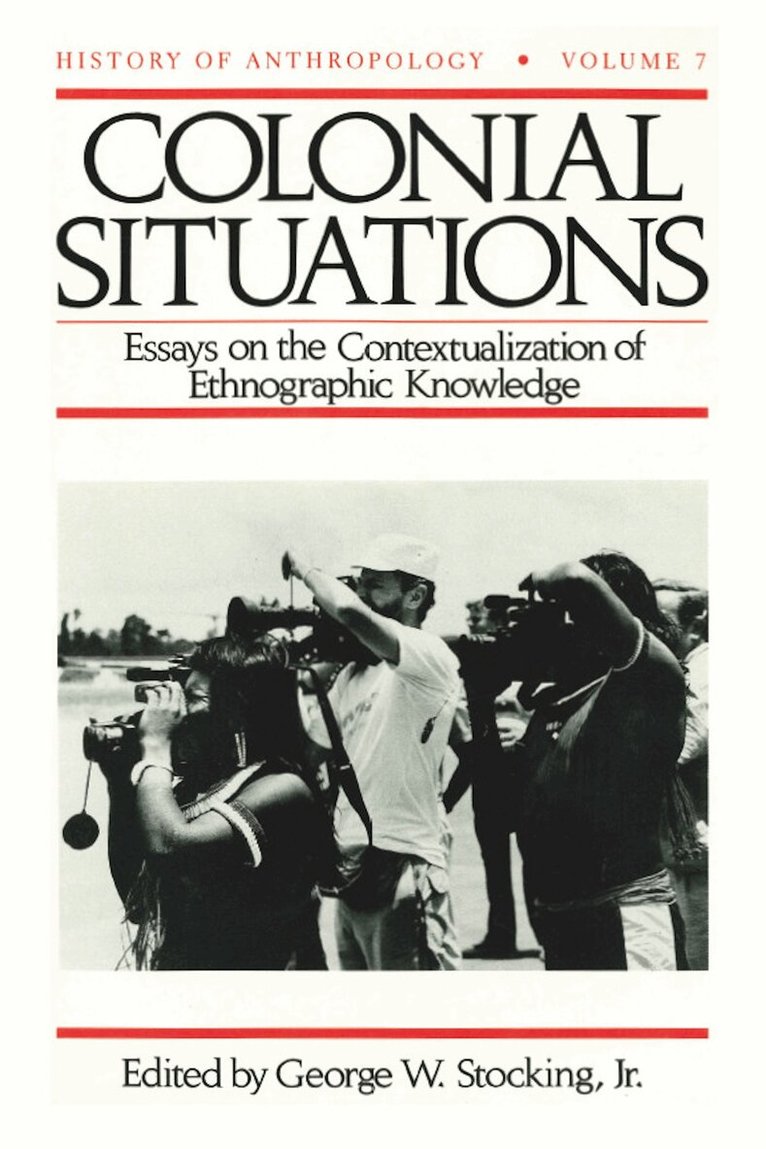
The relation of anthropology to colonialism and imperialism became a burning issue for anthropologists in the mid-1960s. As European colonies in Asia and Africa became independent nations, as the United States engaged in war in South-east Asia and in covert operations in South America, anthropologists questioned their interactions with their subjects and worried about the political consequences of government-supported research. By 1970, some spoke of anthropology as ""the child of Western imperialism"" and as ""scientific colonialism"". Ironically, as the link between anthropology and colonialism became more widely accepted within the discipline, serious interest diminished in examining the history of anthropology in colonial contexts. This volume attempts a critical historical consideration of the varying colonial situations in which (and from which) ethnographic knowledge essential to anthropology has been produced. The essays comment on ethnographic work from the middle of the 19th century to almost the end of the 20th; they cover regions from Oceania through Southeast Asia, the Andaman Islands and Southern Africa, to North and South America. The ""colonial situations"" also range from first contact through to the establishment of colonial power; from District Officer administrations through to white settler regimes; from internal colonialism to international mandates; from early pacification to wars of colonial liberation; from the expropriation of land to the defence of ecology. The motivations and responses of the anthropologists discussed are equally varied: the romantic resistance of Maclay and the complicity of Kubary in early colonialism; Malinowski's salesmanship of academic anthropology; Speck's advocacy of Indian land rights; Schneider's grappling with the ambiguities of rapport; and Turner's facilitation of Kayapo cinematic activism.
215 kr
Skickas inom 10-15 vardagar
The Ethnographer's Magic may be read at several levels by practitioners from several disciplines: intellectual history, history of science, anthropology, even comparative literature, new cultural history, and literary criticism. Original in its design, it presents the historiographer as composer, responsive to his own lived experience and to those whom he encounters deliberately and by chance, defensive at times, disengaging himself from academic political sensibilities over certain issues, but, above all, a primary researcher into the further reaches of anthropology as a profession and as a discipline. For this collection, Stocking has written comments on each of the eight essays included, as well as an introduction providing autobiographical and historiographical context and an afterwork reconsidering major themes of the essays in relation to the recent past and present situation of academic anthropology. The essays themselves address the work and influence of Franz Boas and Bronislaw Malinowski; anthropology's powerfully mythic aspect and persistent strain of romantic primitivism; the contradictions of its relationship to the larger sociopolitical sphere; its problematic integration of a variety of natural scientific and humanistic inquiries; and the tension between its scientific aspirations and its subjectively acquired ""data"".
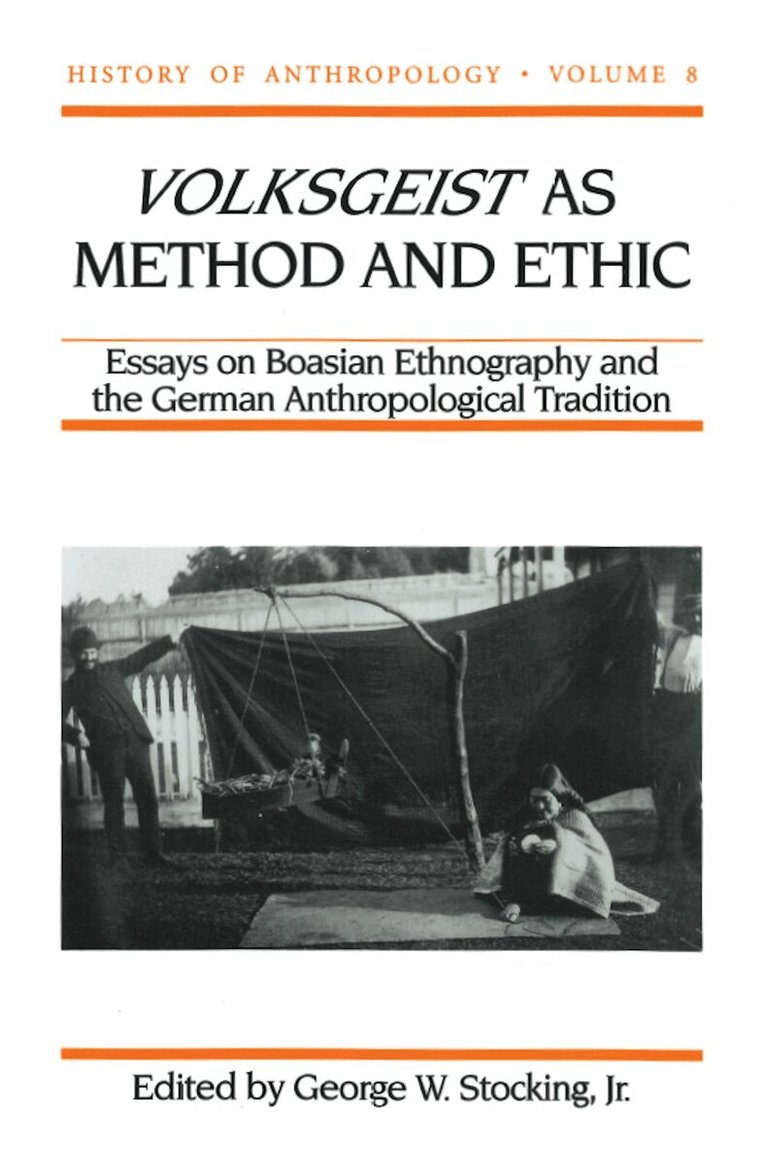
Volksgeist As Method and Ethic
Essays on Boasian Ethnography and the German Anthropological Tradition
Inbunden, Engelska, 1996
464 kr
Skickas inom 10-15 vardagar
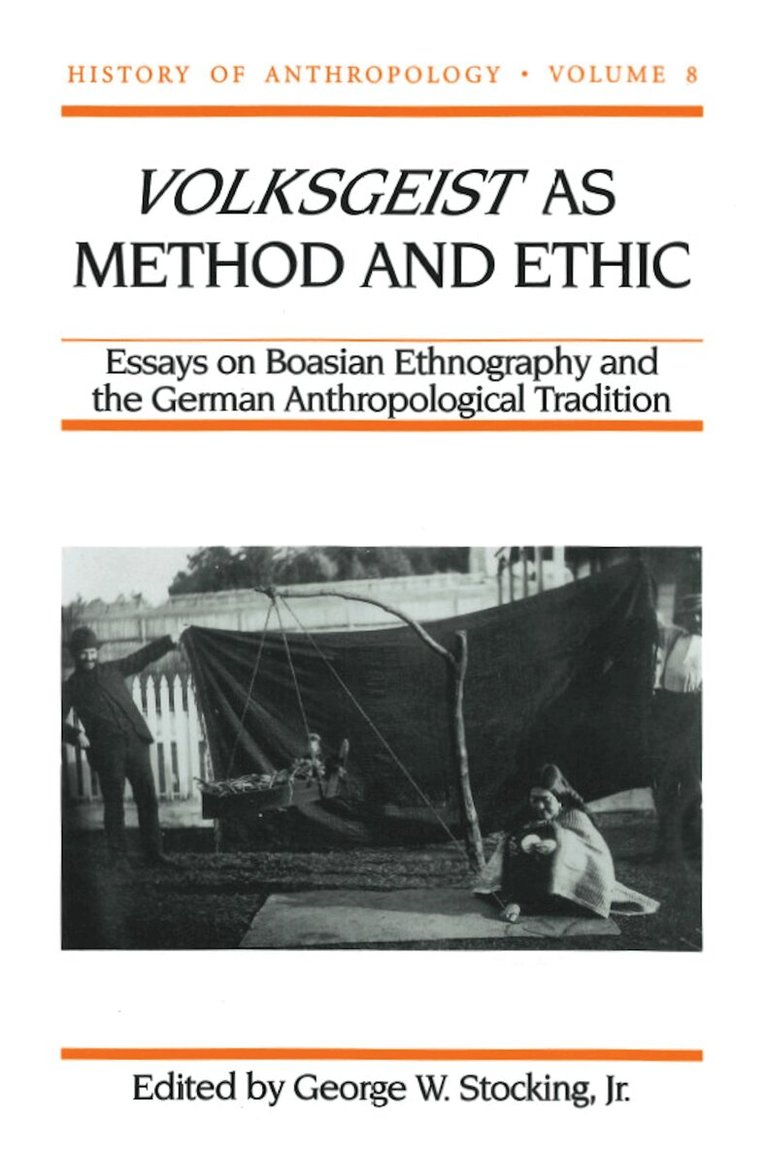
Franz Boas, the major founding figure of anthropology as a discipline in America, came to the United States from Germany in 1886. This volume in the acclaimed History of Anthropology series is the first to explore fully the extent and significance of Boas' roots in the German intellectual tradition and late-19th century German anthropology. Boas' own early essay ""The Study of Geography"", reprinted in this volume, suggests his profound debt to the Herderian tradition of ""Volksgeist"" and ""Nationalcharakter"" - an intellectual lineage Matti Bunzl traces from Wilhelm and Alexander von Humboldt through Ritter, Ratzel, Waitz and Bastian to Boas. Benoit Massin painstakingly reconstructs another powerful influence on Boas, that of Rudolf Virchow, the leading physical anthropologist in Germany in the days before the discipline took its extreme racialist turn in that country. Drawing on letters from Boas' adolescence and early manhood, Julia Liss shows how the intellectual and cultural forces that formed his mature anthropological viewpoint figured clearly in his own ""Bildung"". Shifting the focus from Germany to the United States, essays by Ira Jacknis, Judith Berman and Thomas Buckley treat certain problematic aspects of the ""Volksgeist"" tradition, viewed as an attempt to constitute for each Native American group a permanent archive of cultural material free of contamination by European categories. Suzanne Marchand's essay on the political implications of German Near Eastern archaeology provides a distant counterpoint to the colonial situation of Boasian ethnography in America. Recovering the important but little understood Germanic influences on Boasian ethnography, this volume offers a new perspective on the historical development of American anthropology.
Volksgeist As Method and Ethic
Essays on Boasian Ethnography and the German Anthropological Tradition
Häftad, Engelska, 1998
278 kr
Skickas inom 10-15 vardagar
Franz Boas, the founding figure of anthropology in America, came to the United States from Germany in 1886. This volume in the History of Anthropology series explores the extent and significance of Boas' roots in the German intellectual tradition and late-19th century German anthropology.
259 kr
Skickas inom 7-10 vardagar
259 kr
Skickas inom 7-10 vardagar
George W. Stocking, Jr., has spent a professional lifetime exploring the history of anthropology, and his findings have shaped anthropologists’ understanding of their field for two generations. Through his meticulous research, Stocking has shown how such forces as politics, race, institutional affiliations, and personal relationships have influenced the discipline from its beginnings. In this autobiography, he turns his attention to a subject closer to home but no less challenging. Looking into his own “black box,” he dissects his upbringing, his politics, even his motivations in writing about himself. The result is a book systematically, at times brutally, self-questioning. An interesting question, Stocking says, is one that arouses just the right amount of anxiety. But that very anxiety may be the ultimate source of Stocking’s remarkable intellectual energy and output. In the first two sections of the book, he traces the intersecting vectors of his professional and personal lives. The book concludes with a coda, “Octogenarian Afterthoughts,” that offers glimpses of his life after retirement, when advancing age, cancer, and depression changed the tenor of his reflections about both his life and his work. This book is the twelfth and final volume of the influential History of Anthropology series.
Basing Point Pricing and Regional Development
A Case Study of the Iron and Steel Industry
Häftad, Engelska, 2011
533 kr
Skickas inom 10-15 vardagar
This is a case study in industrial structure, pricing practices, and economic welfare of the steel industry, showing its significance to the South and to the national economy. It concludes with an analysis of the law on basing point pricing and recommendations on public policy. The liberal in economics who favors policies designed to stabilize the economy rather than to stabilize particular industries will find scholarly documentation and vivid justification for his views here.A UNC Press Enduring Edition -- UNC Press Enduring Editions use the latest in digital technology to make available again books from our distinguished backlist that were previously out of print. These editions are published unaltered from the original, and are presented in affordable paperback formats, bringing readers both historical and cultural value.