Georges Minois - Böcker
Visar alla böcker från författaren Georges Minois. Handla med fri frakt och snabb leverans.
6 produkter
6 produkter
260 kr
Skickas inom 7-10 vardagar
Like a lot of good stories, this one begins with a rumor: in 1239, Pope Gregory IX accused Frederick II, the Holy Roman Emperor, of heresy. Without disclosing evidence of any kind, Gregory announced that Frederick had written a supremely blasphemous book - "De tribus impostoribus", or the "Treatise of the Three Impostors" - in which Frederick denounced Moses, Jesus, and Muhammad as impostors. Of course, Frederick denied the charge, and over the following centuries the story played out across Europe, with libertines, freethinkers, and other "strong minds" seeking a copy of the scandalous text. The fascination persisted until finally, in the eighteenth century, someone brought the purported work into actual existence-in not one but two versions, Latin and French. Although historians have debated the origins and influences of this nonexistent book, there has not been a comprehensive biography of the "Treatise of the Three Impostors".In "The Atheist's Bible", the eminent historian Georges Minois tracks the course of the book from its origins in 1239 to its most salient episodes in the seventeenth and eighteenth centuries, introducing readers to the colorful individuals obsessed with possessing the legendary work-and the equally obsessive passion of those who wanted to punish people who sought it. Minois' compelling account sheds much-needed light on the power of atheism, the threat of blasphemy, and the persistence of free thought during a time when the outspoken risked being burned at the stake.
236 kr
Skickas inom 7-10 vardagar
A comprehensive biography of the Treatise of the Three Impostors, a controversial nonexistent medieval book. Like a lot of good stories, this one begins with a rumor: in 1239, Pope Gregory IX accused Frederick II, the Holy Roman Emperor, of heresy. Without disclosing evidence of any kind, Gregory announced that Frederick had written a supremely blasphemous book—De tribus impostoribus, or the Treatise of the Three Impostors—in which Frederick denounced Moses, Jesus, and Muhammad as impostors. Of course, Frederick denied the charge, and over the following centuries the story played out across Europe, with libertines, freethinkers, and other “strong minds” seeking a copy of the scandalous text. The fascination persisted until finally, in the eighteenth century, someone brought the purported work into actual existence—in not one but two versions, Latin and French. Although historians have debated the origins and influences of this nonexistent book, there has not been a comprehensive biography of the Treatise of the Three Impostors. In The Atheist’s Bible, the eminent historian Georges Minois tracks the course of the book from its origins in 1239 to its most salient episodes in the seventeenth and eighteenth centuries, introducing readers to the colorful individuals obsessed with possessing the legendary work—and the equally obsessive passion of those who wanted to punish people who sought it. Minois’s compelling account sheds much-needed light on the power of atheism, the threat of blasphemy, and the persistence of free thought during a time when the outspoken risked being burned at the stake.
382 kr
Skickas inom 5-8 vardagar
This book is the first major study of the ways in which old age was perceived in Western culture and society. Beginning from ancient Palestine and Classical Greece, Minois traces the changing conceptions of the nature, value and burden of the old. He shows how, in ancient Greece, the cult of youth and beauty, on the one hand, and the reverence for the figure of the Homeric sage, on the other, created an ambivalent attitude towards the aged. This ambiquity appears again in the contrast between the active role that senior citizens played in Roman politics, and their depiction in satirical literature of the period. Christian literature in the Middle Ages also played a large part in defining the society′s perception of the old, both in the image of the revered holy sage and in the total condemnation of the aged sinner. Minois traces the increasingly positive image of old age in various professions from the eleventh to the sixteenth centuries. He shows how, as medical advances lengthened the average life–span, more and more old people were seen to take an active part in the life of the society. Throughout, Minois considers the interrelation of literary, religious, medical and political factors in the social fate of old men and women and their relationship with the rest of society.
302 kr
Tillfälligt slut
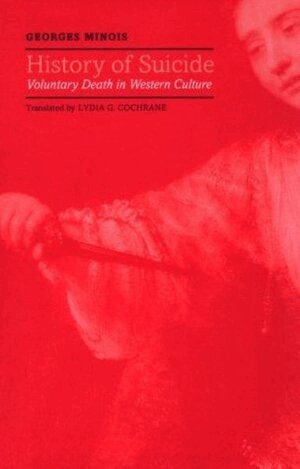
In this compact and illuminating history, Georges Minois examines how a culture's attitudes about suicide reflect its larger beliefs and values-attitudes toward life and death, duty and honor, pain and pleasure. Minois begins his survey with classical Greece and Rome, where suicide was acceptable-even heroic-under some circumstances. With the rise of Christianity, however, suicide was unequivocally condemned as self-murder and an insult to God. With the Renaissance and its renewed interest in classical culture, suicide reemerged as a philosophical issue. Minois finds examples of changing attitudes in key Renaissance texts by Bacon, Montaigne, Sidney, Donne, and Shakespeare. By 1700, the term suicide had replaced self-murder and the subject began to interest the emerging scientific disciplines. Minois follows the ongoing evaluation of suicide through the Enlightenment and the Romantic periods, and he examines attitudes that emerge in nineteenth- and twentieth-century science, law, philosophy, and literature. Minois concludes with comments on the most recent turn in this long and complex history-the emotional debate over euthanasia, assisted suicide, and the right to die.
787 kr
Skickas inom 3-6 vardagar
155 kr
Skickas
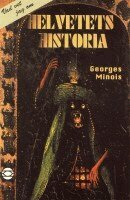
I alla tider har människan funderat på livet efter döden och uppfattningen att människor kommer att delas i flera grupper som ett resultat av de handlingar man utfört under jordelivet har varit vanlig. De rättrogna lyfts ofta till ett angenämt tillstånd av lättja och lyx, medan de förtappade själarna förpassas till de eviga plågornas rike. Historierna om vad som händer med de människor som hamnar i ondskans klor och beskrivningarna av de tusentals olika sätten att straffa dem som syndat har varit mycket detaljerade, rikt varierade och nästan djävulskt fantasifulla. Helvetets historia berättar om dem alla, från helvetesföreställningar i den antika orienten till vår tids uppfattning om helvetet.